Cage crusher operation and maintenance guide during daily use

Before using a cage crusher, it’s crucial to control the moisture content of the material. For materials such as corn, soybean meal, bran, and fish meal used in the feed industry, the ideal moisture content is generally between 10% and 14%. This is because feed pellets need to remain loose. Moisture levels above 14% can cause the material to stick to the cage rotor, hindering the grinding process. Below 10% can easily generate dust, polluting the environment and potentially posing a safety hazard. For example, corn with a moisture content of 9% can be over-crushed into a fine powder due to its brittle texture, exceeding the required particle size for feed pelleting.

Regularly inspect the beater. Manually move the beater. If the beater shakes more than 5mm, or if the bolts securing it are loose or missing, tighten them immediately with a torque wrench. Use a lock washer to prevent further loosening. If a beater is severely worn, replace it with a beater of the same specification to ensure consistent height across all beaters.
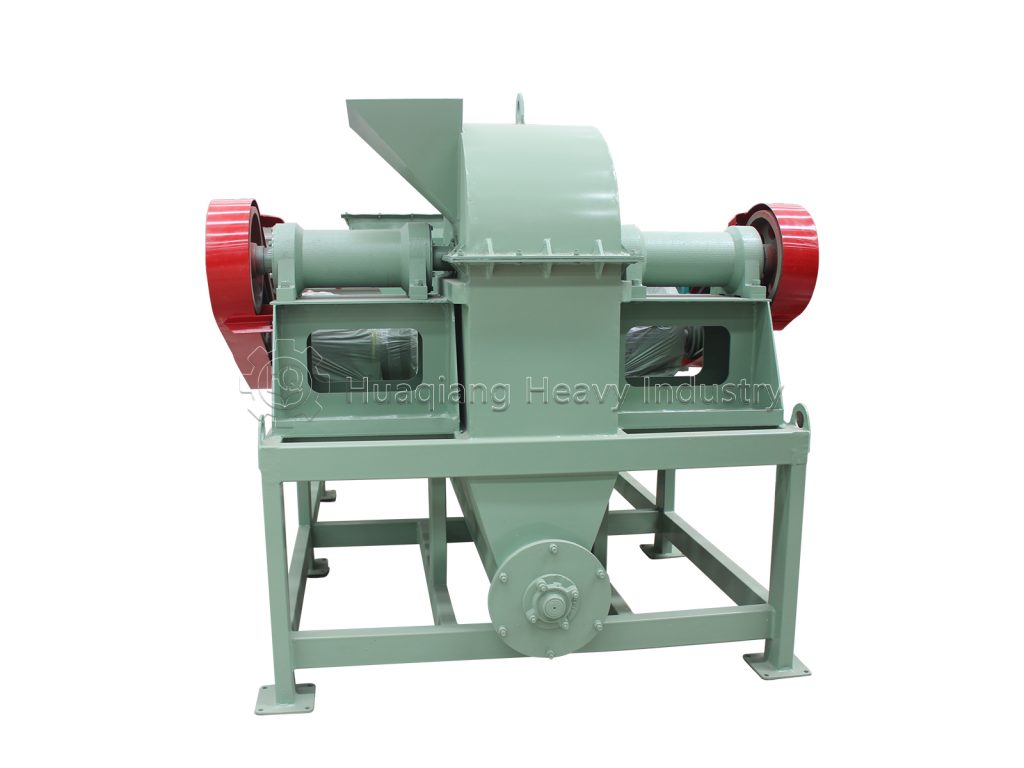
Check the cage plate for material buildup. If wet material is not cleaned after crushing, material may stick to the inside of the cage plate, causing the rotor’s center of gravity to shift. Stop the cage crusher and use a scraper to clean it. Reduce operating time when handling wet material. Also, check for cage wear. Measure the diameter of both cage plates with a caliper. If wear exceeds 2mm, replace the cage plates. After replacement, perform a dynamic balancing test on the rotor.

Bearing maintenance is also crucial. After 10 minutes of operation, touch the bearing seat. If the temperature exceeds 70°C or there is a snag during rotation, the bearing may be depleted or damaged.

Only by properly controlling material moisture and performing routine maintenance can you maintain a cage crusher in good operating condition, improve production efficiency, and extend the equipment’s life.
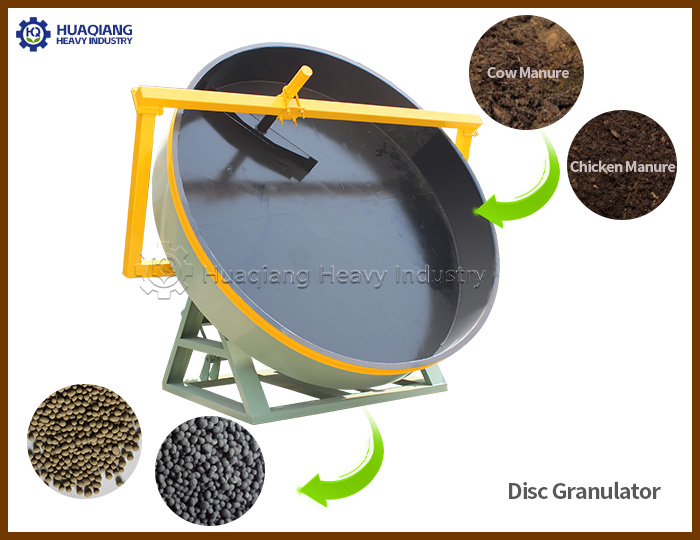
How to configure an organic fertilizer production line? Proper selection and matching of disc granulators

To build an efficient organic fertilizer production line, the proper selection of a disc granulator and its supporting equipment are crucial, directly impacting the overall production efficiency and product quality.

When selecting a disc granulator, the specifications of the disc granulator should be determined based on the production capacity requirements of the fertilizer production line. If the production line has a low capacity, a machine with a moderate processing capacity can be selected. If the production capacity requirements are high, a disc granulator with a high processing capacity should be used to ensure that the granulation process is compatible with the overall production capacity and avoid capacity bottlenecks.

Furthermore, the type of fertilizer being produced, such as organic fertilizer or NPK compound fertilizer, should be considered. Different types of fertilizer raw materials have different characteristics, so an appropriate disc granulator must be selected to ensure optimal granulation results.

The selection of supporting equipment is also crucial. In a fertilizer production line, a disc granulator must work in conjunction with other equipment such as a fertilizer crusher, mixer, screener, dryer, and packaging machine. The pulverizer crushes the raw materials to the appropriate particle size, preparing them for granulation; the mixer ensures that the raw materials are evenly mixed; the screening machine screens the granulated particles and separates unqualified particles; the dryer reduces the moisture content of the particles for easy storage; and the packaging machine completes the final product packaging.

The rational combination of these supporting equipment can form a complete and efficient fertilizer production process, improve the automation level and production efficiency of the entire production line, and create greater value for the enterprise.