Disc granulation: A key to formation in modern organic fertilizer production equipment

In modern organic fertilizer production, transforming fermented and decomposed powdery raw materials into uniform granules is a crucial leap in enhancing the product’s marketability and practical value. This process relies heavily on specialized organic fertilizer production equipment, and the selection and application of the organic fertilizer granulator directly determines the final product’s shape and quality.

In the granulation stage, the diversity of equipment technology provides flexible production options. Among them, the organic fertilizer disc granulator is highly favored for its unique working principle and visualized granulation process. This granulation method boasts a high pelletizing rate, good granule strength, and particle size controllable by adjusting the disc’s tilt angle and rotation speed, making operation intuitive and maintenance simple.

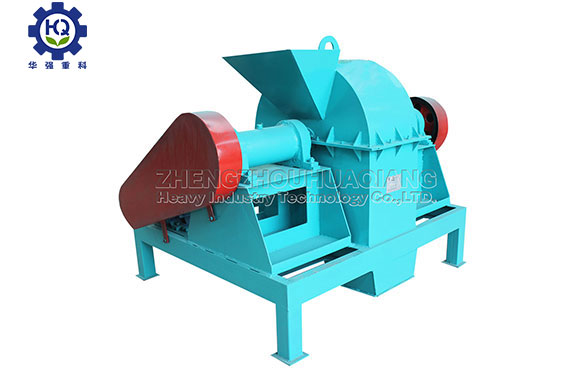
However, high-quality granulation begins with high-quality raw material pretreatment. Before the material enters the organic fertilizer disc granulator or other types of organic fertilizer granulators, the fertilizer crusher plays a vital “gatekeeper” role. It finely crushes any lumps or agglomerates, ensuring that the raw materials entering the granulation process are uniformly fine and loosely textured.

From the fine pretreatment by the fertilizer crusher to the precise shaping by the organic fertilizer disc granulator, the close coordination of these core organic fertilizer production equipment forms a highly efficient chain in the back-end processing of a modern organic fertilizer production line, greatly promoting the large-scale application and industrial upgrading of organic fertilizer.
The synergistic approach of key equipment in organic fertilizer production lines

In modern organic fertilizer production, a complete production line achieves value enhancement from raw materials to finished products through the precise coordination of specialized equipment at each stage. This system transforms various organic wastes into high-quality organic fertilizers through a scientific process.

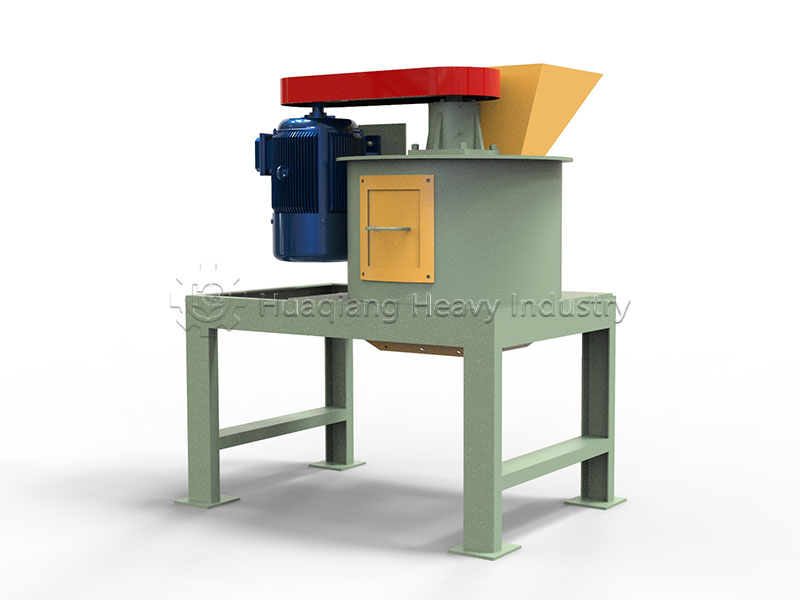
At the front end of the production line, the fertilizer crusher undertakes a crucial pretreatment task. It effectively breaks down lumps in the raw materials, ensuring the smooth progress of subsequent processes. The crushed raw materials are not only easier to mix evenly but also create favorable conditions for the subsequent fermentation process.

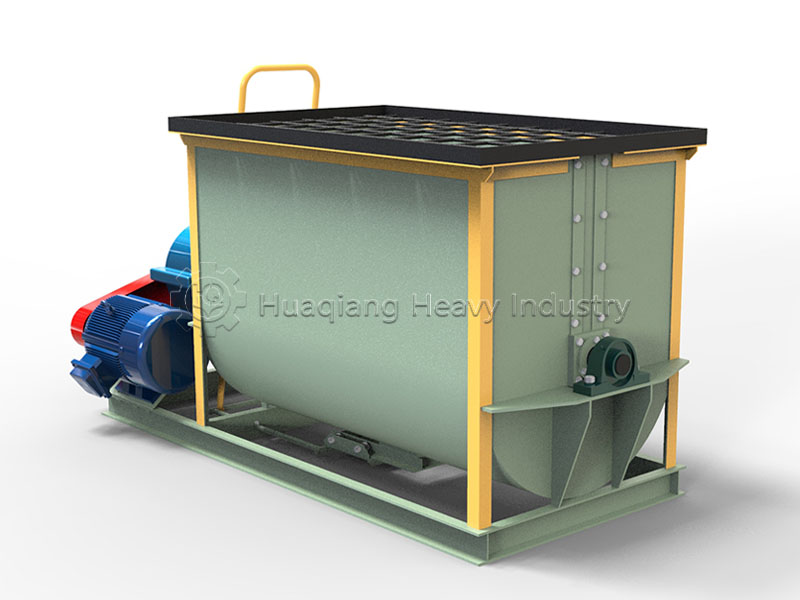
Next, the fertilizer mixer machine plays a key role. This equipment, through an efficient mixing mechanism, thoroughly mixes the raw materials of different components. This uniform mixing not only ensures a balanced distribution of nutrients but also guarantees the consistency of the fermentation process, laying a solid foundation for the production of high-quality organic fertilizer.

After the material has completed fermentation, the organic fertilizer granulator becomes the core equipment of the production line. Through unique molding technology, it transforms powdery materials into uniformly sized granular products. This transformation not only improves the product’s marketability but also gives it significant advantages in storage, transportation, and application.

The successful operation of the entire organic fertilizer production line relies on the precise coordination of each piece of equipment. From crushing and mixing to granulation, each step is closely linked, forming a highly efficient production system. This systematic production method not only ensures the stability of product quality but also greatly improves production efficiency.

A deep dive into fertilizer crusher: Structure, Principle, and Core Advantages

As a crucial piece of equipment in the fertilizer production process, fertilizer crushers play an indispensable role in the production of organic fertilizers, NPK fertilizers, and other fertilizers. To fully maximize their performance, a thorough understanding of their structure, operating principles, and core advantages is essential.

Structurally, a fertilizer crusher primarily consists of a crushing chamber, crushing components, a feed inlet, a discharge outlet, and a drive system. The crushing chamber provides space for material crushing. The crushing components within, such as the blades, hammers, and toothed plates, are the core components that directly act on the material. The drive system provides power to the crushing components, ensuring stable operation. Some fertilizer crushers are also equipped with a screening system to select the particle size of the crushed material to meet different production requirements.

The operating principle is based on a combination of impact, cutting, and grinding. After material enters the crushing chamber through the feed inlet, the high-speed rotating crushing components cut and grind the material. This, combined with intense collision and friction between the material and the crushing components, ultimately breaks the material into particles of the desired quality before discharging through the discharge outlet.

The core advantages of a fertilizer crusher lie in its high processing efficiency, adaptability, and ease of maintenance. It can quickly crush a variety of fertilizer raw materials, and its structural design facilitates routine maintenance and cleaning, significantly reducing production downtime and providing strong support for fertilizer manufacturers to increase production capacity.

The complete process of organic fertilizer crusher processing: Efficient grinding technology

The fertilizer crusher is a core piece of equipment in an organic fertilizer production line. Its processing directly affects the quality of the final product and production efficiency.

1.Raw Material Pre-Treatment Stage

Moisture Control: Keep material moisture content between 30% and 50%. Too dry creates dust; too wet reduces crushing efficiency.

Impurity Removal: Remove hard impurities like stones or metal manually or mechanically.

Initial Crushing: Break down large chunks to reduce the crusher’s workload.

2.Core Workflow

Feeding System: A conveyor belt feeds material evenly into the crushing chamber.

High-Speed Crushing: The rotor spins at 1,500–3,000 rpm, using hammers or blades to strike materials.

Screening: Crushed material passes through a sieve (usually 3–10mm holes).

Recycling: Oversized material stays in the chamber for further grinding.

3.Key Process Control Points

Speed Adjustment: Lower speed for fibrous materials; higher speed for brittle ones.

Sieve Selection: Choose sieve hole size based on required particle size.

Temperature Monitoring: Keep bearing temperature below 75°C to avoid overheating.

Current Monitoring: Unusual motor current may indicate blockage or malfunction.

4.Finished Product Quality Standards

Uniform particle size: ≥90% passes through the target sieve. No visible unprocessed chunks. Fibrous materials ≤5mm in length. Moisture content variance within ±2%.

By properly controlling process parameters and strictly following procedures, the fertilizer crusher can maintain peak performance. This lays a solid foundation for subsequent steps like fermentation and granulation.