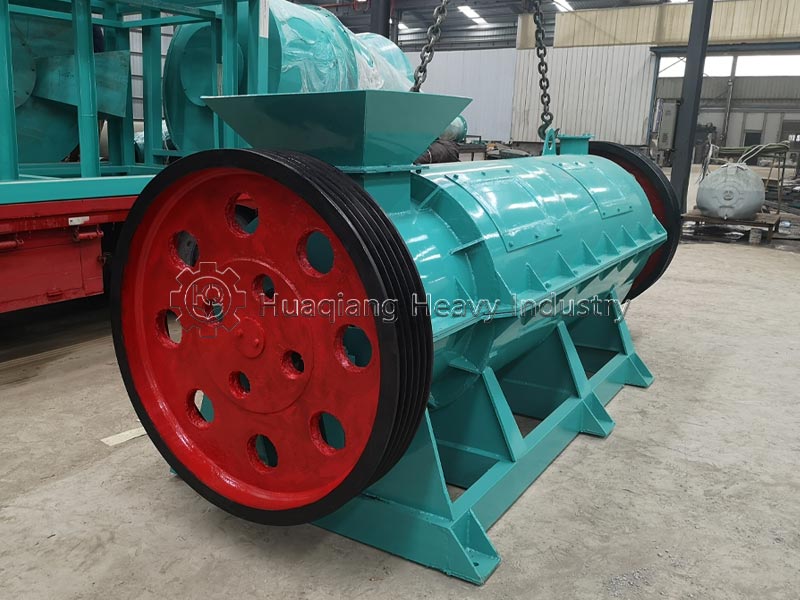
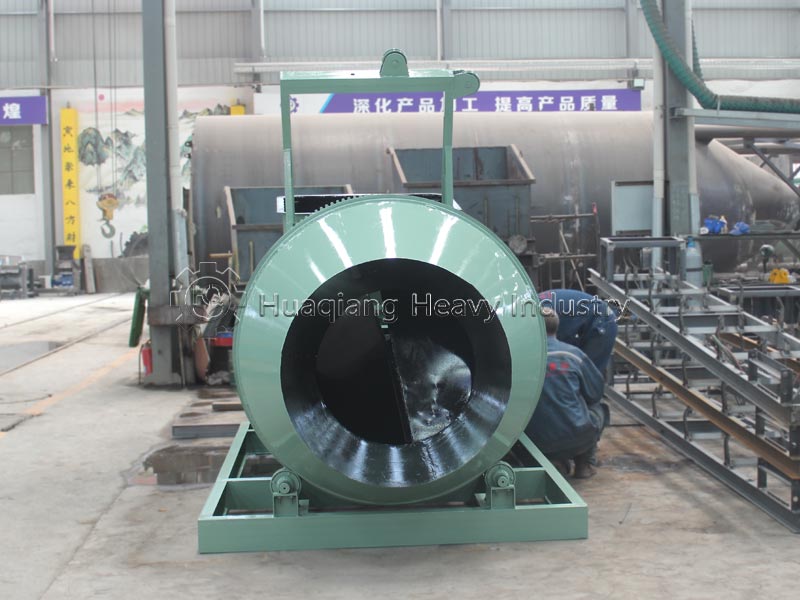
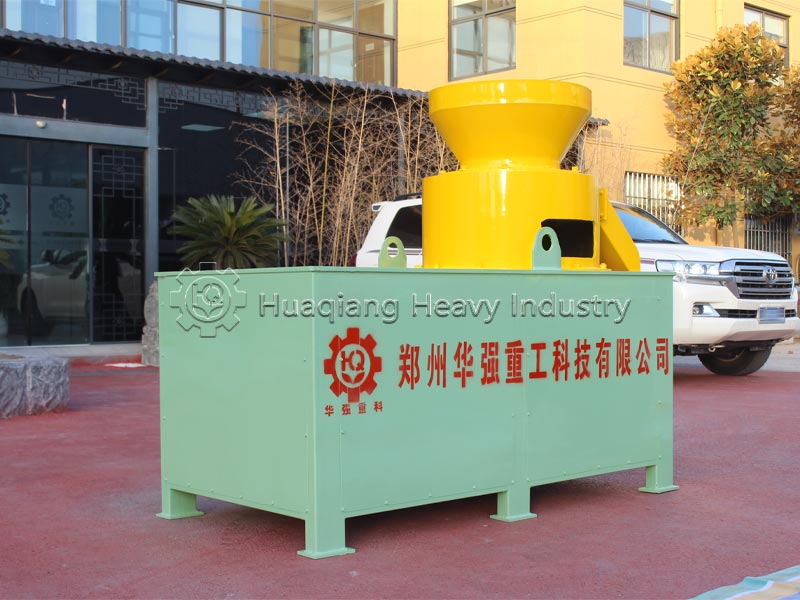
In the field of organic fertilizer production, equipment integration has become a key trend for reducing costs and increasing efficiency. The emergence of the new type two in one organic fertilizer granulator is fundamentally changing traditional production models. This equipment, which integrates mixing and granulation functions, not only solves the problem of high material transfer losses in traditional production lines but also becomes the preferred choice for small and medium-sized fertilizer plants seeking intensive production.
Compared to single-function fertilizer granulators, the two-in-one equipment seamlessly connects the mixing and granulation stages, eliminating the need for intermediate conveying equipment. Material loss rate is reduced from the traditional 5%-8% to 1%-2%, while saving 30%-50% of floor space. Its core advantage lies in its strong adaptability; whether processing livestock and poultry manure, straw, or other organic waste, or producing bio-organic fertilizers, parameters can be flexibly adjusted through the PLC control system without requiring large-scale equipment modifications.
In terms of production efficiency, a single machine can produce 1-5 tons of granular organic fertilizer per hour, an increase of 20%-40% compared to traditional separate equipment. The granules have a sphericity of over 85% and a strength of 10-30N, meeting the transportation and application needs of farmland and orchards. Even more noteworthy is the 15%-25% reduction in energy consumption per unit of product, reducing the number of motors and labor costs, perfectly aligning with the current pursuit of low cost and high output in fertilizer plants.
For companies planning to expand their organic fertilizer production lines, this equipment can also be integrated with NPK fertilizer production lines to process organic-inorganic compound fertilizers. Today, more and more fertilizer plants are incorporating this two-in-one granulator into their production upgrade plans, promoting the resource utilization of organic waste while injecting new impetus into the development of green agriculture.
Composting is the core process in the production of bio-organic fertilizers. High-quality compost relies on scientific operation and the rational use of bio-organic fertilizer composting equipment. In practice, many misconceptions can lead to composting failure and reduced fertilizer efficiency. Understanding common mistakes and how to avoid them is crucial.
The primary mistake is an imbalance in raw material ratios. Blindly piling up a single raw material leads to an imbalance in the carbon-to-nitrogen ratio, resulting in either slow decomposition or the production of foul odors. Solution: Mix raw materials at a ratio of 25:1-30:1, such as livestock manure mixed with straw, and use a fertilizer mixer to ensure thorough mixing, guaranteeing balanced nutrients and supporting microbial activity.
Improper moisture control can easily cause problems. Excessive moisture leads to oxygen deficiency and foul odors in the compost pile, while insufficient moisture results in insufficient microbial activity. Correct practice: Control the moisture content at 50%-60%, ideally when the material can be squeezed into a ball without dripping water between the fingers. Add water when dry and add dry straw to adjust moisture when too wet.
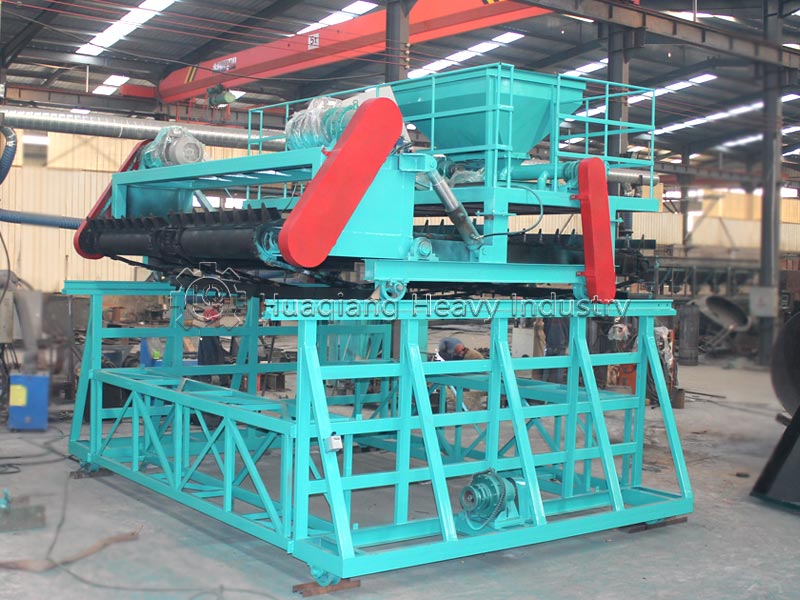
Infrequent or improper turning of the compost pile is a key problem. Lack of turning easily leads to anaerobic fermentation, while shallow turning results in uneven oxygen supply to the materials. Recommendation: After the pile temperature reaches above 60℃ and is maintained for 3-5 days, use a compost turning machine for deep turning to ensure that the materials are fully exposed to oxygen.
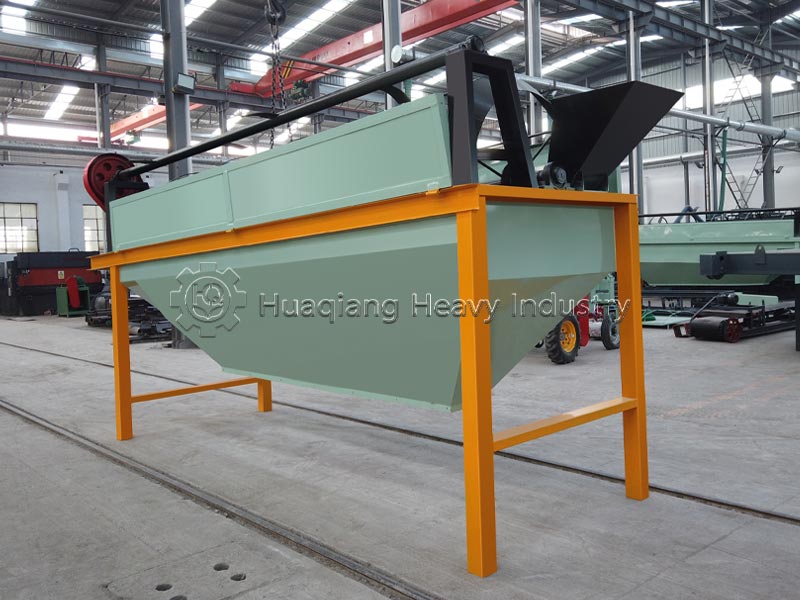
In the entire organic waste treatment process, screening is a core pre-treatment step, requiring specialized equipment such as drum screener machine or vibration screener machine. Its core value lies in removing impurities and optimizing material characteristics through physical classification, laying a solid foundation for subsequent processes such as fermentation and resource utilization.
The primary function is to remove impurities and ensure the safe and smooth operation of equipment. Inert impurities such as stones, metals, and plastics mixed in organic waste can easily wear and clog equipment such as fermentation tanks and mixers. Precise screening with a fertilizer screener machine effectively separates impurities, reduces operating and maintenance costs, and ensures a continuous and stable treatment process.
Secondly, it involves material classification to optimize the effectiveness of subsequent processes. Organic waste of different particle sizes has significantly different fermentation efficiencies. Screening can classify materials by particle size: fine materials can fully contact microorganisms and oxygen, improving the speed and uniformity of composting; coarse materials can be returned to the crushing system for reprocessing, preventing incomplete fermentation and uneven nutrient distribution in the final product.
Furthermore, screening improves the quality of resource-recovered products. When producing organic fertilizer from organic waste, fine screening with a fertilizer screener machine removes uncomposted coarse particles and residual impurities, ensuring uniform particle size and purity of the organic fertilizer. At the same time, the materials classified by drum screener machine and vibration screener machine can be adapted to different resource utilization pathways, improving resource utilization efficiency.
In summary, screening is a crucial link connecting the pre-treatment and deep treatment of organic waste, playing an irreplaceable role in improving treatment efficiency, reducing costs, and ensuring resource utilization value.
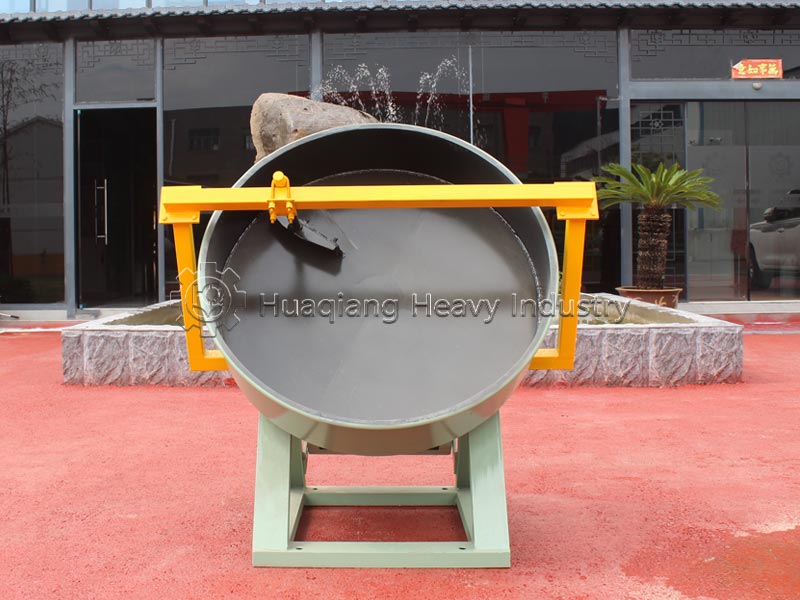
Modern fertilizer production is transforming towards high efficiency and diversification. The organic fertilizer disc granulator, as a core organic fertilizer production equipment, has become the preferred choice for small and medium-sized organic fertilizer production lines due to its simple structure, flexible operation, and wide adaptability. It is widely used in the granulation of various organic raw materials.
Its technical characteristics precisely match modern production requirements. The equipment adopts an inclined rotating disc structure, and the particle size of 2-6 mm can be precisely controlled by adjusting the rotation speed and inclination angle. The formed granules have high sphericity and uniform strength, meeting commercial fertilizer standards. It also features low energy consumption and a small footprint, eliminating the need for complex organic fertilizer production equipment. It can be used to build simple production lines or integrated into segmented processes of large-scale production lines.
Its application scenarios are diverse, adapting to the granulation needs of various organic fertilizer production lines. For conventional raw materials such as livestock and poultry manure and straw fermentation materials, it can directly granulate without excessive pre-treatment; in organic-inorganic compound fertilizer production, it can precisely mix raw materials to achieve uniform nutrient encapsulation; for special waste residues such as mushroom residue and pharmaceutical residue, it can efficiently granulate after simple pre-treatment.
The widespread application of this equipment lowers the operating threshold for small and medium-sized organic fertilizer production lines and promotes the transformation of fertilizer production towards green and low-carbon practices. As a key organic fertilizer production equipment, it maximizes the retention of nutrients in raw materials and reduces losses. The resulting organic fertilizer is suitable for planting a variety of crops, providing crucial support for the development of ecological agriculture.
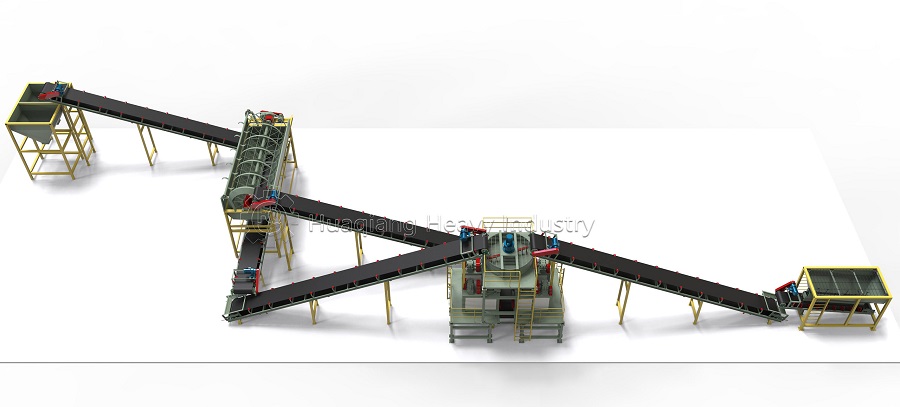
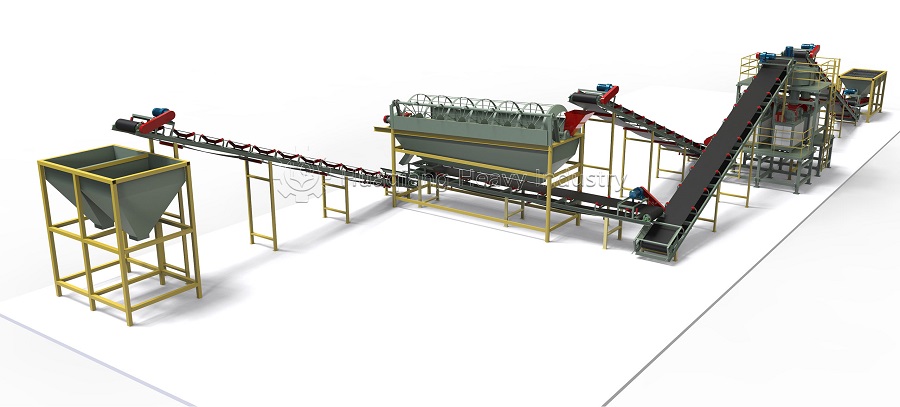
At the end of August 2025, Zhengzhou Huaqiang Heavy Industry Technology Co., Ltd.’s customized 8-ton/hour extrusion granulation production line for a Malaysian client completed full-process commissioning and officially entered the mass production stage. With its core advantages of high capacity, high precision, and low energy consumption, this production line perfectly adapts to local raw material characteristics and environmental standards. Its modular design and intelligent configuration have become a typical model for high-end extrusion granulation equipment exported overseas.
Production Line Core Configuration and Process Link
The entire production line follows a closed-loop process design of “pre-treatment – mixing – granulation – post-treatment – finished product packaging.” Each unit of equipment is precisely matched and works in synergy for high efficiency, achieving an automation level of over 90%.
Raw Material Pre-treatment and Mixing Unit
The raw material conveying system uses three belt conveyors of different specifications, respectively responsible for raw material transfer, intermediate material connection, and return material conveying. The conveyor belt width is adapted to the 8-ton/hour capacity requirement, ensuring smooth operation without material spillage, and improving conveying efficiency by 15% compared to conventional equipment.
The core mixing equipment uses two 1.2×3.0 meter twin-shaft horizontal mixers with counter-rotating blades, ensuring a mixing uniformity error of ≤3%. The equipment is equipped with a variable frequency speed control system, allowing for flexible speed adjustment based on raw material moisture content and proportions, ensuring the moisture content of the mixed materials is stably controlled within the optimal granulation range of 28%-32%.
The core granulation unit utilizes four 2.5-type double-roller extruders operating in parallel. Each machine has a capacity of 2.2 tons per hour, achieving a total designed capacity of 8 tons per hour when operating together. The rollers are made of high-chromium alloy, achieving a hardness of HRC60 or higher after quenching treatment, resulting in three times the wear resistance of ordinary materials and extending the service life to over 8000 hours.
The granulators employ a hydraulic pressure regulation system, allowing for precise control of the extrusion pressure within the range of 5-15 MPa, suitable for granulating various materials such as organic fertilizers and compound fertilizers. The roller surface features a customized serrated design, effectively enhancing material gripping force and maintaining a stable granulation rate above 92%. Particle size is uniformly controlled within 3-5mm, meeting customers’ standardized production requirements.
Post-processing and Environmental Protection Unit: The screening stage is equipped with one 1.8×6.0 meter double-layer drum screen. It employs a grading design; the upper screen separates large pieces of material, while the lower screen filters qualified particles. Unqualified material is directly returned to the mixer for regranulation via a return conveyor belt, achieving a material utilization rate of 98%.
The environmental protection system integrates a pulse-jet dust collector and exhaust gas treatment device. Through a negative pressure dust collection design, dust generated during production is collected and treated centrally, with dust emission concentration ≤10mg/m³, fully complying with local Malaysian environmental regulations. Equipment operating noise is controlled below 75dB, achieving green and low-carbon production.
Finished Product Storage and Packaging Unit:
The finished product silo has a capacity of 20 cubic meters and is equipped with a material level monitoring system to provide real-time feedback on material levels, preventing spills or shortages.
The packaging process utilizes a fully automated quantitative packaging machine. Packaging specifications can be flexibly adjusted within the range of 25-50 kg/bag, with a packaging error of ≤±0.2 kg and a packaging speed of 120 bags/hour, meeting the needs of large-scale shipments.
Core Technological Advantages of the Production Line:
Modular design is used throughout the entire process. Each equipment unit can be independently disassembled and maintained, significantly reducing downtime for maintenance and achieving an overall equipment uptime of over 95%.
An intelligent control system is adopted, integrating a PLC touchscreen operating interface. This allows for real-time monitoring of the operating parameters of each piece of equipment (speed, pressure, temperature, etc.), supports automatic fault alarms and data logging, facilitating remote management and process optimization for customers.
The overall layout of the production line is compact, requiring only 800 square meters of space, saving 20% of space compared to conventional production lines with the same capacity. Simultaneously, optimized material conveying paths shorten transfer distances, and energy consumption is reduced by 12% compared to the industry average.
The successful commissioning of this 8-ton-per-hour extrusion granulation production line once again demonstrates Huaqiang Heavy Industry’s technological strength in the field of high-end fertilizer equipment manufacturing. In the future, the company will continue to focus on equipment performance upgrades and process optimization to provide global customers with more competitive customized production line solutions.
Comparative Granulation Technologies in Fertilizer Manufacturing
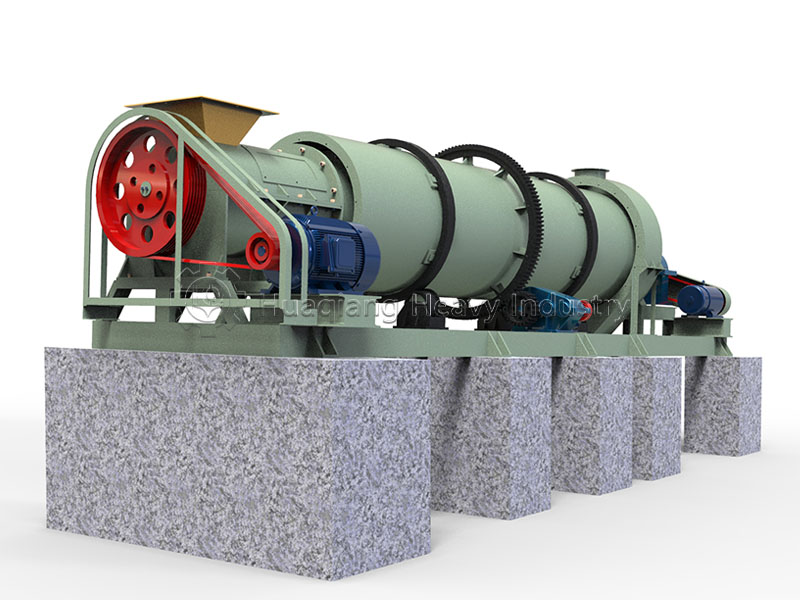
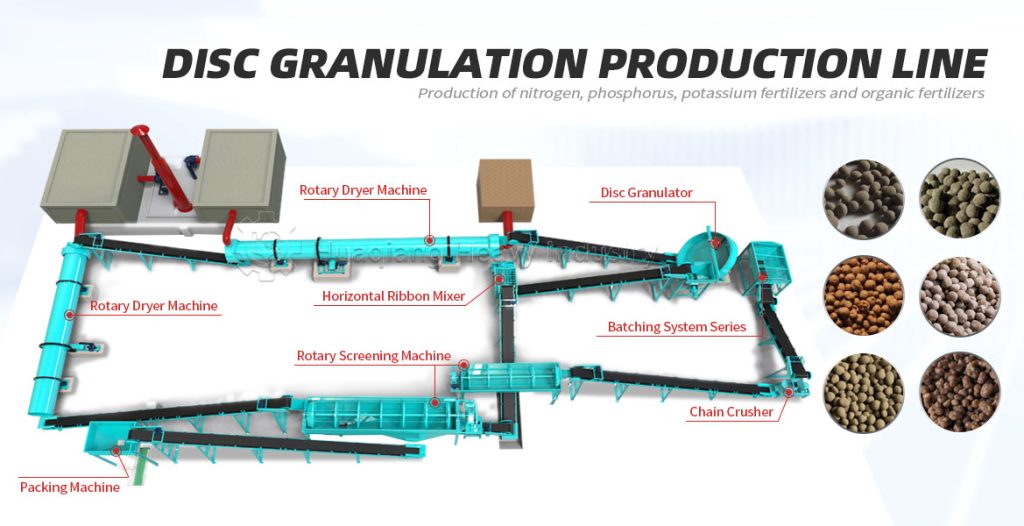
This Malaysian project highlights the efficacy of extrusion-based fertilizer compaction technology. The roller press granulator production line operates on the principle of dry fertilizer granules compaction, where the fertilizer compactor applies high pressure to form dense granules. This method is a key part of modern npk fertilizer manufacturing process and organic fertilizer manufacturing process when dealing with dry powders. In contrast, the npk manufacturing process often employs alternative technologies like the rotary drum granulator, which uses a wet agglomeration method with a liquid binder. For organic systems, a dedicated organic fertilizer disc granulation production line is common, where the disc granulator for shaping forms granules through a tumbling and layering action.
The choice of fertilizer production machine technology—be it a fertilizer compaction machine for dry compaction or a drum/disc for wet agglomeration—fundamentally shapes the entire organic fertilizer manufacturing system. Extrusion offers advantages in energy efficiency (no drying needed) and granule hardness, while rotary methods often provide higher capacity and spherical shape. The optimal selection depends on raw material properties, desired product characteristics, and overall production economics.
Therefore, a comprehensive fertilizer equipment supplier must master these diverse granulation technologies to provide truly customized solutions, matching the precise mechanical, chemical, and economic requirements of each client’s operation, whether for NPK or organic fertilizer production.
We warmly welcome people from all walks of life to visit, guide, and discuss business with us, and work together to create a new future for green agricultural development!
Disc granulation production lines, with their advantages of uniform granulation, high molding rate, and simple operation, are widely used in the production of organic fertilizers and compound fertilizers. The core requirement for raw materials is suitable viscosity and moisture content.
Organic fertilizer raw materials are the core suitable category, mainly consisting of fermented and decomposed organic materials. Common examples include fermented animal manure (chicken manure, pig manure, cow manure, etc.), which, after decomposition, has a loose texture and natural viscosity, allowing for molding without excessive binders; fermented agricultural waste is also suitable, such as crushed and fermented corn stalks, wheat stalks, and rice husks, which need to be mixed with manure-based materials to increase viscosity; in addition, industrial organic waste such as distiller’s grains, vinegar residue, and pharmaceutical residue, after pretreatment to adjust moisture content, can also be adapted to the disc granulation process.
Compound fertilizer raw materials mainly consist of inorganic fertilizers, and are compatible with various basic fertilizers and trace element fertilizers. Basic fertilizers include urea, monoammonium phosphate, diammonium phosphate, potassium chloride, potassium sulfate, etc. These raw materials need to be mixed and their moisture content adjusted to a suitable range, utilizing the centrifugal force and friction of the rotating disc granulator to achieve granulation; trace element fertilizers such as magnesium sulfate, zinc sulfate, and borax can be mixed into the basic fertilizers as auxiliary nutrient raw materials to complete granulation and improve the overall nutrient content of the fertilizer.
Auxiliary raw materials are used to optimize the granulation effect. Common examples include binders (such as bentonite and humic acid), which are added to raw materials with insufficient viscosity to improve particle strength; fillers (such as fly ash and zeolite powder) can adjust the moisture content and specific gravity of the raw materials, preventing particles from becoming too large or too small. When selecting raw materials, it is necessary to reasonably proportion the moisture content and composition of the raw materials according to the type of finished fertilizer and the requirements of the disc granulation process to ensure granulation efficiency and product quality.
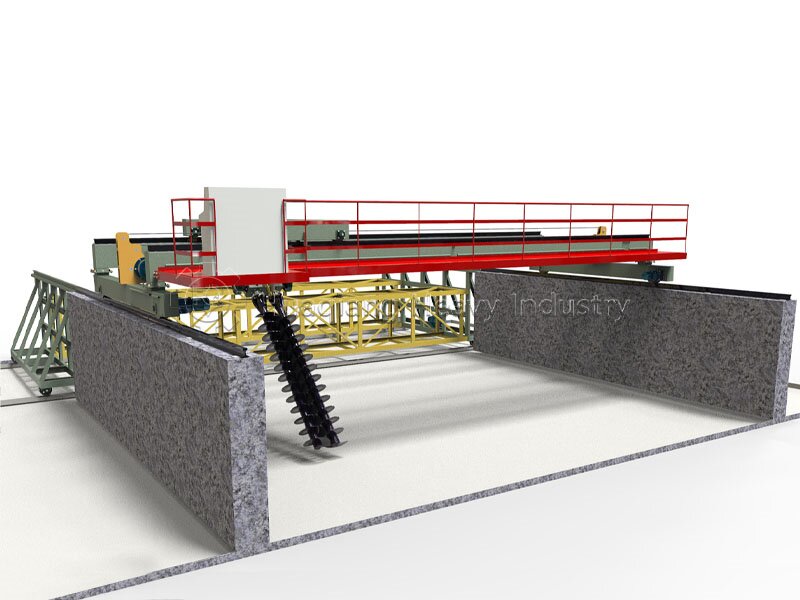
In modern composting and fermentation processes, whether the materials can achieve sufficient and uniform contact with oxygen is crucial in determining the efficiency of decomposition and the final quality. The double screws compost turning machine, with its unique design and working method, is becoming a key technological equipment to solve this core problem, providing a stable and efficient solution for large-scale organic waste treatment.
The core value of this equipment lies in its excellent mixing and homogenization effect. During the turning process, the double helix structure not only breaks up caked materials but also thoroughly exchanges and mixes the surface and bottom layers, as well as the internal and external materials. This three-dimensional mixing method allows moisture, temperature, and microorganisms to quickly become uniform within the compost pile, greatly improving the stability and controllability of the fermentation process.
In a complete organic fertilizer production line, the double screws compost turning machine is usually deployed in the core section of windrow composting or trough composting. As the “main force” in the entire organic fertilizer production equipment system, it works closely with the front-end system and the back-end discharge system, achieving continuous operation from raw material entry to the completion of primary fermentation, significantly shortening the fermentation cycle and improving site utilization and production efficiency.
With its reliable and efficient performance, the double screws compost turning machine provides a solid process guarantee for the resource utilization of organic waste and the stable production of high-quality organic fertilizer.
In organic fertilizer production lines, the core advantages of the new type organic fertilizer granulator are concentrated in its adaptability to different materials and its processing effectiveness. Compared with traditional equipment, it can precisely match organic fertilizer raw materials with different characteristics, while simultaneously preserving nutrients and maintaining product quality during processing, making it a key organic fertilizer production equipment for improving production efficiency.
Its wide range of adaptable materials is a significant feature. Whether it’s common raw materials such as livestock and poultry manure compost and straw powder, or industrial organic waste such as mushroom residue, pharmaceutical residue, and distiller’s grains, the new type organic fertilizer granulator can process them stably. For difficult-to-process materials with high humidity (30%-60%) and high fiber content, it can process them directly without complex pre-treatment, overcoming the strict limitations of traditional equipment on material humidity and fiber content.
It offers strong protection for material nutrients and active ingredients. The new equipment adopts low-temperature granulation or low-pressure molding technology, which can maximize the retention of original nutrients and biological activity in the materials. Especially for bio-organic fertilizer raw materials with added functional bacteria, it can prevent the inactivation of functional bacteria due to high temperatures, ensuring the fertilizer’s effectiveness.
The processed materials have uniform and stable quality. The new type organic fertilizer granulator, through precise control of processing parameters, ensures that the formed material particles are uniform in size, have moderate hardness, are not prone to caking, and have good solubility. This high-quality material processing effect not only facilitates subsequent packaging and storage, but also improves the uniformity of nutrient release during fertilizer application, making it suitable for various fertilization scenarios such as drip irrigation and sprinkler irrigation.
BB fertilizer, short for “Blended Bulk Fertilizer,” is a formulated fertilizer created by precisely measuring and uniformly mixing two or more single-element fertilizers (such as urea, potassium chloride, monoammonium phosphate, etc.), compound fertilizers, or micronutrient fertilizers, based on soil fertility, crop needs, and fertilization plans. Unlike traditional compound fertilizers, BB fertilizer production involves no chemical synthesis reactions. Its core advantage lies in “customization on demand and precise nutrient matching.”
The core characteristics of BB fertilizer are formula flexibility and targeted nutrient delivery. Soil fertility varies greatly in different regions, and different crops have different nutrient requirements at different growth stages. BB fertilizer can adjust the ratio of nitrogen, phosphorus, potassium, and micronutrients according to specific needs. For example, the proportion of potassium chloride can be increased for orchards deficient in potassium. Furthermore, its nutrient distribution is intuitive, with each raw material particle retaining its original characteristics, thus avoiding problems of excessive or deficient single nutrients after application.
The simple and precise production process is key to the widespread adoption of BB fertilizer. Production relies on fertilizer mixers and precise metering equipment, without the need for complex chemical reaction devices: first, various raw materials are screened to remove impurities and ensure uniform particle size; then, they are precisely weighed according to the formula using a metering system; finally, they are sent to a BB fertilizer mixer for thorough mixing. Once the mixing uniformity meets the standards, it can be packaged and shipped. Compared to compound fertilizer production, BB fertilizer production lines(NPK blending fertilizer production lines) have lower investment costs, simplified processes, and can achieve flexible production of small batches and multiple formulas.
In terms of application, BB fertilizer has wide applicability and is easy to use. It can be applied in various ways, such as broadcasting, banding, or spot application, according to crop needs, and can also be used in combination with organic fertilizers to improve fertilizer efficiency; it also reduces fertilizer waste and lowers planting costs, making it particularly suitable for the personalized fertilization needs of large-scale planting bases.
15-15-15 compound fertilizer is a balanced NPK compound fertilizer with 15% nitrogen, 15% phosphorus, and 15% potassium. Its precise ratio relies on the NPK fertilizer production line: nitrogen, phosphorus, and potassium raw materials are thoroughly mixed in a fertilizer mixer machine and then formed into granules by an NPK fertilizer granulator. This fertilizer has a wide range of applications and is a commonly used general-purpose fertilizer in agriculture.
Precise application matching is key. It is suitable for the entire growth period of most field crops, especially meeting the nutrient needs from the seedling stage to the tillering stage; it can also be used during the growth period of fruits and vegetables, balancing leaf and branch growth with flowering and fruiting. However, it should be noted that for crops that prefer nitrogen or potassium (such as leafy vegetables and potatoes), single-nutrient fertilizers should be supplemented according to the growth stage.
Scientific application methods fall into two categories: base fertilizer can be applied during land preparation before sowing/transplanting, at a rate of 25-35 kg per mu, spread and then plowed into the soil; topdressing should be done in stages, 10-15 kg per mu each time, applied in furrows or holes and covered with soil to prevent nutrient volatilization from surface application.
Key precautions: First, do not mix it with uncomposted organic fertilizers to prevent ammonia gas from burning the roots; second, avoid excessive application to prevent soil compaction and water eutrophication; third, irrigate promptly after application in paddy fields, and water moderately after application in dry land to promote dissolution; fourth, store away from humid environments to prevent caking, especially protecting the integrity of the finished granules to avoid damaging their stable structure formed by the NPK fertilizer granulator machine.
The core advantage of 15-15-15 compound fertilizer is its balanced and general-purpose nature. Scientific selection and application can fully utilize its fertilizer efficiency, meeting most planting needs and contributing to high-quality and high-yield crops.