High-efficiency crushing equipment boosts fertilizer production and solves material processing challenges

In fertilizer production, material crushing is one of the key steps. Whether it’s bio-organic fertilizer or NPK compound fertilizer, raw materials need to be crushed to a uniform particle size to ensure the smooth operation of subsequent granulation and mixing processes.

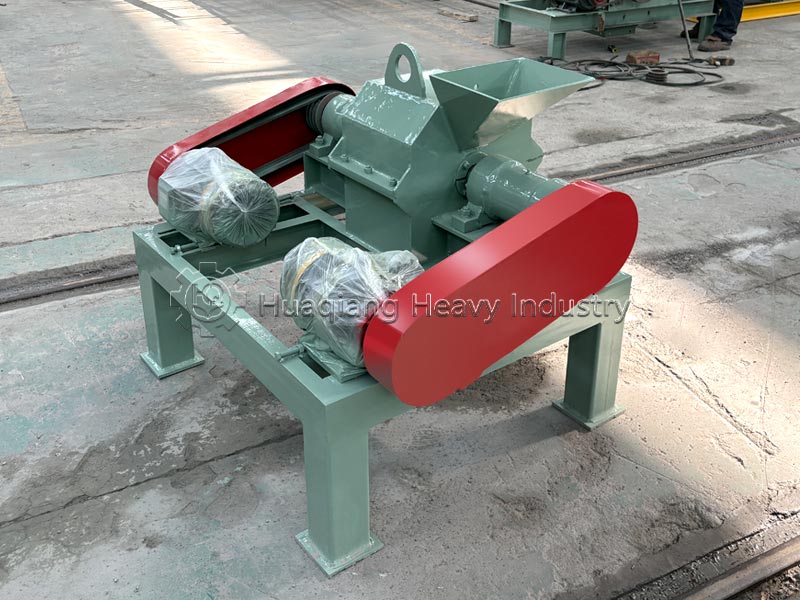
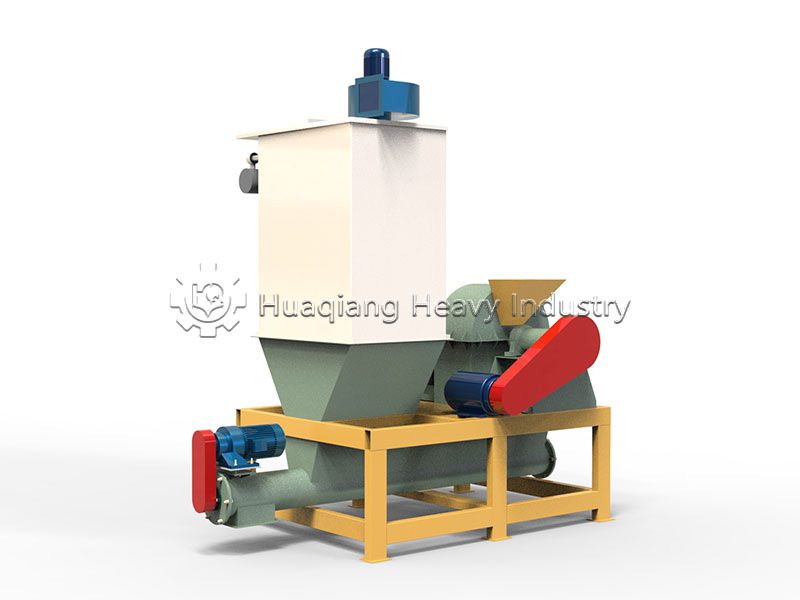
When it comes to high-efficiency crushing equipment, cage crushers are undoubtedly a popular choice. As a typical fertilizer crusher, its unique cage-type rotor design easily handles high-hardness and high-moisture materials—such as organic waste with high water content. Its high-speed rotating cage bars, combined with wear-resistant crushing teeth, can quickly crush materials, and by adjusting the gap between the rotor and the fixed crushing plate, it can precisely control the output particle size, ensuring uniform particle size after crushing and meeting the needs of different fertilizer production lines.

In addition to cage crushers, other crushing equipment is also used in fertilizer production depending on the characteristics of the raw materials. When processing biomass raw materials such as straw and rice straw, straw crushers can crush the raw materials into fine fibers, facilitating microbial decomposition and fermentation; for half-wet organic materials, half-wet material crushers can prevent material sticking and clogging, maintaining stable crushing efficiency; while chain crushers and horizontal crushers are suitable for medium-hardness fertilizer raw materials, flexibly adapting to different production scenarios.

Today, with the large-scale development of bio-organic fertilizer production line and NPK fertilizer production line, the adaptability of crushing equipment is constantly improving. The right crushing equipment can become a powerful “assistant” in fertilizer production, helping companies improve product quality and expand production scale.

A complete analysis of the application fields of cage crusher

Due to their unique pulverizing mechanism and outstanding performance, cage crushers play an indispensable role in numerous industries and have a wide range of applications.

In the building materials industry, brick and tile factories often use cage grinders to process soft and brittle materials such as shale, industrial slag, and dry clay. After these materials are crushed by cage grinders, a high proportion of fine powder particles is produced, which is crucial for brick forming.

The chemical industry is also an important application for cage crushers. They can grind medium-hard chemical raw materials such as ammonium chloride and ammonium sulfate, ensuring that these raw materials can fully participate in subsequent chemical reactions, thereby improving the production efficiency and quality of chemical products.

In compound fertilizer production, cage crushers are also indispensable for the pulverization of fertilizer raw materials such as urea. This pulverization of raw materials like urea facilitates the even release of nutrients in the fertilizer, enhancing its effectiveness.

In addition, in the production of organic fertilizers, cage crushers can crush organic waste such as sheep manure and straw, so that these wastes can better participate in the fermentation process and be converted into high-quality organic fertilizers, providing a green and environmentally friendly source of fertilizers for agricultural production, helping to improve soil and the healthy growth of crops.

Cage Crusher: The Ultimate Solution for Hard Fertilizers

In the field of fertilizer size reduction, the cage crusher stands as a master blacksmith among fertilizer equipment. This robust fertilizer machine wields its dual-rotation cages like hammers, expertly designed to tame the most stubborn materials. Whether crushing rock-hard MAP/DAP or breaking apart caking-prone urea, this essential fertilizer production machine effortlessly transforms hardened granules into a uniform, valuable powder, ensuring optimal quality and efficiency in any production line.

The Philosophy of Counter-Rotating Cages

Dual Rotation

Outer cage rotates clockwise while inner cage spins counterclockwise, creating 60-80m/s relative shear forces

Multi-Stage Impact

Materials endure 10-15 crushing cycles between high-speed steel bars

Dynamic Classification

Properly sized powder exits through cage gaps, preventing over-grinding waste

Self-Cleaning

Centrifugal force automatically removes adhered materials

“Traditional crushers wear out quickly processing MAP—requiring monthly hammer replacement—while our cage crusher’s alloy bars last 2000 hours, reducing maintenance costs by 70%. This is the economic solution for hard fertilizer crushing.” — Equipment Supervisor, Compound Fertilizer Plant

Four Unmatched Advantages

AdvantageTechnologyValue
Hard Material SpecialistSpecial alloy bars + high-speed designCrushes mineral fertilizers ≤Mohs 5 hardness
Uniform FinenessDual counter-rotation + dynamic grading90% product in ideal 0.2-0.5mm range
Energy EfficientPrecise impact replaces full-power grinding30-40% energy saving vs traditional models
Low-Dust OperationFully enclosed structure + negative pressureWorkspace dust ≤10mg/m³

Typical Applications

  • High-hardness Fertilizers: Pre-processing MAP, DAP, CAN etc.
  • Compound Fertilizer Rejects: Re-crushing off-spec granules
  • Organic-Mineral Blends: Ensuring particle size compatibility
  • Specialty Fertilizers: Providing base powder for CRFs

Within a complete suite of equipment required for biofertilizer production, the cage crusher plays a vital preparatory role. This robust machine is tasked with the primary size reduction of organic raw materials, ensuring a uniform, fine powder. This optimal particle size is critical for the subsequent mixing, composting, and granulation stages, making the cage crusher a fundamental piece of equipment for efficient and high-quality biofertilizer manufacturing.