Drum fertilizer dryer: The logic of “Efficient Dehydration” for high-moisture fertilizers

In fertilizer production, high-moisture raw materials (such as fermented organic fertilizers and wet materials after compound fertilizer granulation) are prone to caking and mold if not dried promptly, affecting product quality and storage life. Drum fertilizer dryers, with their “continuous drying + uniform heating” characteristics, have become a core dehydration equipment in the fertilizer industry. Their operating principle is precisely adapted to the characteristics of fertilizer raw materials.

The core structure of a drum fertilizer dryer is an inclined rotating drum equipped with a heating system and a discharge device. During operation, high-moisture fertilizer (30%-50% moisture content) enters the drum through the high-end feed port. The motor drives the drum to slowly rotate, continuously turning the material and moving it forward. Simultaneously, the high-temperature hot air generated by the heating system fully contacts the material, rapidly removing moisture from the material through a dual heat transfer process of “convection and conduction.”

To prevent fertilizer clumping, a lifting plate is often installed inside the drum. This plate continuously lifts and drops the material, increasing the heating surface and ensuring uniform drying of each portion. The drum’s tilt angle is adjustable to control the material’s residence time within the drum, thereby precisely controlling the moisture content after drying. The entire process is continuous and stable, suitable for the mass production needs of organic fertilizer production lines. The dried material is loose and free of lumps, eliminating the need for secondary crushing.

Common troubleshooting and solutions for double screws compost turning machines

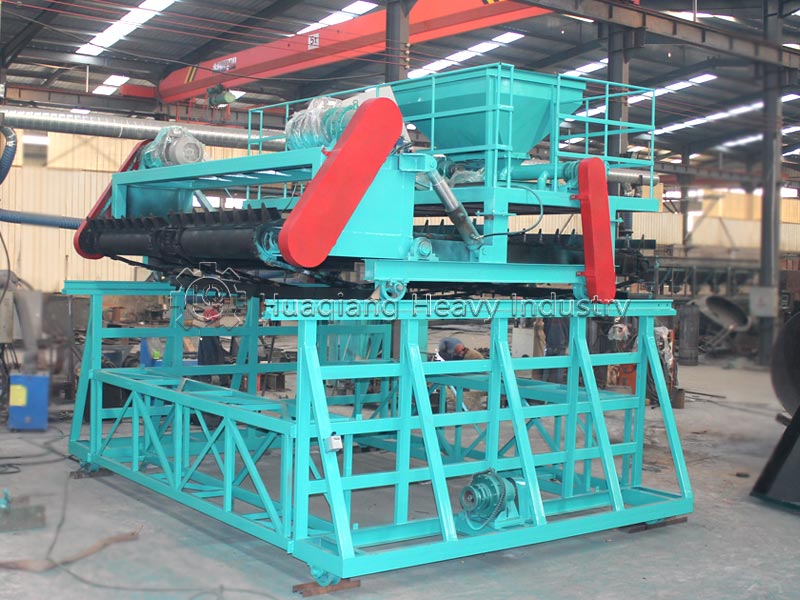
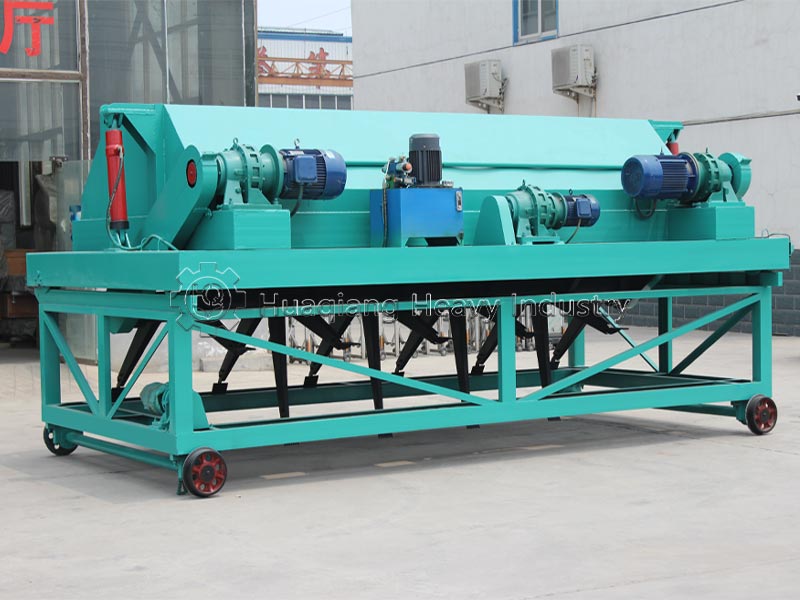
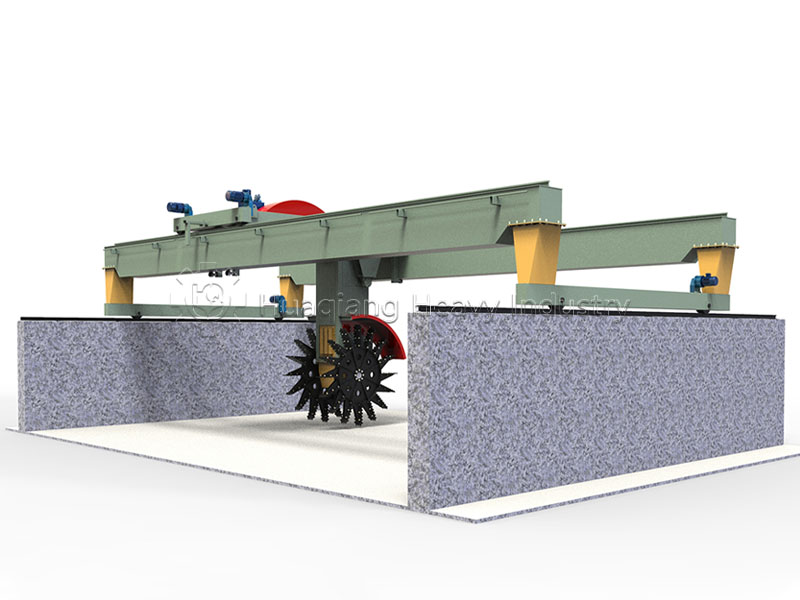
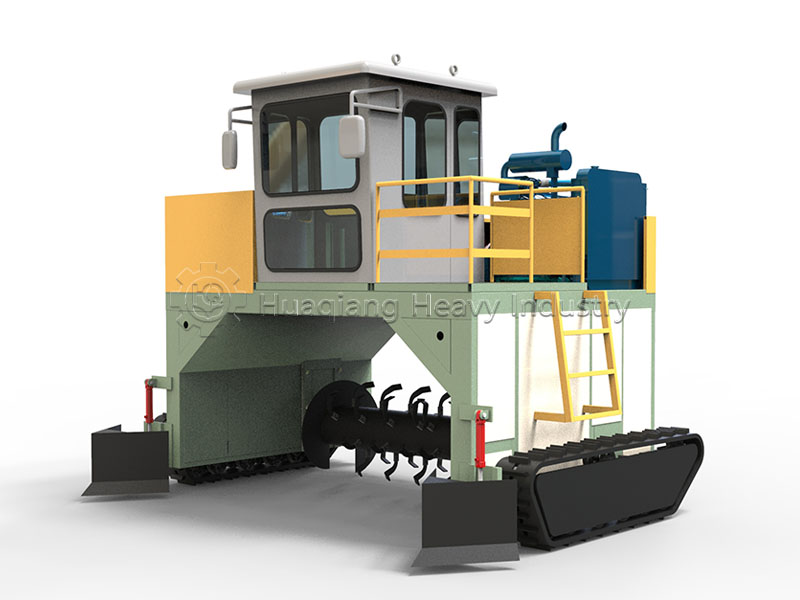
Double screws compost turning machines operate frequently in organic fertilizer fermentation workshops. Improper operation or untimely maintenance can easily lead to problems such as uneven turning, insufficient power, and equipment jamming, impacting fermentation progress.

1.Dead corners remain after turning, and some areas remain uncomposted

The main cause is excessive clearance between the spiral blades and the sidewalls of the fermentation tank (over 10 cm), or the double screws compost turning machine is moving too fast, preventing material from being turned over the edges. To address this, adjust the position of the spiral blades to reduce the clearance to within 5 cm. Also, reduce the double screws compost turning machine’s speed to ensure that every area is thoroughly turned.

2.Motor overload and tripping, insufficient power

This is often caused by excessive moisture content (over 70%) in the raw materials, resulting in increased friction on the spiral blades due to high viscosity, or by large impurities in the raw materials that may be blocking the blades. To address this, adjust the moisture content of the raw materials to 60%-65% before clearing impurities from the fermentation tank. If the compost tank is frequently overloaded, check the tightness of the motor belt and tighten or replace it.

3.Rapid wear of spiral blades, reducing turning capacity

This is primarily due to the presence of hard impurities (such as sand and gravel) in the raw materials, or the blade material not being suitable for wear resistance. To address this, install a screen to filter out hard particles before the raw materials arrive. Regularly inspect the blades for wear. If the blade thickness has decreased by 1/3 or cracks appear, replace them promptly.

Flat die pelleting machine: Protecting the activity of microbial agents in low-temperature granulation

The core challenge in biofertilizer production lies in ensuring that the granulation process does not destroy the activity of the microbial agent. Most functional bacteria (such as Bacillus subtilis and Trichoderma harzianum) are significantly inactivated at temperatures above 45°C. The flat die pelleting machine, with its low-temperature granulation capabilities, is a suitable choice for biofertilizer production. Its core advantage lies in its low-friction, no-additional-heat granulation process.

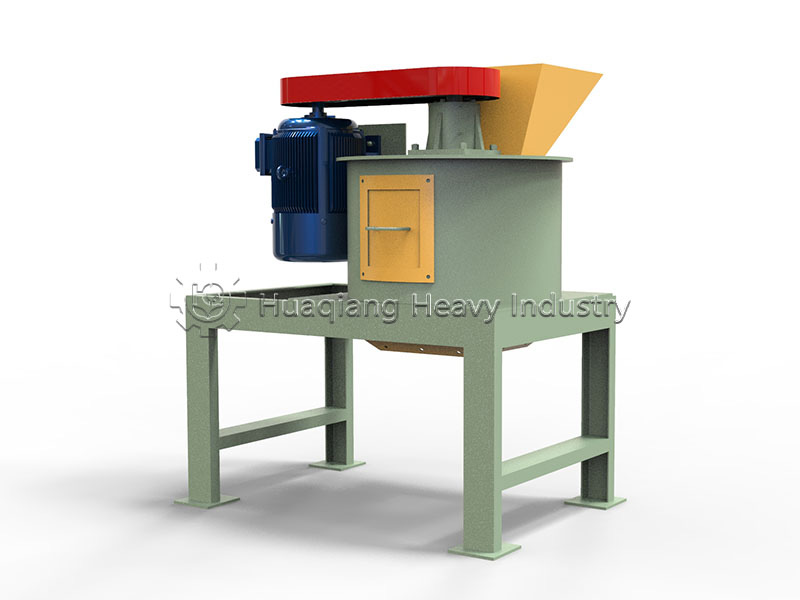
The flat die pelleting machine utilizes a vertical extrusion process, with the rollers and the die in contact with each other over a surface area rather than at points. This results in more uniform force per unit area, less frictional heat generation, and a temperature within the granulation chamber typically maintained at 35-40°C, well below the inactivation threshold of the microbial agent.

Furthermore, the machine does not rely on high-temperature conditioning or hot air conditioning; instead, it achieves granulation solely through the viscosity of the raw material and moderate extrusion, eliminating the need for additional heat input.

Furthermore, the flat die granulator’s speed is adjustable (typically 30-50 rpm). For biofertilizer raw materials with high microbial content, the speed can be reduced to below 30 rpm to further reduce frictional heat generation and ensure a microbial survival rate above 85%.

In practical applications, it is even more effective when used with a “room-temperature binder.” This eliminates the need for heating and dissolving the pellets, while also improving the pelletizing efficiency and complementing the flat die pelleting machine‘s low-temperature characteristics. This ensures the biofertilizer’s core function (microbial activity) while producing uniform pellets, meeting the dual requirements of “functionality” and “commerciality.”

Precautions for Using a Compost Turning Machine

As a core piece of equipment for material fermentation in an organic fertilizer production line, the proper use of a compost turning machine directly impacts production safety and fermentation efficiency. During daily operation, equipment inspection and parameter adjustment must be thoroughly monitored to ensure maximum performance.

A thorough pre-startup inspection is the first line of defense for safe operation. Check the tracks or running wheels for deviation and bolt connections for looseness. In particular, check for breakage or excessive wear on the turning blade assembly to prevent blades from falling off and causing damage to the equipment during operation. Also, clear the fermentation tank of hard objects such as rocks and metal to prevent them from becoming entangled in the turning mechanism and causing it to jam. Electrical system inspection is essential. Ensure cables are intact and grounding is reliable. Install a waterproof cover during rainy weather to prevent electrical leakage.

Parameter adjustment during operation is crucial for ensuring fermentation quality. Dynamically adjust the turning depth and frequency based on the material’s characteristics: High-protein materials like fresh livestock and poultry manure require more frequent turning to ensure ventilation and oxygen supply to prevent anaerobic decay. Crude fiber materials like straw can be turned more deeply to promote even mixing. The turning speed should be matched to the material’s moisture content. If the moisture content is too high, slow the turning speed to reduce clumping. Dry materials can be turned faster to improve efficiency.

Post-downtime maintenance determines the lifespan of the equipment.After each run, clean the blades and trough to prevent caking and compaction, which increases the load at the next start-up. Regularly lubricate bearings, chains, and other transmission components, and promptly replace severely worn parts. When the equipment is idle for extended periods, it should be stored in a dry location, the blades should be coated with anti-rust oil, and the electrical system should be disconnected from the power supply and dust-proofed.

Proper operation of a compost turning machine is not only essential for ensuring production safety, but also a scientific approach to improving fermentation efficiency and reducing operational costs, laying a solid foundation for the resource utilization of organic waste.