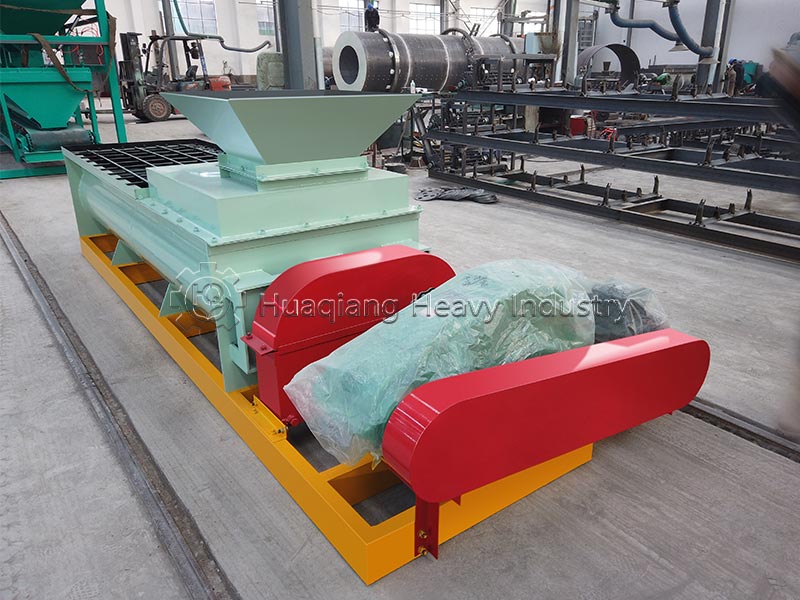
Comparison of fertilizer mixer selection: Double axis paddle mixers vs. Horizontal ribbon mixers

Double axis paddle mixers and horizontal ribbon mixers are commonly used raw material mixing equipment in the production of organic fertilizers and NPK compound fertilizers, both suitable for the pretreatment stage before fertilizer granulation. Due to structural differences, they differ significantly in their suitable application scenarios and mixing effects. Choosing the right model based on the NPK fertilizer production line capacity and raw material characteristics can improve granulation efficiency and facilitate the implementation of NPK compound fertilizer granulation technology.

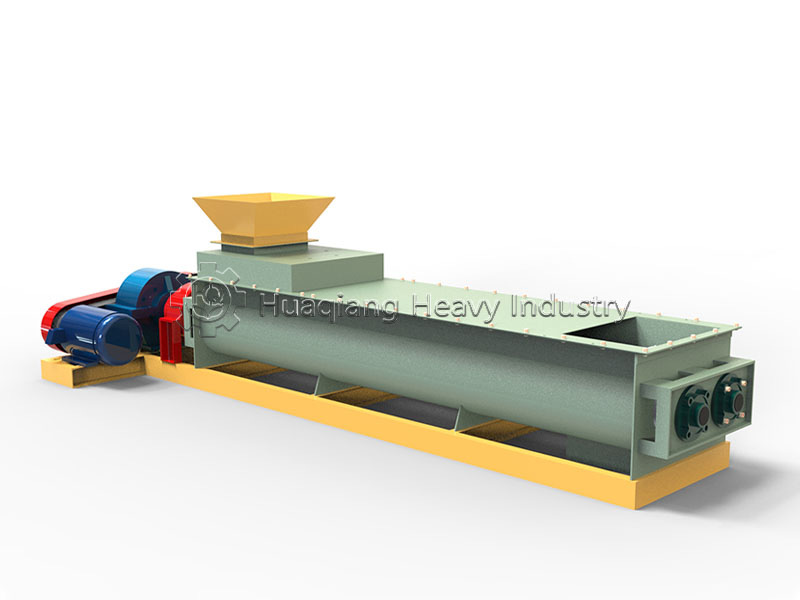
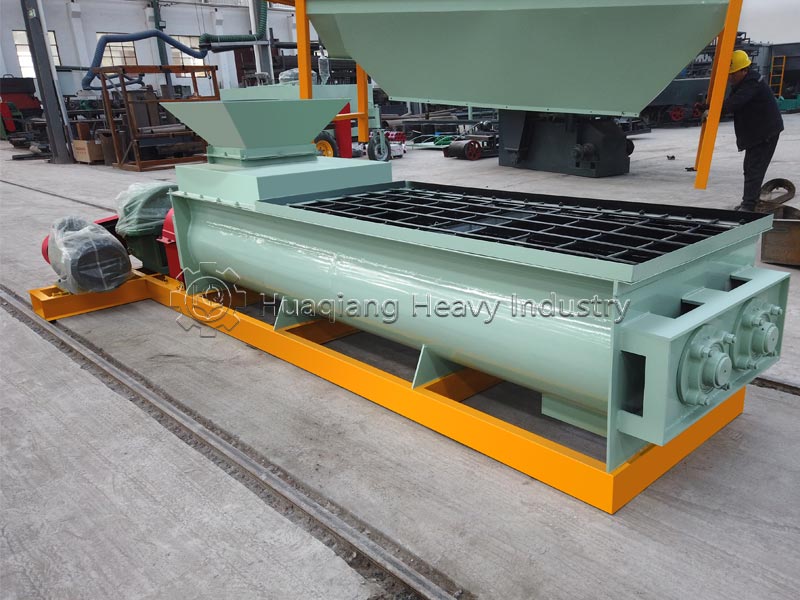
Performance and Mixing Effect: Double axis paddle mixers use a staggered blade design, providing strong and fast mixing force. They are suitable for high-humidity and high-viscosity raw materials, achieving a mixing uniformity of over 95% with no dead corners, making them suitable for large-scale production lines. Horizontal ribbon mixers rely on a spiral belt for mixing, providing gentler force. They are more suitable for dry powder raw materials, but have a slower mixing speed and slightly lower uniformity, making them suitable for small and medium-sized plants or auxiliary material mixing.
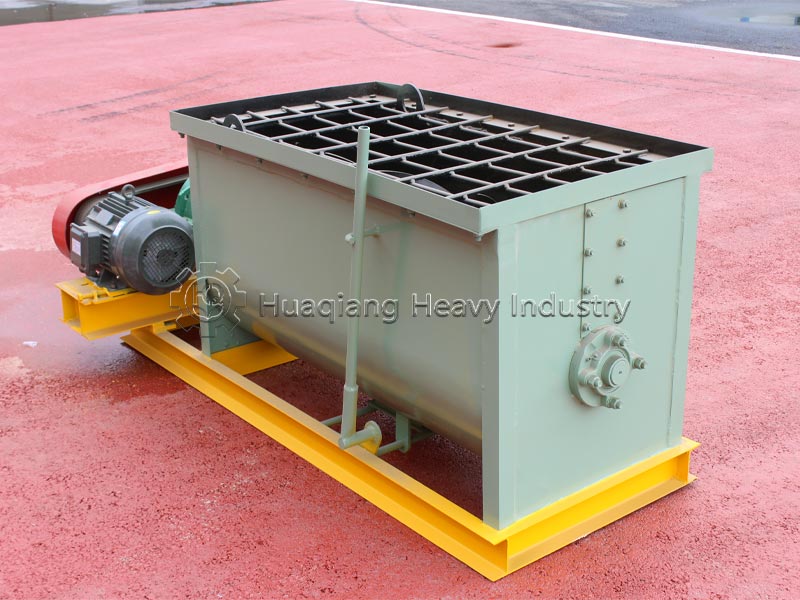
Energy Consumption and Maintenance: Double axis paddle mixers offer strong power but slightly higher energy consumption. However, their simple structure, wear-resistant and easily replaceable paddles make them suitable for continuous production, and their efficiency is even higher when linked with NPK fertilizer production lines. Horizontal ribbon mixers have lower energy consumption, but the spiral belt is prone to tangling with raw materials, making cleaning and maintenance more complicated. They are more suitable for intermittent production, but their maintenance costs are higher.

Selection Recommendations: For large-scale organic fertilizer and NPK compound fertilizer plants that process high-moisture raw materials and use fertilizer granulators for continuous production, double axis paddle mixers are the preferred choice. For small and medium-sized plants that process dry powder raw materials or do not have high uniformity requirements, horizontal ribbon mixers can be selected, balancing cost-effectiveness.
Organic fertilizer plant selection guide: How to choose the right fertilizer mixer?

The fertilizer mixer is a core piece of equipment in organic fertilizer production, directly determining the uniformity of raw material mixing and the quality of the finished product. Selecting a mixer for an organic fertilizer plant requires adhering to three key principles: suitability for raw materials, matching production capacity, and durability. By considering your scale and raw material characteristics, you can avoid pitfalls, improve efficiency, and reduce operating and maintenance costs.

Suitability for raw material characteristics is crucial. Organic fertilizer raw materials are often high-moisture, high-viscosity animal manure, straw, etc., requiring a mixer with sufficient mixing power and anti-sticking capabilities. Double axis paddle mixers offer optimal adaptability, efficiently handling high-moisture raw materials and preventing wall adhesion and clumping, making them suitable for mixing composted organic fertilizers and composite raw materials. Smaller plants processing dry powder additives can opt for horizontal ribbon mixers, balancing performance and cost-effectiveness.

Matching production capacity and automation needs is also important. Large-scale manufacturers can integrate the mixer with NPK fertilizer production lines or organic fertilizer granulation lines, using continuous mixers for uninterrupted mixing and increased production efficiency. Small and medium-sized manufacturers can choose intermittent mixers for flexible batch processing and lower equipment investment.

Durability and ease of maintenance should also be considered. Prioritize equipment with corrosion-resistant bodies and wear-resistant paddles to suit the characteristics of organic fertilizer raw materials. Also, choose mixers with simple structures and easy cleaning to reduce residue and lower maintenance costs.

In summary, organic fertilizer plants should base their selection on raw materials and production capacity, prioritizing suitability and durability. Choosing the right mixer according to your needs will maximize its efficiency and ensure stable organic fertilizer quality.

Guidelines for large-scale production of bio-organic fertilizer: Key to high-efficiency mass production

The core of large-scale bio-organic fertilizer production is achieving “resource utilization of raw materials, standardized processes, mechanized equipment, and controllable quality.” This requires relying on complete sets of equipment and scientific processes, balancing mass production efficiency and fertilizer activity. The core processes and key points are as follows:

Step 1: Raw Material Pre-treatment and Proportioning: Collect livestock and poultry manure, crop straw, and other raw materials in batches. After crushing and screening to remove impurities, the materials are precisely mixed using a double axis paddle mixer according to a carbon-nitrogen ratio of 25-30:1 and a moisture content of 55%-60%, laying a solid foundation for microbial fermentation.

Step 2: Microbial Activation and High-Temperature Fermentation: Select high-efficiency microbial strains such as Bacillus subtilis, activate and expand them, and then mix them into the raw materials. Regular turning is performed using a compost turning machine, controlling the temperature at 55-65℃ and the pH value at 6.5-7.5. Fermentation takes 7-15 days to ensure thorough decomposition, kill pathogens, and preserve microbial activity. This is the core of the production process.

Step 3: Post-treatment and Granulation: The fermented material is dried at low temperature (moisture content ≤20%), crushed, and screened. Granulation is then performed using a double roller press granulator, balancing efficiency and microbial activity while avoiding high-temperature damage.

Step 4: Testing and Storage: The finished product is tested for indicators such as organic matter and effective viable bacteria count. After meeting the standards, it is packaged and stored. Storage requires ventilation, dryness, and protection from light and moisture. The entire process relies on a complete set of bio-organic fertilizer equipment to achieve continuous mass production.

In summary, the key to large-scale production is precise raw material proportioning, controllable fermentation, and coordinated equipment, ensuring both mass production and fertilizer quality, contributing to green and circular development in agriculture.

A comprehensive analysis of common compound fertilizer production processes

Compound fertilizer production processes are diverse, with core differences focusing on raw material processing, granulation methods, and energy consumption control. Different processes are suited to different fertilizer types and production capacity requirements. The following outlines the core characteristics and application scenarios of four major processes, providing a reference for production selection.

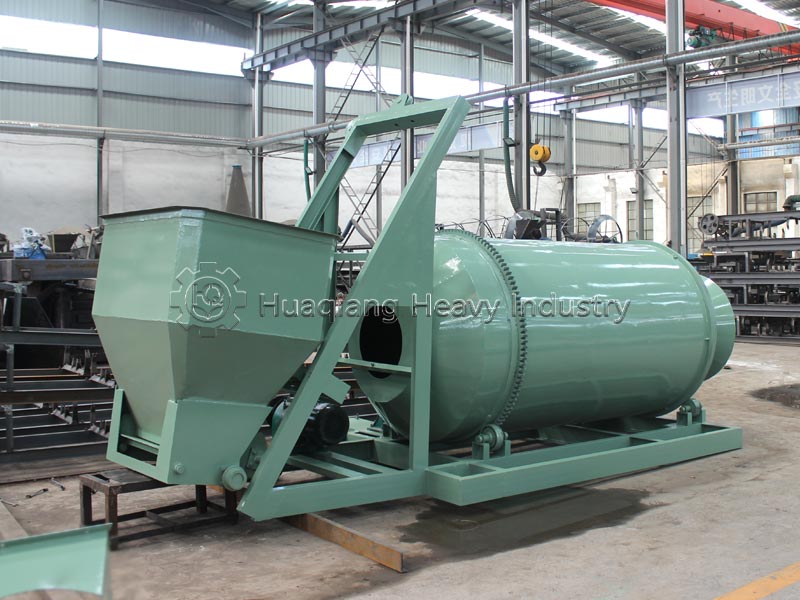
Rotary drum granulation is a traditional mainstream wet process. Raw materials are sprayed, mixed, and granulated in a rotary drum, followed by drying, cooling, and screening to complete production. Its advantages include high production capacity and uniform granules, making it suitable for general-purpose NPK compound fertilizers; its disadvantages include high energy consumption and strict control over raw material moisture content.

Spray granulation emphasizes high efficiency and integration. The raw material slurry is directly sprayed into a granulation tower, where it is rapidly dried and formed by hot air, without the need for additional mixing. It offers uniform nutrient distribution and high efficiency, making it suitable for large-scale production of high-concentration compound fertilizers, but it requires high equipment investment and has stringent requirements for slurry viscosity.

Dry extrusion granulation is an environmentally friendly and energy-saving process. Dry raw materials are directly pressed into shape using a double roller press granulator, eliminating the need for water addition and drying. Energy consumption is more than 30% lower than wet processes, and there is no wastewater or exhaust gas. It is suitable for various raw materials and small-to-medium-scale environmentally friendly production, although the granule strength is slightly lower.

Blending granulation focuses on flexibility. Single fertilizers are mixed according to the formula using a double axis paddle mixer, and then granulated or made into BB fertilizer as needed. It offers flexible formulations and convenient product changes, making it suitable for customized production, but it requires high consistency in raw material particle size.

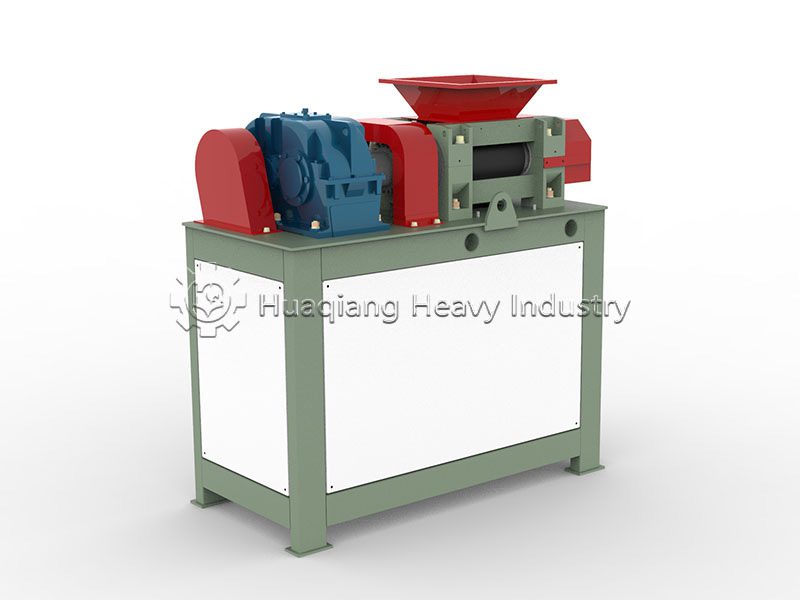
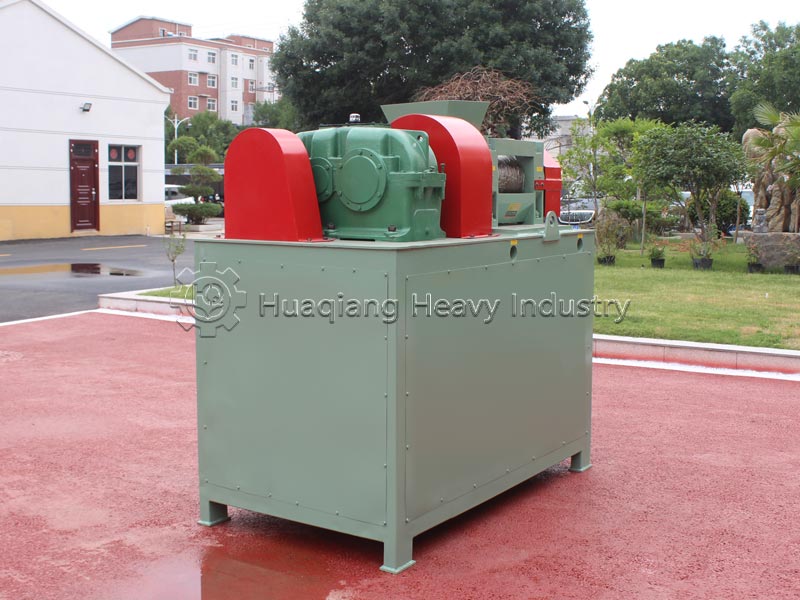
Double roller press granulator: The preferred solution for dry granulation of potassium sulfate

Potassium sulfate (SOP) is a high-quality, chlorine-free potassium fertilizer widely applicable to chlorine-sensitive crops such as tobacco and fruits and vegetables. However, its hygroscopic and highly crystalline properties place extremely high demands on the granulation process. Double roller press dry granulation technology, with its advantages of no drying, low energy consumption, and high purity retention, has become an ideal solution for potassium sulfate granulation.

Potassium sulfate raw materials need to be screened by a fertilizer screener machine to remove impurities and dried at low temperature, controlling the moisture content to 2%-5% to prevent sticking to the roller surface during granulation. The double roller press granulator, by adjusting the 8-15MPa pressure and speed of the rollers, directly extrudes the dry powder into granules, requiring minimal binders, maximizing the preservation of SOP purity, and avoiding the moisture absorption and alkali return problems associated with wet granulation.

This process eliminates the need for high-temperature drying, reducing energy consumption by over 40%, and produces no wastewater or exhaust gas emissions, meeting environmental protection requirements. The granulated particles have a compressive strength ≥15N, uniform strength, and are not easily pulverized, making them suitable for mechanized fertilization and long-distance transportation, while also allowing for controllable dissolution rates.

The equipment can process potassium sulfate granules independently or be used in conjunction with a double axis paddle mixer to add micronutrients to create compound potassium sulfate fertilizer, flexibly adapting to different formulations. It is simple to operate and easy to change production lines, meeting the needs of large-scale production by large enterprises as well as batch processing by small and medium-sized workshops.

In summary, the double roller press granulator is precisely adapted to the characteristics of potassium sulfate, empowering the industrialization of potassium sulfate fertilizer and helping chlorine-sensitive crops to accurately supplement potassium, improve quality, and increase yield.

Double axis paddle mixers: The “efficiency champion” of fertilizer mixing

With their symmetrical, staggered paddle structure, double axis paddle mixers play an irreplaceable role in fertilizer mixing production. Adaptable to diverse applications such as BB fertilizers, organic fertilizers, and compound fertilizers, they are core equipment for high-quality fertilizer production.

Strong convection mixing, balancing uniformity and efficiency. The twin shafts rotate in opposite directions, and the staggered paddles create a multi-dimensional convection field, rapidly blending raw materials with different specific gravities and particle sizes. The mixing uniformity far surpasses that of single-shaft equipment, and the nutrient variation coefficient can be controlled within 3%. The mixing cycle is shortened by more than 40%, meeting the batch processing needs of NPK fertilizer production lines and significantly increasing overall capacity.

Outstanding adaptability, solving complex raw material challenges. Compared to ordinary fertilizer mixers, it can easily handle high-humidity, highly viscous raw materials (such as well-rotted organic fertilizers and sludge-based fertilizers). The special angle design of the paddles prevents adhesion to the walls and does not damage the properties of the granular raw materials. In BB fertilizer production, it can achieve uniform mixing of dry powder and small amounts of additives, ensuring precise formulation.

Low-loss and energy-saving, suitable for large-scale production. The extremely small gap between the impeller and the machine cavity results in minimal raw material residue and a material utilization rate exceeding 98%. The dual-shaft coordinated operation saves approximately 25% more energy than traditional equipment. It can also seamlessly integrate with screening and granulation equipment, achieving integrated mixing and pretreatment, simplifying the process.

In summary, the double shaft paddle mixer, with its structural advantages and high efficiency, versatility, and low consumption, has become a powerful tool in fertilizer mixing, stably ensuring fertilizer quality and helping fertilizer production upgrade towards higher efficiency and precision.

NPK blending fertilizer production line: Can it meet the market demand for balanced fertilizers?

Against the backdrop of green transformation in agriculture, the market demand for balanced fertilizers has shifted from “general-purpose” to “precisely tailored,” with the core requirement being a precise match between nutrient ratios and soil and crop needs, while also accommodating flexible production of small batches and multiple formulations. The NPK blending fertilizer production line, with its unique technical characteristics, has become a core vehicle for meeting this demand.

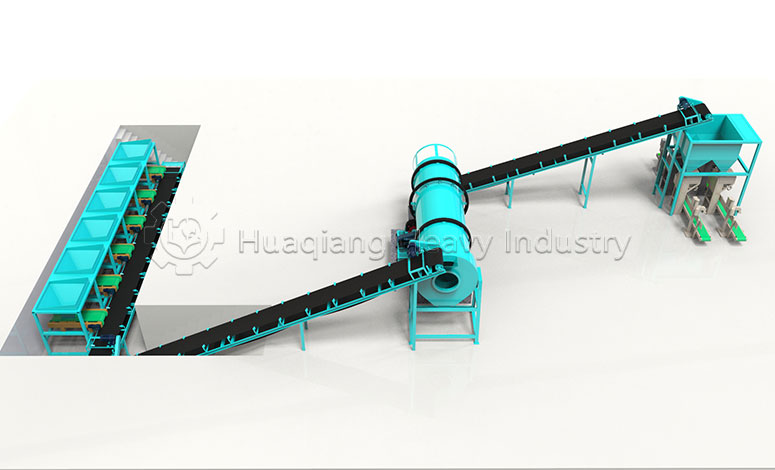
Precise Proportional Mixing Capability: The key to balanced fertilizers is the balance of nitrogen, phosphorus, potassium, and micronutrients. The automatic precision batching system of the NPK blending fertilizer production line can achieve a mixing accuracy of 0.1%, producing not only general formulas such as 15-15-15, but also customized formulas based on soil test data, such as high-potassium balanced fertilizers for potassium-deficient orchards.

Adaptability to Diversified Needs: Currently, large-scale farms and scattered smallholder farmers coexist, resulting in significant differences in the demand for balanced fertilizers. The NPK blending fertilizer production line can flexibly switch formulas and can handle small batch orders as low as 10 tons, meeting the concentrated fertilizer needs of large cooperatives and also accommodating personalized orders from individual farmers.

Efficient Collaborative Capability: The production line uses a double axis paddle mixer or a BB fertilizer mixer to achieve uniform mixing of raw materials, avoiding nutrient imbalance.  Combined with subsequent screening and testing processes, it ensures uniform granule size and nutrient content of the finished product. Its simplified process and rapid commissioning advantages allow it to quickly respond to the demand for new types of balanced fertilizers.

In summary, the NPK blending fertilizer production line, with its core advantages of precise proportioning, flexible production, and efficient collaboration, can fully meet the diversified and precise needs of the market for balanced fertilizers.

Analysis of key factors for efficient operation of disc granulation production lines

The efficient and stable operation of a disc granulation production line hinges on the precise coordination of equipment at each stage. The large-diameter large wheel compost turning machine, double axis paddle mixer, and disc granulator form the core linkage chain, directly determining the quality of raw material composting, mixing uniformity, and granule formation. These are crucial for increasing production capacity and product quality.

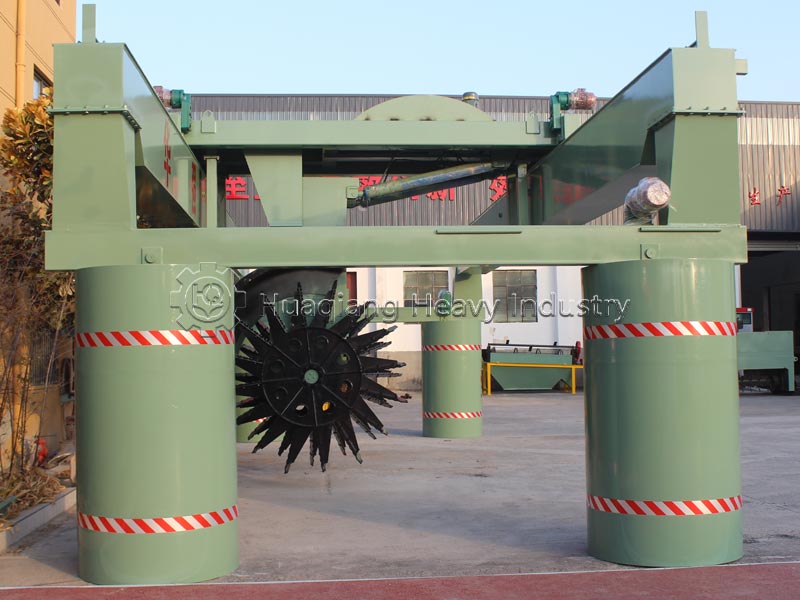
The large wheel compost turning machine lays the foundation for high-quality raw materials in the production line. During the raw material pretreatment stage, its efficient turning and mixing allow the raw materials to fully contact the air, rapidly increasing the fermentation temperature and inhibiting harmful bacteria, ensuring uniform composting and stable nutrient content. Insufficient turning can lead to incomplete composting, resulting in problems such as loose granules and uneven nutrient distribution.

The double axis paddle mixer builds upon the pretreatment results, achieving precise material conditioning. After the composted raw materials, auxiliary materials, and microbial agents are added in proportion, its dual-shaft structure allows for rapid and thorough mixing of materials. It can also adjust moisture content and particle size according to granulation requirements, forming high-quality material suitable for the disc granulator. Compared to ordinary mixers, it offers higher mixing efficiency and better uniformity, significantly improving the subsequent granulation and molding rate.

The synergistic operation of these three components ultimately ensures the efficient operation of the production line, reduces material waste, and improves granule uniformity and strength. Therefore, controlling the operating quality of the large wheel compost turning machine and the double axis paddle mixer is essential for maximizing the efficiency of the disc granulation production line.

Double axis paddle mixers: A powerful mixing tool for efficient production across multiple industries

In production processes across industries such as chemicals, pharmaceuticals, food, and building materials, the uniformity and efficiency of material mixing directly impact the quality of the final product. Double axis paddle mixers, with their superior performance, have become the preferred equipment for many companies.

As a high-efficiency mixing device, it uses two independent, counter-rotating mixing shafts as its core. Through paddle-type or other types of mixing blades, it shears, crushes, and diffuses materials, easily achieving deep mixing. It is particularly suitable for scenarios requiring the mixing of high-viscosity materials and solid particles, solving the problems of uneven mixing and low efficiency associated with traditional mixing equipment.

In the fertilizer production field, NPK fertilizer production lines have extremely high requirements for material mixing precision. NPK blending machine needs to uniformly mix raw materials such as nitrogen, phosphorus, and potassium. Double axis paddle mixers, with their stable mixing effect, ensure uniform distribution of raw materials, laying a good foundation for subsequent granulation, drying, and other processes, significantly improving the quality of fertilizer products. Furthermore, it is not only an important component of fertilizer mixer equipment but can also work in conjunction with fertilizer mixer machines and other equipment, adapting to the needs of different production lines such as organic fertilizers and bio-organic fertilizers.

Beyond industrial applications, double axis paddle mixers also play a crucial role in food additive mixing and pharmaceutical raw material pretreatment. For companies pursuing high-efficiency, high-quality production, selecting suitable high-efficiency mixing equipment is undoubtedly a key step in improving production efficiency and reducing costs, injecting strong momentum into the sustainable development of the industry.

Key equipment maintenance for NPK blending fertilizer production lines

The NPK blending fertilizer production line is the core of compound fertilizer production. The condition of its equipment directly affects product quality and production efficiency. Proper, science-based maintenance not only cuts unplanned downtime but also significantly extends equipment life and lowers production costs.

1.Raw Material Pretreatment System

Fertilizer crushers and screening equipment are the front-end critical units. Poor maintenance here causes problems later. Check hammer heads and screen mesh wear weekly. Replace them when wear reaches one-third of the original thickness. Clean out leftover material inside the equipment thoroughly after each day’s production to prevent caking and corrosion.

2.Mixing System

The double axis paddle mixer is the heart of blending. Pay special attention to paddle wear and shaft end seal condition. Measure the gap between paddles and the mixing chamber monthly. Adjust or replace paddles if the gap exceeds 5mm. Replace seals every six months to prevent lubricant leaks contaminating the product.

3.Packaging and Conveying Equipment

Automatic packing scales and belt conveyors directly impact packing accuracy and NPK blending fertilizer production line continuity. Calibrate packing scale sensors monthly using standard weights to keep weighing errors within ±0.2%. Check conveyor idler rollers quarterly for smooth rotation. Seized rollers significantly increase motor load.

Implementing these maintenance steps can greatly reduce equipment failure rates and boost the overall efficiency of the NPK blending fertilizer production line. This provides a solid foundation for stable product quality and controlled production costs.