Producing organic fertilizer from high-moisture animal manure requires several essential pieces of equipment

Animal manure typically has a moisture content of 70%-90%, making it prone to clumping and anaerobic fermentation, leading to putrefaction and making direct composting impossible. The key to fertilizer production is gradually reducing moisture and optimizing the fermentation environment. This requires a closed-loop organic fertilizer production line with specialized equipment to ensure efficiency and product quality, adapting to different processing scales.

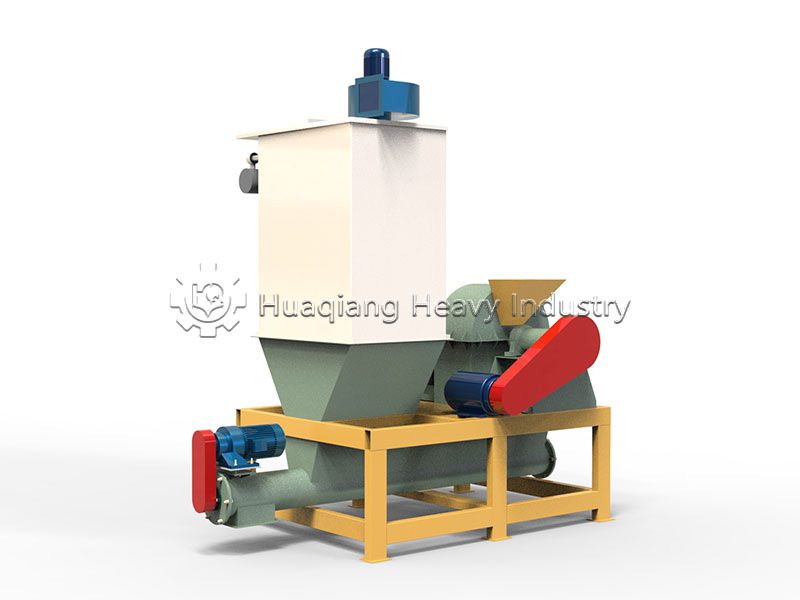
The core of pretreatment is moisture reduction and blending equipment. A solid-liquid separator is crucial in the pretreatment stage of the organic fertilizer production line, quickly reducing the moisture content of the manure to 55%-65%, preventing anaerobic fermentation. Combined with crushing equipment for dry materials such as straw, and then mixed proportionally using mixing equipment to adjust the carbon-nitrogen ratio, a solid foundation for fermentation is laid.

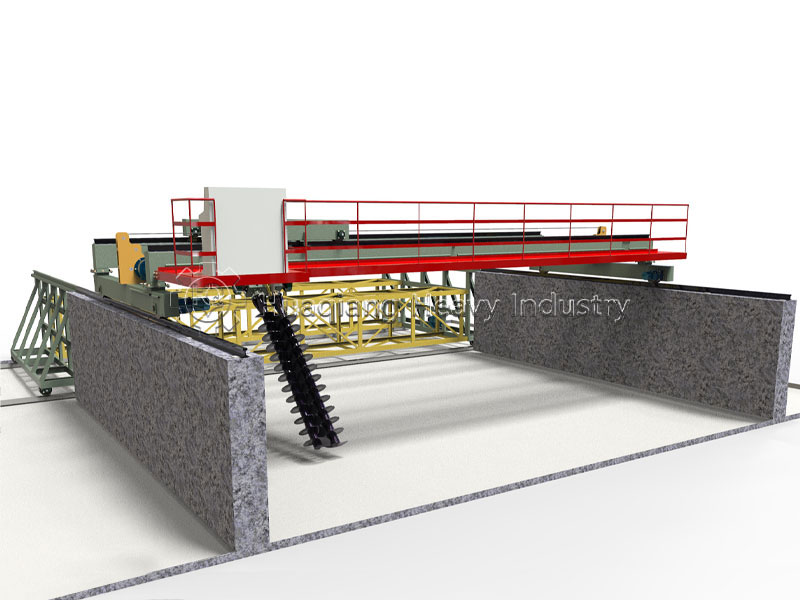
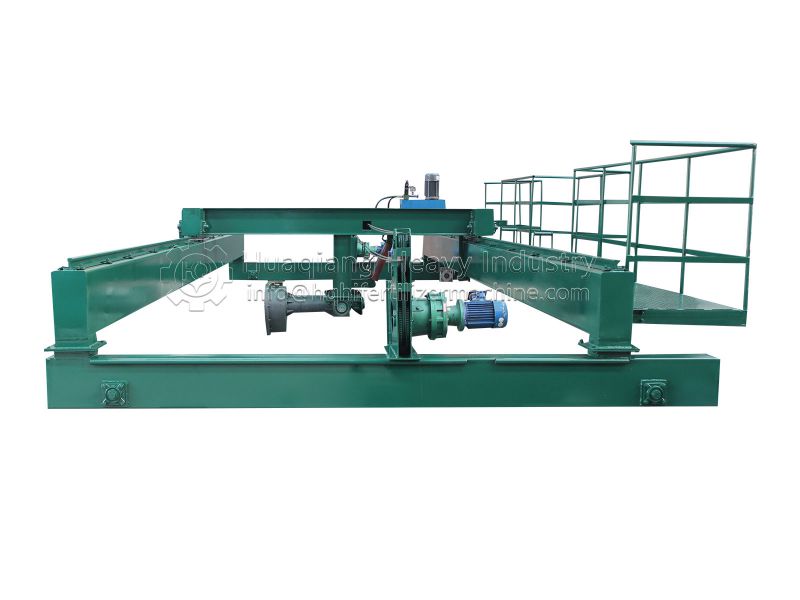
The fermentation stage requires equipment adapted to high-moisture materials. Small-scale organic fertilizer production lines can use a double screws compost turning machine to break up clumps and provide oxygen and moisture during mixing; large-scale production lines can use horizontal fermentation tanks, which provide enclosed temperature and humidity control to accelerate decomposition, reduce odor emissions, and are suitable for continuous fermentation of high-moisture materials.
Deep processing and environmental protection equipment are indispensable. If producing granular fertilizer, a fertilizer granulator is needed to process semi-dry materials; drying equipment can reduce the moisture content of the finished product, improving storage and transportation stability. Simultaneously, odor treatment equipment is necessary to prevent secondary pollution, meet environmental requirements, and complete the entire process configuration.

In summary, producing fertilizer from high-moisture animal manure requires equipment focused on “moisture reduction—fermentation—quality improvement.” The core components are the solid-liquid separator and high-moisture-adapted fermentation equipment, supplemented by deep processing and environmental protection equipment as needed, to efficiently overcome the challenges of high moisture content and produce high-quality organic fertilizer.
Building a chicken manure organic fertilizer production plant from scratch: A complete practical guide

Chicken manure is rich in nitrogen, phosphorus, and potassium, but it is highly moist, sticky, and has a strong odor. Establishing a chicken manure organic fertilizer production plant requires focusing on the core principles of “harmlessness + resource utilization,” specifically addressing the challenges posed by the characteristics of the raw materials, balancing compliance, efficiency, and quality, and building a closed-loop production system.

Solidify the foundation of raw materials and site. Secure a stable source of chicken manure, sign long-term agreements with farms, and strictly control impurities in the raw materials. The site should be located far from residential areas and water sources, with reserved environmental protection distances. Different functional areas should be planned in zones, equipped with seepage-proof leachate collection ponds and odor treatment facilities to prevent secondary pollution.

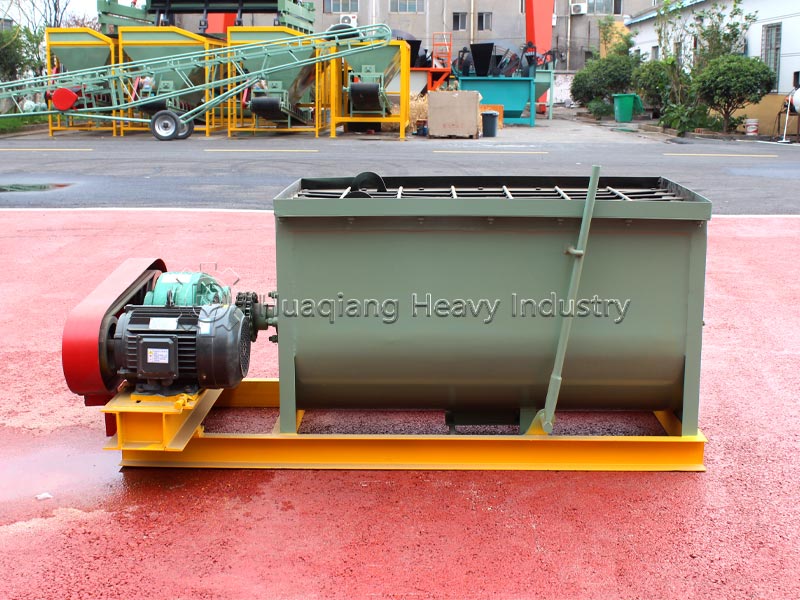
Set up the production line with suitable equipment. Equipment configuration based on scale: Pre-treatment uses a solid-liquid separator for dehumidification, paired with a fertilizer crusher and fertilizer mixer to mix chicken manure and straw/sawdust at approximately a 1:2 ratio to adjust the carbon-to-nitrogen ratio; fermentation uses horizontal fermentation tanks or double screws compost turning machines, maturing at 55-65℃ for 7-15 days for sterilization; deep processing includes granulation, screening, and packaging equipment to form a complete organic fertilizer production line.

Improve compliance and process systems. Obtain environmental protection filings, discharge permits, and finished fertilizer registration certificates, and establish a quality testing mechanism. Addressing the odor-prone nature of chicken manure, precisely control oxygen supply and turning frequency, and use microbial agents to accelerate maturation and reduce odor diffusion.

Build an operational closed loop. Control raw material costs and transportation losses, determine finished product types based on market demand, and connect with growers and agricultural input channels. Develop a regular equipment maintenance plan to ensure continuous operation of the production line.

Avoid these pitfalls when composting! Don’t make these two mistakes!

The success of composting begins in the preparation stage. Whether it’s home composting or large-scale organic fertilizer production lines, even slight negligence can lead to fermentation stagnation and unpleasant odors. Imbalanced carbon-to-nitrogen ratios and improper moisture control are two common mistakes. Precise avoidance is fundamental to efficient composting, especially for large-scale production relying on organic fertilizer composting equipment, where attention to detail is crucial.

The first mistake: Imbalanced carbon-to-nitrogen ratio, halting the fermentation process. The carbon-to-nitrogen ratio needs to be maintained between 25:1 and 30:1 to suit microbial activity. Composting only high-nitrogen materials (such as livestock manure) will cause the compost pile to heat up quickly, produce a strong odor, and breed bacteria; adding only high-carbon materials such as straw will make it difficult for the compost pile to heat up, prolonging the composting period. Solution: Mix materials according to the ratio. For home composting, a ratio of “1 part manure + 2-3 parts straw” is suitable. Organic fertilizer production lines can use specialized equipment to precisely calibrate the ratio.

The second mistake: Improper moisture control, triggering anaerobic fermentation. The ideal moisture content for raw materials is 55%-60%, resulting in a consistency that “clumps together when squeezed but crumbles easily when released.” Excessive moisture blocks oxygen, leading to a putrid odor; insufficient moisture hinders microbial activity and stagnates composting. To prevent this, control moisture levels beforehand, sun-dry high-moisture raw materials or add dry materials for absorption, and spray water and mix excessively dry materials. A double screws compost turning machine can assist in moisture dissipation and optimize aeration during turning, making it suitable for continuous production line operations.

In summary, the carbon-to-nitrogen ratio and moisture content are the core variables in composting preparation. Whether operating a small-scale composting operation or an organic fertilizer production line, avoiding these two major mistakes and following standardized operation of organic fertilizer composting equipment will improve composting success rates and efficiently produce high-quality organic fertilizer.
Chicken manure deodorization and composting system solution

Chicken manure is rich in organic matter and is a high-quality raw material for organic fertilizer. However, it easily produces foul odors and breeds bacteria, and improper handling can cause environmental pollution. An efficient organic fertilizer equipment for chicken manure deodorization and composting needs to achieve “deodorization throughout the entire process and efficient composting and maturation.”

Simultaneous deodorization and pollution reduction during the pretreatment stage is fundamental. First, screening is used to remove bedding impurities and stones from the chicken manure, reducing the load on subsequent processing; then, a physical + biological synergistic deodorization method is adopted: a spraying device is used to dilute soluble odorous substances, combined with a biofilter to adsorb and decompose ammonia, hydrogen sulfide, and other odorous gases, reducing odor diffusion at the source. At the same time, the moisture content of the chicken manure is controlled at 55%-60%, laying the foundation for subsequent composting, maturation, and deodorization.

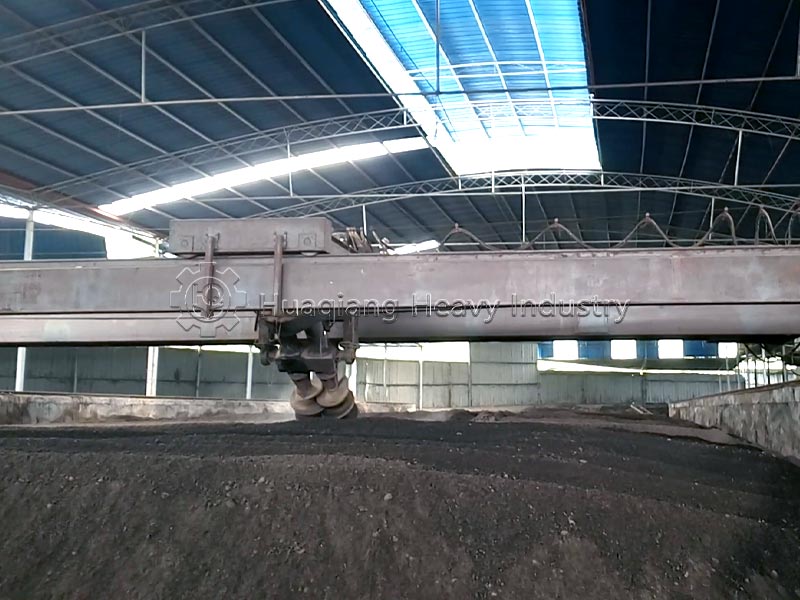
The composting process achieves synergistic deodorization and maturation. Auxiliary materials such as straw and mushroom residue are added according to a carbon-to-nitrogen ratio of 25:1-30:1. A double screws compost turning machine or a large wheel compost turning machine is used for regular deep turning, which ensures ventilation and oxygen supply to the compost pile, inhibits anaerobic fermentation and the production of foul odors, and accelerates the decomposition of organic matter. Special deodorizing and composting microbial agents can be added to decompose odorous components and shorten the composting cycle, ensuring the inactivation of bacteria and insect eggs.

After composting is completed, ventilation and drying are used to further dissipate residual odors, and the nutrient and pollutant indicators of the organic fertilizer are tested to ensure compliance. The leachate generated during the composting process is collected and treated, then recycled for spraying and deodorization, achieving wastewater recycling.

Efficient organic fertilizer production: From compost turners to complete production line selection

In the context of green agricultural development and waste resource utilization, efficient organic fertilizer production equipment has become crucial. Compost turning machines, as the core equipment in the organic fertilizer fermentation process, directly impact fermentation efficiency and fertilizer quality. Among these, the double screws compost turning machine stands out due to its unique advantages. It utilizes a double-helix stirring structure to penetrate the compost pile for even mixing, and is equipped with an oxygen supply system to meet the needs of aerobic fermentation. This accelerates the decomposition of organic materials such as livestock manure and crop straw, significantly improving fermentation efficiency. It is widely applicable to agricultural waste treatment and organic fertilizer production.

In addition to the double-helix model, various other compost turners are available for different needs. For example, hydraulic compost turning machines are suitable for large production sites, offering powerful performance and stable operation; windrow compost turning machines are flexible and adaptable to open-air windrow fermentation; and simple compost turning machines are cost-effective, meeting the basic fermentation needs of small farms or startups. These devices, through precise composting and turning operations, lay the foundation for high-quality raw materials in organic fertilizer production.

A complete organic fertilizer production line also requires other key equipment. To expand the product line, NPK fertilizer production lines can achieve diversified fertilizer production, while bio-organic fertilizer production lines focus on the development of high-value bio-fertilizers. Furthermore, fertilizer granulators can process the fermented materials into granular form, improving product storage and transportation convenience and market competitiveness.

Choosing the right combination of equipment not only promotes the resource utilization of organic waste and reduces environmental pollution, but also helps agricultural production achieve a green cycle, injecting momentum into sustainable agricultural development.

Double screws compost turning machines: The core guarantee for aerobic fermentation process

In modern composting and fermentation processes, whether the materials can achieve sufficient and uniform contact with oxygen is crucial in determining the efficiency of decomposition and the final quality. The double screws compost turning machine, with its unique design and working method, is becoming a key technological equipment to solve this core problem, providing a stable and efficient solution for large-scale organic waste treatment.

The core value of this equipment lies in its excellent mixing and homogenization effect. During the turning process, the double helix structure not only breaks up caked materials but also thoroughly exchanges and mixes the surface and bottom layers, as well as the internal and external materials. This three-dimensional mixing method allows moisture, temperature, and microorganisms to quickly become uniform within the compost pile, greatly improving the stability and controllability of the fermentation process.

In a complete organic fertilizer production line, the double screws compost turning machine is usually deployed in the core section of windrow composting or trough composting. As the “main force” in the entire organic fertilizer production equipment system, it works closely with the front-end system and the back-end discharge system, achieving continuous operation from raw material entry to the completion of primary fermentation, significantly shortening the fermentation cycle and improving site utilization and production efficiency.

With its reliable and efficient performance, the double screws compost turning machine provides a solid process guarantee for the resource utilization of organic waste and the stable production of high-quality organic fertilizer.
High-efficiency fermentation solutions in modern organic fertilizer production lines

In modern organic fertilizer production lines, the double screws compost turning machine, as a crucial piece of equipment, provides a professional and reliable solution for the aerobic fermentation stage. This equipment complements the common large wheel compost turning machine, together forming a complete material handling system.

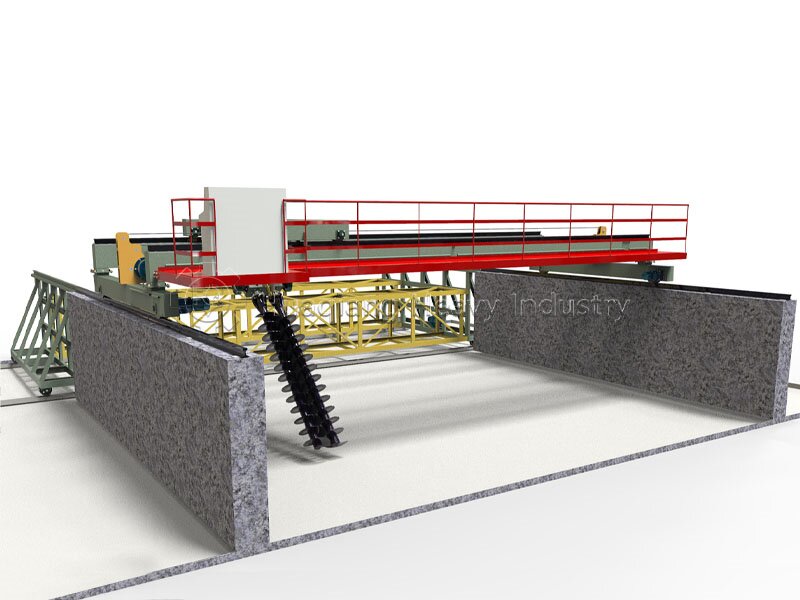
As a key piece of equipment in organic fertilizer production lines, the double screws compost turning machine’s design is characterized by its unique double-helix structure. Two parallel spiral shafts work in tandem under power drive, enabling deep turning of the material within the fermentation tank. This design not only ensures thorough turning but also significantly improves processing efficiency, making it an important member of the modern organic fertilizer production equipment system.

In practical applications, the double screws compost turning machine works perfectly with trough fermentation processes. Its processing depth typically reaches over two meters, effectively breaking up the compacted layer formed during fermentation and ensuring uniform oxygen distribution in the material. Compared to large wheel compost turning machines, this equipment is more suitable for operation within fixed fermentation tanks, demonstrating unique environmental adaptability.

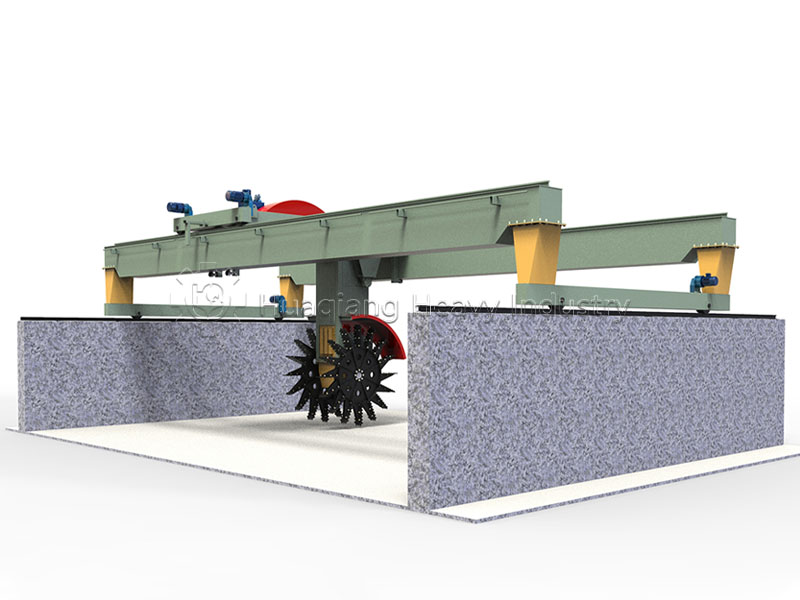
In the configuration of organic fertilizer production lines, the double screws compost turning machine and the large wheel compost turning machine each have their own advantages. Large wheel compost turning machines are typically suitable for windrow fermentation in open areas, while double screws compost turning machines excel in trough fermentation processes. This combination of equipment provides organic fertilizer producers with more flexible and diverse process options, meeting the needs of different site conditions and production scales.

With the continuous development of the organic fertilizer industry, double-helix compost turning technology is also constantly innovating. These technological advancements not only improve equipment performance but also drive the entire organic fertilizer production equipment system towards greater efficiency and intelligence.

The core contribution of cage crushers and double screws compost turning machines

The efficient operation of a bio-organic fertilizer production line relies on the precise coordination of bio-organic fertilizer equipment at each stage. Among these, cage crushers and double screws compost turning machines play indispensable roles in raw material pretreatment and fermentation, directly impacting the quality and production efficiency of the final product.

The cage crusher, as an important pretreatment equipment in bio-organic fertilizer production, primarily functions to refine raw material particles. Raw materials for bio-organic fertilizer production often include straw, poultry and livestock manure, and fallen leaves. These materials have uneven textures and contain large impurities. If directly introduced into the fermentation process, this can lead to insufficient fermentation and uneven nutrient distribution. The cage crusher can refine large materials into uniform particles, laying the foundation for subsequent fermentation and preventing damage to subsequent equipment caused by impurities.

After processing by the cage crusher, the raw materials enter the fermentation stage, where the double screws compost turning machine becomes a core piece of bio-organic fertilizer equipment. Fermentation is a critical step in bio-organic fertilizer production, requiring proper ventilation and uniform temperature to promote microbial activity and achieve complete composting. The double screws compost turning machine, with its unique double-screw structure, ensures stable overall fermentation temperature, significantly improving composting efficiency and shortening the fermentation cycle.

In a complete bio-organic fertilizer production line, the cage crusher and double screws compost turning machine are closely integrated and work collaboratively, forming the core force that ensures a smooth production process and high-quality products. This highlights the important supporting role of high-quality bio-organic fertilizer equipment in the development of the industry.

Why is the large wheel compost turning machine considered an “accelerator” for efficient organic fertilizer production?

In today’s pursuit of efficient production, the large wheel compost turning machine, with its superior performance, has become an “accelerator” for organic fertilizer manufacturers. Its efficiency advantages are reflected in multiple aspects.

In terms of processing capacity, the equipment utilizes a large wheel structure with a main wheel diameter of 5-10 meters, providing a wide turning coverage area in a single turn. It can process 100-200 tons of material per hour, 3-5 times the capacity of traditional windrow compost turning machines. For example, a base with an annual production capacity of 10,000 tons of organic fertilizer, which previously required multiple units, can now be met by a single large wheel compost turner, significantly improving production efficiency.

In terms of fermentation efficiency, it uses centrifugal force to thoroughly turn the material to a depth of 1.5-2 meters, evenly mixing the upper and lower layers of the material, and maintaining a temperature distribution difference of ≤2°C, thus avoiding uneven fermentation. The equipment also accelerates the contact between materials and air, regulates temperature and humidity, and shortens the fermentation cycle to 20-30 days, nearly half the time of traditional equipment.

Furthermore, the equipment boasts a high degree of automation, with an electronic control system and touchscreen operation, allowing one or two people to operate it, reducing labor input. For organic fertilizer companies seeking efficient production, the large wheel compost turning machine is undoubtedly an ideal choice for enhancing competitiveness.

Tracked design and efficient turning! Technical advantages of the windrow compost turning machine

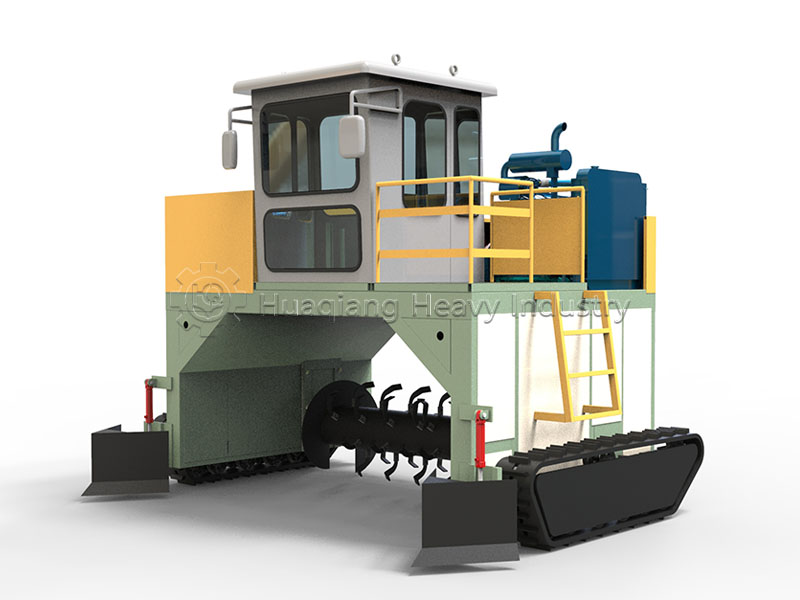
The windrow compost turning machine’s widespread use in organic fertilizer production stems from the significant advantages offered by its unique technical design. The tracked design is a key advantage. Compared to traditional wheeled equipment, it effectively reduces ground pressure, typically to just 0.05-0.1 MPa. This allows for flexible maneuverability even on muddy, soft surfaces, or complex terrain with slopes up to 15°, eliminating the need for dedicated tracks. This significantly improves site utilization, exceeding that of trough-type compost turning machines by over 30%.

The machine also excels in turning performance. Its hydraulic arm allows for flexible adjustment of turning height and width, accommodating windrows ranging from 0.5-2.5 meters in height and 2-6 meters in width. A single unit can process 50-150 tons of material per hour, achieving an efficiency 1.5-2 times that of a single-screw compost turning machine. The turning teeth and spiral blades are forged from alloy steel. Combined with a bottom-up turning mechanism, this achieves a material turning rate of over 95%, preventing localized compaction and uneven fermentation. Material temperature deviation is kept within 3°C, ensuring stable fermentation quality.

Furthermore, the equipment’s electronic control system monitors operating parameters in real time. In the event of abnormal conditions such as overload or excessive hydraulic oil temperature, it automatically issues an alarm and shuts down the machine for protection, ensuring safe and efficient operation.