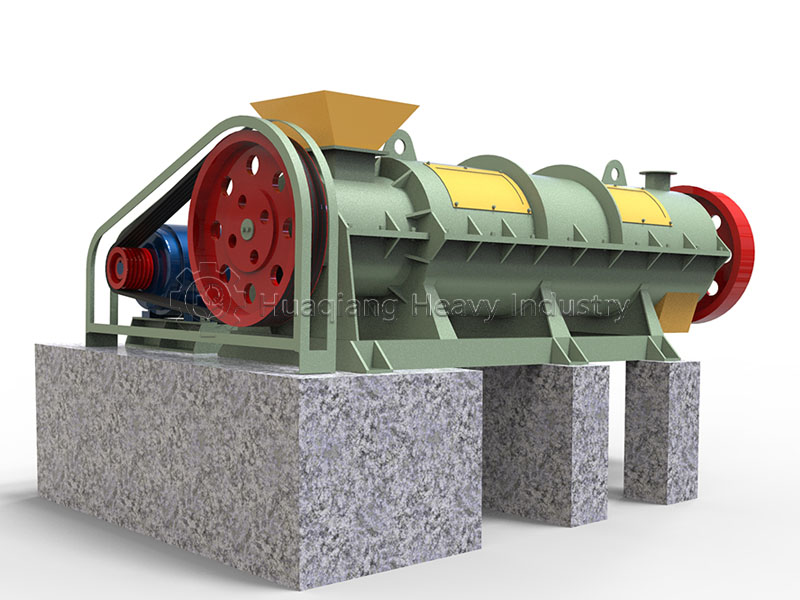
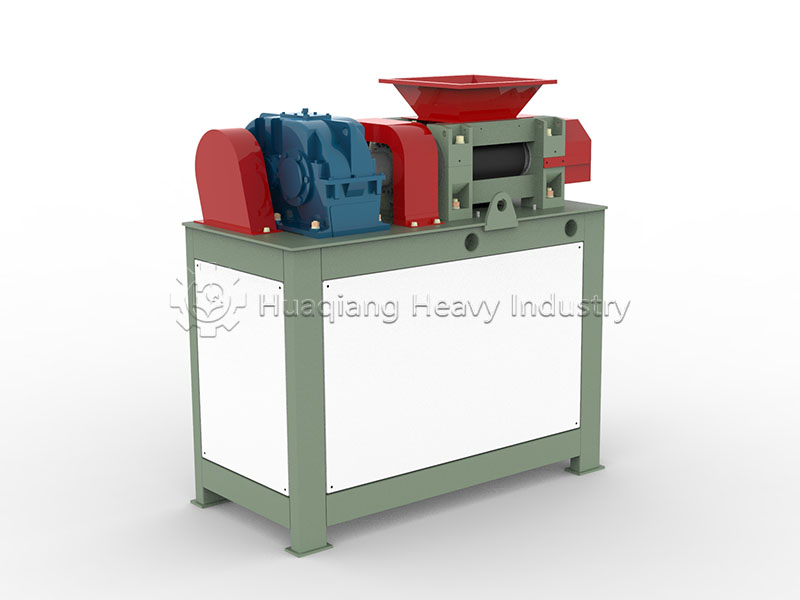
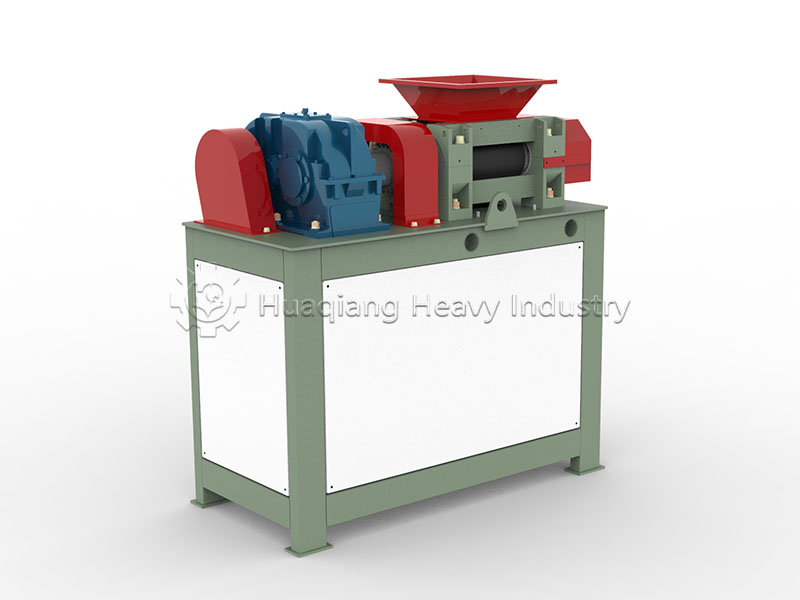
Optimizing double roller press granulator process to boost organic fertilizer production

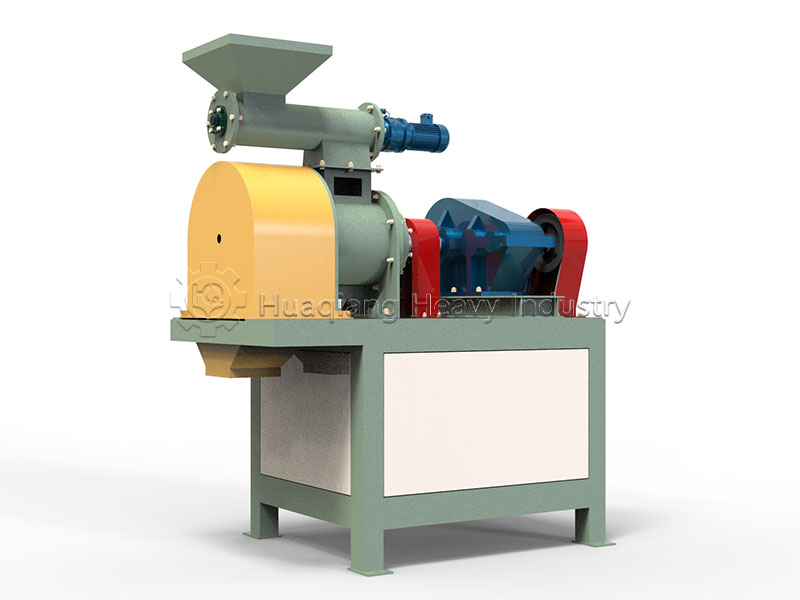
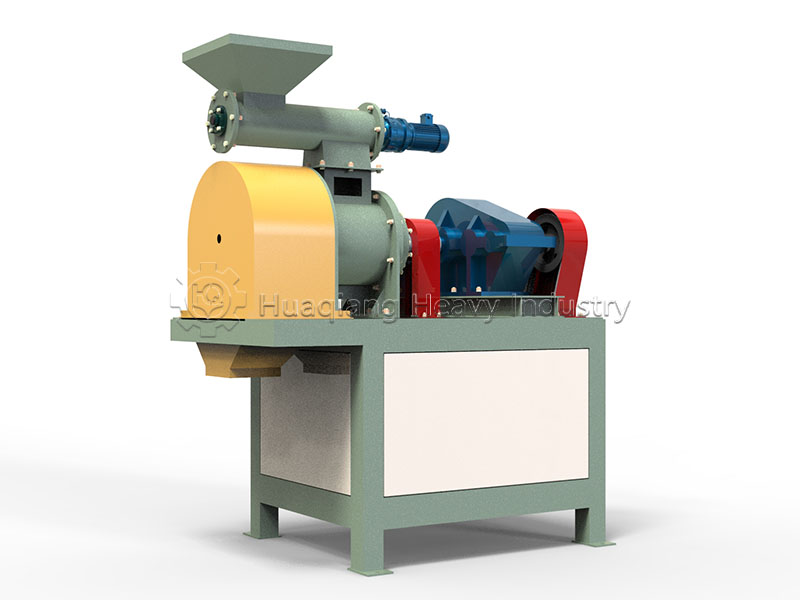
Double roller press granulators are key equipment in modern organic fertilizer production lines. Optimizing their process directly impacts a company’s output and economic benefits. With the rapid growth of organic farming, how to improve organic fertilizer production through technical upgrades to these granulators has become a major focus for many manufacturers.

1.Optimizing Raw Material Pre-treatment

Grind raw materials to 40-60 mesh. Control moisture content between 20%-25%. Adding suitable binders like bentonite or lignin can significantly improve granulation rate and reduce return material. This is expected to increase output by around 15%.

2.Precise Adjustment of Roller Parameters

For general organic fertilizer production: Set the nip gap between 1.5-2.5mm. Maintain roller pressure at 8-12MPa. Control line speed at 0.8-1.2m/s. Installing pressure sensors and automatic adjustment systems allows for dynamic optimization, improving particle formation rate.
3.Die Selection and Maintenance

Hole Size: 3-6mm suits most organic fertilizers. Open Area Ratio: Maintain between 30%-40%. Regular polishing extends die life. Recommend professional maintenance every 500 tons of material processed to ensure smooth discharge.

4.Coordinated Optimization of Supporting Equipment

Precise batching system (error <1%). Efficient mixer (mixing uniformity >95%). Energy-saving dryer (thermal efficiency >65%). Systematic upgrades like this can increase the entire line’s output by 30%-50%.

Through comprehensive optimization of the double roller press granulator process, organic fertilizer producers can significantly boost production without adding more machines.
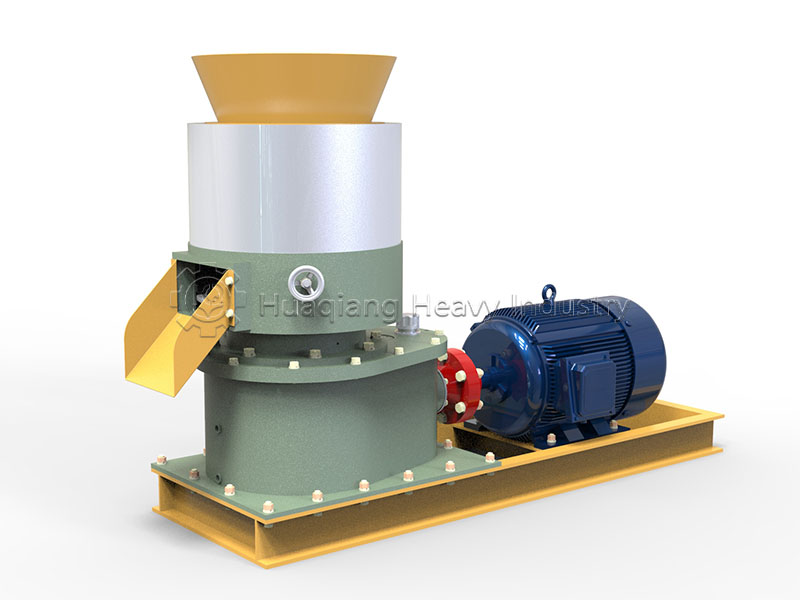
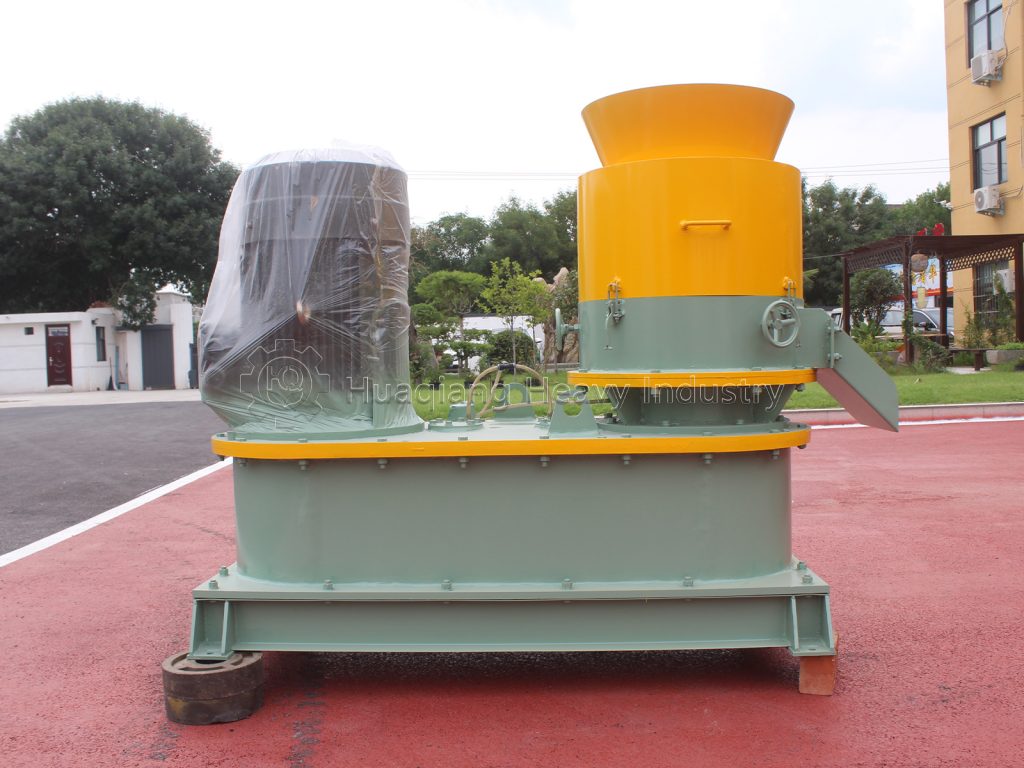
When fertilizer meets extrusion: The art and science of granulation

In modern fertilizer production, fertilizer compaction machines and flat die pelleting machines are quietly changing the form and future of fertilizers. Unlike chemical reaction equipment, they don’t attract attention, but with their unique mechanical charm, they transform powdered fertilizer into uniform granules.

Stepping into the production workshop, you’ll see fertilizer compaction machines working steadily. They use powerful mechanical pressure to “compress” loose powdery raw materials into dense ribbons. This process involves no high temperatures and no binders.

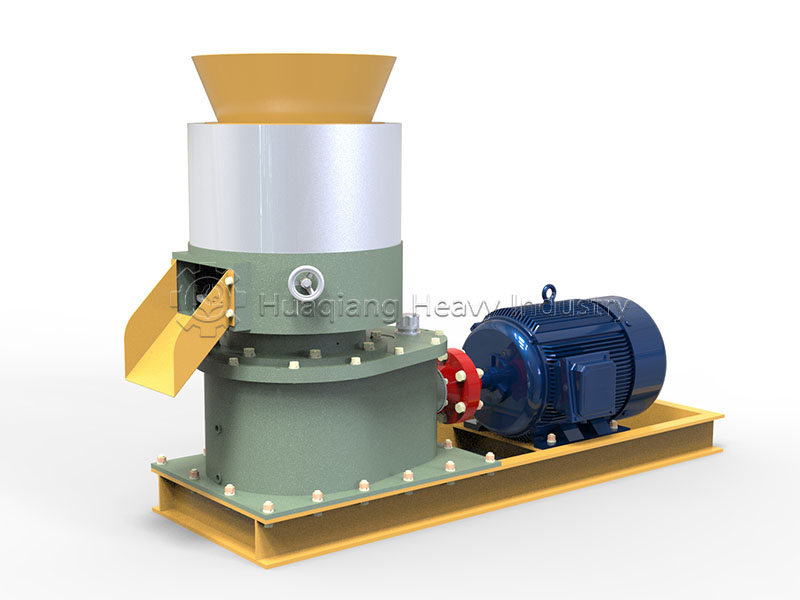
The flat die pelleting machine, on the other hand, showcases another kind of ingenuity. The horizontally placed die acts like a precision sieve; the material, under the pressure of the rollers, passes through the holes in the die, instantly becoming uniformly sized granules.

The combination of these two devices creates surprising possibilities. Powdered fertilizers that are prone to clumping become more fluid, easier to store and apply. Active ingredients are firmly locked inside the granules, reducing drift loss during use and making nutrient release more controllable.

More importantly, this physical granulation method has opened new doors for the development of specialty fertilizers. Whether it’s a compound fertilizer requiring the addition of trace elements or a special fertilizer for specific crops, it can all be achieved by adjusting the mold and process parameters. On the path to sustainable agricultural development, equipment like fertilizer compaction machines and flat die pelleting machines are playing a unique role.

Flat die pelleting machine: The key shaping machine in organic fertilizer production lines

As agriculture shifts from “pursuing yield” to “green sustainability,” organic fertilizer is no longer simply “waste recycling,” but plays a crucial role in protecting soil fertility. A production line capable of consistently producing high-quality organic fertilizer always relies on one key piece of equipment: the flat die pelleting machine.

The process of an organic fertilizer production line is actually quite clear: first, raw materials such as straw and livestock manure are collected, then crushed, mixed, and enter the fermentation stage. Once the materials are fully decomposed, the flat die pelleting machine comes into play. Using the principle of extrusion molding, the flat die pelleting machine compresses these “unformed” raw materials into uniformly sized granules, not only preserving nutrients such as nitrogen, phosphorus, and potassium in the organic fertilizer but also solving the problems of storage space and transportation losses.

More importantly, it has “adaptability.” The raw materials for organic fertilizer vary greatly from region to region; some are mainly composed of coarse-fiber straw, while others are mainly composed of fine-textured livestock manure. The flat die pelleting machine does not require frequent parameter adjustments and can adapt to various raw material ratios, allowing the production line to be free from the limitation of a single raw material source. This “material-insensitive” characteristic allows many small and medium-sized organic fertilizer production projects to flexibly utilize local resources and reduce initial investment.

In short, the production line provides a complete logic for “turning waste into treasure,” while the flat die pelleting machine translates this logic into a practical product that can be directly used in the fields.

What are the requirements of ring die pelleting machines for processed materials?

The ring die pelleting machine is a core equipment in the production of granular organic fertilizer, known for its high output, high pellet hardness, and excellent formation rate. However, understanding the material requirements of the ring die pelleting machine is essential for achieving efficient and stable production.

1.Suitable Material Fineness

The raw materials must be thoroughly crushed, with a fineness generally required to be between 80 and 120 mesh (0.2mm–0.1mm). Excessively coarse materials have poor fluidity and struggle to pass through the mold holes. If the fineness is too high (exceeding 140 mesh), it may affect the material’s breathability.

2.Precise Moisture Content(13%–18%)

If the moisture is too low, the material lacks flexibility, making it difficult to extrude and form. This results in excessive powder and a very low formation rate. If the moisture is too high, the material becomes overly soft and sticky, easily clogging the mold holes.

3.Appropriate Organic Matter Content and Fiber Structure

Organic matter can generate some viscosity under high pressure, which aids in formation. Short fibrous materials, on the other hand, interweave and bind within the pellets, significantly improving their hardness and drop resistance.

4.Balanced Formula and Uniform Mixing

Various raw materials must be blended in scientific proportions and thoroughly mixed using a mixer. A balanced formula ensures stable nutrient content in the material while also adjusting its physical properties.

In summary, only by pre-treating the raw materials can the advantages of the ring die pelleting machine’s high efficiency be fully utilized to produce high-quality granular organic fertilizer.

A new logic for organic fertilizer formation with ring die pelleting machine

In the forming stage of large-scale organic fertilizer production, ring die pelleting machines, with their dual advantages of “extrusion granulation + nutrient lock-in,” have become key equipment connecting organic substrates and practical fertilizers, transforming loose, well-rotted materials into high-quality organic fertilizer with uniform granules and stable fertilizer effects.

The core working principle of the ring die pelleting machine is ingenious: the core ring die and built-in pressure rollers form an extrusion combination. When the well-rotted organic material enters the cavity, the high-speed rotation of the pressure rollers forcibly squeezes the material through the fine die holes on the ring die. During the extrusion process, the material agglomerates and forms due to the viscosity of its organic matter and physical pressure. After exiting the die holes, it is cut by a cutter to form uniformly long columnar granules.

The advantages of ring die pelleting machines are particularly prominent. Its high granulation rate and density solve the problems of loose, easily scattered organic fertilizer granules and significant transportation losses. The dense granular structure slows down nutrient volatilization, prolonging the fertilizer release cycle and allowing crops to absorb nutrients for a longer period. Simultaneously, the equipment is highly adaptable, capable of handling both high-humidity organic substrates and composite organic materials with added micronutrients, meeting diverse fertilizer production needs.

In the complete organic fertilizer production process, the ring die pelleting machine undertakes the crucial shaping stage after fermentation and crushing. This “physical shaping without compromising fertilizer efficacy” process ensures that organic fertilizers both preserve their ecological core and possess practical value for large-scale application.

The impact of material moisture on flat die pelleting machines in organic fertilizer production

In organic fertilizer production, flat die pelleting machines are highly favored for their strong adaptability and low investment cost. However, the moisture content of the material directly determines the success and efficiency of granulation—it can be considered the “lifeline” of the process.

1.Excessively Low Moisture: Results in Failure to Form Pellets and Reduced Output

When the material is too dry (usually with a moisture content below 20%), its viscosity significantly decreases. Under the pressure of the rollers, the powdered material cannot bind effectively, leading to loose, poorly formed pellets or granules with very low strength that break easily.

2.Excessively High Moisture: Causes Blockage and Sticking, Halting Production

If the material is too wet (usually with a moisture content above 40%), it becomes too soft and overly sticky. During compression, the material adheres to the rollers and the flat die mold, forming a thick layer of paste that causes serious clogging.

3.Ideal Moisture Range

Generally, the ideal moisture content for materials processed by a flat die pelleting machine falls within the range of 25%–35%. Within this range, the material exhibits optimal plasticity and viscosity. Therefore, to achieve the best performance of the flat die pelleting machine, it is essential to accurately monitor and pre-treat the moisture content of the incoming material. This can be done by adding dry auxiliary materials (such as straw powder or rice husk powder) or returned material to reduce moisture, or by adding water or slurry to adjust overly dry material.

In summary, precise control of material moisture is key to unlocking the full potential of flat die pelleting machines.

A new type two in one organic fertilizer granulator solves raw material processing challenges

In organic fertilizer production, the challenge of bridging the gap between “mixing” and “granulation” is often amplified by differences in raw material characteristics. The new type two in one organic fertilizer granulator, integrating mixing and granulation, solves these problems with a design more closely suited to the characteristics of the raw materials.

Its most prominent advantage is its ability to handle “dry-wet mixtures.” For example, when mixing fresh chicken manure with a moisture content of 30% with dry straw powder with a moisture content of only 12%, the fertilizer granulator, within the same chamber, first uses the staggered rotation of a spiral stirring paddle to quickly interweave and blend the dry and wet materials. Simultaneously, a built-in micro-humidification device replenishes moisture to the dry material and guides the wet material to dry, resulting in a stable moisture content of 18%-22% after mixing.

It can also precisely control the proportions when dealing with “multi-component mixtures” of raw materials. Many organic fertilizers mix 3-4 raw materials, such as mushroom residue, rice husks, and humus, to enhance fertilizer efficiency. However, the densities of these different raw materials vary greatly. The new type two in one organic fertilizer granulator can automatically adjust the mixing speed according to the density of the raw materials. It slows down the mixing of heavier materials and speeds up the mixing of lighter materials, ensuring precise proportions of each raw material.

Even “difficult-to-bind fibrous raw materials” can be handled effectively. Raw materials like rice husks and peanut shells, with a fiber content exceeding 40%, tend to be loose when mixed alone. During the mixing stage, the two-in-one model uses a built-in shearing blade to cut long fibers into short fibers of 2-3 mm, which are then thoroughly mixed with other raw materials to form a mixture of “fiber skeleton + binding component.” No additional binder is needed during subsequent granulation, and the granules achieve the required hardness.

Selection guide for fertilizer granulators for small and medium-sized organic fertilizer plants

Choosing the right equipment is crucial for small and medium-sized organic fertilizer plants, and the new type organic fertilizer granulator is worth considering.

For these plants, equipment selection directly impacts production efficiency and profit margins. As a core piece of machinery, the granulator is closely tied to product quality and market competitiveness. The new type organic fertilizer granulator, with its strong adaptability and cost-effectiveness, has become an ideal choice for small and medium-sized producers.

Small and medium-sized organic fertilizer plants often face challenges such as limited space, tight budgets, and fluctuating raw material quality. Traditional granulators either have excessive capacity leading to waste, or suffer from low pellet formation rates resulting in material loss. The new granulator addresses these issues effectively.

In terms of cost control, the new granulator reduces energy consumption by 20%-30% compared to traditional equipment. Taking a production line with a daily output of 5 tons as an example, it can save about ¥2,000 in electricity costs per month. Its modular design simplifies maintenance, and the replacement cost of core components is reduced by 40%, significantly minimizing downtime losses.

Regarding product quality, the new equipment produces organic fertilizer granules with a uniformity rate of over 90% and moderate hardness. This not only facilitates packaging and transportation but also ensures even nutrient release during fertilization, enhancing market recognition.

With increasingly strict environmental regulations, the new granulator comes equipped with a sealed dust collection system, ensuring dust emissions meet standards. For manufacturers planning to expand their business, some new models support future capacity upgrades without the need for a complete replacement, effectively reducing secondary investment.

Choosing the right granulator allows small and medium-sized organic fertilizer plants to reduce costs, improve efficiency, and enhance product competitiveness. The new type organic fertilizer granulator is undoubtedly a cost-effective choice.

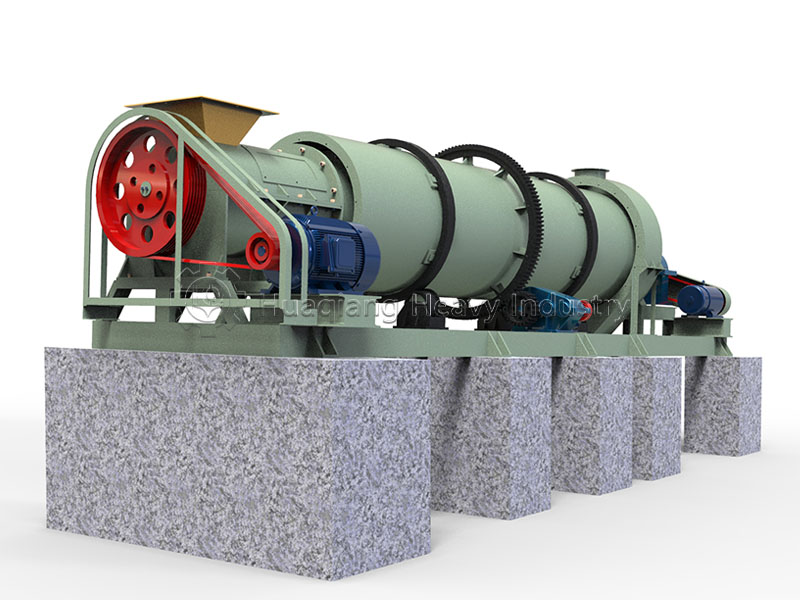
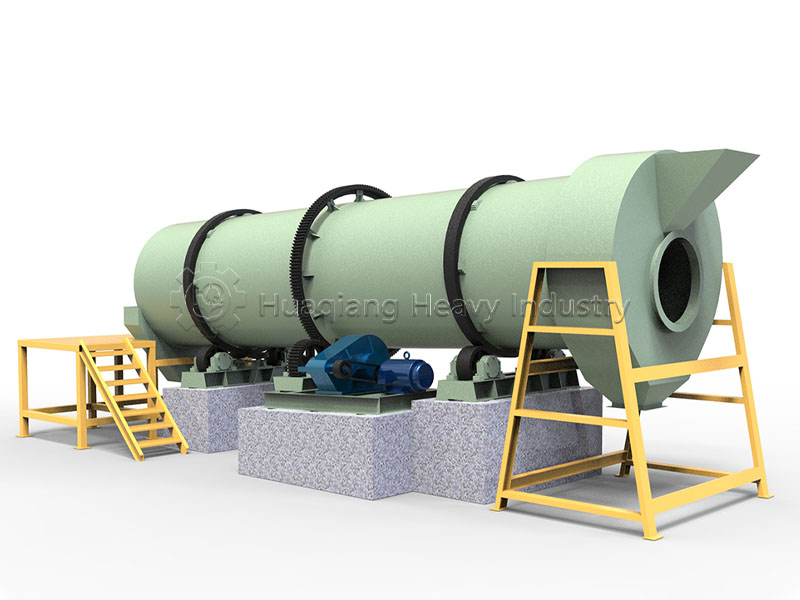
The “Pellet Revolution” of cow dung: The recycling magic of the rotary drum granulator

In the core process of organic fertilizer production, the rotary drum granulator, with its unique working principle, is transforming cow dung from waste into high-quality granular fertilizer. This equipment, perfectly suited to the needs of ecological agriculture, unlocks a new path for the resource utilization of cow dung through a simple and efficient process.

First, the fermented cow dung needs to be pulverized into a uniform powder. Then, a small amount of binder and nutrient additives are mixed in a specific ratio to ensure granule formation and nutrient balance. When the mixture enters the tilted rotary drum, the centrifugal force and friction generated by the uniform rotation cause the material to tumble and agglomerate within the drum, gradually forming round and uniform granules. The entire process requires no complex chemical treatment, relying entirely on physical processes to achieve the desired shape. This preserves the organic matter and beneficial bacteria in the cow dung while avoiding secondary pollution.

The advantages of the rotary drum granulator are significant. Its large-capacity drum design is suitable for large-scale production, resulting in higher efficiency for continuous operation. It produces high-quality pellets with moderate strength, facilitating storage and transportation while preventing clumping. Furthermore, the equipment is highly adaptable to various materials, flexibly handling cow manure raw materials with different moisture levels and proportions, thus lowering the production threshold.

From an environmental burden on livestock farms to “fertile gold” for nourishing crops, the rotary drum granulator maximizes the value of cow manure. This process of transforming waste into green fertilizer not only helps solve livestock pollution problems but also injects momentum into the circular economy of agriculture.

Synergistic approach of fertilizer compaction machine and oil palm empty fruit bunch Forming

As a fiber-rich organic waste, the key to the resource utilization of oil palm empty fruit bunches lies in their forming and processing. Fertilizer compaction machines, with their targeted structural design, have become the core equipment for unlocking the granulation challenges of this type of fibrous raw material.

From the perspective of raw material compatibility, oil palm empty fruit bunches retain a large amount of tough fibers after fermentation and decomposition. This type of material has low viscosity and is prone to entanglement. Fertilizer compaction machines optimize the cooperation between the pressure rollers and the die holes, employing a large-area contact extrusion design. This allows the fibrous material to naturally unfold and pass through the die holes in the correct direction under pressure, avoiding entanglement and jamming.

Simultaneously, during the extrusion process, the fibers intertwine to form a “net-like support structure,” eliminating the need for excessive binders. Forming can be achieved solely through mechanical force and the material’s own viscosity, reducing production costs while ensuring the environmentally friendly properties of organic fertilizer.

The synergistic advantages of the two are particularly prominent in terms of forming effect and fertilizer retention. The low-temperature extrusion process of the fertilizer compaction machine minimizes the damage to organic matter and beneficial microorganisms in the oil palm empty fruit bunches caused by high temperatures, while preserving the loose fiber characteristics of the formed granules.

Furthermore, this synergistic approach optimizes the production process. The loose structure of the oil palm empty fruit bunches reduces frictional wear within the extruder, extending the lifespan of easily worn parts. Meanwhile, the fertilizer compaction machine’s high-efficiency forming capability rapidly transforms the decomposed oil palm empty fruit bunches into regular granules, solving the problems of dust generation during transport and uneven application of loose materials.