Fertilizer mixer machines lay a solid foundation for bio-organic fertilizer equipment

In the entire operation of bio-organic fertilizer equipment, the fertilizer mixer machine, seemingly a “basic link,” is actually a “hidden hero” that determines the final fertilizer effect and production efficiency.

The core objective of bio-organic fertilizer equipment is to transform organic waste such as straw and livestock manure into ecological fertilizer rich in beneficial bacteria through harmless treatment. The uniformity of raw material mixing directly affects the fermentation effect and nutrient balance. The fertilizer mixer machine perfectly addresses this key requirement: through the rotational action of its multi-dimensional mixing structure, it breaks down the physical differences between raw materials, achieving uniformity in carbon-nitrogen ratio, humidity, and microbial distribution across the entire process.

The mechanical mixing of the fertilizer mixer machine ensures that every component of the raw material is fully in contact. This not only provides a “homogeneous substrate” for the fermentation stage of the bio-organic fertilizer equipment but also allows microbial agents to adhere evenly to the organic materials, significantly improving microbial activity and composting efficiency, and shortening the fermentation cycle.

As the “quality gatekeeper” in bio-organic fertilizer equipment, the fertilizer mixer machine ensures the nutrient balance and fermentation quality of ecological fertilizer through precise mixing, making every step of the transformation of organic waste into high-quality fertilizer more controllable and efficient, and providing solid support for the large-scale development of green agriculture.

The synergistic code between BB fertilizer mixers and NPK fertilizer production lines

In the wave of “on-demand fertilization” in modern agriculture, BB fertilizer mixers and NPK fertilizer production lines are not independent entities. Their synergy allows NPK fertilizers to move from “standardization” to “customization,” adapting to the nutrient needs of different crops.

The core value of the BB fertilizer mixer lies in its “uniformity control.” Targeting the physical characteristics of nitrogen, phosphorus, and potassium fertilizers (or additives containing micronutrients), it uses the staggered operation of multi-directional mixing paddles, combined with anti-caking devices, to ensure that raw materials of different particle sizes and specific gravities are thoroughly mixed in a sealed chamber, laying the foundation for “precision fertilization.”

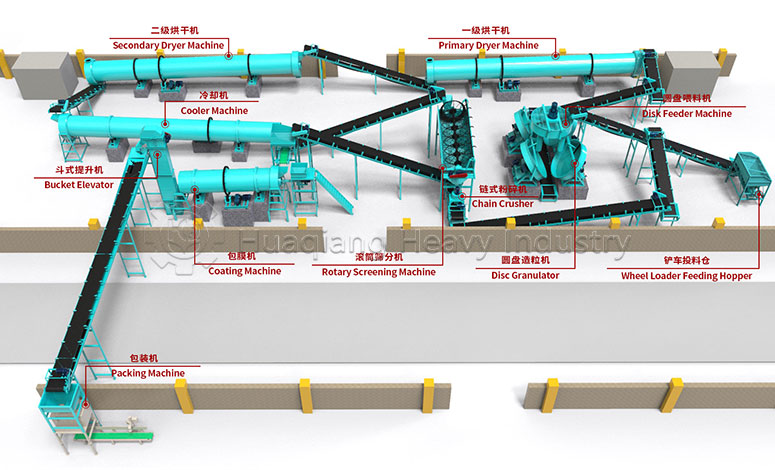
The NPK fertilizer production line, on the other hand, is the complete chain that translates “precise proportioning” into “standardized products.” From raw material screening and automatic metering to the core mixing stage of the BB fertilizer mixer, and then to subsequent granulation, cooling, and packaging, the entire production line is connected through automated processes, avoiding errors and efficiency bottlenecks caused by manual operation.

The synergy between the two also addresses the “single-formula pain point” of traditional NPK fertilizers. Through flexible formula adjustments on the production line, coupled with the precise mixing of the BB fertilizer mixer, it’s possible to quickly switch between specialized NPK formulas for different crops such as wheat, corn, fruits, and vegetables. This meets the needs of large-scale production while reducing fertilizer waste and soil nutrient imbalances.

From “precise mixing” to “closed-loop process,” the linkage between the BB fertilizer mixer and the NPK fertilizer production line ensures that NPK fertilizer production maintains both “quantity” and “quality,” better meeting the modern agricultural demands for “efficiency, precision, and environmental protection.”

A new ecosystem for fertilization: Bio-organic fertilizer and NPK blending machine

In modern agriculture’s pursuit of “ecology + efficiency,” bio-organic fertilizer equipment and NPK blending machines are forming a complementary synergy, protecting soil health while precisely meeting crop nutrient needs.

Bio-organic fertilizer equipment starts with organic waste, transforming straw, livestock manure, and other materials into bio-organic fertilizer rich in beneficial microorganisms through processes such as composting, fermentation, and granulation. Its core value lies in cultivating a soil microbial environment, improving compacted soil, and releasing nutrients fixed in the soil, thus laying a solid “ecological foundation” for crop growth.

NPK blending machines focus on precise nutrient supply, mixing nitrogen, phosphorus, and potassium fertilizers in scientifically proportioned ratios according to the needs of different crops and growth stages. It overcomes the limitations of single-nutrient fertilizers, using mechanized precision mixing to ensure fertilizer nutrients better match the crop’s growth rhythm, achieving highly efficient “supplementing what’s lacking.”

The two do not exist in isolation but rather form a highly efficient synergy. The “ecological fertilizer” produced by the bio-organic fertilizer equipment improves soil texture, creating favorable conditions for the absorption of NPK fertilizer; the “precision fertilizer” formulated by the NPK blending machine provides fast-acting nutrients, compensating for the slightly slower effect of bio-organic fertilizer.

In actual production, the fertilizers produced by the two types of equipment can be further combined to ensure both short-term crop growth needs and long-term soil maintenance, achieving a closed loop of “fast-acting + long-lasting” nutrient supply.

NPK fertilizer mixer machine: The core of precise nutrient mixing

In the NPK fertilizer production process, the fertilizer mixer machine is a key piece of equipment determining the nutrient balance of the product. Its core function is to fully blend nitrogen, phosphorus, and potassium raw materials, as well as trace elements and slow-release agents, ensuring that the nutrient ratio of each fertilizer granule is consistent with the formula, providing a fundamental guarantee for precision fertilization.

Raw material compatibility is its outstanding advantage. NPK fertilizer raw materials have diverse forms and a wide range of specific gravities, requiring the mixer to have a wide range of adaptability. By adjusting parameters such as mixing speed and blade angle, it can adapt to raw materials with different particle sizes (0.5-4 mm) and different moisture contents (≤5%), preventing light raw materials from floating and accumulating, and avoiding heavy raw materials from settling and stratifying, ensuring stable mixing results.

Operation and practicality are designed to meet production needs. Fertilizer mixer machines are typically equipped with a simple control system, allowing for adjustments to the mixing time (generally 5-15 minutes) based on formula complexity, meeting the diverse needs of mass production and small-batch customization. Some models feature an openable chamber design, facilitating the cleaning of residual materials and reducing cross-contamination during formula changes. Simultaneously, the enclosed structure effectively controls dust emissions, minimizing raw material waste and environmental impact, aligning with environmentally friendly production requirements.

As the “nutrient integration hub” of the NPK fertilizer production line, the mixer’s stable adaptability, precise mixing capabilities, and user-friendly operation enable accurate implementation of NPK fertilizer formulations, providing reliable equipment support for precision fertilization in modern agriculture.

Multi-dimensional adaptation requirements of NPK fertilizer production lines for granulators

As NPK fertilizers transition towards “precise formulation and scenario-based adaptation,” granulators, as the core forming equipment in NPK fertilizer production lines, must adapt to customized production requirements involving multiple formulations, multiple forms, and high uniformity. Their performance directly determines the nutrient stability and application suitability of NPK fertilizers.

1.Formulation Compatibility

NPK fertilizer formulations are flexible and varied, not only with significant differences in nitrogen, phosphorus, and potassium ratios but also often including trace elements and slow-release agents. The specific gravity and viscosity of raw materials vary greatly. Fertilizer granulators must have a wide range of raw material adaptability capabilities, handling both free-flowing raw materials such as urea and potassium chloride, and compatible with composite raw materials containing viscous components such as humic acid and amino acids, avoiding granule agglomeration and uneven forming rates due to differences in raw material characteristics.

2.Precise and Flexible Parameter Adjustability

Different crops and different fertilization scenarios have different requirements for NPK granule size, hardness, and dissolution rate. Fertilizer granulators need to support precise control of granule parameters, allowing for rapid switching of granule diameter (1-5 mm) and hardness grade by adjusting parameters such as die size, extrusion pressure, and rotation speed.

3.Low Loss and Environmental Friendliness

NPK raw materials are mostly chemical or compound materials. During granulation, it is necessary to avoid high temperatures or excessive extrusion that could lead to nutrient loss. The granulator must employ a low-temperature molding process to maximize the preservation of raw material activity. Simultaneously, a closed design must reduce dust emission, minimizing raw material waste and environmental impact.

Precise proportioning in NPK blending fertilizer production lines

NPK blended fertilizers, due to their ability to flexibly adjust the proportions of nitrogen, phosphorus, potassium, and micronutrients according to crop needs, have become an important choice for modern agricultural fertilization. The standardized operation of NPK blending fertilizer production lines directly determines product quality and application effectiveness.

Raw material pretreatment is a fundamental step. The production line must select single-nutrient raw materials with qualified purity and stable moisture content. First, the lumpy raw materials are crushed to a uniform particle size using crushing equipment to avoid large particles affecting mixing uniformity. Simultaneously, stones and impurities in the raw materials must be removed to prevent damage to subsequent equipment. The moisture content of the raw materials must be controlled below 5%.

The batching stage is crucial. The amount of each raw material is precisely weighed according to the preset formula using metering equipment. The proportions of nitrogen, phosphorus, and potassium, the main nutrients, can be flexibly adjusted according to crop type and soil fertility. Some production lines also add micronutrients such as calcium, magnesium, and sulfur to achieve comprehensive and balanced nutrient distribution. Metering errors must be controlled within acceptable limits.

Standardized mixing and subsequent processing are essential. The weighed raw materials are fed into a fertilizer mixer machine, where mechanical mixing ensures uniform blending of all components. Strict control of the mixing time is crucial to prevent localized material agglomeration. If the mixed material is in powder form, it can be processed into granules using granulation equipment to improve transportation convenience and application uniformity. Finally, unqualified granules are removed by sieving, and the mixture is then quantitatively packaged using packaging equipment. Storage requires moisture protection to prevent clumping and spoilage.

The entire NPK blending fertilizer production line is simple and efficient, with its core strengths lying in the control of raw material purity, precise proportioning, and uniform mixing.

BB fertilizer mixers: Key equipment for ensuring uniform nutrient distribution in blended fertilizers

In BB fertilizer (blended fertilizer) production, the BB fertilizer mixer is a key piece of equipment that determines product quality. Its core function is to evenly blend multiple raw materials of varying density and particle size into a nutrient-consistent fertilizer, directly impacting subsequent fertilization effectiveness.

In terms of equipment structure, mainstream BB fertilizer mixers mostly adopt a closed-cylinder design with an internal mixing assembly. The cylinder is typically positioned horizontally, with the mixing assembly driven by a motor. Some BB fertilizer mixers also feature forward and reverse rotation to reduce residual material in the cylinder. The feed inlet is typically located at the top of the cylinder, and the discharge outlet at the bottom. Some models feature an observation window for easily monitoring the mixing status.

During operation, raw materials such as urea, monoammonium phosphate, and potassium chloride are introduced into the mixing cylinder according to the formulated ratio. The rotating mixing assembly propels the raw materials: the screw conveys the raw materials from both ends toward the center, the paddles shear and stir the raw materials, and the guide plates facilitate convection, ensuring full contact between raw materials with density differences of 30%-50%. The entire process does not require the addition of adhesives, and mechanical force is used to achieve “small particles filling gaps and large particles colliding with each other”, ultimately achieving a uniform mixing effect.

Fertilizer granulators: How to adapt to the special production requirements of functional fertilizers?

As the fertilizer industry upgrades toward “precision and functionalization,” demand for functional fertilizers such as slow-release fertilizers, biofertilizers, and trace element compound fertilizers has surged. The production of these fertilizers places special demands on granulators, balancing functional retention and granule formation.

For slow-release fertilizer production, fertilizer granulators must meet the dual requirements of “granule formation” and subsequent coating. For example, when producing sulfur-coated slow-release fertilizers, the granulation process requires producing base granules with a smooth surface and uniform hardness. The “rolling forming” feature of a rotary drum granulator is perfectly suited for this purpose. By controlling the drum speed (8-12 rpm) and the amount of binder used, the granules are naturally rounded and smooth. Some granulators also feature a “pre-cooling section” at the discharge port to reduce the granule temperature to below 30°C, paving the way for subsequent coating and preventing the coating material from melting and becoming ineffective due to high temperatures.

For compound fertilizers containing trace elements, fertilizer granulators must address the issue of uneven trace element distribution. These fertilizers contain low concentrations of trace elements such as zinc, boron, and iron. Inhomogeneous mixing can lead to nutrient deficiencies in some granules. In this case, the low-speed extrusion design of a flat die granulator is optimal. After thoroughly mixing the trace elements with the base raw materials in a twin-shaft premixer, the low-speed rollers slowly extrude the granules into shape, minimizing material separation and ensuring a trace element content variation of ≤0.1% per granule, thus preventing functional deficiencies.

For biofertilizers, the granulator’s low-temperature performance is crucial. Flat die and disc granulators utilize a low-friction, no-high-temperature extrusion design to maintain a temperature within the granulation chamber below 40°C, ensuring the survival rate of the microbial inoculant.

Fertilizer granulators contribute to efficient agricultural development

With the agriculture and fertilizer industries deeply intertwined, fertilizer form directly impacts fertilization effectiveness and industry efficiency. As the core equipment connecting fertilizer raw materials and finished products, fertilizer granulators are becoming a key driver of industry upgrades.

Fertilizer granulators transform powdered raw materials into uniform fertilizer granules through processes such as physical extrusion and conditioning. These granulated fertilizers are not only highly stable, making them suitable for long-term storage and long-distance transportation, but also enable a slow release of nutrients, extending the fertilizer’s effective lifespan and enabling more efficient crop absorption, thereby boosting agricultural production returns from the source.

Furthermore, the adaptability of fertilizer granulators meets the diverse needs of the industry. Whether producing organic fertilizers, compound fertilizers, or customized fertilizers for specific crops, the equipment can adapt to different raw material ratios by adjusting parameters. More importantly, modern fertilizer granulators continuously optimize energy efficiency, improving production efficiency while reducing energy consumption.

For fertilizer companies, fertilizer granulators are a powerful tool for enhancing product competitiveness. Against the backdrop of growing demand for high-efficiency fertilizers in agriculture, fertilizer granulators will undoubtedly drive fertilizer production towards greater efficiency, higher quality, and greater environmental protection.

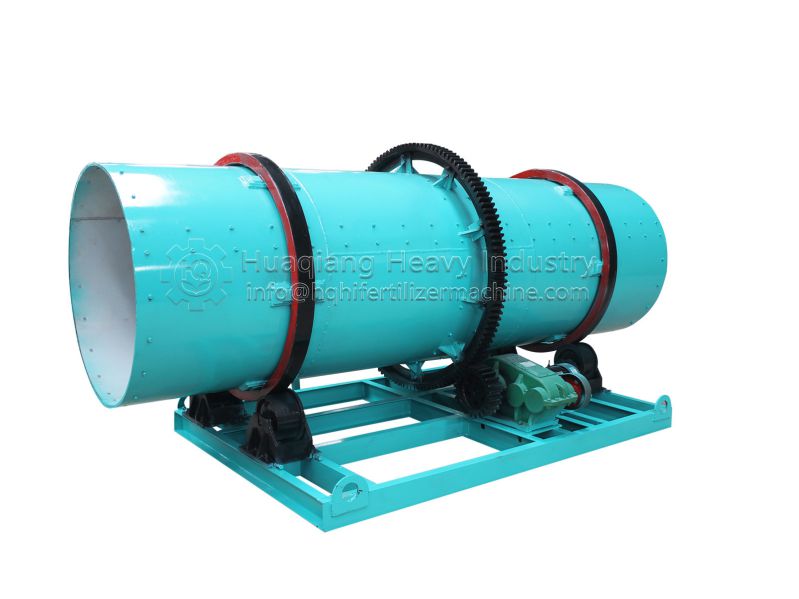
Rotary drum granulators optimize the nutrient content and application experience of organic fertilizer granules

The core value of organic fertilizer lies in nutrient supply and convenient application, and granule shape directly impacts these two properties. Insufficient nutrient retention reduces fertilizer efficiency, while uneven granules increase the difficulty of field application. By optimizing process details, rotary drum granulators can reduce nutrient loss during the granulation process while creating granule shapes that meet field needs.

In terms of nutrient retention, the rotary drum granulator’s low-temperature granulation is particularly advantageous. Relying on physical tumbling to form granules, the granulator eliminates the need for high pressure and maintains an internal temperature below 35°C, maximizing the retention of active ingredients in the raw materials. Its nutrient retention rate is 5%-8% higher than that of traditional equipment.

In terms of granule application experience, granules produced by rotary drum granulators better meet field needs. On the one hand, the equipment can produce uniform granules with a diameter of 2-5mm by adjusting the drum speed and die aperture, making it easier for farmers to apply fertilizers using seed drills and reducing the unevenness of manual spreading. On the other hand, the moderate hardness of the granules (compressive strength of 10-15N) prevents them from breaking down during transportation and slowly disintegrates in the soil, achieving “slow-release fertilizer supply” and avoiding the root burn caused by concentrated nutrient release.

For organic fertilizer companies pursuing “high quality and low price,” the high-nutrient, easy-to-apply granules produced by the rotary drum granulator can significantly enhance their product’s market competitiveness.