The Development Direction of NPK Fertilizer Production Lines in the Context of Green Agriculture

Amid the booming development of green agriculture, NPK fertilizer production lines are undergoing profound transformation, striding forward towards environmental protection, high efficiency, and intelligent technologies.
Technological innovation has become the core driving force behind the green development of NPK fertilizer production lines. Controlled-release technology continues to evolve. By optimizing coating materials and processes, it achieves precise nutrient release, tailored to the needs of crops at different growth stages, significantly improving fertilizer utilization and reducing nutrient loss and environmental pollution. For example, the bio-based polyurethane-coated controlled-release fertilizer developed by Weisheng Liansu has increased fertilizer utilization from 35% to 80%. Furthermore, breakthroughs are being made in the research and application of new synergists. For example, the addition of urease inhibitors and nitrification inhibitors effectively inhibits nitrogen conversion and prolongs fertilizer effectiveness.

Production models are shifting towards green, low-carbon, and circular approaches. On the one hand, energy utilization is becoming increasingly efficient, with clean energy sources like solar and wind power gradually being integrated into production lines, reducing dependence on traditional fossil fuels. On the other hand, waste recycling systems are continuously improving, with dust, waste residue, and wastewater from the production process being recycled and treated and re-entered production, maximizing resource utilization.

Product upgrades are closely aligned with the needs of green agriculture. Functional NPK fertilizers are emerging in large numbers, with specialized fertilizers developed for acidification, alkalinity control, and continuous cropping resistance, tailored to different soil types and crop characteristics. Furthermore, organic-inorganic compound NPK fertilizers are gaining popularity, combining the long-lasting properties of organic fertilizers with the quick-acting properties of inorganic fertilizers, improving soil fertility while ensuring crop nutrient availability.

Intelligence and precision are integrated throughout the entire production process. From raw material procurement and blending to production process control and finished product quality testing, sensors, the Internet of Things, and big data technologies enable precise control. This not only enables real-time monitoring of production parameters and timely adjustments and optimization to ensure stable product quality, but also provides farmers with customized fertilizer formulas based on soil testing data and crop growth models, enabling precise fertilization.

Under the trend of green agriculture, NPK fertilizer production lines must continue to innovate to meet agricultural production needs while protecting the ecological environment and achieving sustainable agricultural development.
Common Problems and Solutions in NPK Fertilizer Production Lines

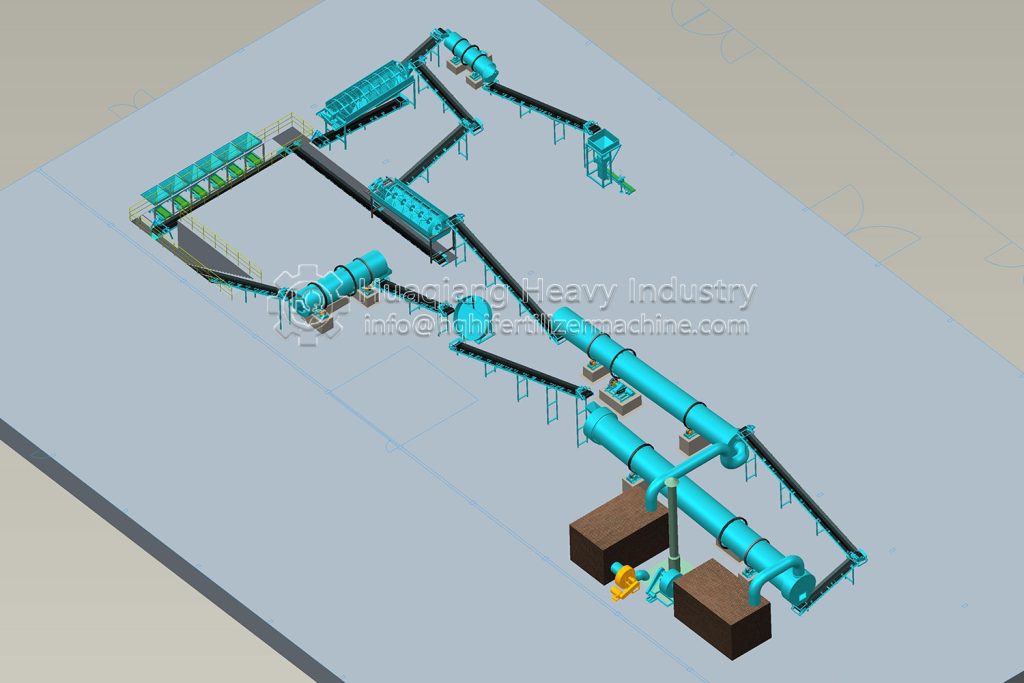
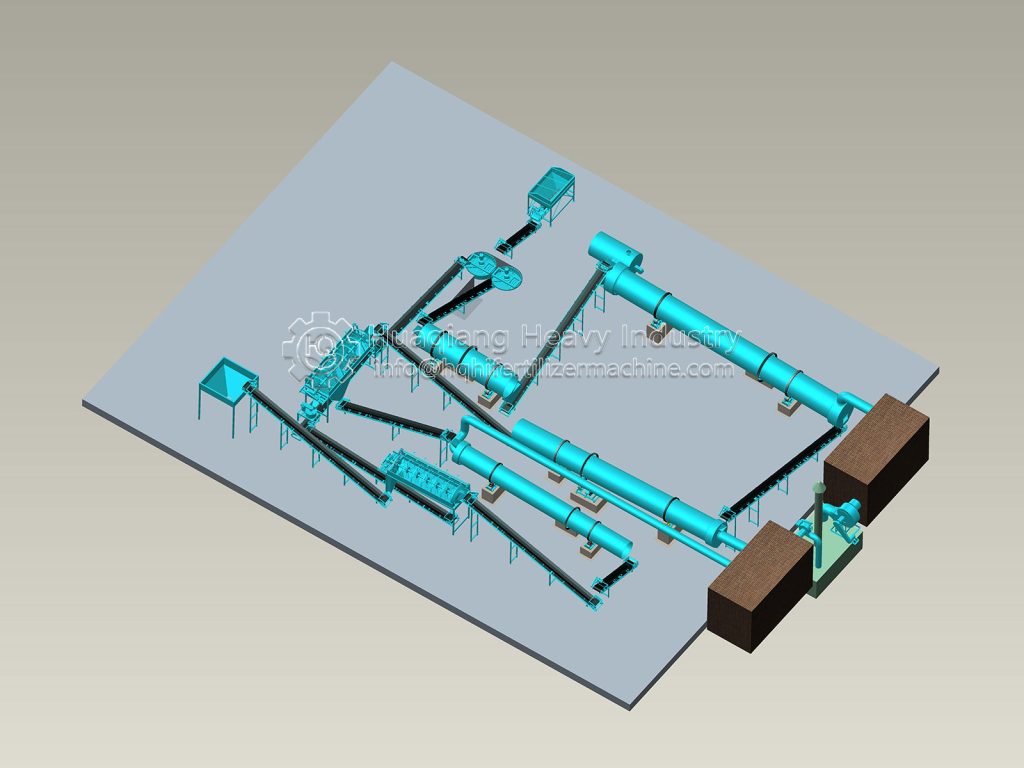
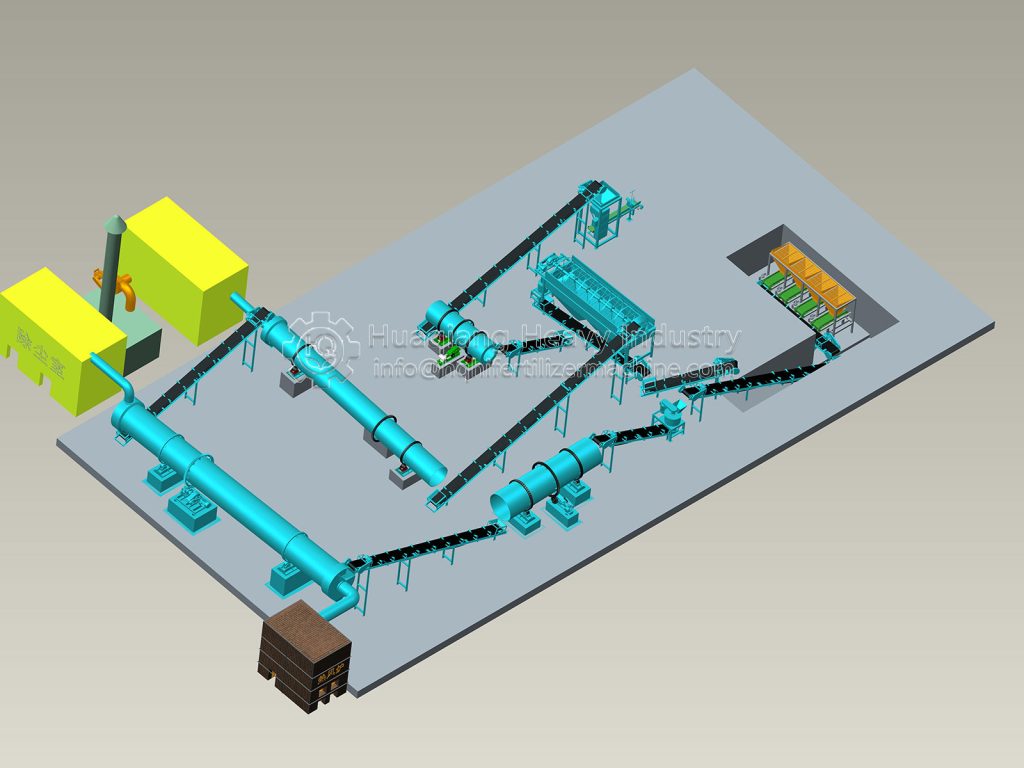
During continuous operation, NPK fertilizer production lines are susceptible to factors such as raw material characteristics, equipment status, and process parameters, leading to various problems that directly impact product quality and production efficiency. The following are three typical problems and their solutions.

Raw material pretreatment often faces the challenge of uneven particle size. Nitrogen, phosphorus, and potassium raw materials vary significantly in hardness and moisture content. For example, urea easily absorbs moisture and clumps, while phosphate slag has a high hardness. Using only a single crusher can result in significant particle size variation, leading to uneven nutrient distribution during subsequent mixing. The solution requires “classified crushing + precise screening”: urea is crushed with a hammer crusher, while phosphate slag is crushed with a crusher. After crushing, the raw materials are graded using multiple vibrating screens to ensure a uniform particle size within the appropriate range, significantly improving mixing uniformity.

Low particle formation rate is a frequent problem in the granulation process. During drum granulation, excessive water spraying can easily cause sticking to the wall and clumping. Excessive water spraying results in loose, fragile particles, resulting in a low particle formation rate. This problem requires dynamic parameter control: A humidity sensor is installed at the drum inlet to monitor the moisture content of the raw materials in real time. The spray volume is automatically adjusted via the PLC system based on moisture content changes. Furthermore, the drum speed is controlled based on raw material characteristics, and the internal lifter angle is adjusted to significantly improve the yield and maintain stability.

Product clumping is a prominent issue after drying and cooling. If the pellet moisture content does not drop to the acceptable standard after drying, or if the temperature difference during cooling is too large, the clumping rate will increase significantly over a period of storage. A two-pronged approach is necessary: ​​first, optimizing the drying process by implementing staged temperature control in the drum fertilizer dryer to ensure that the pellet moisture content at the outlet meets the standard. Second, upgrading the cooling system by using a dual-stage cooling system with air and water cooling to quickly reduce the pellet temperature to near room temperature. Adding an appropriate amount of anti-caking agent can effectively reduce the clumping rate.

Solving these problems requires dynamic adjustments based on the actual operating conditions of the NPK fertilizer production line. Through “precise control + equipment upgrades,” this approach can not only ensure product quality meets standards, but also improve the continuous operation stability of the production line and reduce production costs.

NPK compound fertilizer production lines promote green agricultural development

In promoting green agricultural development, NPK compound fertilizer production lines play a key role, providing strong support for sustainable agricultural development.
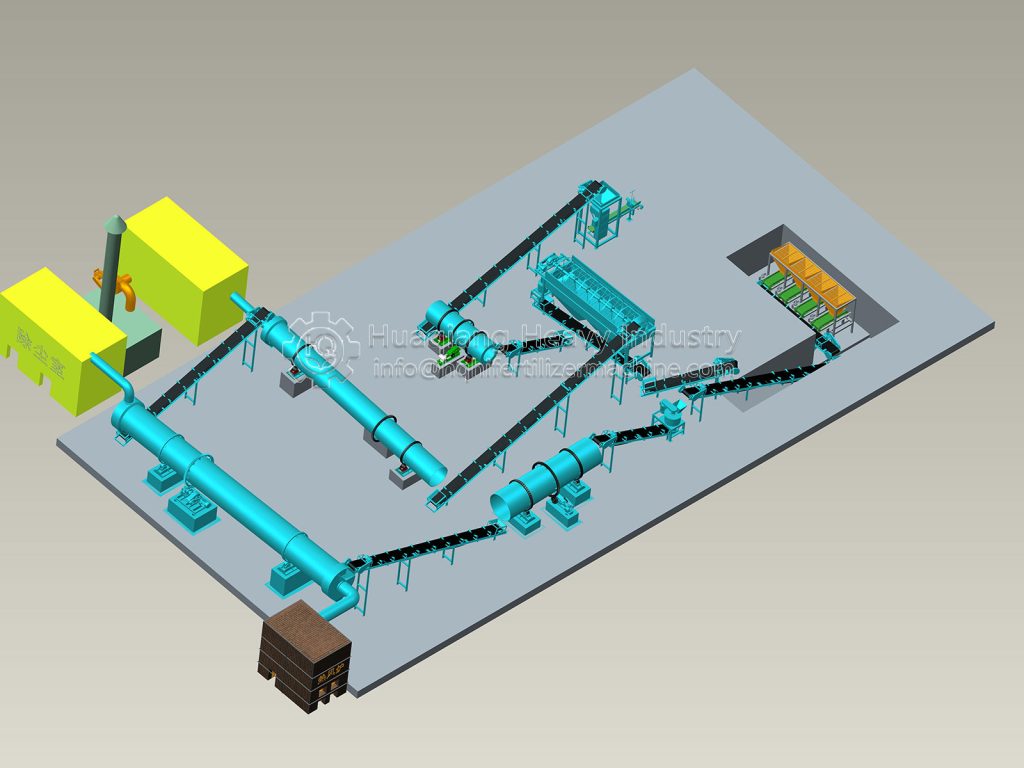
Traditional fertilization methods often lead to soil degradation and environmental pollution due to nutrient imbalances and low utilization rates. However, NPK compound fertilizer production lines, through scientific processes, produce high-quality fertilizers that meet the needs of green agriculture.

The production line prioritizes the use of natural and renewable raw materials, reducing reliance on synthetic raw materials. Raw materials are meticulously processed to remove impurities, improving fertilizer quality while minimizing environmental risks. Production emphasizes precision fertilization. By precisely controlling the ratios of nitrogen, phosphorus, potassium, and other elements, formulas can be customized for different crops and soils, maximizing crop needs while minimizing waste and pollution.

The production line features environmentally friendly technologies: advanced dust and odor removal equipment reduces dust and odor emissions; energy-saving equipment and processes reduce energy consumption, enabling recycling and green production. This type of fertilizer also improves soil structure. The appropriate nutrient supply promotes soil microbial growth, increases organic matter content, enhances soil fertility and water and fertilizer retention, and reduces soil erosion.

With growing consumer demand for green agricultural products, the fertilizer produced by this production line helps farmers cultivate high-quality crops, increasing the added value of agricultural products and farmers’ income while also meeting market demand for healthy food.

With its scientific production and environmentally friendly approach, the NPK compound fertilizer production line has become a key driver of green agricultural development. It will continue to innovate and contribute to the green transformation of agriculture.

The Critical Role of NPK Compound Fertilizer Production Lines in Agricultural Production

NPK compound fertilizer production lines are the core pillar of modern agricultural high-yield systems. Their systematic production processes directly determine fertilizer quality, which in turn profoundly impacts crop growth and agricultural sustainability. Faced with the conflict between continued population growth and limited arable land, these production lines are crucial for balancing food production and ecological protection.

The production lines utilize a automatic batching system to achieve a precise ratio of nitrogen, phosphorus, and potassium, addressing the nutrient imbalances of traditional single fertilizers. Leveraging electronic scales and automated control technology, these lines can be customized for different crops and soil types. For example, rice fertilizers can increase potassium content to enhance lodging resistance, while fruit and vegetable fertilizers can increase phosphorus to promote fruit enlargement, ensuring precise nutrient delivery to every inch of land.

Processes such as granulation and coating improve fertilizer utilization efficiency. The uniform granules formed by drum granulation facilitate mechanized fertilization, reducing labor costs. Coating technology uses a polymer protective film to achieve slow-release nutrients, extending the fertilizer’s effective life by over 30%, preventing nutrient loss and soil compaction associated with traditional fertilization. In arid areas, this can reduce fertilization frequency by 50%.

The standardized operation of the production line ensures consistent fertilizer quality. From raw material pretreatment, crushing and screening, to nutrient testing during finished product inspection, comprehensive quality control ensures that every batch meets standards. Data shows that standardized compound fertilizers can increase crop yields by an average of 15%-20% while reducing fertilizer usage by 30%, ensuring food security while promoting green agricultural development.

Facing the dual challenges of growing global food demand and scarce arable land resources, modern NPK compound fertilizer production lines, through technological innovation, continuously produce high-efficiency, environmentally friendly, and customized fertilizer products. These production lines have become a key link in agricultural production, injecting lasting momentum into high-quality agricultural development.

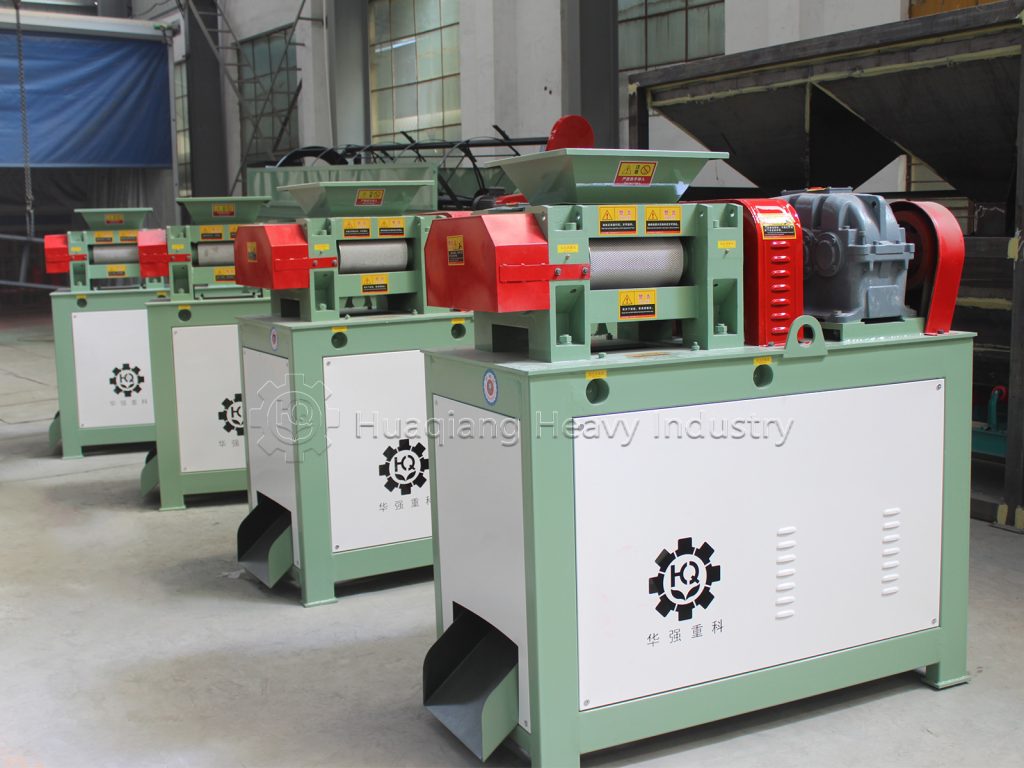
How to scientifically maintain the double roller press granulator

As an important organic fertilizer production equipment, the double roller press granulator can always maintain efficient operation, extend its service life, and escort production. Mastering scientific maintenance methods can not only reduce the hidden dangers of failure, but also enable the equipment to output high-quality particles stably for a long time.

Daily maintenance needs to form a standardized process. Before starting the machine, in addition to checking the connection and fasteners of the components, it is necessary to focus on whether the feed port is unobstructed, remove possible foreign matter, and avoid material jamming and damage to the equipment after starting. During operation, in addition to paying attention to the rotation and sound of the rollers, it is also necessary to observe the temperature of the motor. If overheating occurs, the machine should be shut down to cool down to prevent the motor from burning. The cleaning work after shutdown should be thorough. A special brush can be used to clean the residual material in the roller texture, and compressed air can be used to blow the equipment gap to prevent the material from corroding the components after moisture and agglomeration.

Maintenance of key components must be accurate and in place. The parallelism of the rollers needs to be checked every time they run for a period of time. If there is an offset, it should be calibrated in time to ensure uniform extrusion force; when the surface is worn to a certain extent, it can be polished and repaired to extend the service life. Bearing lubrication requires the use of lubricating oil of suitable types, which should be refilled at least once a month. Before refilling, clean the impurities in the oil filling port to prevent contamination of the lubrication system. The chain of the transmission system should be regularly smeared with chain oil, and the gears should be checked for meshing. If abnormal noise or jamming is found, timely adjustments should be made to avoid affecting the granulation efficiency due to poor power transmission.

Well-maintained equipment can reduce downtime, maintain stable granulation efficiency and granule quality, and reduce long-term use costs. Choose a double roller press granulator and cooperate with scientific maintenance to make your organic fertilizer production line continue to be efficient and your profits more guaranteed.