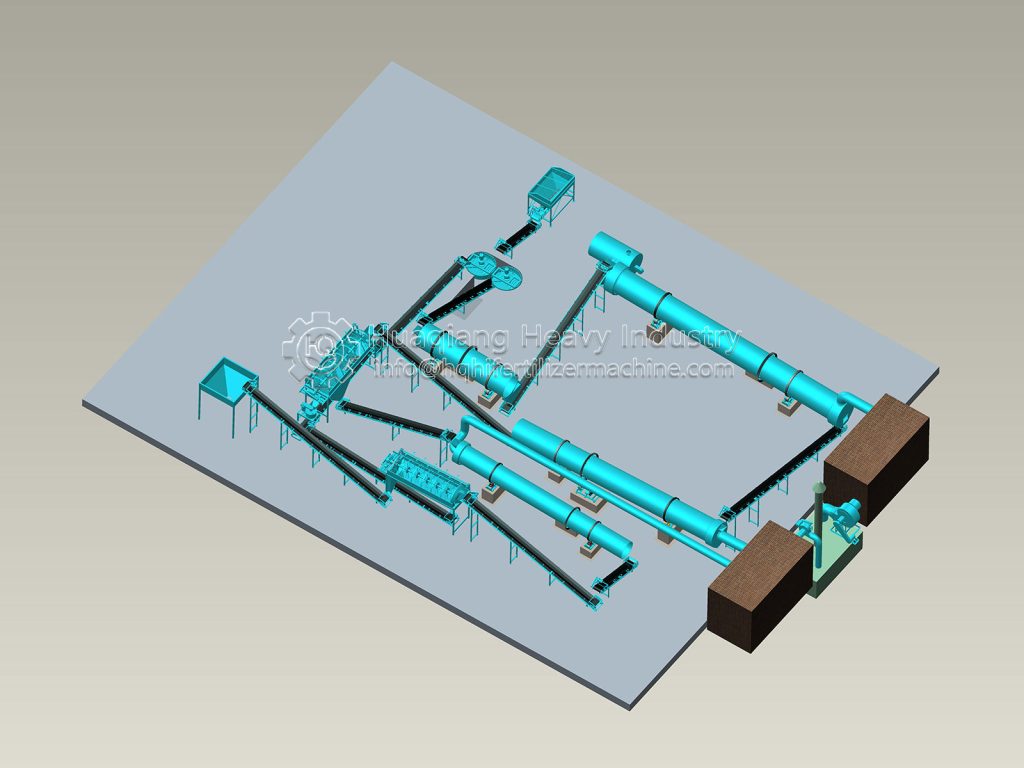
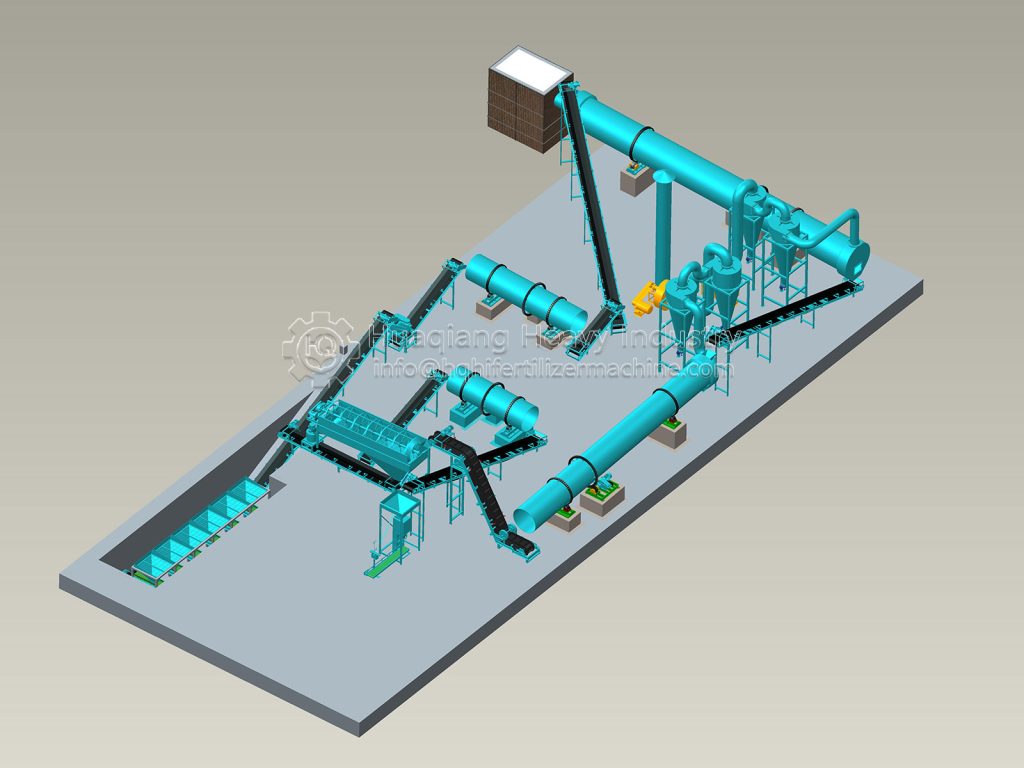
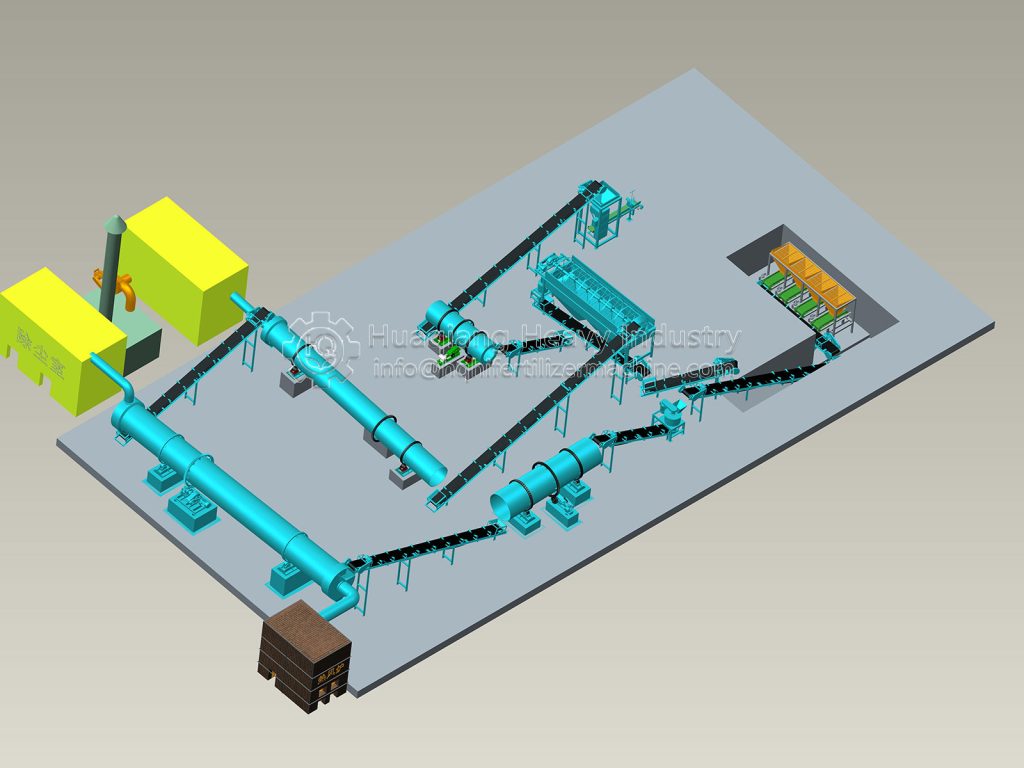
NPK fertilizer production line: Scientific ratios help boost vegetable yield and quality

NPK fertilizer is a scientifically blended combination of the three core nutrients – Nitrogen (N), Phosphorus (P), and Potassium (K) – designed specifically to meet vegetable growth needs. Modern NPK fertilizer production lines use precise blending processes to create high-efficiency compound fertilizers. These fertilizers can significantly improve vegetable yield, quality, and disease resistance.

1.Promotes Rapid Vegetable Growth

Nitrogen is key for leaf and stem growth in vegetables. Adequate nitrogen fertilizer speeds up leaf development in leafy greens like spinach and lettuce, helping plants thrive with vibrant green color.

2.Boosts Root Development, Flowering, and Fruiting

Phosphorus encourages root growth. It’s especially vital for fruiting vegetables like tomatoes and cucumbers, improving fruit setting rates and shortening the ripening cycle.

3.Enhances Stress Tolerance and Quality

Potassium fertilizer strengthens a vegetable’s resistance to drought and disease. It also improves the sweetness and taste of fruits. Crops like peppers and eggplants develop brighter colors and better storage and transport tolerance after application.

The Technical Edge of NPK Fertilizer Production Lines

Modern NPK fertilizer production lines use computer-controlled dosing systems. This ensures precise ratios of nitrogen, phosphorus, and potassium (like 16-16-16 or 20-10-10) and allows for adding trace elements (such as calcium and magnesium). This meets the specific nutritional needs of different vegetable varieties. The granulation process creates slow-release fertilizer pellets, reducing nutrient loss.

Scientifically blended NPK fertilizer is key to high vegetable yields and quality. Modern production line technology further improves fertilizer efficiency, helping growers achieve both economic and ecological benefits.
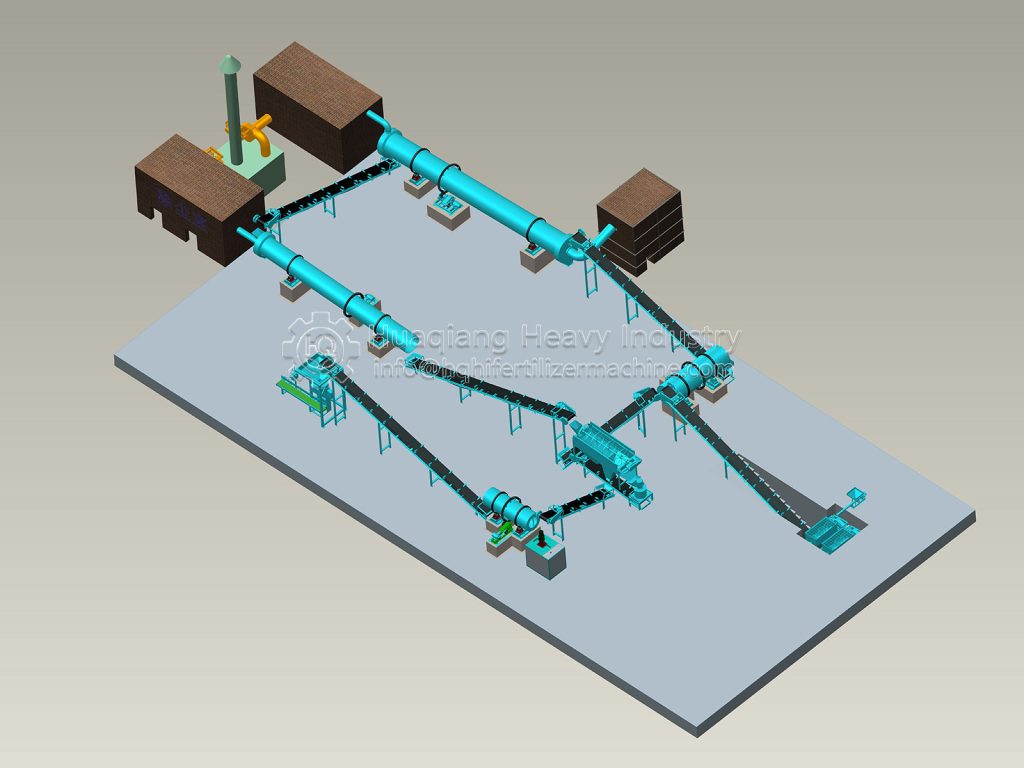
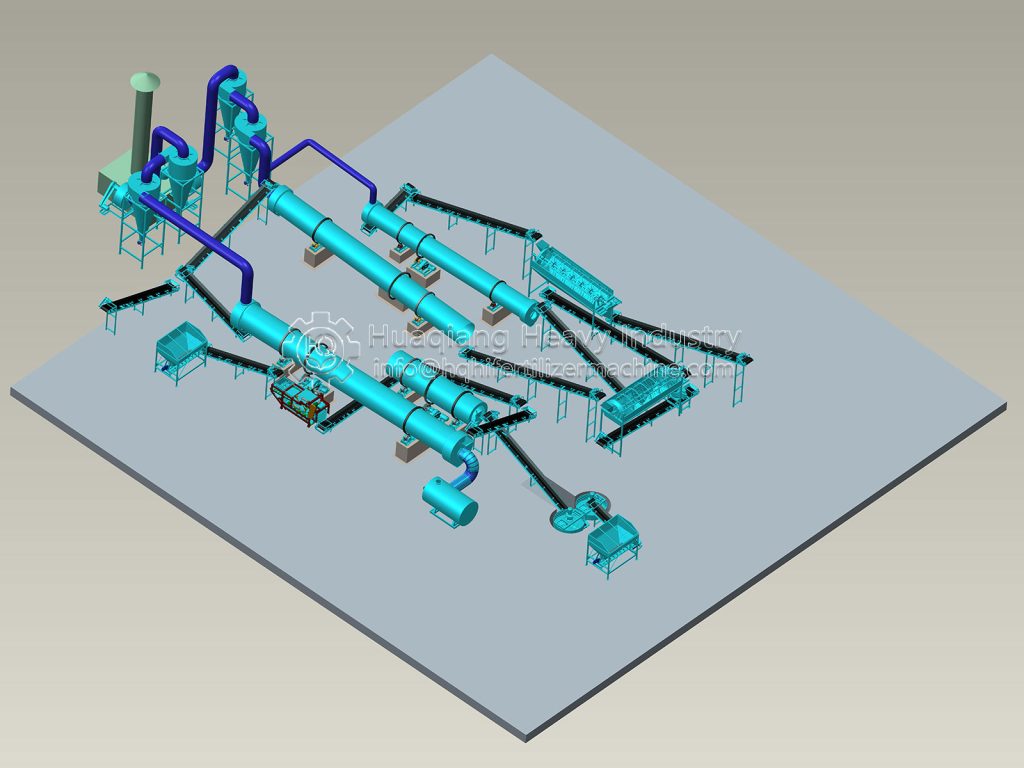
Technological innovation in NPK fertilizer production line equipment is driving industry development

In the fertilizer production industry, technological innovation in NPK fertilizer production line equipment is driving the industry’s development at an unprecedented pace, continuously improving production efficiency and product quality.

Early NPK fertilizer production equipment was relatively simple, resulting in low production efficiency and difficulty in ensuring product quality. Today, with the rapid advancement of technology, a range of advanced technologies have been applied to production line equipment.

Technological innovation in hybrid equipment is particularly important. The emergence of intelligent batching systems has enabled more precise batching of various raw materials. Using sensors to monitor the flow and weight of raw materials in real time, the control system can precisely adjust the feed rate to ensure that the mixing ratio error is kept within a very small range. Furthermore, new mixing structure designs, such as double axis mixers, can achieve uniform mixing of materials in all directions in a shorter time.

Granulation technology has also achieved significant breakthroughs. Some advanced granulation equipment uses spray drying granulation technology to produce fertilizers with uniform granules and excellent solubility. This technology not only improves fertilizer quality but also meets the needs of different crops and fertilization methods. Furthermore, the automation level of granulation equipment continues to improve, allowing it to automatically adjust granule size, shape, and strength according to set parameters. Energy-saving hot air furnaces and efficient cooling systems are widely used in drying and cooling equipment. These furnaces utilize advanced combustion technology, improving energy efficiency and reducing exhaust emissions. The efficient cooling system quickly cools fertilizer granules to the appropriate temperature, ensuring stable physical properties.

NPK fertilizer production lines have achieved a significant leap in automation control. PLC control systems allow operators to centrally monitor and operate the entire production line from a central control room. The equipment automatically detects faults and issues timely alarms, significantly improving production safety and reliability.

Furthermore, with increasingly stringent environmental protection requirements, NPK fertilizer production lines are continuously innovating in environmental protection technologies. For example, the use of efficient dust removal equipment and exhaust gas treatment systems reduces dust and exhaust emissions during the production process, achieving green production.

Why invest in an NPK fertilizer production line?

NPK fertilizer, a compound fertilizer containing the three key nutrients nitrogen, phosphorus, and potassium, can meet the nutritional needs of different crops at different growth stages. It is indispensable in agricultural production, and investing in an NPK fertilizer production line has many important implications.

From an agricultural production perspective, nutrient requirements vary significantly between different crops and soil types. For example, rice requires a high nitrogen content, cotton has a higher potassium requirement, and vegetables require a balanced supply of nitrogen, phosphorus, and potassium. NPK fertilizers can flexibly adjust the ratio of the three elements based on actual needs, providing targeted nutrients to crops and effectively addressing the nutritional imbalance of single fertilizers. This helps crops grow more vigorously, achieve higher yields, and improve quality. It perfectly meets the needs of modern agriculture for precision fertilization and provides strong support for high and stable agricultural yields.

At the market level, NPK fertilizer market demand is stable, and NPK fertilizer production lines have enormous potential. As the global population grows, the demand for food and cash crops continues to rise, and agricultural production is increasingly dependent on high-efficiency fertilizers. At the same time, farmers’ awareness of scientific fertilization continues to grow. More and more people are realizing the advantages of NPK fertilizers and choosing them over traditional single fertilizers, driving continued growth in the NPK fertilizer market. Furthermore, NPK fertilizers have a wide range of applications, covering food crops, cash crops, fruits and vegetables, and other sectors. Their broad market reach offers investors stable and substantial returns.

In terms of product competitiveness, NPK fertilizers offer advantages over traditional single fertilizers, such as comprehensive nutritional content, high utilization rate, and convenient application. Appropriate application of NPK fertilizers can reduce fertilizer waste, lower agricultural production costs, and mitigate soil problems caused by single fertilizer application. This aligns with the concept of sustainable agricultural development, provides a competitive advantage, and helps investors capture a larger market share.

In summary, investing in NPK fertilizer production lines aligns with agricultural development trends, meets market demand, and offers significant economic and social value, making it a highly promising investment opportunity.

NPK fertilizer production lines are a key enabler for agricultural development

NPK fertilizer (nitrogen-phosphorus-potassium compound fertilizer) production lines are core equipment for modern agriculture. By scientifically blending nitrogen, phosphorus, and potassium, they provide precise nutrients to crops. This is of great significance to high-quality agricultural development, and its impact is reflected in three key areas.

NPK fertilizer production lines are a stabilizer for ensuring food security. With population growth and limited arable land, increasing yields is crucial. NPK fertilizer production lines can customize balanced compound fertilizers based on the fertilizer needs of crops like wheat and rice, addressing the nutrient deficiencies of traditional single fertilizers. Data shows that high-quality NPK compound fertilizers can increase grain yields by 15%-25% per mu, effectively alleviating pressure on food supply and strengthening national food security.

NPK fertilizer production lines are an accelerator for promoting agricultural modernization. Traditional fertilizer production relies on manual labor, resulting in low efficiency and uneven nutrient distribution. NPK production lines, however, fully automate raw material mixing, granulation, drying, and packaging. A modern production line can produce hundreds of tons of fertilizer per day, significantly improving efficiency. Precise temperature and humidity control ensures uniform fertilizer particles and consistent nutrient content, reducing fertilizer waste and helping transform agriculture from extensive to intensive farming.

NPK fertilizer production lines are the “guardians” of sustainable agriculture. Today, NPK production lines can incorporate slow-release technology to produce slow-release compound fertilizers, which slowly release nutrients, prolong fertilizer effectiveness, and reduce soil and water pollution caused by fertilizer runoff. Some lines can also utilize agricultural waste such as straw and livestock manure as auxiliary materials, achieving resource recycling and reducing the environmental impact of chemical fertilizer production, meeting the needs of green agriculture.

In short, by ensuring yield, improving efficiency, and promoting green development, NPK fertilizer production lines have become an indispensable core force in agricultural modernization, injecting lasting momentum into sustainable agricultural development.

Key requirements for choosing granulators in NPK fertilizer production lines

In compound fertilizer production, the granulator is the core equipment of an NPK fertilizer production line. It directly affects pellet quality, production efficiency, and product competitiveness. With the advancement of agricultural modernization, the market demands higher standards for NPK fertilizer granulation.

1.Strong Raw Material Adaptability

A quality NPK fertilizer granulator must handle various raw material ratios.It needs to work with mixes having different proportions of Nitrogen (N), Phosphorus (P), and Potassium (K).It should be able to process functional formulas that include added trace elements.It must handle raw materials with high moisture or high viscosity.

2.High Granulation Rate and Uniform Particles

A professional NPK granulator should achieve a granulation rate above 90%, minimizing recycled material.Particle size must be uniform, with over 85% of pellets sized between 2-4mm.Pellets should be well-rounded with a smooth surface finish. 

3.Excellent Energy Efficiency and Environmental Performance

Modern NPK granulators need energy consumption per unit at least 20% below industry standards.They must include dust recovery systems, keeping dust emissions ≤30mg/m³.Noise levels should be controlled below 85 decibels.

4.Durable and Easy to Maintain

A quality granulator’s design should use wear-resistant alloy materials for key parts, ensuring a lifespan of over 5 years.Modular design allows for quick replacement of wear parts.Multiple access points provide ample space for maintenance.The lubrication system should be highly automated.

Granulator Selection Advice

Small lines (1-5 tons/hour): Disc Granulators are suitable.Medium lines (5-15 tons/hour): Rotary Drum Granulators are recommended.Large lines (15+ tons/hour): Prilling tower systems should be considered.

Selecting an NPK fertilizer granulator that meets these requirements will significantly boost production efficiency and product quality.

NPK fertilizer production lines are a key enabler for agricultural development.

NPK fertilizer (nitrogen-phosphorus-potassium compound fertilizer) production lines are core equipment for modern agriculture. By scientifically blending nitrogen, phosphorus, and potassium, they provide precise nutrients to crops. This is of great significance to high-quality agricultural development, and its impact is reflected in three key areas.

NPK fertilizer production lines are a stabilizer for ensuring food security. With population growth and limited arable land, increasing yields is crucial. NPK fertilizer production lines can customize balanced compound fertilizers based on the fertilizer needs of crops like wheat and rice, addressing the nutrient deficiencies of traditional single fertilizers. Data shows that high-quality NPK compound fertilizers can increase grain yields by 15%-25% per mu, effectively alleviating pressure on food supply and strengthening national food security.

NPK fertilizer production lines are an accelerator for promoting agricultural modernization. Traditional fertilizer production relies on manual labor, resulting in low efficiency and uneven nutrient distribution. NPK production lines, however, fully automate raw material mixing, granulation, drying, and packaging. A modern production line can produce hundreds of tons of fertilizer per day, significantly improving efficiency. Precise temperature and humidity control ensures uniform fertilizer particles and consistent nutrient content, reducing fertilizer waste and helping transform agriculture from extensive to intensive farming.

NPK fertilizer production lines are the “guardians” of sustainable agriculture. Today, NPK production lines can incorporate slow-release technology to produce slow-release compound fertilizers, which slowly release nutrients, prolong fertilizer effectiveness, and reduce soil and water pollution caused by fertilizer runoff. Some lines can also utilize agricultural waste such as straw and livestock manure as auxiliary materials, achieving resource recycling and reducing the environmental impact of chemical fertilizer production, meeting the needs of green agriculture.

In short, by ensuring yield, improving efficiency, and promoting green development, NPK fertilizer production lines have become an indispensable core force in agricultural modernization, injecting lasting momentum into sustainable agricultural development.

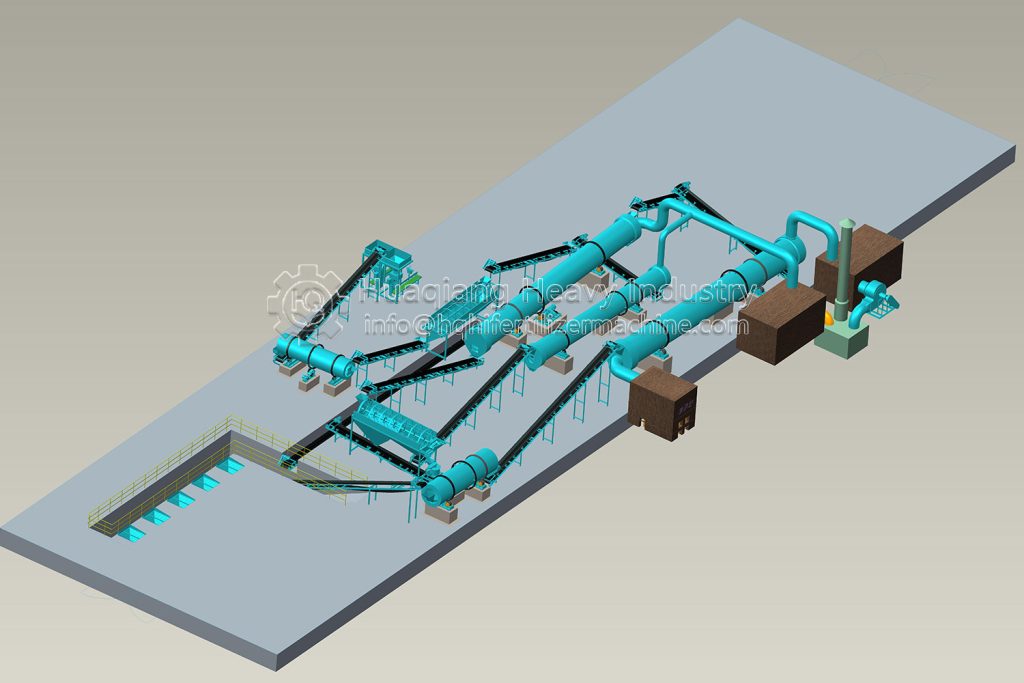
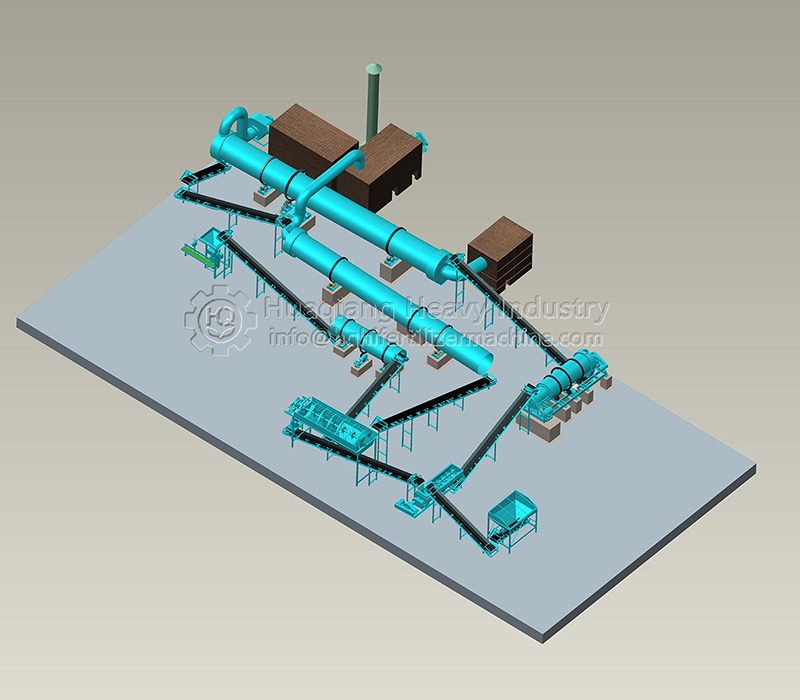
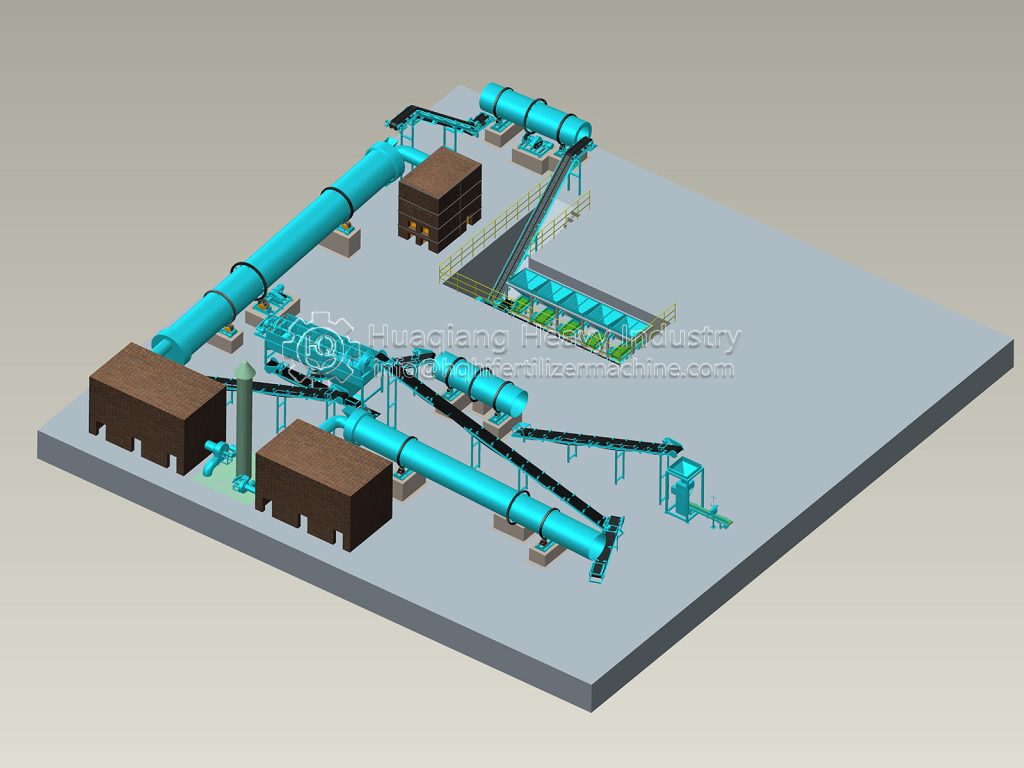
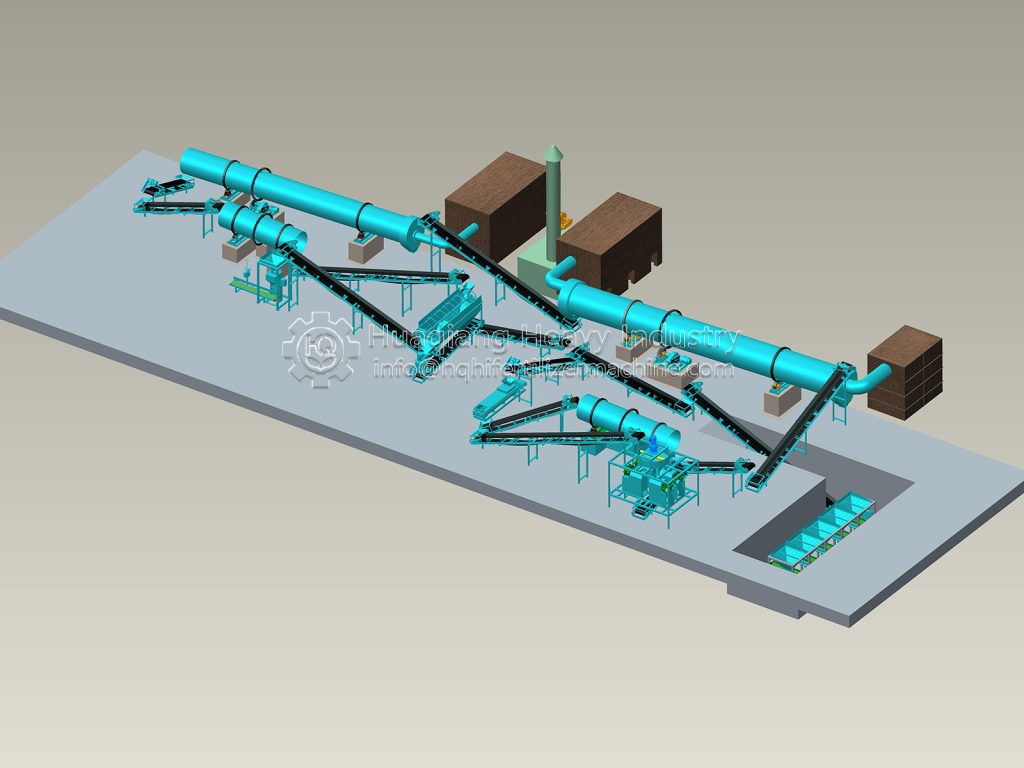
How does a NPK fertilizer production line produce fertilizer?

A NPK fertilizer production line is a modern production system that scientifically blends the three key elements, nitrogen, phosphorus, and potassium, to create compound fertilizer. From raw material processing to finished product packaging, each step embodies the principles of precision and standardization.

Raw material pretreatment is the foundation of production. Nitrogen fertilizer raw materials, primarily ammonia and urea, require crushing and screening to remove impurities. Phosphorus sources, typically monoammonium phosphate and superphosphate, are ground to a desired fineness. Potassium salts, primarily potassium chloride and potassium sulfate, are dried to reduce moisture. These three raw materials are metered according to crop requirements and precisely mixed using an intelligent batching system.

Mixed granulation is the core step. The pretreated raw materials enter the agitator for thorough homogenization before being fed into the rotary drum granulator. The inclined rotating drum drives the material, while a spray system adds an appropriate amount of water or steam, allowing the material to gradually agglomerate into granules through friction and adhesion. Particle size can be controlled by adjusting the drum speed and the material’s residence time, resulting in rounded granules. This process is highly adaptable and can handle a variety of raw material formulations. It also produces granules with high strength and good water solubility, making it suitable for large-scale continuous production. After granulation, the granules are screened and graded, and unqualified granules are returned for reprocessing to ensure consistent product size.

Post-processing determines fertilizer stability. The granules enter a dryer, where moisture is controlled within a reasonable range at an appropriate temperature to prevent clumping. After cooling, they are sprayed with an anti-caking agent in a film coating machine to form a protective film. Finally, they are packaged in standard bags by a quantitative packaging machine for sale.

NPK fertilizer production line transforms chemical raw materials into “nutrient packs” that provide a balanced supply to crops. This not only addresses the nutrient imbalance of single fertilizers, but also improves fertilizer utilization through industrialized production, providing efficient and stable nutrient support for modern agriculture.

NPK compound fertilizer production lines meet diverse needs

The diversified development of modern agriculture has created diverse fertilizer demands. With its strong adaptability and flexibility, NPK compound fertilizer production lines perfectly meet these diverse needs, providing comprehensive services for the vigorous development of modern agriculture.

Different crops have vastly different nutrient requirements during growth. NPK compound fertilizer production lines can customize fertilizer formulas based on the characteristics of each crop. For grain crops like wheat and rice, the line can produce fertilizers with appropriate nitrogen, phosphorus, and potassium content and ratios, improving yield and quality. For cash crops like cotton and tobacco, the line can adjust the formula to increase the content of certain trace elements, thereby enhancing the crop’s resilience and economic value.

Soil conditions are also a significant factor influencing crop growth. In acidic soils, NPK compound fertilizer production lines can produce slightly alkaline fertilizers to neutralize soil acidity. In areas with poor soils, the line can produce fertilizers with high nutrient content and long-lasting effects, rapidly improving soil fertility. Through this customized fertilizer production, NPK compound fertilizer production lines can help farmers overcome the planting challenges presented by varying soil conditions. With increasing attention to food safety and environmental protection, the demand for green and environmentally friendly fertilizers is growing. The NPK compound fertilizer production line actively responds to this trend, utilizing environmentally friendly raw materials and clean production processes to produce low-pollution, low-residue fertilizers. These fertilizers not only help reduce agricultural non-point source pollution and protect the ecological environment, but also produce agricultural products that meet green and organic standards, satisfying consumer demand for healthy food.

The NPK compound fertilizer production line will continue to keep pace with agricultural development, continuously innovating and improving, and providing a stronger foundation for the sustainable development of modern agriculture.NPK compound fertilizer production lines meet diverse needs.

Common Problems in NPK Fertilizer Production Lines

NPK compound fertilizer is synthesized from chemical raw materials needed by various plants. NPK fertilizer plays a vital role in agricultural production, contributing to increased production and income. So, what are some common problems in NPK fertilizer production lines?

NPK fertilizer production lines naturally require specialized production equipment. However, due to the characteristics of compound fertilizer, fertilizer equipment is susceptible to corrosion. Some frequently used equipment has experienced severe corrosion in less than a year. While normal wear and tear is inevitable, necessary equipment maintenance can extend the lifespan of fertilizer processing equipment.

When crushing raw materials, ensure that they are free of large lumps. Stones or even iron mixed into the compound fertilizer raw materials can cause serious damage to the high-speed mill rotor.

Mechanical equipment relies on motors and reducers for power. Regular lubrication ensures optimal operation. There are many types of lubricants available, and the appropriate grease should be selected based on climatic conditions and mechanical transmission principles.

Equipment varies in production efficiency, and its use should be tailored to that efficiency. For example, during the batching stage, forklifts should be allowed to unload materials slowly to avoid damage. When mixing, avoid overfilling the mixer with raw materials; add them only after the mixer is started.

In short, the smooth operation of an NPK fertilizer production line requires meticulous control of every step. Only by incorporating solutions to these common problems into daily production management can we ensure the maximum stable output of NPK compound fertilizer.

NPK compound fertilizer production lines promote green agricultural development

In promoting green agricultural development, NPK compound fertilizer production lines play a key role, providing strong support for sustainable agricultural development.

Traditional fertilization methods often lead to soil degradation and environmental pollution due to nutrient imbalances and low utilization rates. However, NPK compound fertilizer production lines, through scientific processes, produce high-quality fertilizers that meet the needs of green agriculture.

The production line prioritizes the use of natural and renewable raw materials, reducing reliance on synthetic raw materials. Raw materials are meticulously processed to remove impurities, improving fertilizer quality while minimizing environmental risks. Production emphasizes precision fertilization. By precisely controlling the ratios of nitrogen, phosphorus, potassium, and other elements, formulas can be customized for different crops and soils, maximizing crop needs while minimizing waste and pollution.

The production line features environmentally friendly technologies: advanced dust and odor removal equipment reduces dust and odor emissions; energy-saving equipment and processes reduce energy consumption, enabling recycling and green production. This type of fertilizer also improves soil structure. The appropriate nutrient supply promotes soil microbial growth, increases organic matter content, enhances soil fertility and water and fertilizer retention, and reduces soil erosion.

With growing consumer demand for green agricultural products, the fertilizer produced by this production line helps farmers cultivate high-quality crops, increasing the added value of agricultural products and farmers’ income while also meeting market demand for healthy food.

With its scientific production and environmentally friendly approach, the NPK compound fertilizer production line has become a key driver of green agricultural development. It will continue to innovate and contribute to the green transformation of agriculture.