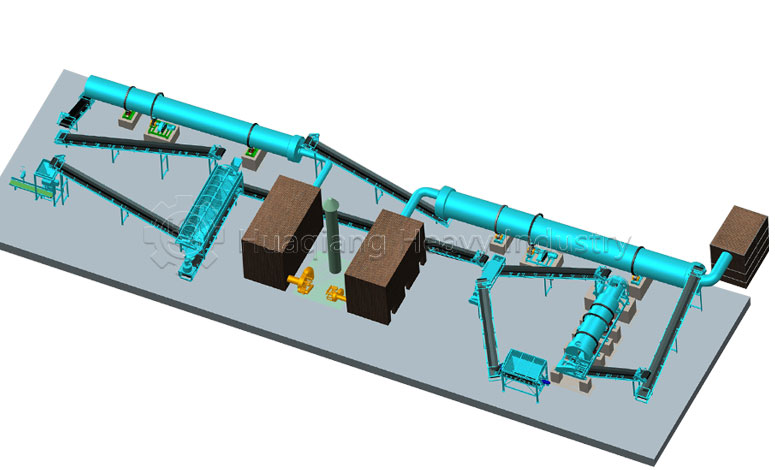
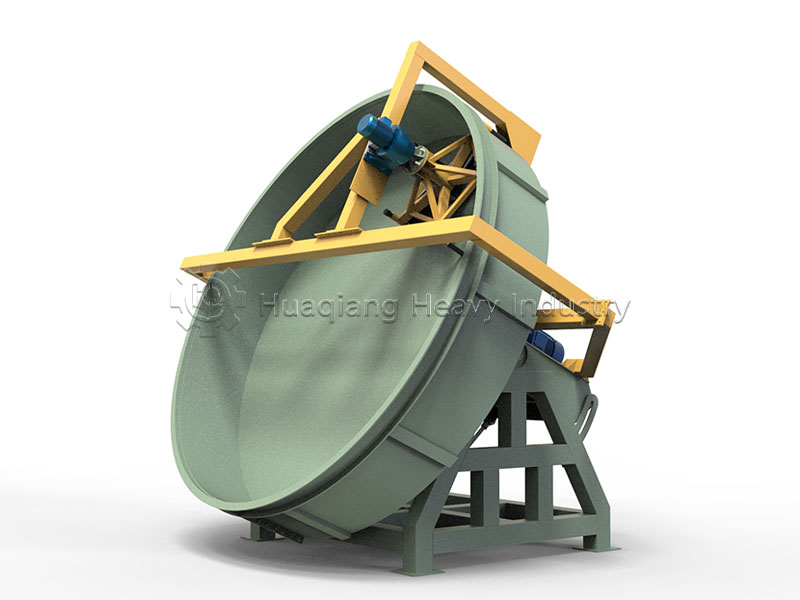
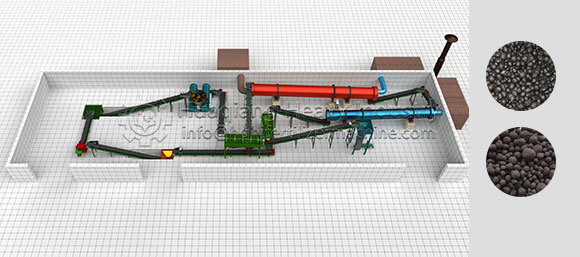
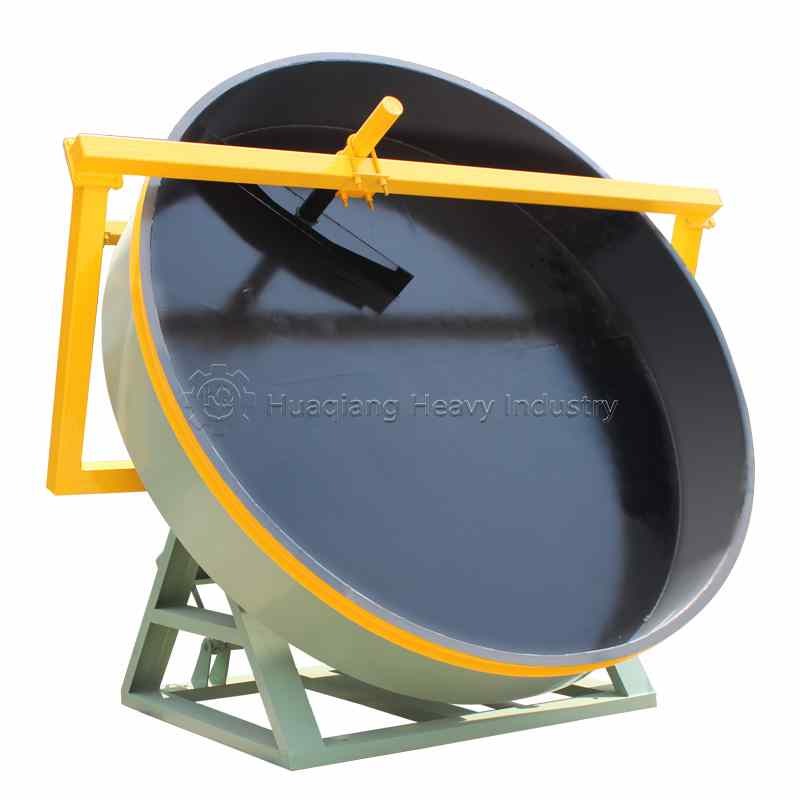
Disc granulation production line: A new solution for low-energy, circular organic fertilizer formation

The innovative value of the disc granulation production line lies not only in the pellet forming itself, but also in its core design logic of “low-energy circulation,” perfectly meeting the needs of modern agricultural waste resource utilization.

Its core advantage lies in “highly efficient energy utilization.” The disc granulation production line utilizes the natural forces of gravity and centrifugal force to achieve agglomeration and forming, eliminating the need for additional high-intensity mechanical pressure and significantly reducing motor load. Simultaneously, the frictional heat naturally generated during the material’s rotation within the disc helps evaporate excess moisture, reducing energy consumption in subsequent drying stages.

In terms of raw material recycling, this production line demonstrates strong ecological compatibility. It can efficiently process various agricultural wastes such as straw, livestock manure, and mushroom residue. Especially for “non-standard raw materials” with high moisture content (25%-40%) and low viscosity, stable pelleting can be achieved simply by adjusting the disc’s tilt angle and rotation speed, without complex dehydration or the addition of large amounts of binders.

“Lightweight” operation and maintenance are also unique highlights. The disc granulation production line has a simple structure with no complex transmission or enclosed components. The material flow path is clear, reducing the likelihood of blockages or material residue. Daily cleaning and maintenance require only simple operations, lowering labor costs.

Furthermore, the formed granules, due to their natural agglomeration, have a rich porous structure. When applied to the soil, they quickly integrate into the topsoil, enhancing water and fertilizer retention while promoting soil microbial activity, perfectly aligning with ecological planting principles.

Oil palm empty fruit bunch: “Green Raw Materials” for organic fertilizer production lines

As a major waste product of the oil palm processing industry, oil palm empty fruit bunch, with their rich organic matter and unique physical properties, have become a high-quality raw material for organic fertilizer production lines. Their deep integration with various stages of the production line not only realizes waste resource utilization but also optimizes the organic fertilizer production process.

In the raw material pretreatment stage, oil palm empty fruit bunch need to be processed by crushing equipment to break them into 1-3 mm granular materials. This removes coarse and hard impurities while retaining an appropriate amount of fiber structure. The crushed material is then mixed with livestock and poultry manure, microbial agents, etc., in a specific ratio. Its loose properties naturally adjust the carbon-nitrogen ratio of the mixture while improving its permeability, laying the foundation for subsequent fermentation.

In the fermentation stage, oil palm empty fruit bunch a highly efficient combination with a compost turning machine. During the composting and fermentation of the mixed materials, the fibrous structure of the oil palm empty fruit bunch prevents the pile from compacting, while the periodic turning by the compost turner further enhances aeration, allowing aerobic microorganisms to multiply rapidly and maintaining the composting temperature at a stable 55-65℃.

In the post-processing stage, the composted oil palm empty fruit bunches are suitable for the forming requirements of organic fertilizer granulators. Their residual fiber toughness enhances granule cohesion, preventing breakage due to compression during granulation and avoiding die clogging, thus improving granulation efficiency. The formed granular organic fertilizer, retaining some of its fibrous structure, possesses both long-lasting fertilizing effects and soil-improving functions.

The deep integration of oil palm empty fruit bunch with the organic fertilizer production line solves the waste disposal problem and optimizes the production process through the characteristics of the raw materials.

Organic fertilizer production line processing chicken manure: A comprehensive analysis of key considerations

Chicken manure, rich in nutrients and widely available, is a high-quality raw material for organic fertilizer production. However, due to its high moisture content, susceptibility to fermentation and spoilage, and the presence of impurities, key processes must be carefully controlled to ensure product quality and smooth production.

Pretreatment is fundamental. Fresh chicken manure typically has a moisture content of 70%-80%. It needs to be reduced to 55%-60% using organic fertilizer production equipment to prevent anaerobic putrefaction during fermentation. Simultaneously, impurities such as stones, plastics, and feathers must be removed manually or mechanically to prevent damage to subsequent equipment. If the chicken manure is severely clumped, it needs to be crushed to ensure uniform particle size, laying the foundation for fermentation.

The fermentation stage is crucial. Chicken manure has a high nitrogen content and needs to be mixed with straw, sawdust, and other carbon source materials in a specific ratio to adjust the carbon-to-nitrogen ratio to 25-30:1, promoting microbial activity. During fermentation, the compost pile needs to be turned regularly using a compost turning machine to ensure aeration and maintain a high temperature of 55-65℃ for 7-15 days to achieve sterilization, insect control, and decomposition.

Subsequent processing must be standardized. The decomposed chicken manure needs to be crushed and screened again to ensure there are no large pieces of uncomposted material, with a particle size controlled within 2 mm for easy granulation. During granulation, the material moisture content must be controlled at 20%-30% to avoid clogging the die holes; the drying temperature should not exceed 80℃ to prevent damage to organic matter and beneficial microorganisms. Simultaneously, the entire organic fertilizer production line must be properly sealed and deodorized to reduce odor diffusion and meet environmental protection requirements.

The connecting process of flat die granulator in organic fertilizer production line

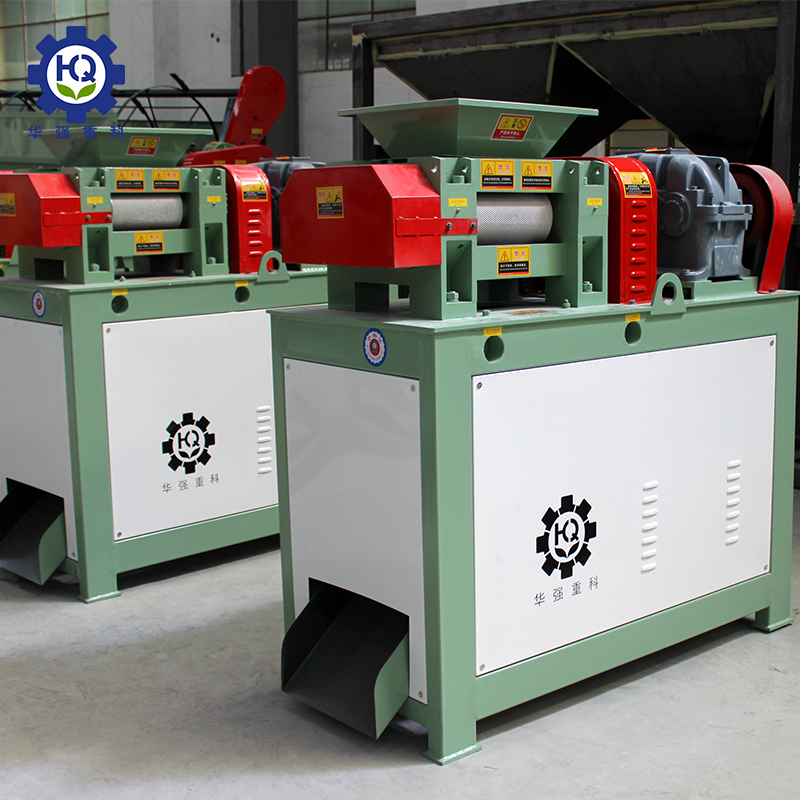
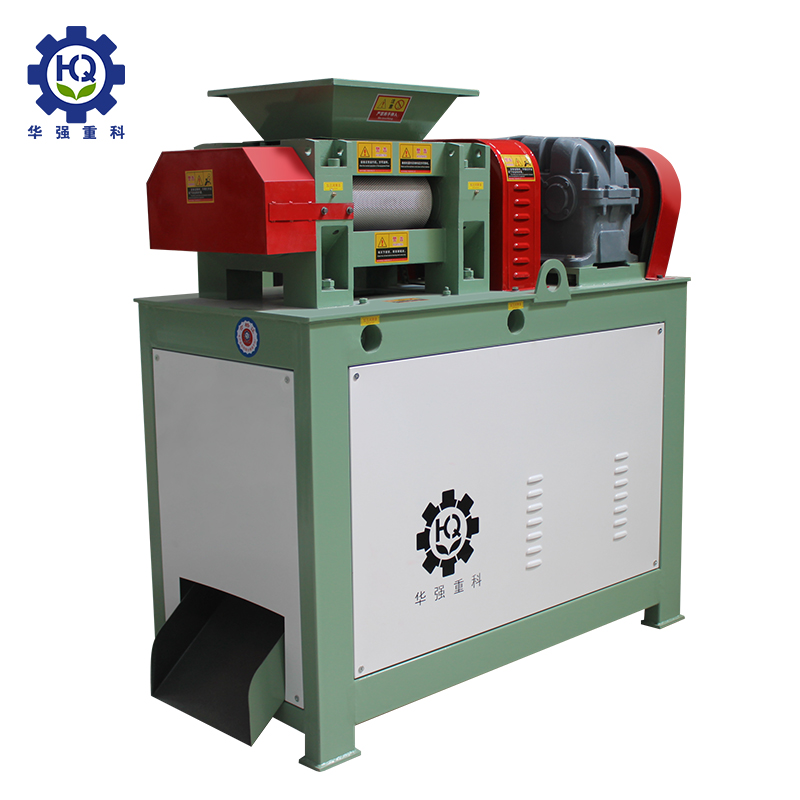
In the overall process of an organic fertilizer production line, the flat die granulator plays a crucial “bridging” role. It receives the organic fertilizer raw materials from the preceding processes, after fermentation, crushing, and mixing, transforming the loose, powdery material into structurally stable granules, laying the foundation for subsequent drying, cooling, and packaging stages.

From a working principle perspective, the flat die granulator uses a motor-driven transmission mechanism to rotate the pressure rollers. When the raw material enters the machine, the pressure rollers exert extrusion force on the material, forcing it through pre-set die holes on the flat die, ultimately forming cylindrical or other shaped granules. This process requires minimal binders, relying primarily on the material’s own viscosity and extrusion force to achieve shaping, thus preserving the nutritional components of the organic fertilizer while avoiding the potential impact of chemicals on the soil.

For organic fertilizer production, the flat die granulator not only solves the problems of dust and caking during raw material transportation, but also controls the diameter and hardness of the granules by adjusting the die size and pressure roller pressure, meeting the needs of different crops and different fertilization scenarios. It is one of the indispensable core equipment in the production line.

Intelligent control: Improving the stability of organic fertilizer production lines

With the large-scale development of organic fertilizer production, intelligent control has gradually become a core means of improving organic fertilizer production line stability. Compared to traditional manual monitoring, intelligent systems can precisely control key parameters, reduce operational errors, and ensure consistent finished product quality.

Intelligent control is primarily applied in three key areas: First, fermentation process monitoring. By deploying temperature, humidity, and oxygen concentration sensors, the system collects real-time data from the fermentation chamber. When parameters deviate from the appropriate range, the system automatically triggers an alarm and adjusts the turning frequency and ventilation volume to prevent under- or over-roasting of the material. Second, granulation process control. Based on changes in material moisture content, the system automatically adjusts the fertilizer granulator machine speed and binder dosage to minimize problems such as granule clumping and breakage. Third, production data management. The system automatically records operational data from each stage, creating a production ledger that facilitates process traceability and allows for optimization of process parameters through data review.

This intelligent transformation of organic fertilizer production lines does not require replacing core equipment; it is often achieved through the addition of sensors and upgraded control systems. This reduces labor costs and improves the yield of finished products, making it suitable for small and medium-sized production enterprises to implement gradually.

How to Operate Cow Manure Organic Fertilizer Production Equipment

How to deal with cow dung in cattle farm? In the process of cattle breeding, if the cow dung is not handled in time, it will cause air pollution, breed a large number of mosquitoes and flies, pollute the surrounding environment of the farm and cause cattle diseases. Treating cow dung to turn waste into treasure can also bring huge benefits.

Making cow dung into organic manure is one of the main methods to treat cow dung. Dry cow dung contains 10%-20% crude protein, 1%-3% crude fat, 20%-30% nitrogen-free extract and 15%-30% crude fiber, so it has high nutrients. An organic fertilizer production line can efficiently convert cow dung into organic fertilizer.

Organic Fertilizer Production Equipment

Cow Dung Organic Fertilizer Production Equipment and Process Step

1.Fermentation is the first important step

The cow dung produced by a cow in one year requires 4 to 6 cubic meters of space. According to the scale of farming, reasonable construction of cattle dung accumulation fermentation site. Adding 10%-15% straw, rice bran and other supplementary materials to cow dung, and adding appropriate water, the water content of cow dung can be controlled at about 60%, inoculated with starter, and the fermentation time is 15-40 days (depending on the season).

In organic fertilizer fermentation, turning is an important phase. Its purpose is to enable the materials mixed. By the thrown over, it course of the materials make the most contact with the air and get the best fermentation.

Fermentation compost turning machine (Strong maneuverability of mechanical dump operation)

Trough Compost Turning Machine, Double Screws Compost Turning Machine (Suitable for large field flip), Windrow Turner (Suitable for strip stacking).


2.Crushing raw material

The fermented materials and other additives are crushed, proportioned and mixed through material grinder and mixer in a certain proportion. The function of this system is to crush, mix and mix compost materials, inorganic fertilizers of nitrogen, phosphorus, potassium and other additives in a certain proportion. Based on years of experience, the following equipment is recommended:

Half-wet Material Crusher

The machine is mainly used to crush materials of biological fermentation organic fertilizer with moisture of 25%~50%. Have good effect on grinding the glass brick, ceramics and broken stone such kinds of hard matter from the city life garbage organic fertilizer.

Horizontal Mixer

Horizontal mixer stir material in batches, material can be mixed completely. High mixing rate, less residual suitable for feed, concentrated feed, premix additives mixing.


3.Pelletizing

New Type Organic Fertilizer Granulator is used to granulate the material. The organic fertilizer granulator is the newest technology products by our years of research experience. It process fertilizer powder into granules, it also can be achieved the better effect of grain making to acid and municipal sludge. We also supply disc fertilizer granulator and flat die pelleting machine for organic fertilizer production.


4.Drying, cooling and screening

After granulating, the fertilizer moisture is a little high. Use organic fertilizer Rotary Dryer, further remove water, to achieve the standard requirements of organic fertilizer moisture content.

Cooling the particulate matter with a Rotary Cooler helps to store the heat particulate matter from the top of the dryer to the counter-flow cooler. Under the action of the cooling fan, the dry air enters from the lower part of the cooler and exchanges sufficiently with the wet and hot particles from the upper tribe and the lower tribe.

There are some differences in particle sizes of the particles exported from the pelletizing and forming system, which requires sieving and grading. Drum Screener Machine has the advantages of low vibration, low noise and convenient screen change. The organic fertilizer manufacturing process is equipped with automatic feed-back system, which screens the unqualified large and small particulate materials, conveys them through belt hoist, re-crushes them and sends them to the granulator to continue granulating, which is helpful to improve the continuous operation ability of the production line.


5.Packing

Packing Machine weighs and packs the particulate matter quantitatively. Automatic quantitative packaging of powder and granules, suitable for flour, starch, feed, food, chemical industry, light industry, building materials industries.


Using cow dung as raw material to produce organic fertilizer has the advantages of low cost, stable quality, fluffy soil, improved land consolidation, improved soil fertility, and great marketing space. As a leading fertilizer equipment manufacturer in China, we have a professional organic fertilizer manufacturing process, which can make cow manure into organic fertilizer with high efficiency and benefit.

Organic fertilizer production line

Organic fertilizer production line is the need of developing circular economy, building a resource-saving and environment-friendly society, in line with the relevant national industrial policies, conducive to the sustainable development of the company’s production, and can promote the company’s production to go on the track of modernization, scale and standardization.

The organic fertilizer production line is a kind of production process that takes chicken, sheep and pig manure as the main raw materials, adds certain amount of nitrogen fertilizer, phosphorus fertilizer, potassium fertilizer, magnesium sulfate, ferrous sulfate and other substances, ferments rice bran, yeast, soybean meal and sugar for a certain period of time as biological bacteria, under the action of sulfuric acid, mixes fermentation to produce biological fertilizer.

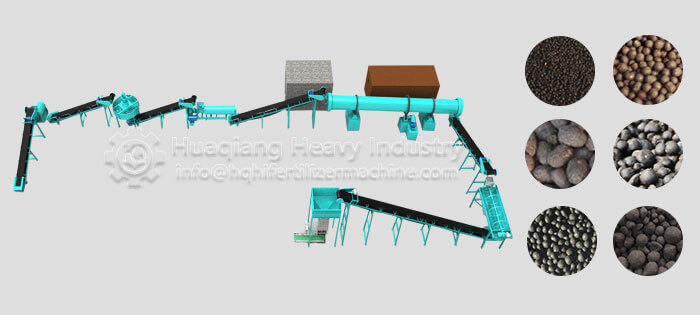
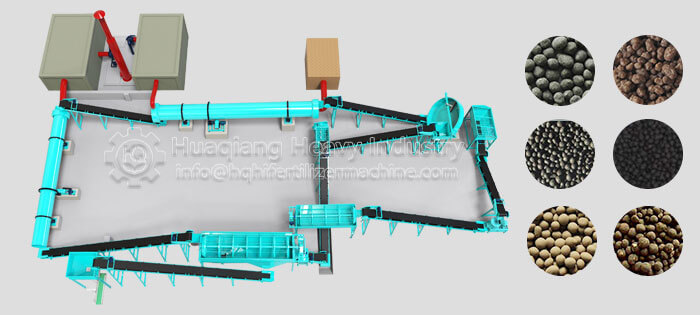
The production line of organic fertilizer includes: selection of raw materials (chicken manure, etc.) → drying and sterilization → mixing of ingredients → granulation → cooling and screening → metering and sealing → warehousing of finished products.

The more complex fertilizer production process is: organic fertilizer raw materials (animal manure, domestic garbage, dead branches and rotten leaves, biogas residue, waste bacteria, etc.) are fermented and then enter the semi wet material grinder for grinding, and then add elements such as nitrogen, phosphorus and potassium (pure nitrogen, phosphorus pentoxide, potassium chloride, ammonium chloride, etc.) to make the mineral elements meet the required standards, and then enter the mixer. After mixing, then enter the organic fertilizer granulator mechanism to form particles, dried after coming out, screened by the screen machine, the qualified products will be packed, and the unqualified ones will be returned to the granulator for granulation.