Practical methods for reducing raw material waste in ring die granulators

In fertilizer production, raw material waste in ring die granulators primarily stems from substandard pellets and die blockage. Targeted measures can increase raw material utilization by 5%-8%.

First, substandard pellets are recycled. After screening in the pelletizer, broken and large particles are collected and crushed to the required particle size (consistent with new raw material) using a dedicated fertilizer crusher. These particles are then mixed with new raw material at a ratio of 1:5 for re-pelletization. Care should be taken to control the moisture content during mixing. If the moisture content of the recycled material exceeds 18%, it should be air-dried to 14%-16% before mixing to prevent moisture absorption and impact on the overall pelletizing effect. Furthermore, the recycled material mix ratio should not exceed 20% to prevent it from affecting the strength of the new pellets.
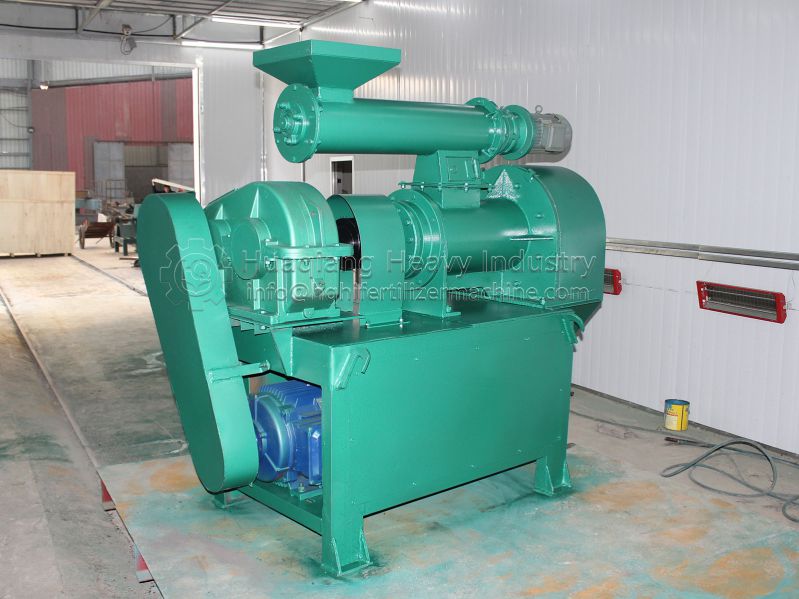
Secondly, reduce ring die blockage losses. Before each shutdown, empty the pelletizing chamber of any remaining raw material. Then, introduce a small amount of talcum powder (5-8 kg per ton of raw material). Run the ring die granulator at no load for 5 minutes to allow the talcum powder to adhere to the inner wall of the ring die, forming a protective film to prevent residual raw material from solidifying and clogging. During daily production, check the ring die holes for blockage every four hours. If a small blockage is detected, clear it with a special needle (0.5 mm smaller in diameter than the die hole) to prevent further blockage and material waste.

In addition, polish the edges of the ring die holes every 100 hours to remove burrs and minimize material loss caused by material being stuck in the holes. A magnetic separator should be installed at the pelletizer feed inlet to remove metallic impurities from the raw material, preventing them from damaging the ring die and causing pelletizing problems, further reducing material waste.
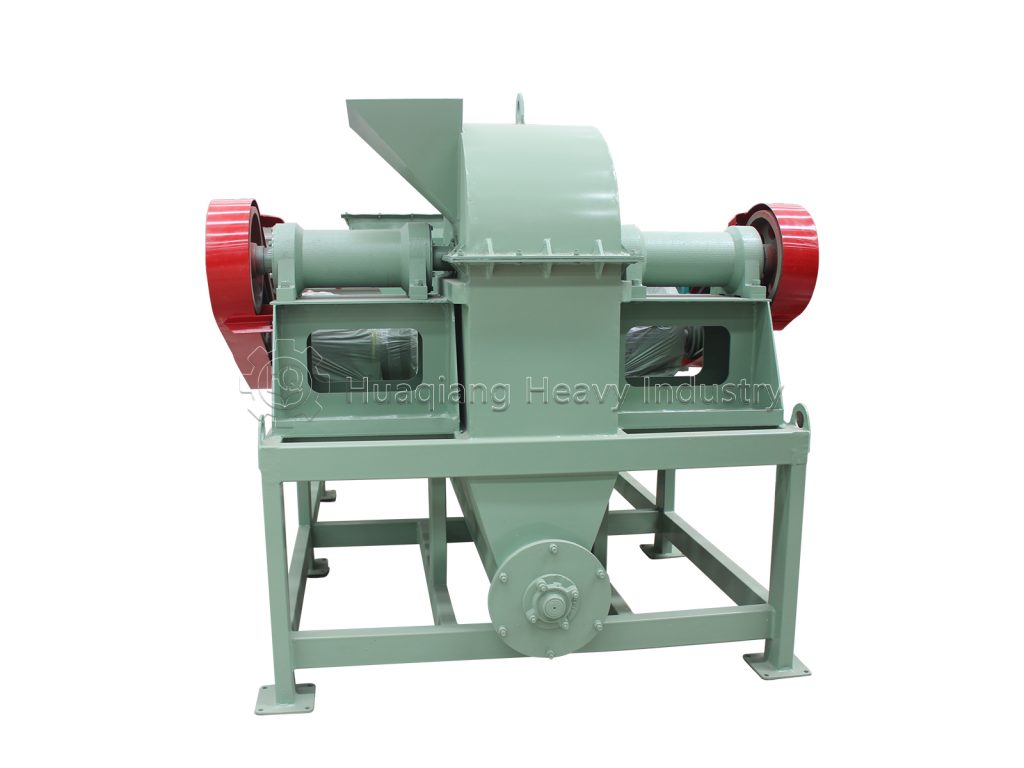
Cage crusher operation and maintenance guide during daily use

Before using a cage crusher, it’s crucial to control the moisture content of the material. For materials such as corn, soybean meal, bran, and fish meal used in the feed industry, the ideal moisture content is generally between 10% and 14%. This is because feed pellets need to remain loose. Moisture levels above 14% can cause the material to stick to the cage rotor, hindering the grinding process. Below 10% can easily generate dust, polluting the environment and potentially posing a safety hazard. For example, corn with a moisture content of 9% can be over-crushed into a fine powder due to its brittle texture, exceeding the required particle size for feed pelleting.

Regularly inspect the beater. Manually move the beater. If the beater shakes more than 5mm, or if the bolts securing it are loose or missing, tighten them immediately with a torque wrench. Use a lock washer to prevent further loosening. If a beater is severely worn, replace it with a beater of the same specification to ensure consistent height across all beaters.

Check the cage plate for material buildup. If wet material is not cleaned after crushing, material may stick to the inside of the cage plate, causing the rotor’s center of gravity to shift. Stop the cage crusher and use a scraper to clean it. Reduce operating time when handling wet material. Also, check for cage wear. Measure the diameter of both cage plates with a caliper. If wear exceeds 2mm, replace the cage plates. After replacement, perform a dynamic balancing test on the rotor.

Bearing maintenance is also crucial. After 10 minutes of operation, touch the bearing seat. If the temperature exceeds 70°C or there is a snag during rotation, the bearing may be depleted or damaged.

Only by properly controlling material moisture and performing routine maintenance can you maintain a cage crusher in good operating condition, improve production efficiency, and extend the equipment’s life.

The Core Value of the Mixing Process in an Organic Fertilizer Production Line

The mixing process is like the “heart” of the entire organic fertilizer production line, fulfilling the crucial mission of homogenizing raw materials and promoting composting. This directly determines the nutrient balance and application safety of the final product. This seemingly simple “mixing” step actually embodies rigorous process standards and technical considerations.

From a process perspective, the mixing process must address two key issues: precise raw material ratios and uniform moisture distribution and microbial environment. Organic fertilizer raw materials come from a complex source, with significant variations in nutrient content and physical properties among materials like livestock and poultry manure, straw, and mushroom residue. Inhomogeneous mixing can lead to localized enrichment or depletion of core nutrients like nitrogen, phosphorus, and potassium in the finished product, seriously impacting fertilization effectiveness. Furthermore, the moisture content must be controlled within the optimal composting range of 50%-60% during the mixing process. Continuous stirring breaks up material clumps, creates a sufficient oxygen environment for aerobic microorganisms, accelerates the decomposition and conversion of organic matter, and prevents the localized anaerobic production of harmful gases such as hydrogen sulfide.

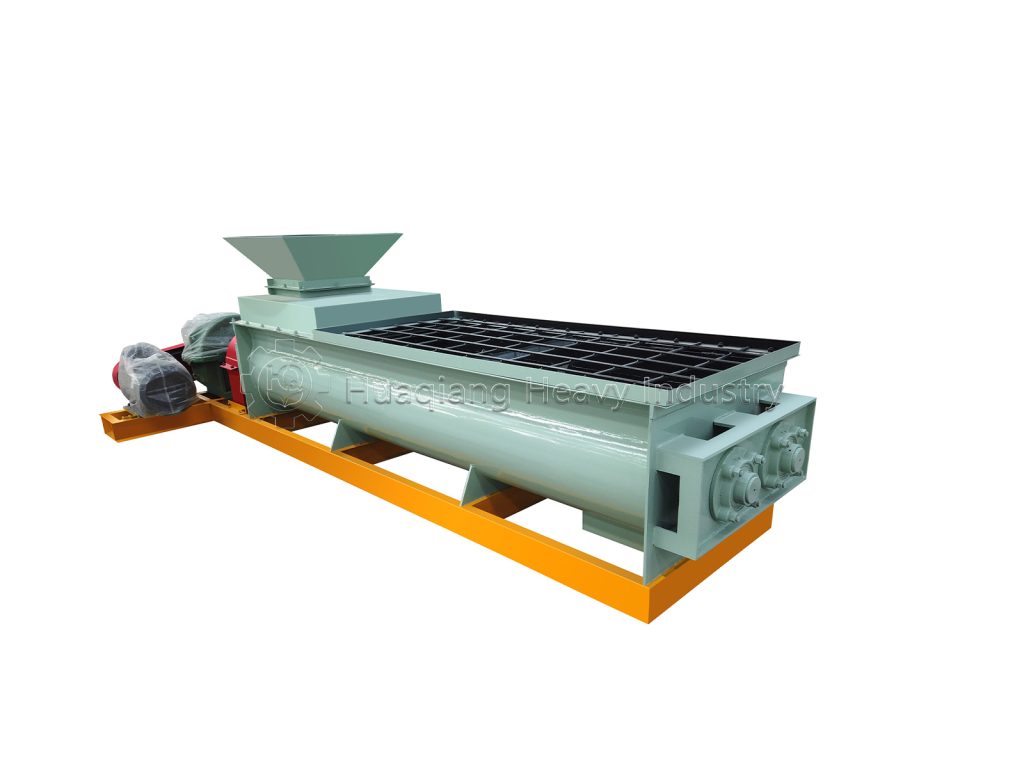
The current mainstream mixing equipment is primarily a double axis mixer, which uses counter-rotating blades to create a strong convection mixing field. Combined with an adjustable-speed agitator shaft, the mixing intensity can be flexibly adjusted based on the raw material’s moisture content and particle size. High-quality equipment also features a water sprayer and temperature sensor to monitor material temperature changes in real time during mixing. When the temperature rises above 55°C, indicating peak microbial activity, the agitator speed should be appropriately reduced to avoid excessive energy consumption. If the temperature is abnormally low, the water supply system adjusts the humidity to ensure a stable composting process.

It is important to note that quality control of the mixing process must be implemented throughout the entire production process. Too short a mixing time can lead to insufficient homogeneity, while too long a mixing time can cause excessive fragmentation and damage the organic matter structure. Typically, the mixing time for each batch of material should be controlled between 8 and 12 minutes, and sampling testing should be performed to ensure that the uniformity error does not exceed 3%. Strict control of the mixing process in organic fertilizer production lines is not only fundamental to ensuring that organic fertilizer products meet national standards but also crucial for the resource utilization of agricultural waste and the promotion of green agriculture.

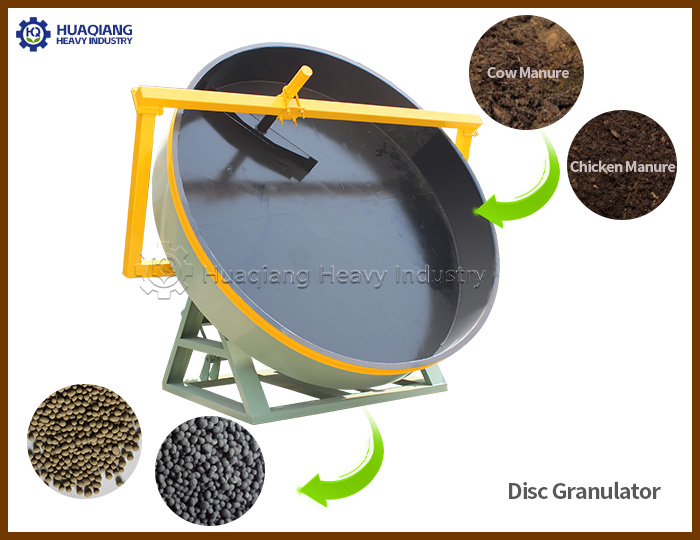
How to configure an organic fertilizer production line? Proper selection and matching of disc granulators

To build an efficient organic fertilizer production line, the proper selection of a disc granulator and its supporting equipment are crucial, directly impacting the overall production efficiency and product quality.

When selecting a disc granulator, the specifications of the disc granulator should be determined based on the production capacity requirements of the fertilizer production line. If the production line has a low capacity, a machine with a moderate processing capacity can be selected. If the production capacity requirements are high, a disc granulator with a high processing capacity should be used to ensure that the granulation process is compatible with the overall production capacity and avoid capacity bottlenecks.

Furthermore, the type of fertilizer being produced, such as organic fertilizer or NPK compound fertilizer, should be considered. Different types of fertilizer raw materials have different characteristics, so an appropriate disc granulator must be selected to ensure optimal granulation results.

The selection of supporting equipment is also crucial. In a fertilizer production line, a disc granulator must work in conjunction with other equipment such as a fertilizer crusher, mixer, screener, dryer, and packaging machine. The pulverizer crushes the raw materials to the appropriate particle size, preparing them for granulation; the mixer ensures that the raw materials are evenly mixed; the screening machine screens the granulated particles and separates unqualified particles; the dryer reduces the moisture content of the particles for easy storage; and the packaging machine completes the final product packaging.

The rational combination of these supporting equipment can form a complete and efficient fertilizer production process, improve the automation level and production efficiency of the entire production line, and create greater value for the enterprise.