A complete analysis of the application fields of cage crusher

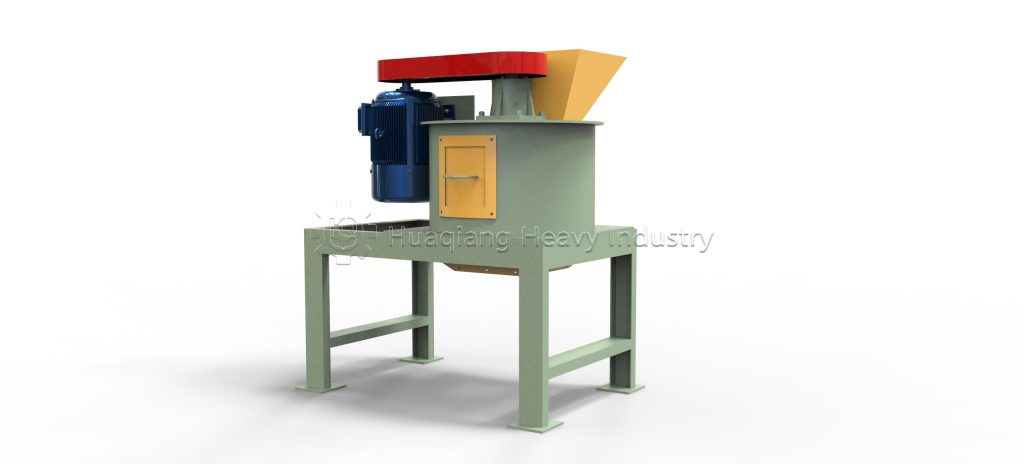
Due to their unique pulverizing mechanism and outstanding performance, cage crushers play an indispensable role in numerous industries and have a wide range of applications.

In the building materials industry, brick and tile factories often use cage grinders to process soft and brittle materials such as shale, industrial slag, and dry clay. After these materials are crushed by cage grinders, a high proportion of fine powder particles is produced, which is crucial for brick forming.

The chemical industry is also an important application for cage crushers. They can grind medium-hard chemical raw materials such as ammonium chloride and ammonium sulfate, ensuring that these raw materials can fully participate in subsequent chemical reactions, thereby improving the production efficiency and quality of chemical products.
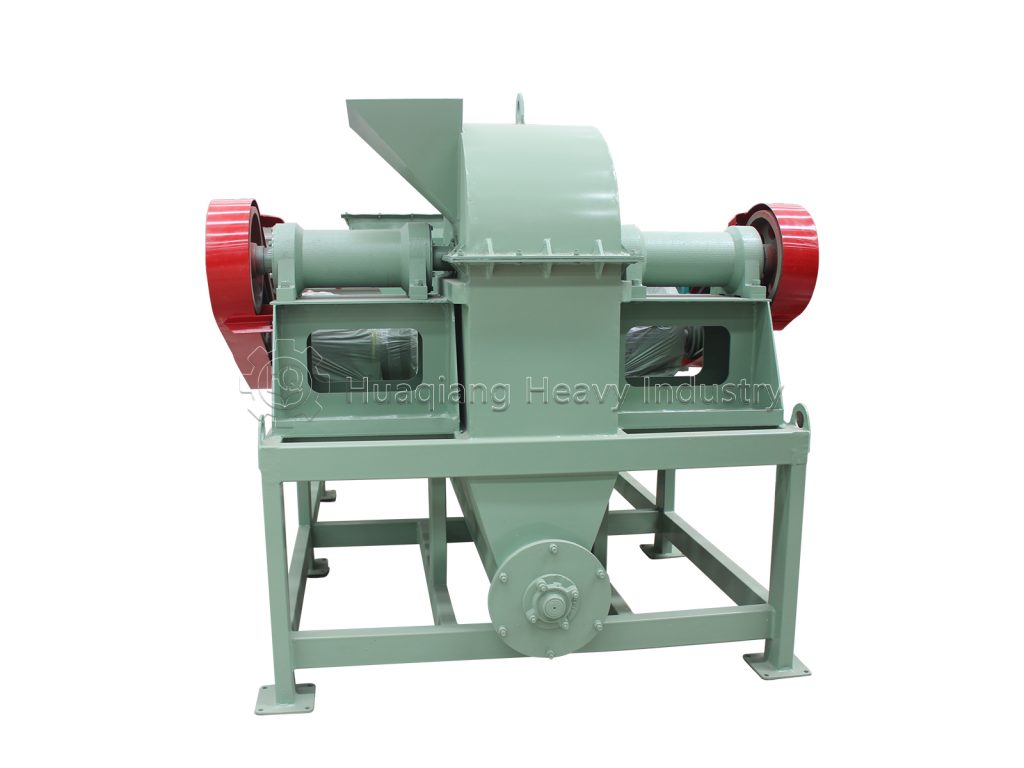
In compound fertilizer production, cage crushers are also indispensable for the pulverization of fertilizer raw materials such as urea. This pulverization of raw materials like urea facilitates the even release of nutrients in the fertilizer, enhancing its effectiveness.

In addition, in the production of organic fertilizers, cage crushers can crush organic waste such as sheep manure and straw, so that these wastes can better participate in the fermentation process and be converted into high-quality organic fertilizers, providing a green and environmentally friendly source of fertilizers for agricultural production, helping to improve soil and the healthy growth of crops.
Advantages and applications of the flat die granulator

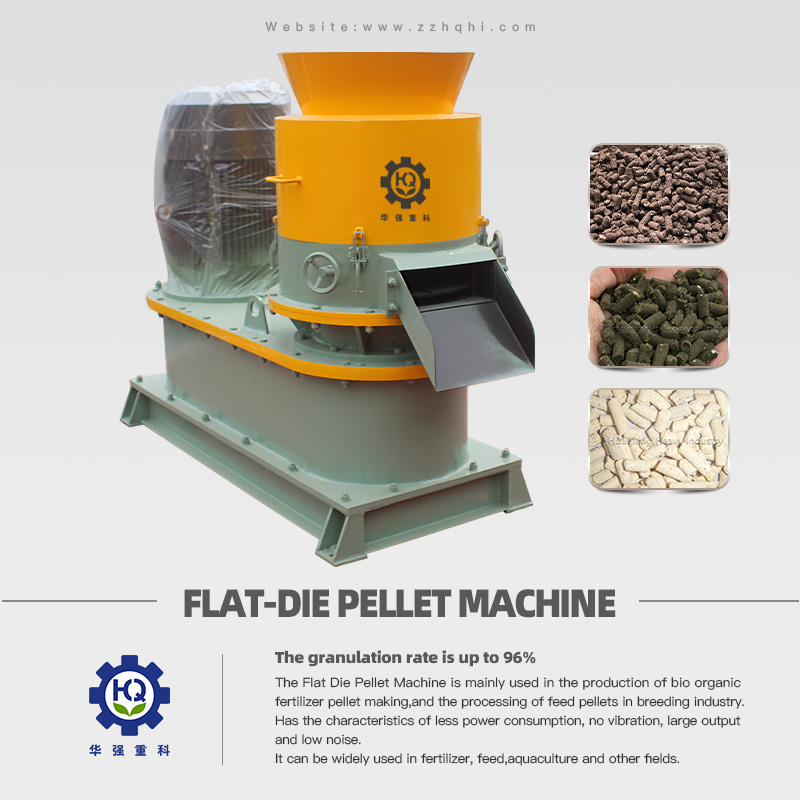
The flat die granulator offers significant advantages, with the larger pressure wheel being a key feature. This larger pressure wheel also increases the bearing’s ability to withstand pressure, making the equipment more stable and reliable, and reducing failures caused by pressure. Furthermore, the larger pressure wheel prevents heat generated by extrusion friction from being transmitted to the bearing chamber, ensuring the bearing operates at a low temperature and preventing lubricant leakage, thus extending bearing life. Furthermore, the larger pressure wheel can be repaired two to three times, reducing maintenance costs and increasing project profitability, offering significant advantages over similar equipment.

The flat die granulator is suitable for a wide range of materials. In agriculture, crop straw, such as corn stalks, wheat straw, and rice husks, can be processed into biomass pellet fuel or organic fertilizer. In the domestic sector, some household waste, after sorting and processing, can also be used for pelletizing, achieving resource recycling. In industry, the flat die granulator can easily handle materials such as biofertilizer, coal, carbon black, kaolin, and stone powder, demonstrating its strong material adaptability.

Flat die granulators also play a positive role in environmental protection. On the one hand, they can process large amounts of agricultural and forestry waste, reducing environmental pollution and enabling resource recycling. On the other hand, by converting degradable materials into biodegradable plastic pellets, they provide a new approach to addressing white pollution, promoting the development of environmentally friendly materials and facilitating the achievement of sustainable development goals.

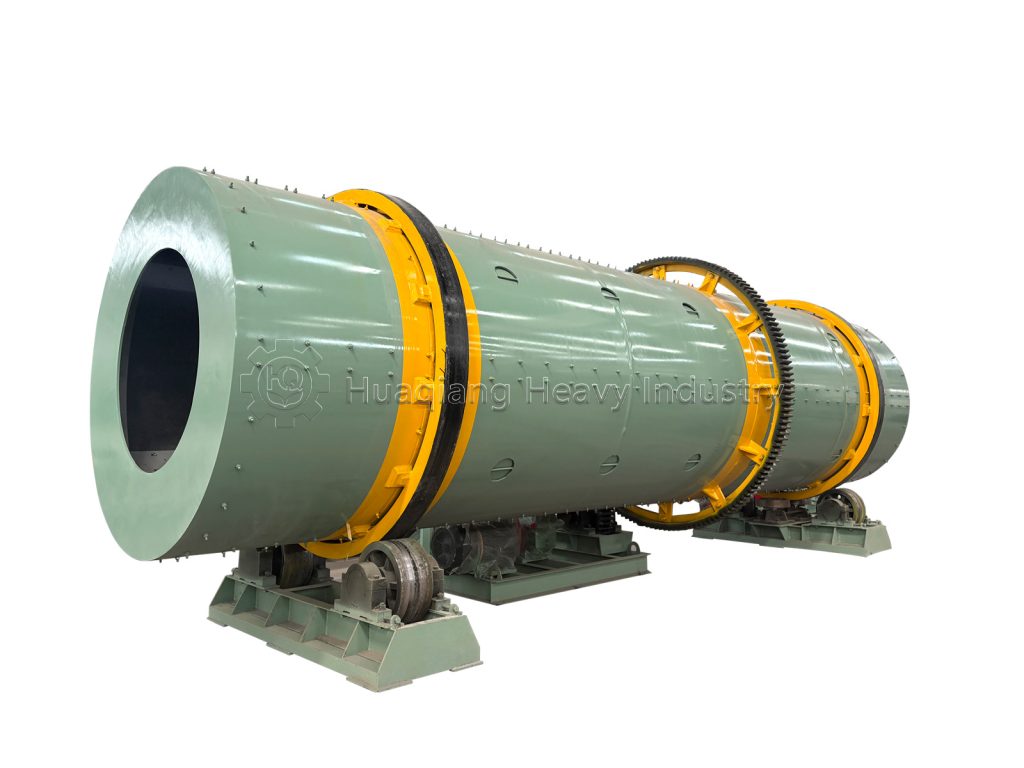
The Core Reasons to Choose a Rotary Drum Granulator for Organic Fertilizer Production Lines

In the granulation stage of organic fertilizer production lines, rotary drum granulators are the preferred equipment for most companies due to their high adaptability to the characteristics of organic fertilizers. Their unique operating principle and performance advantages effectively address key challenges in the granulation process, ensuring product quality and production efficiency.

In terms of granulation adaptability, rotary drum granulators perfectly match the characteristics of organic fertilizer raw materials. Organic fertilizer raw materials, mostly livestock and poultry manure and composted straw, have complex compositions and contain a large amount of fiber. The rotary drum granulator uses the centrifugal force, extrusion force, and friction generated by the rotating drum to granulate loose raw materials without excessive compression, thus preventing the destruction of organic matter and functional microbial activity in the raw materials due to strong compression. The rotary drum granulator also adapts to fluctuations in raw material moisture content (it can handle raw materials with a moisture content of 25%-40%), reducing the tedious pre-treatment process.

The advantages in granulation efficiency and finished product quality are significant. The drum length and diameter of the rotary drum granulator can be flexibly designed to meet production capacity requirements. A single unit can achieve an output of 1-20 tons/hour, meeting the needs of production lines of varying sizes. Its granulation process is gentle and uniform, resulting in highly rounded granules (over 90% roundness). The particle size can be controlled between 2-5mm by adjusting the drum speed and the baffle, meeting standard requirements for organic fertilizer granules. The granules also possess moderate strength, preventing breakage during transportation while slowly disintegrating in the soil, enhancing nutrient release efficiency.

From a cost and environmental perspective, the rotary drum granulator is also competitive. Its simple structure, minimal transmission components, and low failure rate mean ongoing maintenance costs are approximately 30% lower than those of other granulation equipment (such as disc granulators and extrusion granulators). Furthermore, the granulation process does not require the addition of large amounts of binders; granulation is achieved solely through the raw material’s inherent viscosity. This reduces raw material costs while preventing the impact of foreign matter on the purity of the organic fertilizer, aligning with green production principles.

The comprehensive advantages of the rotary drum granulator in adaptability, efficiency, cost and environmental protection make it an ideal choice for the granulation link of the organic fertilizer production line, providing strong support for enterprises to achieve high-quality and high-efficiency production.

The core role of chain crushers in organic fertilizer production

In the organic fertilizer production process, material crushing is a critical pretreatment step, and chain crushers, with their outstanding performance, are the preferred equipment for this purpose. Organic fertilizer raw materials often contain lumps or medium-hard impurities. Inadequate crushing can affect the efficiency of subsequent granulation and mixing processes, as well as the quality of the finished product. It can even lead to problems such as material jamming in the granulator and uneven granulation in the finished fertilizer.

Designed specifically for the characteristics of organic fertilizer, chain crushers can efficiently crush a wide range of organic fertilizer raw materials, including those with a certain degree of moisture and viscosity, addressing the clogging and incomplete crushing issues of traditional crushing equipment. High-speed rotating chains and hammers impact and shear the material, while an adjustable screen allows for easy control of the crushed material’s particle size, meeting the stringent fineness requirements of organic fertilizer production.

Furthermore, the equipment’s sturdy structure, with core components made of wear-resistant steel, can withstand long-term, intensive operation, minimizing production interruptions. This provides a strong guarantee for the stable operation of organic fertilizer production lines, helping companies improve the yield rate of finished fertilizers and production efficiency.

The Bio-Organic Fertilizer Revolution

Raw Material Pretreatment: Where Transformation Begins

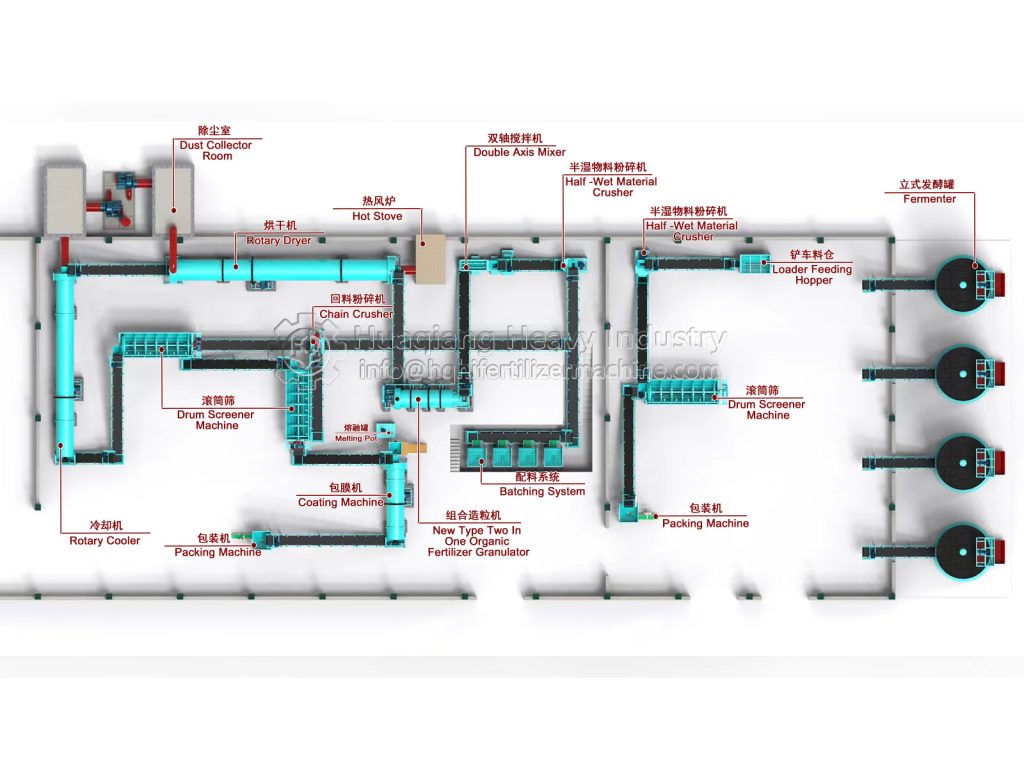
Raw Material Pretreatment: Where Transformation Begins. On the bio-organic fertilizer production line, the remarkable transformation of organic waste starts with a key organic fertilizer production machine: the grinder. This essential fertilizer production machine processes livestock manure, crop straw, and food byproducts into uniform particles. These materials are then scientifically mixed with water and fermentation agents, like an “activation potion,” to create the perfect microbial environment for subsequent processes.

Fermentation Process: A Microbial Feast

The pretreated materials enter fermentation equipment (fermentation tanks or silos), initiating a microbe-led “celebration”. In the organic fertilizer line, this stage is truly the soul of the operation. Through regular turning and precise control of temperature, humidity, and oxygen levels, organic matter is efficiently decomposed at high temperatures, harmful pathogens are eliminated, and the materials ultimately transform into nutrient-rich organic fertilizer substrates.

Precision Processing: Crafting Perfect Pellets

After fermentation, the materials undergo drying to remove excess moisture before entering the crucial stage of bio organic fertilizer production – granulation. Various types of granulators shape the loose materials into uniform pellets, both aesthetically pleasing and convenient for transportation. The screening machines act as strict quality inspectors, ensuring every fertilizer pellet meets standards, with oversized or undersized particles being “recycled”.

Quality Enhancement: From Adequate to Excellent

In the final stage of a modern bio organic fertilizer production line, qualified pellets are uniformly mixed with additives like microbial agents and trace elements, as if donning “nutrient armor” for the fertilizer. Automatic packaging machines dress these “black gold” particles in neat packaging, while rigorous quality testing ensures every bag meets national standards, providing reliable support for green agriculture.