A comprehensive analysis of the production process of powdered fertilizers

Powdered fertilizers are widely used in agriculture due to their ease of application and uniform nutrient distribution. Their production process revolves around “raw material purification → precise proportioning → fine shaping.”

Raw material pretreatment is fundamental. Raw materials are selected based on the type of fertilizer. Organic fertilizer raw materials require the use of composted livestock manure, straw, etc., which are dried or air-dried to adjust the moisture content to 10%-15% to prevent subsequent clumping; inorganic fertilizer raw materials such as urea and monoammonium phosphate require impurity removal to eliminate stones, impurities, and other foreign matter, while simultaneously reducing the water content through drying equipment.

Mixing and proportioning is the core process. According to the preset nutrient ratio, various pre-treated raw materials are fed into a fertilizer mixer. For example, the production of NPK compound fertilizer requires precise proportioning of urea, diammonium phosphate, potassium chloride, and other raw materials. During the mixing process, uniform mixing must be ensured to avoid excessively high or low local nutrient concentrations. Horizontal ribbon mixers or vertical disc mixers are typically used.
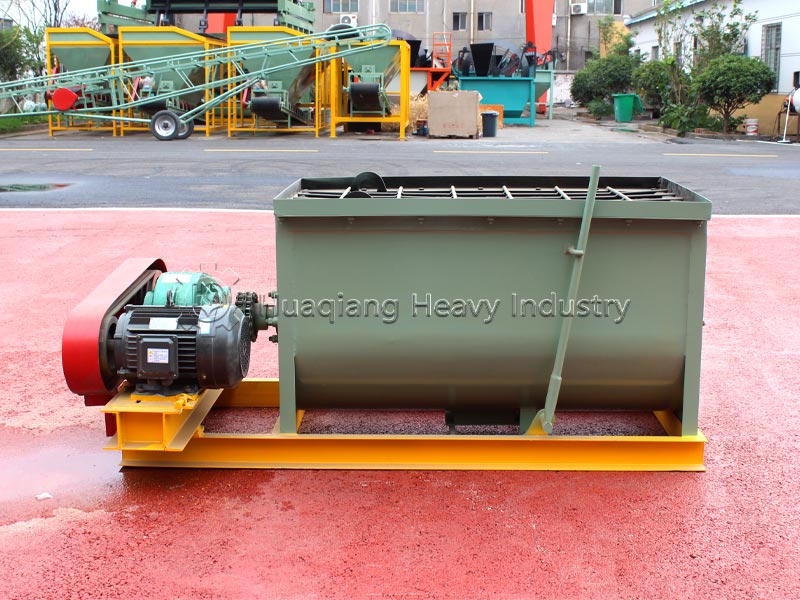
Crushing and screening are crucial for shaping. The mixed material needs to be crushed by a fertilizer crusher to ensure that the particle size meets the standard (generally requiring a pass rate of over 80 mesh). The crushed material then enters a screening machine, where different mesh sizes are used to separate unqualified particles. Coarse particles are returned for secondary crushing, while fine particles proceed to the next stage.

Inspection and packaging are the final guarantee. The screened powdered fertilizer is sampled and tested. Key indicators include nutrient content, moisture content, and particle size. After passing the inspection, the fertilizer is sent to the packaging stage, where it is quantitatively packaged by an automatic packing machine, sealed, and labeled with product information.
Core control of key equipment in bio-organic fertilizer production

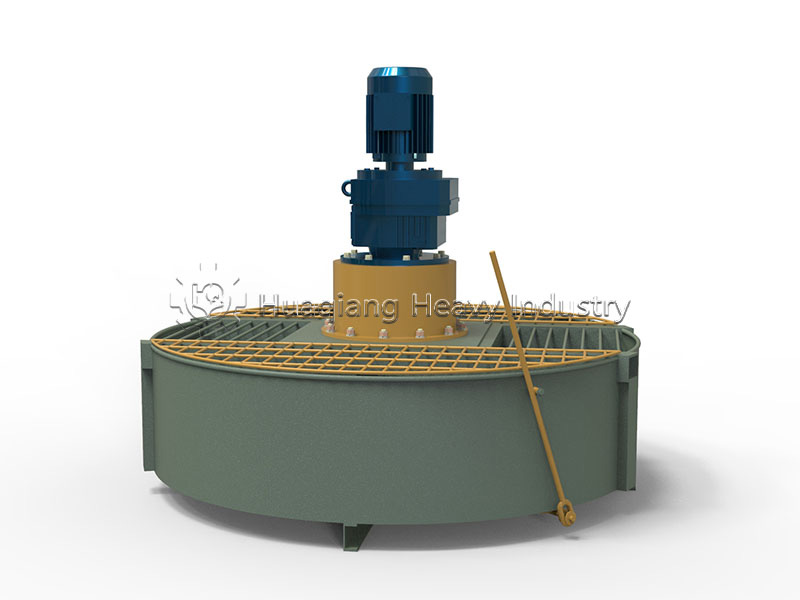
Bio-organic fertilizer production relies on the coordinated operation of a complete set of bio-organic fertilizer equipment, among which mixing and granulation are the core links that determine product quality. As an important piece of equipment in the mixing process, the vertical disc mixer has become the preferred choice for many production lines due to its unique structural advantages.

In bio-organic fertilizer production, the fertilizer mixer plays a crucial role in mixing raw materials. The vertical disc mixer, as a mainstream type, features high mixing uniformity and low energy consumption. During operation, the composted organic fertilizer raw materials, auxiliary materials, and beneficial microbial agents are added in proportion, and the materials are thoroughly mixed through the rotation of the disc. It is necessary to control the feeding speed to avoid material accumulation affecting the mixing effect, and to adjust the mixing speed according to the material humidity to prevent clumping or uneven mixing.

The uniformly mixed materials processed by the vertical disc mixer and other fertilizer mixer machines then need to enter the fertilizer granulator for shaping. The quality of the granulation process is closely related to the mixing effect; uniformly mixed materials ensure consistent nutrient content and sufficient strength of the granules. During production, it is necessary to accurately adjust the speed, pressure, and other parameters of the fertilizer granulator according to the characteristics of the mixed materials, and to use an appropriate moisture content to produce regular, easy-to-store and transport bio-organic fertilizer granules.

In summary, in a bio-organic fertilizer production line, it is necessary to precisely control the operating details of the fertilizer mixer and ensure proper coordination with the fertilizer granulator to consistently produce high-quality bio-organic fertilizer products.