Essential knowledge about fertilizer granulators + working principle analysis

Fertilizer granulators are the core equipment in granular fertilizer production, essential for both organic and compound fertilizer processing. To use a granulator efficiently, it’s crucial to master its core features and understand its working principle. This allows for better adaptation to production needs, avoidance of malfunctions, and maximizing the equipment’s value.

There are three essential core features:

1.Adaptability: Select the appropriate model based on the characteristics of the raw materials (dry/wet, sticky) to avoid low granulation rates due to incompatibility.

2.Parameter Control: Precise adjustment of parameters such as rotation speed, tilt angle, and feed rate directly affects particle size and strength.

3.Routine Maintenance: Regularly cleaning the equipment’s internal walls and inspecting vulnerable parts extends its lifespan and reduces downtime losses.
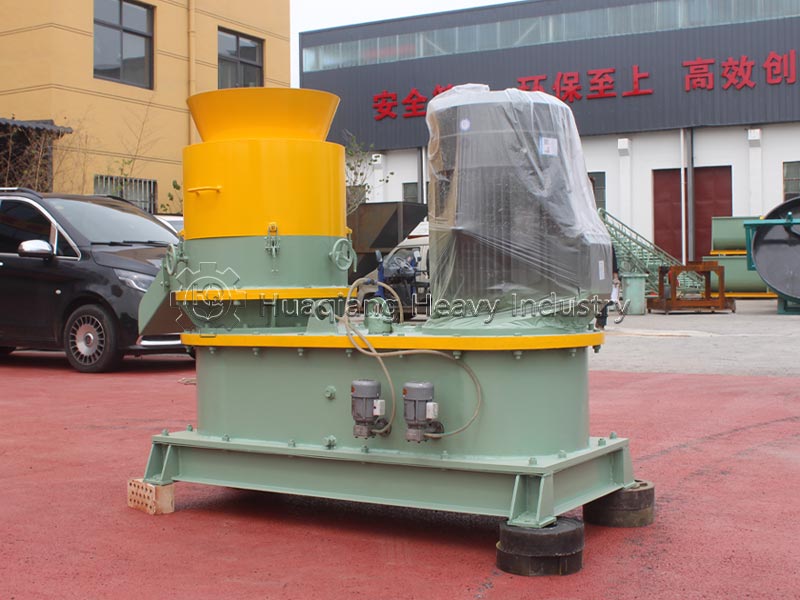
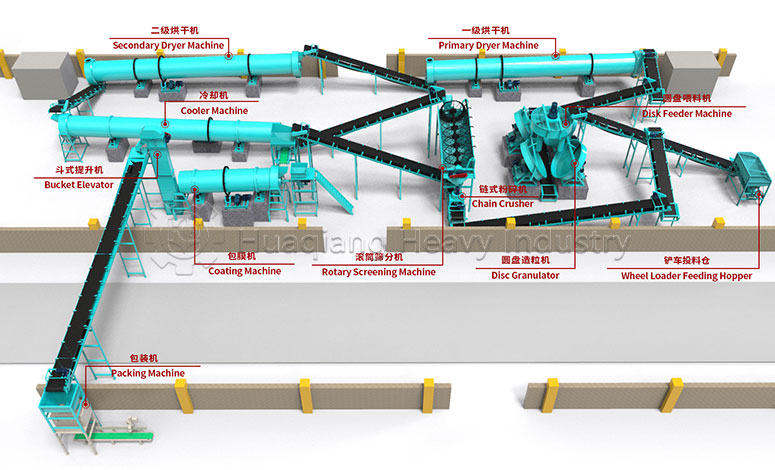
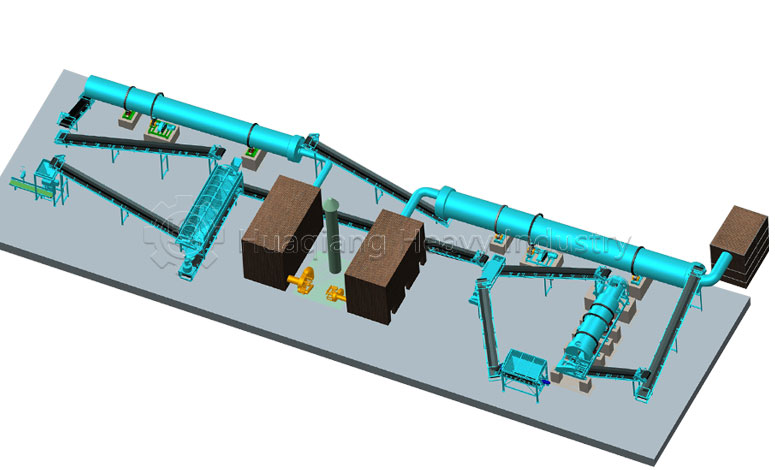
The core working principle can be summarized in four steps: “pretreatment → molding → screening → remelting,” a simple and efficient process. First, the fertilizer raw materials are crushed, mixed evenly, and adjusted to a suitable moisture content to prepare for granulation. Then, the raw materials enter the fertilizer granulation machine, where they are bound or pressed into shape through tumbling, extrusion, and other methods. After forming, the granules are screened to separate qualified particles, while unqualified particles are crushed and returned to the furnace for regranulation. Finally, the qualified particles enter the subsequent drying and packaging stages.

In short, the core function of a fertilizer granulator is to change the form of raw materials through physical action. The key lies in raw material compatibility and parameter control. Mastering these key points and understanding its working logic can improve production efficiency and ensure granule quality.
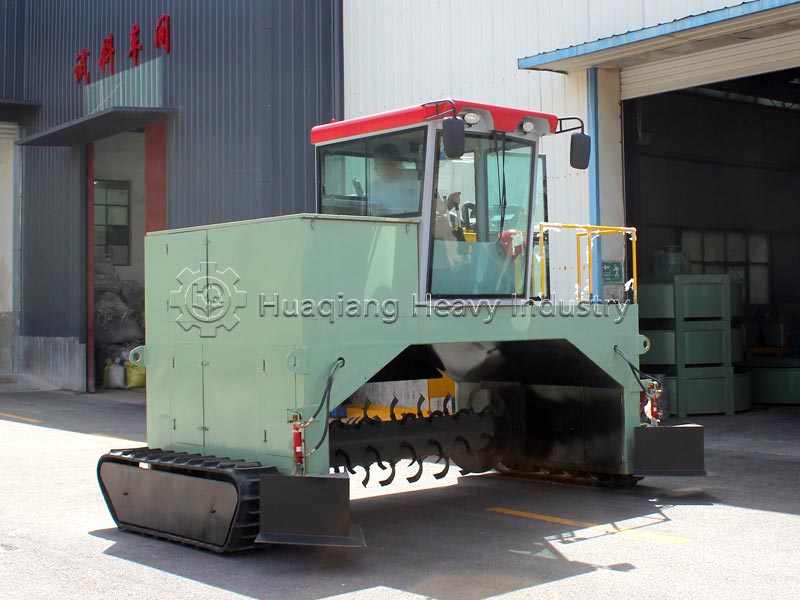
Self-propelled compost turning machine operation requirements: Safe, Efficient, and Problem-free

As a core organic fertilizer compost turning machine, the self-propelled compost turning machine is widely used in organic fertilizer fermentation scenarios due to its flexibility, convenience, and uniform turning capabilities. Proper operation not only improves efficiency and extends equipment lifespan but also prevents safety accidents, ensuring the smooth operation of the organic fertilizer production line.

Before operation, conduct a comprehensive inspection and preparation: Check tire pressure, track tension, and the turning rollers and transmission components to ensure there are no loose or jammed parts; clear debris from the work area, demarcate the work zone, and prohibit unauthorized personnel from entering to ensure the safe operation of the organic fertilizer compost turning machine.

During operation, strictly follow the specifications: After starting, conduct a no-load test run to confirm normal operation before commencing work; maintain a constant speed, adjusting the turning depth according to the material thickness to avoid overloading; keep the compost turn in a straight line, slow down when turning, and avoid sudden turns and stops to prevent equipment damage or disruption to the production line schedule.

After operation, perform thorough cleaning and maintenance: turn off the power, clean the material adhering to the cutter rollers and machine body; check for wear on parts, tighten as needed, and replenish lubricating oil; park the organic fertilizer compost turning machine in a dry, well-ventilated area, protecting it from rain and dust to prevent rust.

Furthermore, operators must wear protective equipment, and operating the machine under the influence of alcohol or while fatigued is strictly prohibited. Do not touch moving parts. In summary, following these requirements ensures safety and maximizes equipment efficiency, supporting the efficient operation of the organic fertilizer production line.

What are microbial fertilizers? What types of microbial fertilizers are there?

Many growers easily confuse microbial fertilizers with ordinary organic fertilizers. The core difference lies in the “microorganisms.” Microbial fertilizers are made with beneficial microorganisms as the core, combined with carriers such as straw and mushroom residue. They are produced through pretreatment using bio-organic fertilizer equipment and standardized processing on a bio-organic fertilizer production line. The core function is to improve soil and activate nutrients through microbial activity, rather than simply supplementing nutrition; it is a great helper for green planting.

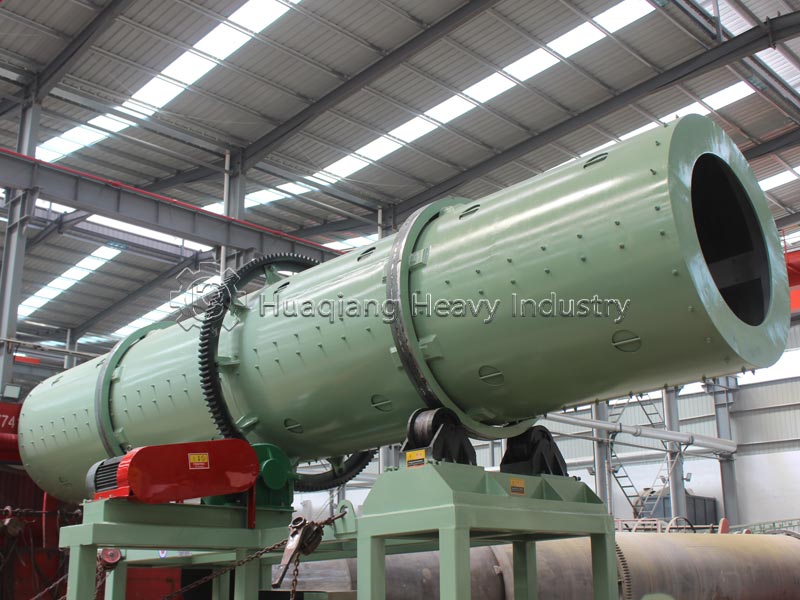
Its core value lies in the metabolic activity of beneficial microorganisms, which can decompose poorly absorbed nutrients, inhibit harmful bacteria, promote crop root growth, and reduce the use of chemical fertilizers. In production, bio-organic fertilizer equipment ensures the purification of raw materials, a rotary drum granulator achieves granule formation, and the bio-organic fertilizer production line maintains standardized control throughout the process, balancing fertilizer effectiveness and soil maintenance.

Based on function, microbial fertilizers are mainly divided into four categories, which are easy to distinguish:

1.Nitrogen-fixing microbial fertilizers: Containing nitrogen-fixing bacteria, these can convert atmospheric nitrogen into nitrogen that crops can absorb, reducing nitrogen fertilizer application and suitable for various scenarios.

2.Phosphorus and Potassium Solubilizing Microbial Fertilizer: Contains corresponding strains that decompose fixed phosphorus and potassium elements in the soil, improving utilization and alleviating soil compaction.

3.Bioremediation Microbial Fertilizer: Primarily for soil improvement, it degrades pesticide residues and heavy metals, regulates pH, and is suitable for continuously cropped and polluted land.

4.Compound Microbial Fertilizer: Integrates multiple beneficial microorganisms, offering comprehensive functions, the widest range of applications, and the most common use.

In summary, the core of microbial fertilizer is microbial activity. Its quality depends on the synergistic effect of bio-organic fertilizer production lines and equipment. Selecting the right fertilizer as needed can achieve green soil improvement, quality enhancement, and efficiency improvement.

How does a 10-ton/hour NPK fertilizer production line improve agricultural productivity?

The 10-ton/hour NPK fertilizer production line, with its core advantages of large-scale production, standardized quality, and customized adaptation, breaks through traditional production bottlenecks. Through mature NPK compound fertilizer granulation technology, coupled with professional fertilizer granulators and mixers, it empowers agriculture from the fertilizer supply side, comprehensively improving productivity and supporting high-quality and increased yields in large-scale planting.

Large-scale production solves the fertilizer shortage problem and ensures stable supply. This production line can operate continuously around the clock, with a daily capacity of 240 tons, efficiently meeting the fertilizer needs of large-scale farmland and large-scale bases. It avoids delays in planting due to insufficient fertilizer supply, laying a solid foundation for orderly agricultural production and significantly improving planting efficiency.

Standardized quality lays a solid foundation for increased yields and reduces planting losses. The production line utilizes precise ingredient proportioning and scientific granulation technology, coupled with a fertilizer mixer to ensure thorough mixing of raw materials. The resulting compound fertilizer granules are uniform, nutrient-balanced, and release nutrients steadily, effectively preventing uneven crop growth and nutrient deficiency, reducing management costs, and improving crop yield and quality.

Customized formulations cater to diverse needs and optimize nutrient supply. It can customize nitrogen, phosphorus, and potassium ratios according to different crops and soil conditions, adapting to the nutrient requirements of various crops. It can also be linked with an organic fertilizer production line to produce compound organic fertilizer, improving soil fertility, achieving sustainable land use, and enhancing long-term agricultural productivity potential.

In summary, this production line focuses on three dimensions: stable supply, improved quality, and customized formulation. It simplifies the fertilization process, reduces labor and time costs, and achieves “fertilizer suitable for crops, sufficient quantity and excellent quality,” comprehensively driving efficient improvement in agricultural productivity.

How to choose the right fertilizer crusher? Avoiding pitfalls and ensuring practicality

Fertilizer crushers are core auxiliary equipment in organic and chemical fertilizer processing.  The selection directly impacts crushing efficiency, production capacity, and subsequent processing quality. The key to selection is following the principle of “matching needs and ensuring practicality.”

First, consider the crushing requirements and material characteristics. Different fertilizers have varying hardness and moisture content. For processing caked organic fertilizers and medium-hard granular fertilizers, conventional models are suitable; for crushing hard mineral fertilizers and large lumps of fertilizer, models with strong crushing power and wear resistance are needed. Simultaneously, consider the required particle size after crushing to determine the equipment precision and ensure it meets subsequent needs.

Secondly, focus on equipment performance and suitability for the application. For small-scale processing or home use, prioritize small, easy-to-operate, and low-energy-consumption models; for large-scale production requiring integration with organic fertilizer production lines or NPK fertilizer production lines, choose models that can be linked, have matching capacity, and are easy to maintain to ensure a smooth process.

Finally, avoid selection pitfalls and consider practicality. Do not blindly pursue high capacity to avoid waste; pay attention to the durability of wear parts and choose models with easily removable and replaceable parts to reduce subsequent maintenance costs.

In summary, choosing a fertilizer crusher requires matching material characteristics, production scale, and subsequent needs, while considering performance and practicality, to achieve efficient crushing, reduce costs, and suit various processing scenarios.