In the context of global agricultural sustainable development, how to efficiently utilize agricultural waste such as straw and wood chips has become an important issue. The emergence of acid-alkali hydrolysis technology provides innovative solutions for the resource utilization of these difficult-to-degrade materials, successfully transforming agricultural waste into high-value organic fertilizer.
Technical Principle: Decoding the Secrets of Lignocellulose
Acid-alkali hydrolysis technology is based on chemical catalysis principles, decomposing the complex structure of lignocellulosic raw materials through the chemical action of acids or alkalis under specific temperature and pressure conditions. The core of this technology lies in breaking the chemical bonds of cellulose and lignin, converting these difficult-to-decompose macromolecules into small molecular nutrients absorbable by crops.
Like using a key to open a locked treasure chest, acid or alkali reagents serve as the “key” to unlock the lignocellulose structure, while temperature and pressure provide necessary power for this process. This chemical conversion process is much more efficient than natural decomposition, completing within hours what would take months or even years in nature.
Synergistic Effects of Two Processes
Acid hydrolysis specifically targets cellulose decomposition. Using 1%-5% dilute sulfuric acid as hydrolysis reagent, reacting for 2-4 hours at 100-150°C and 0.1-0.5MPa conditions, cellulose is decomposed into small molecular carbon compounds like glucose. This process is particularly suitable for producing organic fertilizers rich in directly absorbable carbon sources.
Alkali hydrolysis focuses on lignin decomposition. Using 2%-8% sodium hydroxide solution to treat raw materials under mild conditions of 80-120°C, breaking the connection bonds between lignin and cellulose, releasing beneficial substances like humic acid precursors. These two processes can be used individually or in combination according to raw material characteristics and product requirements, achieving comprehensive and efficient utilization of raw materials.
Product Characteristics and Application Advantages
After acid-alkali hydrolysis treatment and neutralization, products can be made into highly active liquid organic fertilizers. This fertilizer contains abundant small molecular carbon sources and humic acid precursors, quickly absorbed and utilized by crops while improving soil structure and microbial environment.
Compared with traditional organic fertilizers, liquid organic fertilizers produced by acid-alkali hydrolysis technology have advantages of clear nutritional composition, high activity, and rapid absorption. They are particularly suitable for high-value special crop cultivation, such as premium fruits and vegetables, medicinal herbs, significantly improving crop quality and yield. In developed countries like the United States, this technology has been applied to the production of special crop-specific liquid fertilizers.
Environmental and Economic Benefits
Acid-alkali hydrolysis technology not only solves the treatment challenges of agricultural waste but also creates significant economic and environmental benefits. By transforming waste such as straw and wood chips into high-value organic fertilizer, it reduces environmental pollution from waste while providing high-quality inputs for agricultural production.
The application of this technology also helps reduce the usage of chemical fertilizers, promoting the development of green agriculture. By improving the resource utilization rate of agricultural waste, a more sustainable agricultural production system is constructed. Simultaneously, it creates new income sources for farmers and related enterprises, achieving win-win outcomes for both economy and environment.
Future Development Prospects
With increasing global emphasis on sustainable agriculture, acid-alkali hydrolysis technology will encounter broader development opportunities. Technological innovation will further improve reaction efficiency while reducing energy consumption and production costs. Meanwhile, integration with other treatment technologies will generate synergistic effects, developing more distinctive organic fertilizer products.
The promotion and application of this technology will provide important technical support for the resource utilization of global agricultural waste, promoting the development of circular agriculture. By transforming “waste” into “valuable resources,” acid-alkali hydrolysis technology is contributing significant power to building a more sustainable agricultural ecosystem.
Comprehensive Organic Fertilizer Production: From Pre-processing to Granulation
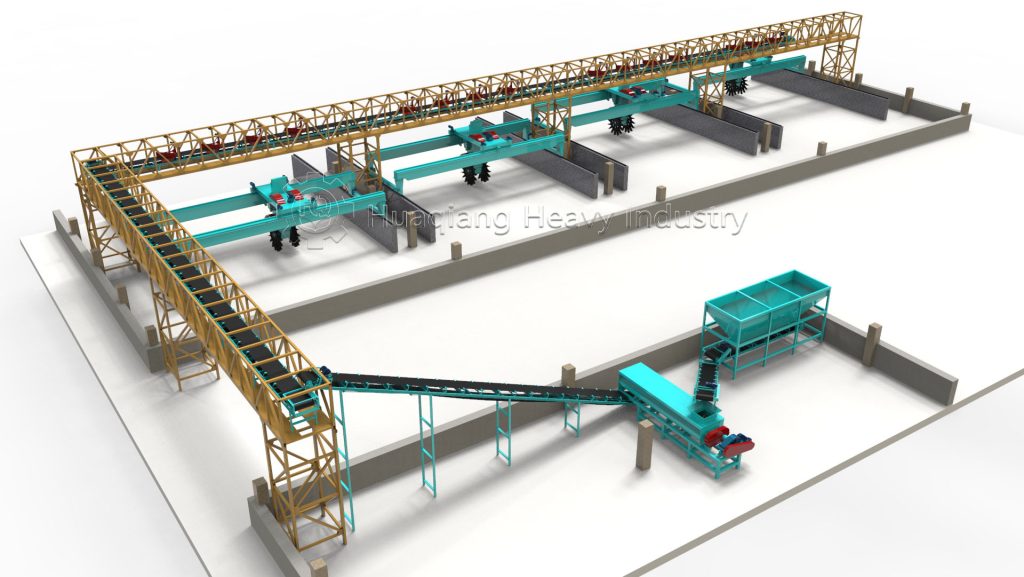
Acid-alkali hydrolysis represents an innovative pre-treatment method that works synergistically with established fermentation composting technology for organic fertilizer. Following chemical hydrolysis, materials can be processed using efficient fermentation composting turning technology implemented through specialized pre-composting processing equipment. Advanced trough-type aerobic fermentation composting technology utilizes equipment such as the trough-type compost turner and hydraulic trough compost turner for controlled decomposition, while large-scale operations employ large wheel compost turner and windrow compost turner systems. For challenging materials, the chain compost turner provides robust performance.
These essential equipments required for biofertilizer production ensure optimal conditions for microbial activity during composting. Following complete maturation through advanced fermentation composting technology, the finished compost can be processed through a disc granulation production line to create uniform, market-ready organic fertilizer granules. This integrated approach—combining innovative chemical pre-treatment with optimized biological decomposition and precision granulation—creates a comprehensive system for transforming diverse agricultural waste into high-value organic amendments. The synergy between these technologies enables efficient resource utilization while producing organic fertilizers that enhance soil health, support sustainable crop production, and contribute to circular agricultural systems that minimize waste and maximize resource efficiency.