In compound fertilizer production, granulation technology is a key factor determining product quality, production efficiency, and overall cost. Currently, rotary granulation and roller granulation are the two mainstream technologies in the market, each with its own applicable scenarios and technological advantages. How can enterprises scientifically choose the right technology based on their own needs? The following analysis examines the technology from multiple dimensions, including technical characteristics, applicable conditions, and economic benefits.
Roller Granulation: A Sound Choice for Large-Scale Production
Roller granulation technology’s core advantages are “high pelletizing rate” and “large-scale production.” Its process principle involves using a rotating drum to thoroughly mix and roll the material and binder, gradually forming uniform particles. The pelletizing rate of this technology can typically reach over 95%, with a production capacity ranging from 1 to 20 tons/hour, making it particularly suitable for large-scale continuous production lines.
In terms of raw material adaptability, rotary granulation has good compatibility with various nitrogen, phosphorus, and potassium raw materials and can be used with common basic fertilizers such as urea, ammonium sulfate, and diammonium phosphate (DAP). The resulting granules have high strength, good sphericity, and excellent physical stability, making them suitable for long-term storage and long-distance transportation. Therefore, they are widely used in the large-scale production of NPK compound fertilizers and general-purpose compound fertilizers.
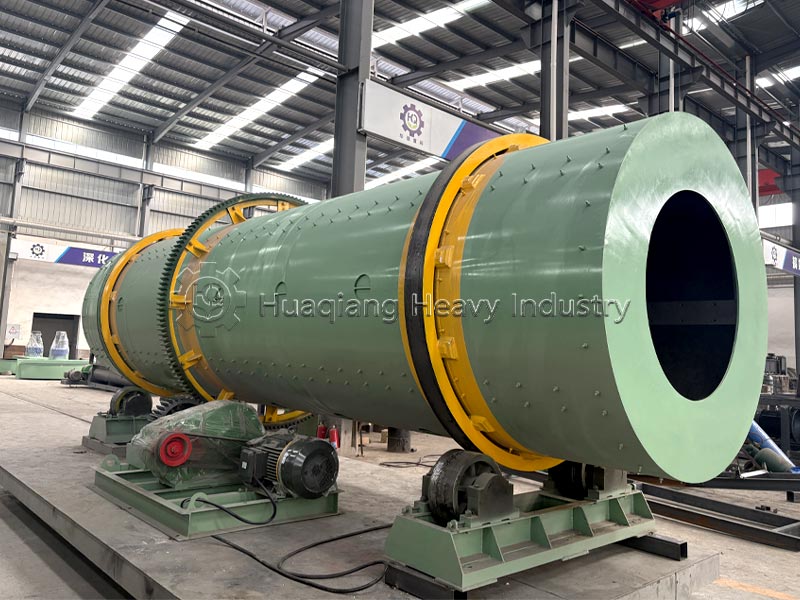
Taking Zhengzhou Huaqiang Heavy Industry’s rotary drum granulator as an example, its special rubber liner design enables automatic cleaning and removal of lumps and nodules, significantly reducing the problem of clumping and agglomeration, and lowering downtime maintenance frequency and manual cleaning costs. For large fertilizer companies pursuing stable mass production and high product standardization, rotary drum granulation remains the preferred solution due to its mature technology and reliable operation.
Roller Press Granulation: A New Path to Energy Saving and Flexibility
Roller press granulation technology highlights “room temperature molding” and “energy saving and consumption reduction.” This process directly presses powdered raw materials into shape through high-pressure extrusion by two rollers, eliminating the need for subsequent drying. Overall energy consumption can be reduced to about 60% of that of rotary drum granulation.
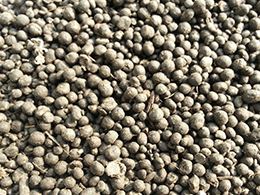
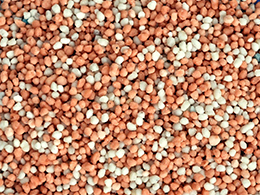
In terms of raw material processing, roller press granulation has no special requirements for material particle size and is particularly suitable for heat-sensitive raw materials and the addition of trace elements. The minimal temperature fluctuations in materials during production prevent the decomposition and loss of nutrients due to high temperatures, allowing for the precise incorporation of trace elements such as boron, iron, zinc, and copper. This makes it suitable for producing various specialized and functional compound fertilizers.
This technology also offers a production capacity flexibility of 1-20 tons/hour, but its relatively lower equipment investment and simpler process make it more popular with small and medium-sized fertilizer companies or manufacturers focusing on product customization. For example, a Malaysian customer chose Huaqiang Heavy Industry’s roller granulation production line, which was designed specifically for the local hot and humid climate, enabling rapid installation, commissioning, and stable operation, effectively meeting the regional market’s personalized needs for specialty fertilizers.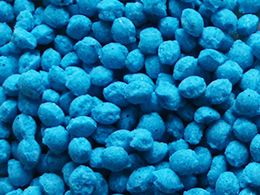
Key Considerations for Enterprise Selection
When choosing between these two technologies, companies should conduct a systematic evaluation from the following four dimensions:
Product Type and Raw Material Characteristics
If the main products are general-purpose compound fertilizers and large-scale standardized products, and the raw materials do not contain heat-sensitive components, roller granulation is more suitable. For producing specialized fertilizers containing heat-sensitive materials such as trace elements and humic acid, roller granulation better ensures the stability of active ingredients.
Capacity and Scale Requirements: Drum granulation is suitable for continuous, high-volume production with a high capacity ceiling and strong production line scalability; roller pressing, on the other hand, adapts to flexible production modes of multiple varieties and small batches, especially suitable for order-based and differentiated fertilizer products.
Energy Consumption and Overall Cost: Roller pressing eliminates the drying process, resulting in significant advantages in electricity and heat consumption, making it suitable for regions with high energy costs. While the initial investment for drum granulation may be higher, unit costs can still be controlled at a low level in ultra-large-scale production.
Maintenance and Operation: Drum granulation equipment requires regular cleaning and maintenance, but current automated cleaning technologies have significantly reduced the manual burden; roller pressing has a relatively simple mechanical structure and low maintenance frequency, but it places certain demands on roller wear, requiring careful material selection and maintenance.
Diverse Granulation Technologies for Fertilizer Production
This comparative analysis highlights the strategic choice between wet and dry granulation paths within fertilizer production machine technology. The rotary drum granulator represents the standard for large-scale, high-volume wet agglomeration in the npk fertilizer manufacturing process. In contrast, the roller press granulator production line operates on the principle of dry fertilizer granules compaction, where a fertilizer compactor applies high pressure, eliminating the need for drying. This method is a distinct and efficient pathway within the broader npk manufacturing process.
The selection of granulation equipment is a fundamental decision in designing fertilizer manufacturing plant equipment. While drum and roller press are primary for NPK, other technologies serve niche markets. For organic production, an organic fertilizer disc granulation production line offers gentle shaping. For small-scale or specialized pellet production, a flat die pelleting machine provides a compact extrusion solution. Thus, a comprehensive fertilizer equipment supplier must master this entire spectrum of technologies to provide truly customized solutions based on client-specific raw materials, capacity, and product goals.
Ultimately, there is no single “best” technology. The optimal choice is the one that aligns with the specific economic, agronomic, and operational parameters of the production facility, ensuring both product quality and long-term profitability.
Conclusion: In summary, drum granulation and roller pressing are not simple substitutes, but rather complementary technologies based on different product strategies and production conditions. For large enterprises producing general-purpose fertilizers, roller granulation is a solid and efficient cornerstone; for small and medium-sized enterprises focusing on specialty fertilizers, roller pressing offers an energy-saving and flexible growth path. In today’s era of green manufacturing and precision agriculture, scientific selection not only affects corporate profits but also impacts the final efficacy and sustainable competitiveness of fertilizer products. It is recommended that companies conduct pilot-scale trials before making decisions, combining their own raw materials, market conditions, and operational goals to make the most suitable technological investment.