As a highly efficient pelleting equipment, the flat die pelleting production line boasts a wide range of capacity adaptability and is applied in various fields including agriculture, energy, and chemicals. Its unique technological advantages have made it popular with manufacturers of all sizes worldwide. The following details its core features, application scope, and key selection and operation points to help global readers gain a comprehensive understanding of this equipment.
Capacity performance is one of the core indicators of a flat die pelleting production line, with significant differences in output between different models and configurations. Generally, the hourly output range for mainstream equipment is 0.08 to 5 tons, while large-scale customized production lines can reach 8 to 20 tons. Specifically, small-scale equipment, such as the KP-150C model, has an hourly output of 0.08 to 0.3 tons, suitable for laboratory research and development or small-batch pilot production, with a power requirement of 5.5 to 11 kW; medium-sized equipment, such as the KP-400/500 model, has an hourly output of 0.4 to 2.5 tons, ideal for small and medium-sized farms and fertilizer plants, with a power requirement of 15 to 55 kW; large-scale equipment, such as the KP-600/800 model, has an hourly output of 2.5 to 5 tons, suitable for large-scale fertilizer and feed mills, with a power requirement of 55 to 75 kW; and extra-large customized lines are designed specifically for large-scale chemical and mineral granulation, with power reaching 90 to 200 kW or more. Key factors affecting capacity include material moisture content, with an optimal range of 15% to 25%, and a particle size preferably not exceeding 2 mm. The viscosity and hardness of the material, as well as the die aperture and roller pressure, also significantly affect output and granulation rate.
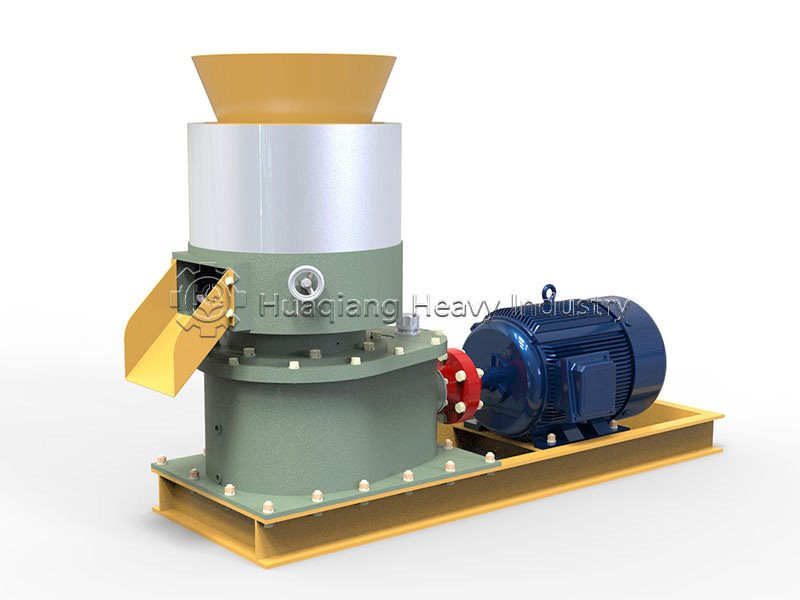
This production line has extremely wide applications, covering core needs in global agriculture, energy, and industry. In the fertilizer industry, it can process organic fertilizer, bio-organic fertilizer, and compound fertilizer, suitable for raw materials such as livestock and poultry manure, straw, and mushroom residue, with a pelleting rate exceeding 95%, high pellet strength, and low secondary pulverization rate. In the feed industry, it can produce pelleted feed for livestock, poultry, and aquatic animals, using corn, soybean meal, etc. as raw materials. The temperature rise during the pelleting process does not exceed 30℃, effectively preserving nutrients. In the biomass energy industry, it can compress sawdust, straw, etc., into high-density fuel pellets, facilitating storage, transportation, and combustion. In the industrial field, it is also suitable for granulating powdery materials such as activated carbon, clay, and coal powder, especially suitable for low-viscosity and heat-sensitive materials.
Its working principle is simple and efficient. The motor drives the reducer to rotate the flat die. Under the action of centrifugal force, the pressure roller adheres to the flat die, pressing the material into the die holes and extruding it into a cylindrical shape. Then, a scraper cuts it into uniform pellets. The entire process is carried out at low temperatures, making it particularly suitable for heat-sensitive materials. The core structure comprises three main modules: pretreatment, main unit, and post-processing. Pretreatment equipment includes crushers and mixers; the main unit’s core components are flat dies and pressure rollers; and post-processing equipment includes coolers and screening machines. Particle diameter can be adjusted between 3 and 50 mm, and energy consumption is approximately 40% lower than that of drying granulation.
Regarding selection and operation, scientific selection is necessary based on production capacity requirements, material characteristics, and particle size. Production capacity should be calculated backwards from daily output with a 10% to 20% redundancy. During operation, raw material particle size and moisture content must be controlled, and vulnerable parts should be inspected regularly. Compared to ring die granulation, flat die granulation primarily offers low to medium production capacity, is more suitable for low-viscosity and heat-sensitive materials, offers easier die changing, lower maintenance costs, and produces mostly cylindrical particles, making it suitable for production scenarios with strict cost control and special material characteristics.
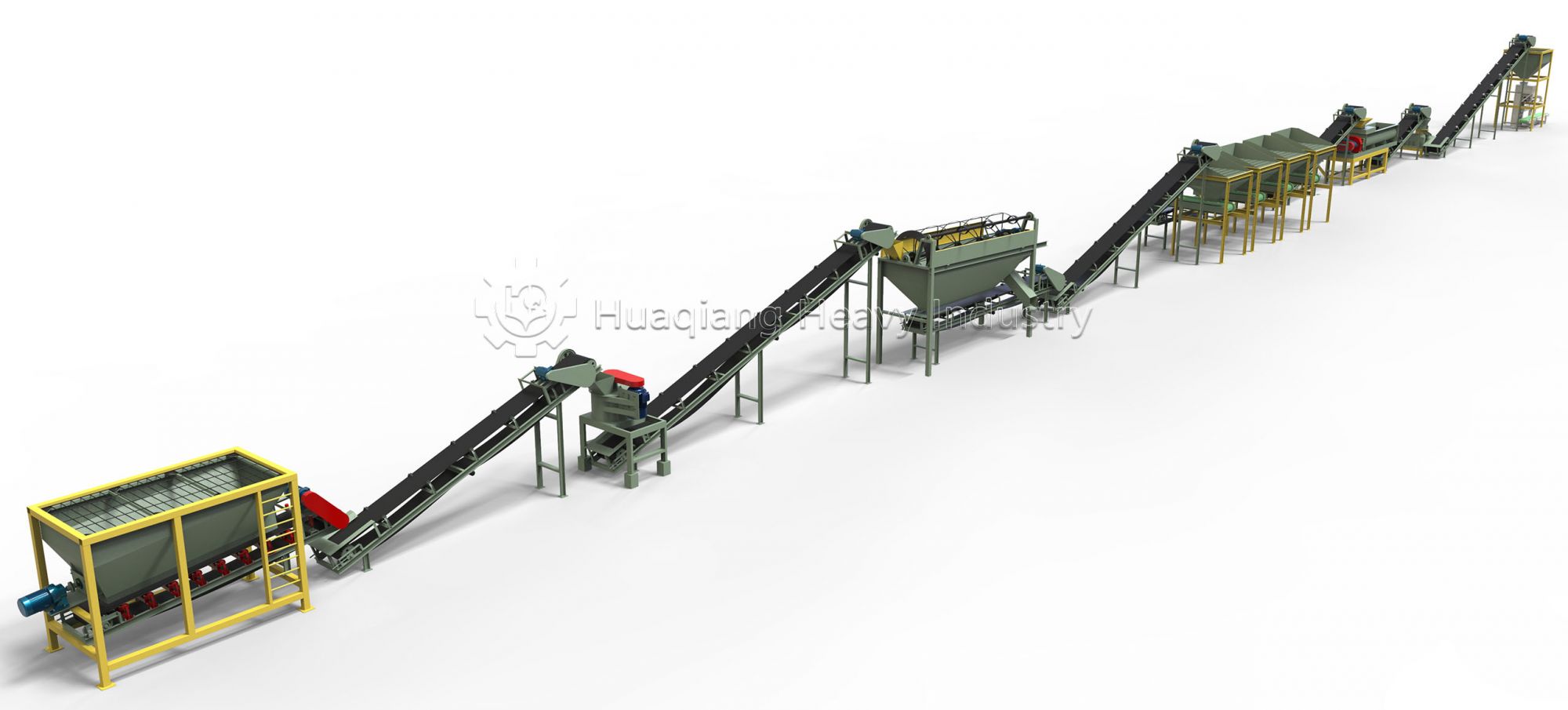
Conclusion: The Strategic Role of Flat Die Pelletizing in Modern Fertilizer Production
In conclusion, the flat die pelletizing production line stands as a versatile and efficient solution for medium-scale granulation, particularly valued for its low-temperature processing and adaptability to diverse materials like organic waste. Its role is defined within a broader ecosystem of fertilizer manufacturing technologies.
For operations focused on organic fertilizer manufacturing process, integrating a flat die line with a large wheel compost turning machine for initial fertilizer granules compaction creates a seamless workflow from raw compost to finished pellets. However, for high-volume production of mineral-based fertilizers, it is part of a larger suite of fertilizer production machine options. A complete npk production line for the npk fertilizer manufacturing process might instead utilize a rotary drum granulator within a disc granulation production line or a roller press granulator production line for high-capacity manufacturing of npk fertilizer. Each piece of fertilizer processing machine technology, from compaction to granulation, contributes to the overall npk fertilizer production technology, allowing producers to select the optimal process for their specific product and scale.
Ultimately, understanding the full spectrum of granulation and processing technologies empowers manufacturers to build efficient, cost-effective production systems that meet the precise demands of the global market for both organic and synthetic fertilizers.