A Roller Extrusion Granulation Production Line Successfully Commences Operation in Malaysia

In early summer, the air is filled with the fragrance of ripe fruit. In April 2025, Zhengzhou Huaqiang Heavy Industry Technology Co., Ltd. (hereinafter referred to as “Huaqiang Heavy Industry”) successfully completed the installation, commissioning, and official operation of a roller extrusion granulation production line tailored for a Malaysian client. The successful completion of this project not only represents another significant breakthrough for Huaqiang Heavy Industry in its deep cultivation of the overseas fertilizer equipment market, but also demonstrates the strong competitiveness of “Made in China” in the international market through professional customized solutions and superior product technology, winning high praise from the client.

As a leading modern fertilizer equipment enterprise integrating R&D, production, sales, and after-sales service, Huaqiang Heavy Industry adheres to the corporate tenet of “market-oriented, innovation-driven development, quality-based survival, and customer trust gained through comprehensive after-sales service.” With its strong technical capabilities, high-quality workforce, and professional CAD design center, Huaqiang Heavy Industry provides global clients with comprehensive one-stop services, from plant planning and process design to equipment manufacturing, installation, commissioning, and formula optimization. This Malaysian client, driven by the need for large-scale fertilizer production in the region, urgently required a high-efficiency, stable, and environmentally friendly roller extrusion granulation production line for the mass production of compound fertilizers. Huaqiang Heavy Industry, leveraging its years of experience in roller extrusion granulation technology, extensive overseas project implementation experience, and flexible customization capabilities, stood out from numerous competitors and successfully secured the cooperation.
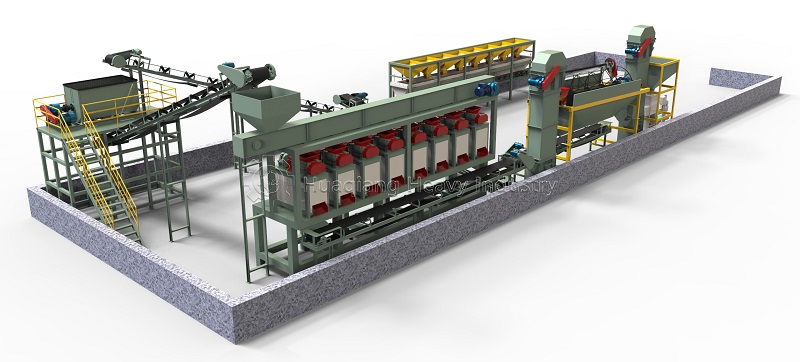
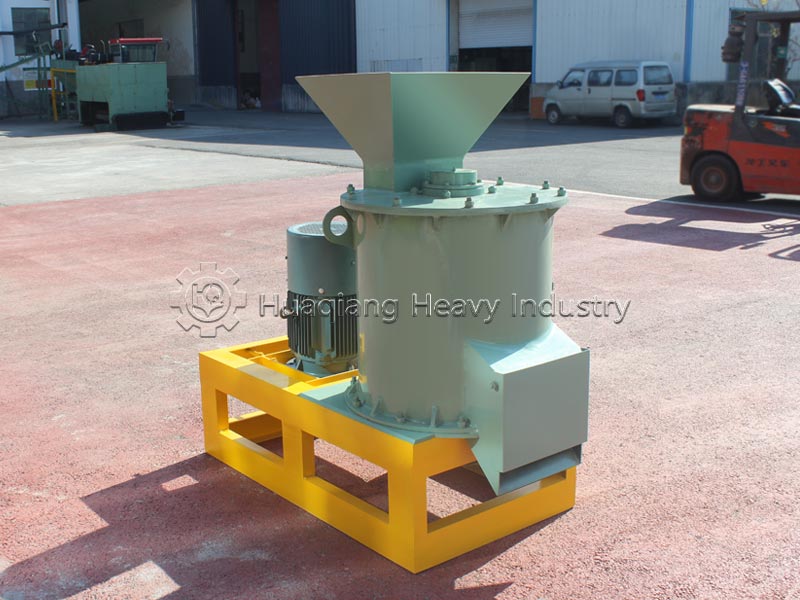
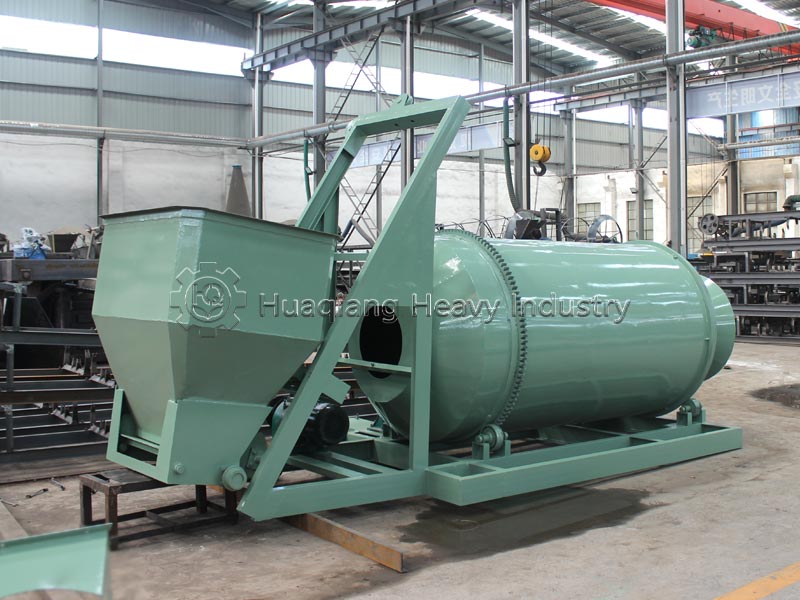
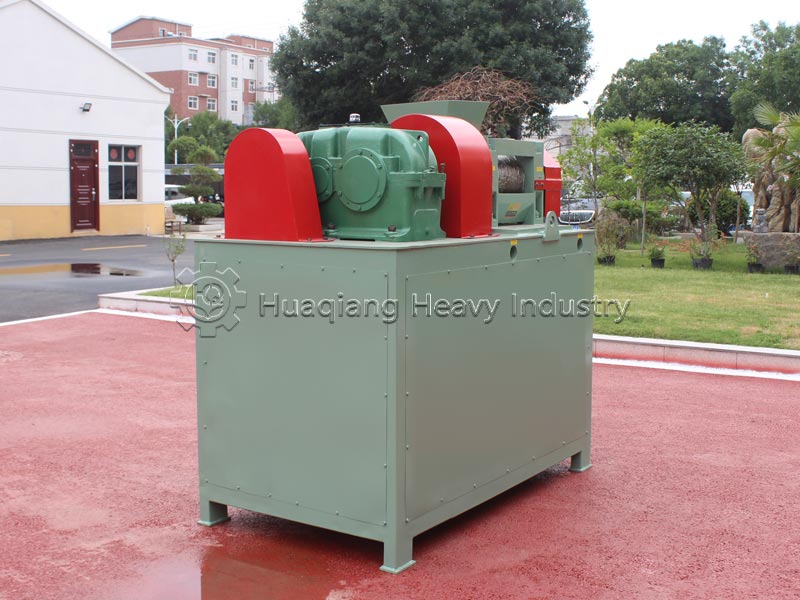
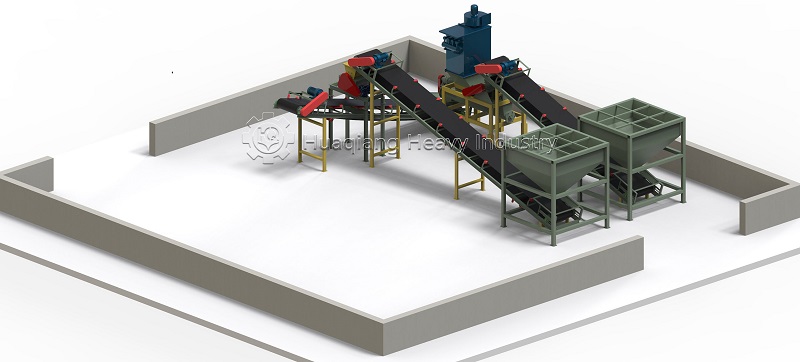
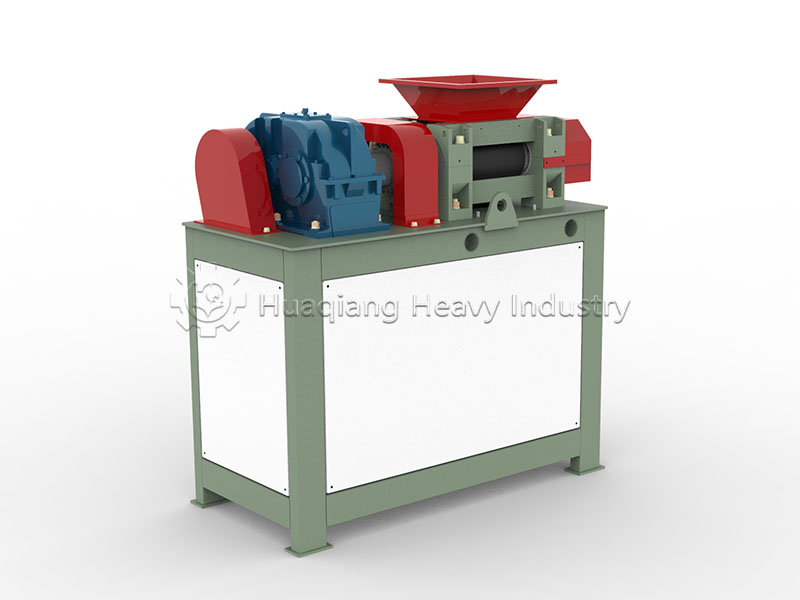
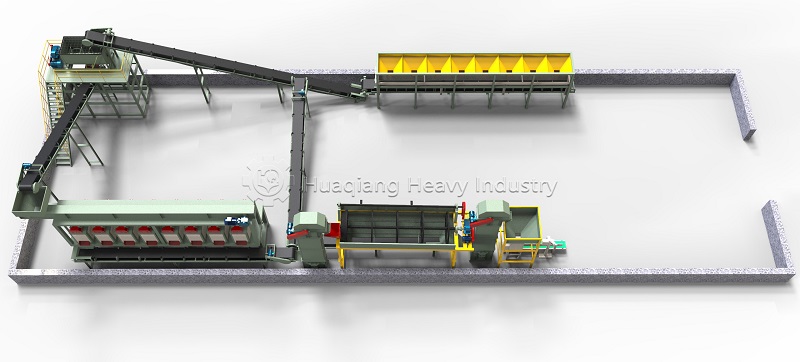
To ensure the production line was fully adapted to the Malaysian client’s production conditions, raw material characteristics, and capacity requirements, the Huaqiang Heavy Industry project team conducted multiple rounds of on-site surveys and solution optimizations, creating this well-configured, closed-loop roller extrusion granulation production line. The entire production line covers all core processes including raw material pretreatment, mixing, granulation, screening, coating, finished product storage, and packaging. The equipment is scientifically and rationally configured, with a high degree of automation: After entering the production chain via a conveyor system, the raw materials are precisely transferred to two 1×2 meter horizontal mixers via a 4-meter belt conveyor, achieving uniform mixing of multi-component raw materials and ensuring the accuracy of fertilizer formulation. The mixed material is then conveyed by a 13-meter belt conveyor to a ø2.2-meter disc feeder. The feeder employs a precise quantity control design to ensure a stable and uniform supply of material to the core equipment—four 2.0-type double-roller extrusion granulators. This type of granulator is a mature and mainstream product of Huaqiang Heavy Industry, featuring a high-strength double-roller design, adjustable extrusion pressure, adaptability to various raw material characteristics, high granulation rate, high particle strength, and stable and reliable operation. The parallel operation of the four machines significantly increases the core capacity of the production line. The granulated material is then transferred by a 4-meter belt conveyor to an ø1.5×6. The 9-meter screening machine performs grading and screening. Unqualified particles are returned to the front end for reprocessing via a 9-meter return conveyor belt, achieving resource recycling. Qualified particles are conveyed via an 8-meter conveyor belt to a 1.5 x 12-meter coating and screening integrated machine for coating treatment to improve the fertilizer’s moisture resistance, stability, and slow-release nutrient effect. A small amount of dust generated during the coating process is efficiently collected by a dust collector to avoid environmental pollution. The processed finished product is transported via a 12-meter conveyor belt to a 3-cubic-meter finished product silo for temporary storage, and finally, standardized quantitative packaging is completed by an automatic packaging machine, achieving continuous and automated production throughout the entire process.

It is worth mentioning that the entire production line incorporates core technologies independently developed by Huaqiang Heavy Industry. The equipment layout is compact and reasonable, occupying a small area, and is equipped with comprehensive environmental protection designs, resulting in low dust entrainment and fully meeting the stringent environmental production standards of Malaysia. From equipment material selection to process optimization, from component processing to complete machine assembly, Huaqiang Heavy Industry consistently adheres to high standards and strict requirements to ensure that every piece of equipment and every link reaches industry-leading levels.

During the project implementation, Huaqiang Heavy Industry assembled a professional overseas service team composed of technical experts and experienced construction personnel, who traveled across borders to the construction site in Malaysia. The team overcame multiple challenges, including regional cultural differences, a complex construction environment, and international logistics coordination. They strictly adhered to construction specifications and timelines to advance equipment installation and commissioning, providing on-site technical guidance and support throughout the process. Simultaneously, they conducted systematic training on equipment operation and maintenance for the client’s operators, ensuring that the client could master the skills of operating and managing the production line. During the trial operation, all equipment on the production line worked smoothly, and all indicators, including capacity, pellet forming quality, energy consumption control, and environmental emissions, met or even exceeded customer expectations. Customer representatives highly praised the line during acceptance, stating, “Huaqiang Heavy Industry’s roller extrusion granulation production line is technologically advanced and operates stably. Our professional team followed up throughout the entire process from design to production implementation, and our after-sales service was timely and thorough, ensuring a worry-free start-up.” Zhengzhou Huaqiang Heavy Industry Technology Co., Ltd. has been deeply involved in the fertilizer equipment field for many years, specializing in a series of equipment such as ground-walking compost turners, trough compost turners, crushers, mixers, granulators, dryers, coolers, screening machines, and packaging machines. We can customize organic fertilizer and compound fertilizer production lines ranging from 10,000 to 500,000 tons according to customer needs. Our products not only cover all parts of China but have also been exported to many countries and regions, providing high-quality organic waste harmless treatment solutions for organic and inorganic bio-fertilizer plants and wastewater treatment plants worldwide. The successful commissioning of the roll extrusion granulation production line in Malaysia marks another significant milestone in the company’s overseas market expansion, further solidifying its brand influence and market share in the international fertilizer equipment market.
Beyond Installation: Enabling Advanced NPK Fertilizer Production

The successful operation of this roller extrusion line provides the Malaysian client with a robust foundation for high-quality fertilizer production. This installation demonstrates Huaqiang Heavy Industry’s expertise in delivering turnkey solutions that integrate seamlessly into the broader npk manufacturing process.

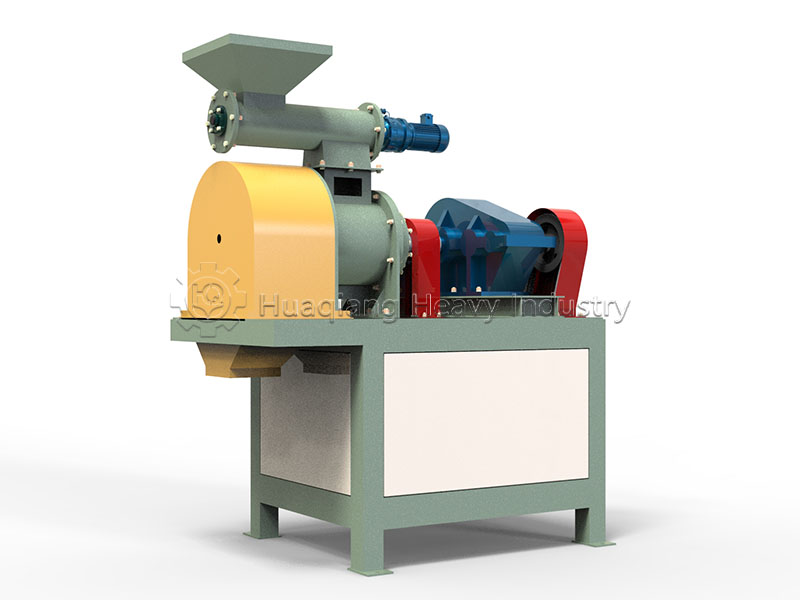
The core of this system is the roller press granulator production line, where the fertilizer compactor (or fertilizer compaction machine) performs dry fertilizer granules compaction through high-pressure extrusion. This efficient npk fertilizer production technology is particularly advantageous for producing dense, low-dust granules with excellent storage properties. While this project utilizes roller press technology, Huaqiang Heavy Industry’s portfolio also includes complementary systems like the rotary drum granulator for different production needs, offering clients a comprehensive range of solutions for compound fertilizer manufacturing.

In the future, Huaqiang Heavy Industry will continue to focus on technological innovation and service upgrades, continuously increasing R&D investment, optimizing product performance and process solutions, and enhancing its customized service capabilities. With more advanced technology, more reliable products, and more professional services, we will actively expand into the global market, creating greater value for more international customers and allowing “Made in China” to shine even brighter in the global agricultural equipment field.

We warmly welcome people from all walks of life to visit, guide, and discuss business with us, and work hand in hand with Huaqiang Heavy Industry to promote the high-quality development of green agriculture!
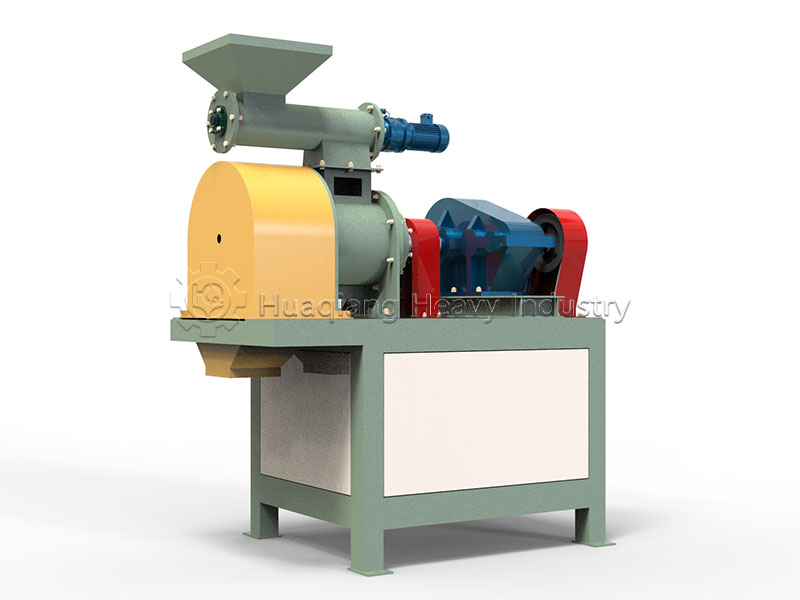
What materials can a ring die pelleting machine handle?

Ring die pelleting machines are widely used for granulation in industries like organic fertilizer and biomass energy. However, different materials vary in suitability. Choosing the right material boosts efficiency and extends the ring die pelleting machine’s life.
1.Organic fertilizer materials
Livestock manure: Chicken, cow, or pig manure can be pelletized into organic fertilizer after fermentation.
Agricultural waste: Materials like straw, rice husks, or mushroom residue can be crushed and mixed into bio-organic fertilizer.
Sludge-based fertilizers: Sewage sludge or biogas residue can be used for pelletizing after dehydration.
Humic acid fertilizers: Blends of humic acid with NPK nutrients make efficient organic-inorganic compound fertilizers.
2.Inorganic fertilizer materials
Compound fertilizers: Mixtures like nitrogen, phosphorus, and potassium (urea, MAP, KCl, etc.).
Single-nutrient fertilizers: Powdered fertilizers (like ammonium sulfate, potassium nitrate) turned into granules.
Micronutrient fertilizers: Materials containing zinc, iron, boron, etc., formed into uniform pellets.

3.Biomass energy materials
Wood pellets: Sawdust, wood shavings, or wood chips pressed into high-density fuel.
Straw pellets: Crop waste like corn or wheat stalks processed into clean energy pellets.
Other biomass: Peanut shells, palm shells, bagasse, etc., processed into fuel pellets.
The properties of different materials (moisture content, viscosity, fiber content) will affect the granulation effect of the ring die pelleting machine. It’s crucial to select the right ring die (compression ratio, hole size). And adjust process parameters (temperature, pressure).

How ring die pelleting machines work and their advantages in granulation?

In the world of powder granulation, various granulation technologies have their strengths. Whether it’s a rotary drum granulator suitable for high output and good pelletizing, a compact flat die pelleting machine, or a fertilizer compaction machine specializing in high-hardness products, they all play a crucial role in their respective fields. Among them, the ring die pelleting machine, with its unique structure and wide applicability, has become an indispensable piece of equipment.

From pelleted feed for livestock and poultry to fuel for biomass power generation, and the preparation of organic fertilizers, many seemingly insignificant granular items may have its contribution behind the scenes. It doesn’t have a fancy appearance; at its core is a ring die filled with precise holes. This process is essentially a highly efficient physical molding. The change it brings is intuitive: loose powder disappears, replaced by regular, solid granules. This transformation brings enormous practical value.

It’s worth noting that technological evolution has never stopped. For example, the new type two in one organic fertilizer granulator, which emerged to meet market demand, integrates multiple functions to simplify the process. However, the fundamental principles of ring die granulation, due to its reliability and efficiency, remain the cornerstone of many equipment designs.

It can be said that this silent industrial artist does not change the essence of the material, but powerfully endows it with the most practical form. In countless factory workshops, it, along with other types of granulation equipment, organizes the complex world of powders into a neat and uniform order of particles.

Core equipment for bio-organic fertilizer production lines adapted to complex working conditions

The raw materials for bio-organic fertilizer production often contain half-wet materials such as livestock and poultry manure and kitchen waste. These materials are highly viscous and difficult to process, and the fermentation process often faces challenges such as large piles and complex sites. The half-wet material crusher and windrow compost turner, as specialized equipment for bio-organic fertilizer production, are precisely adapted to these complex working conditions and are key to ensuring the stable and efficient operation of the bio-organic fertilizer production line.

The half-wet material crusher is the core equipment for the pretreatment of half-wet raw materials. With its special blade structure and anti-sticking design, it can effectively overcome the problem of wet material adhesion, crushing half-wet raw materials with a moisture content of 30%-60% into uniform particles through shearing and extrusion. This not only prevents material clumping from hindering subsequent processes but also improves the uniformity of the mixture of raw materials and fermentation agents, laying the foundation for efficient composting. It is the ideal equipment for processing half-wet raw materials in bio-organic fertilizer production lines.

After pretreatment, the raw materials enter the fermentation stage, where the windrow compost turner demonstrates its unique advantages in adapting to complex working conditions. Its crawler-type walking structure can easily handle uneven fermentation sites and can deeply turn over large areas and high piles of material, breaking up compacted layers to ensure ventilation and aeration, and uniformly regulating the pile temperature to accelerate microbial decomposition and improve fermentation efficiency. In large-scale bio-organic fertilizer production lines, its flexible movement and efficient turning capabilities make large-scale fermentation smoother.

Working together, these two pieces of equipment precisely solve the industry pain points of half-wet raw material processing and large-scale fermentation, fully demonstrating the important role of bio-organic fertilizer equipment in improving the adaptability and efficiency of bio-organic fertilizer production lines.

NPK blending fertilizer production line: Equipment selection and uniformity improvement

The core advantage of NPK blended fertilizers lies in their flexible nutrient ratio, and this advantage is achieved through the precise coordination of various blending and mixing equipment in the production line. Whether it’s a BB fertilizer mixer, an NPK blending machine, or a bulk blending fertilizer machine, the selection, suitability, and operating status of the equipment directly determine the nutrient uniformity and market competitiveness of the final product.

Equipment selection must match production needs. Small and medium-sized production lines are suitable for BB fertilizer mixers, which are easy to operate and have low energy consumption, meeting the needs of small-batch, multi-ratio blending, especially suitable for customizing special fertilizers for regional crops; large-scale production is more suitable for NPK blending machines, which have large mixing capacity and high mixing efficiency, and can ensure the full integration of nitrogen, phosphorus, potassium, and trace elements through a multi-stage mixing structure, adapting to a continuous production rhythm. Bulk blending fertilizer machines focus on the on-site blending needs of bulk materials, offering strong flexibility and effectively reducing packaging and transportation costs, suitable for direct supply to large planting bases.

Operational optimization is key to ensuring uniformity. Regardless of the equipment used, the feeding sequence and speed must be strictly controlled, following the principle of “fine materials first, then coarse materials; light materials first, then heavy materials,” to avoid material stratification; at the same time, the mixing speed and time should be adjusted according to the material characteristics to prevent over-mixing leading to material segregation, or insufficient mixing resulting in uneven nutrient distribution.

In summary, an NPK blending fertilizer production line needs to rationally select a BB fertilizer mixer or a bulk blending fertilizer machine based on production capacity and application scenarios, and optimize operating parameters to consistently produce high-quality blended fertilizers.

Choosing the Right NPK Fertilizer: Enhancing Crop Yield and Quality

 In global agricultural production, selecting the right NPK fertilizer is a key factor influencing crop yield and quality. This article will delve into the characteristics and applicable scenarios of different NPK fertilizers to help growers make informed choices and achieve efficient and sustainable agricultural production.

Understanding Crop Needs: The Foundation for Selecting the Right Formula

The first step in selecting NPK fertilizer is understanding the nutrient requirements of the target crop. Different crops, and even the same crop at different growth stages, have varying requirements for the proportions of nitrogen, phosphorus, and potassium. For example, leafy vegetables require more nitrogen to promote leaf growth, while fruit trees need more potassium during the fruiting period to promote fruit enlargement and sugar accumulation.

For field crops, balanced fertilizers (such as 15-15-15) are generally a good choice because they comprehensively provide the basic nutrients needed by the crop. For higher-value fruit and vegetable crops, specialized formula fertilizers often bring better results and returns. Modern precision agriculture technologies, such as soil testing and leaf analysis, can help growers more accurately understand crop needs and thus select the most suitable fertilizer formula.

Considering Soil Conditions: Suitability is Crucial

Soil characteristics are a critical factor to consider when selecting fertilizers. The pH, texture, and nutrient status of different soils directly affect fertilizer effectiveness and crop response.

In acidic soils, sulfur-based fertilizers are generally more suitable than chloride-based fertilizers because they do not exacerbate soil acidification and can replenish sulfur. For alkaline soils, chloride-based fertilizers may be a more economical choice. Soil texture also influences fertilizer selection: sandy soils have poor nutrient retention capacity and are suitable for slow-release fertilizers to reduce nutrient loss; clay soils can use conventional fertilizers.

Furthermore, the existing nutrient levels in the soil must be considered. Understanding the nitrogen, phosphorus, and potassium content of the soil through soil testing can avoid unnecessary nutrient application, saving costs and reducing environmental burden. In soils lacking micronutrients, choosing compound fertilizers fortified with these elements may be more advantageous.

Assessing the Production System: Matching Application Methods

The scale of planting and the level of mechanization of the production system directly affect the choice of fertilizer form. Large-scale farming typically requires granular fertilizers suitable for mechanized application, while small-scale or facility-based farming may prefer powdered or liquid fertilizers.

For modern farms using drip or sprinkler irrigation systems, highly water-soluble fertilizers are essential. Liquid fertilizers or fully water-soluble powdered fertilizers can mix evenly with water, ensuring proper operation of the irrigation system and uniform nutrient distribution. Traditional field crops can use conventional granular fertilizers, applied by broadcasting or strip application.

Labor costs are also a factor to consider. In areas with labor shortages or high costs, choosing slow-release or controlled-release fertilizers can reduce the number of fertilizations, thereby lowering labor costs. Although the initial investment in these fertilizers is higher, they may be more economical over the entire growing season.

Environmental Considerations: Choices for Sustainable Agriculture

With increasing global emphasis on environmental protection, choosing environmentally friendly fertilizers is becoming increasingly important. While controlled-release and slow-release fertilizers are more expensive, they significantly reduce nutrient loss and the risk of water pollution, aligning with the development direction of sustainable agriculture.

Organic-inorganic compound fertilizers combine the rapid effects of chemical fertilizers with the soil-improving properties of organic fertilizers, helping to increase soil organic matter content and improve soil structure. These fertilizers are particularly suitable for soils used in long-term, continuous cropping, and can alleviate soil degradation problems.

When choosing fertilizers, local climate conditions should also be considered. In rainy areas, choosing fertilizer forms that are less prone to leaching is especially important; while in arid areas, the water solubility of the fertilizer needs to be considered to ensure that crops can absorb nutrients under limited water conditions.

Economic Benefit Analysis: Balancing Costs and Benefits

Finally, a balance needs to be found between costs and expected benefits when choosing fertilizers. Although high-end fertilizers (such as controlled-release fertilizers and specialized formula fertilizers) are more expensive, they may provide higher returns by increasing yields, improving quality, or reducing other inputs (such as labor and irrigation).

For bulk crops, such as grains, cost-effectiveness may be the primary consideration, so economical general-purpose fertilizers may be more suitable. For high-value crops, such as fruits, vegetables, or specialty crops, investing in more precise, specialized fertilizers often yields better economic benefits.

It’s important to note that fertilizer costs include not only the purchase price but also transportation, storage, and application costs. Granular fertilizers are generally easier to store and transport than powdered fertilizers, while liquid fertilizers require specialized storage and application equipment. These factors should all be considered comprehensively when making a decision.

Future Trends and Innovations

The NPK fertilizer industry is constantly innovating, with new fertilizer products emerging continuously. Improvements in coating technology make controlled-release fertilizers more precise and economical; fertilizers with added biostimulants or beneficial microorganisms are gaining attention; and fully water-soluble crystalline fertilizers offer more options for greenhouse agriculture.

Digital technology is also changing how fertilizers are selected and applied. Through sensors, drones, and intelligent algorithms, growers can more accurately monitor crop nutrient status and achieve on-demand fertilization. These technological developments will make fertilizer selection more scientific and fertilization more precise, ultimately achieving efficient resource utilization and sustainable agricultural development.

By comprehensively considering crop needs, soil conditions, production systems, environmental factors, and economic benefits, growers can choose the NPK fertilizer best suited to their specific circumstances, achieving high-yield, high-quality, and efficient agricultural production.

Conclusion: Bridging Smart Selection with Advanced Manufacturing

In summary, selecting the optimal NPK fertilizer requires a nuanced analysis of crop needs, soil conditions, and farm economics. This thoughtful selection process ensures efficient nutrient use, supports crop health, and promotes environmental stewardship, ultimately maximizing both yield and sustainability.

The diverse fertilizer options available to farmers are made possible by sophisticated npk fertilizer production technology. A complete npk fertilizer production line utilizes advanced fertilizer granulation methods to create these products. The process typically involves precise blending of raw materials using an npk blending machine or npk bulk blending machine and a fertilizer mixer machine. The mixture is then formed into granules using key equipment such as an npk fertilizer granulator machine (employing npk granulation machine technology), a disc granulator machine, or a fertilizer roller press machine. Each piece of npk fertilizer machine within this npk fertilizer manufacturing process is designed to produce the specific formulations—from general blends to specialized controlled-release products—that meet the precise needs identified through smart agronomic selection.

Ultimately, the synergy between informed on-farm decision-making and precision manufacturing ensures a reliable supply of tailored nutrients, driving the future of productive and responsible agriculture.

Fertilizer Compactor: The Efficient and Energy-Saving Dry Granulation Technology

 In modern agricultural production, the physical form of fertilizer is crucial for its storage, transportation, and application efficiency. Powdered fertilizers are prone to dust, caking, and uneven spreading, while traditional wet granulation processes are energy-intensive and complex. The fertilizer compactor, particularly the double-roller dry granulator, offers an efficient, energy-saving, and environmentally friendly solution for fertilizer processing through its unique room-temperature, high-pressure forming technology.

Core Principle: High-Pressure Forming Without Drying

The essence of the fertilizer compactor lies in its dry granulation process. This process completely eliminates the need for liquid binders and subsequent drying steps required in traditional wet granulation, achieving significant energy savings at the source. Its working principle is clear and efficient:

Uniform Feeding: Pre-mixed powdered fertilizer raw materials are continuously and evenly fed into the gap between two parallel rollers by a precise feeding system.

High-Pressure Compaction: The two rollers, driven by powerful hydraulic or mechanical force, rotate towards each other, exerting extreme pressure (tens to hundreds of Megapascals) on the material passing through the nip. In this instant, air between powder particles is forcibly expelled. Particles undergo plastic deformation and intermolecular bonding under immense mechanical force, being compressed into dense flakes or strips.

Crushing and Screening: The extruded continuous flakes are then sent to a crusher and broken into fragments of various sizes. These fragments are graded by multi-layer vibrating screens to select finished granules within the target size range (typically 2-5 mm). Oversized fragments are re-crushed, and fine powder is recycled back into the process, ensuring zero raw material waste.

Optional Coating: To enhance the product’s anti-caking and controlled-release properties, the formed granules can undergo surface coating in a subsequent stage.

Remarkable Advantages: Energy Saving, Quality Improvement, Environmental Friendliness

Thanks to its unique working principle, the fertilizer compactor demonstrates multiple outstanding advantages:

Prominent Energy Saving and Consumption Reduction: By eliminating the drying step in the granulation process, its energy consumption is typically only 30%-50% of that of traditional wet processes, directly and significantly reducing production costs and carbon emissions.

Excellent Product Quality: The produced granules feature high density, great mechanical strength, and extremely low dust content. They possess good compressive and wear resistance, minimizing breakage or caking during long-distance transportation and storage. The uniform particle size ensures good flowability, facilitating precise mechanical application.

Wide Raw Material Adaptability: This technology is highly versatile for various fertilizer raw materials. Whether it’s NPK compound fertilizer, potassium chloride, ammonium sulfate, potassium sulfate, or various blended fertilizers, all can be processed effectively, and the requirements for raw material moisture content are relatively lenient.

Green and Environmentally Friendly: The entire production process occurs at room temperature without involving chemical reactions, generating no wastewater, exhaust gas, or harmful waste residue. It fully complies with the requirements of clean production and the circular economy.

Application and Prospects

Currently, roller-type fertilizer compactors have become key equipment for upgrading and retrofitting in industries such as compound fertilizers, potash fertilizers, and micronutrient fertilizers. They are not only suitable for large-scale continuous production but their medium and small-scale designs also meet the market demand for customized formula fertilizers and small-batch production.

As global requirements for agricultural sustainability and industrial energy efficiency continue to increase, dry compaction granulation technology is gaining more attention due to its comprehensive advantages in energy saving, environmental protection, and product quality. In the future, through further integration with intelligent control systems, precision feeding technology, and more efficient roller surface design, fertilizer compactors will continue to propel the fertilizer processing industry towards greater efficiency, sustainability, and cost-effectiveness.

Conclusion: The Strategic Advantage of Dry Compaction Technology

In summary, the fertilizer compaction machine, specifically the double-roller dry granulator, establishes a new standard for efficient and sustainable fertilizer processing. By enabling fertilizer granules compaction at room temperature, it eliminates the need for energy-intensive drying, offering a clear path to lower costs and a reduced carbon footprint.

This dry fertilizer compaction process is a vital part of the modern suite of fertilizer granulation processes. It serves as a key fertilizer processing machine within an integrated npk manufacturing process. While traditional methods like drum granulation using a rotary drum granulator remain important for some applications, the roller press granulator production line offers a compelling dry alternative. Its role is complementary to other technologies like a disc granulation production line used in organic fertilizer manufacturing process, providing manufacturers with the flexibility to choose the optimal npk fertilizer production technology based on raw materials and product specifications.

Ultimately, with its unmatched energy efficiency, product quality, and environmental benefits, the fertilizer compactor is poised to play an increasingly central role in the future of sustainable fertilizer manufacturing worldwide.

What Is the Difference Between Layered Composting and Turned Composting?

In modern agriculture and horticulture, composting is a key technology for transforming organic waste into fertile soil amendments. Among the methods, layered composting and turned composting are two mainstream aerobic composting techniques. Both rely on microbial decomposition of organic matter, but they differ significantly in operational principles, process efficiency, and applicable scenarios. Understanding these differences helps growers choose the most suitable composting method based on their specific conditions.

1. Fundamental Differences in Core Definitions and Operational Modes

Layered composting is essentially a static composting method. Its core concept is “layered stacking, natural fermentation.” During operation, materials are not mixed but are stacked in specific layers, much like making a layer cake. Typically, the bottom layer consists of coarse straw or small branches for aeration (about 10-15 cm thick) to ensure ventilation at the base. Above this, layers are alternated: high-carbon material layers (e.g., straw, sawdust, 15-20 cm thick), high-nitrogen material layers (e.g., livestock manure, kitchen waste, 5-10 cm thick), and a thin inoculation layer (mature compost or commercial microbial agents, 2-3 cm thick). This process is repeated until the pile reaches a height of about 1.2-1.5 meters, and is finally covered with a layer of soil or breathable film to retain heat and moisture. The entire process requires little to no turning, relying primarily on natural air convection and microbial diffusion within the pile structure to complete fermentation.

In sharp contrast, turned composting is a dynamic composting method. Its core lies in “thorough mixing and active aeration.” All raw materials are crushed and thoroughly mixed to achieve an ideal carbon-to-nitrogen ratio (typically 25:1 to 30:1) and moisture content (55%-60%) before piling. The mixed materials are then formed into long, windrow-shaped piles. Regular, mechanical turning is employed to force aeration. When the core temperature rises to the thermophilic stage of 55-65°C, the pile is turned every 2-3 days using a compost turner. This process moves the inner materials to the outside and the outer materials to the inside, ensuring even oxygen distribution, controlled temperature, and promoting uniform maturation throughout the pile.

2. Key Differences in Process and Outcomes

These distinct operational modes directly lead to several differences in the fermentation process and final results:

First, there is a notable difference in fermentation cycle and efficiency. Due to the relatively passive oxygen supply in layered composting, microbial activity is slower, resulting in a longer fermentation cycle, typically requiring 60 to 90 days for complete maturation. In contrast, turned composting continuously injects oxygen through active turning, greatly stimulating microbial activity. With the addition of efficient microbial inoculants, the cycle can be significantly shortened to 15 to 30 days, making it much more efficient.

Second, temperature control and sanitization effects also differ. The temperature rise inside a layered compost pile is slower and unevenly distributed. The thermophilic phase (above 55°C) may be short-lived or unstable, which limits the effectiveness of killing pathogens, weed seeds, and insect eggs. Turned composting, however, can quickly reach and maintain a stable thermophilic phase for 5-7 days, ensuring more thorough sanitization and a more reliable harmless outcome.

Furthermore, the uniformity of maturation and the requirements for labor and equipment are key points of contrast. In layered composting, the maturation progress often varies between the top, middle, and bottom layers. It’s possible for the bottom to be mature while the top still contains fresh materials. Its advantage, however, lies in requiring almost no specialized equipment; it can be managed manually at a low cost. Turned composting achieves highly uniform material maturation through frequent turning, resulting in stable product quality. But it heavily relies on equipment like shredders and compost turners, involving higher initial investment and operational costs.

3. How to Choose: A Guide to Applicable Scenarios

The choice between the two methods depends entirely on your scale, resources, and goals.

Layered composting is an ideal choice for small-scale, low-investment scenarios. It is perfectly suited for handling daily household kitchen waste, garden leaves, or scattered livestock manure on a small farm. This method is flexible in terms of space requirements (it can even be done in a compost bin), simple to learn and operate, making it an excellent way to recycle waste naturally.

Turned composting, on the other hand, is the standard process for large-scale, commercial production. It is suitable for scenarios such as large-scale livestock farms needing to process thousands of tons of manure, or organic fertilizer factories converting crop residues and other waste into commercial fertilizer. Its high efficiency, uniformity, and excellent sanitization effects meet the demands of mass production and strict product quality standards.

4. Practical Tips and Summary

It’s worth noting that both methods can be slightly modified to optimize results. For example, in layered composting, manually turning the pile once after the temperature begins to drop (after about a month), swapping the upper and lower layers, can effectively shorten the cycle and improve uniformity. For turned composting, mastering the timing of turning is crucial: turning before the temperature reaches the desired range can cool the pile and delay fermentation, while turning is essential immediately if the temperature exceeds 70°C to prevent “overheating” and killing beneficial microbes.

In summary, layered composting and turned composting represent two philosophies of “stillness” and “motion” in the art of composting. The former is simple, economical, and follows a natural rhythm; the latter is efficient, uniform, and embodies industrial wisdom. Understanding their differences allows us to utilize resources more intelligently, whether nourishing a family vegetable garden or supporting an ecological farm.

Conclusion: From Small-Scale Practice to Industrial Production

In summary, the choice between layered and turned composting is a strategic decision based on scale, resources, and objectives. Layered composting offers a simple, low-cost entry point for recycling organic waste, while turned composting provides the efficiency and consistency required for commercial-scale production.

The dynamic fermentation composting technology for organic fertilizer exemplified by turned composting is the cornerstone of the modern organic fertilizer fermentation process. This fermentation composting turning technology relies on specialized equipment like the trough-type compost turner (for controlled trough-type aerobic fermentation composting technology), the large wheel compost turner, or the chain compost turning machine. These machines, along with necessary pre-composting processing equipment, form the essential equipments required for biofertilizer production. The resulting high-quality compost can then be further processed into uniform granules using a disc granulation production line, completing the transformation from raw waste to a market-ready soil amendment.

Ultimately, whether for a backyard garden or an industrial facility, understanding and selecting the appropriate composting method is fundamental to building a sustainable, closed-loop nutrient management system.

Tags:

compost fermentation machine

Requirements for raw materials in double roller press granulator: How to choose suitable materials?

Double roller press granulators are efficient and energy-saving equipment widely used in producing granular fertilizers like organic fertilizer, compound fertilizer, and bio-fertilizer. However, not all raw materials are directly suitable for extrusion granulation. The physical and chemical properties of the material directly affect the granulation results.
Physical Property Requirements
1.Appropriate Particle Size
Raw materials must be crushed, generally to 80-200 mesh (0.074-0.2mm). Particles that are too coarse make forming difficult, while particles too fine can affect flowability and cause the material to stick to the rollers.
2.Moderate Moisture Content
Excessive moisture (>15%) causes material to stick to the rollers and affects demolding. Insufficient moisture (<8%) makes forming difficult, and the granules become brittle. The optimal moisture range is usually 8%-12%, though this may vary based on material characteristics.
3.Good Plasticity
Materials need some stickiness and plasticity (like humic acid, composted manure, bentonite) to help improve granule formation rate and hardness.

Chemical Property Requirements
1.Moderate Organic Matter Content
For organic fertilizer materials (like compost, humic acid), an organic matter content of 30%-70% is recommended. Too high can lead to loose granules; too low affects fertilizer efficiency.
2.No Corrosive Components
Strong acids, strong alkalis, or high-salt substances should be avoided in the raw materials to prevent equipment corrosion or harm to crops.
3.No Hard Impurities
Hard objects like stones or metal fragments can damage the double roller press granulator die. Screening or magnetic separation is needed before granulation.
Double roller press granulators have strict requirements for raw material particle size, moisture, and binding properties. Selecting suitable materials and optimizing process parameters are essential for producing high-strength, qualified granular fertilizer.

The art of resource reshaping with organic fertilizer granulators

In today’s era where the circular economy is widely recognized, various granulation equipment is redefining the value of “waste” in its own way.

Stepping into a modern processing workshop, you’ll see different technological approaches: rotary drum granulators use the rotation of rollers to agglomerate materials into granules; while ring die pelleting machines, with their ring die structure, demonstrate high-efficiency production capacity in the feed and fuel sectors. Meanwhile, fertilizer compaction machines are focusing on transforming organic waste into valuable fertilizer products.

Within this diverse technological landscape, flat die pelleting machines maintain a unique balance. They don’t pursue exaggerated output, but rather achieve a perfect balance between pressure and efficiency within a compact space. This design gives them a unique advantage in small- to medium-scale production, especially with the emergence of new type two in one organic fertilizer granulators that combine mixing and granulation in a single unit, further simplifying the production process.

Even more commendable is the inclusivity of this technological family. From the reuse of agricultural and forestry waste to the molding of chemical raw materials, from traditional feed production to the emerging biomass energy sector, different granulation equipment showcases its strengths. Together, they form a bridge connecting different industries, allowing resources to continuously increase in value through cross-sectoral circulation.

With sustainable development becoming a global issue, the value of granulation technology has transcended that of a mere processing tool. Whether it’s a basic fertilizer compaction machine or an integrated, innovative model, they all embody the modern meaning of “turning waste into treasure” in the most practical way.