Bulk Blending Lines: Can You Win Without Precision?

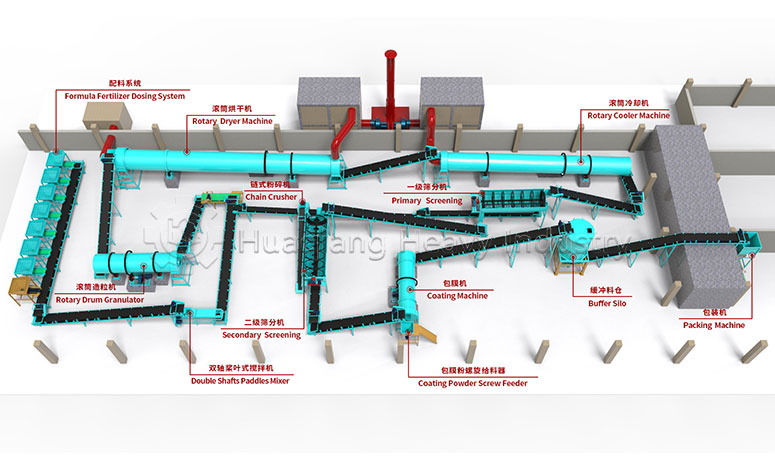
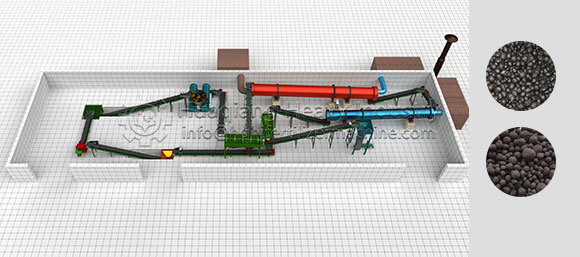
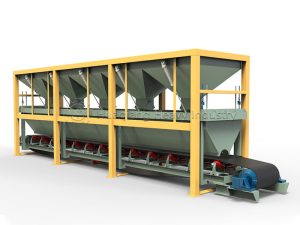
For bulk blending fertilizer line operations, precision isn’t just a buzzword; it’s a matter of survival. Unlike an organic fertilizer production line, which relies on biological decomposition, or a complex NPK fertilizer production line that involves chemical granulation, a bulk blending fertilizer line combines pre-formed nitrogen (N), phosphorus (P), and potassium (K) granules into specific formulas. The entire viability of this operation hinges on maintaining exact nutrient ratios, typically within a critical ±1% tolerance.

This precision standard is significantly stricter than what is often required in a standard organic fertilizer line, where nutrient content can be more variable. Failure to meet this rigorous specification in a blending line can result in uneven crop growth for farmers, leading to financial losses and potentially shattering a company’s reputation in the competitive agricultural market.

Therefore, while an organic fertilizer production line focuses on consistent biological processing, the success of a bulk blending fertilizer line is defined by its unwavering mechanical and operational accuracy.

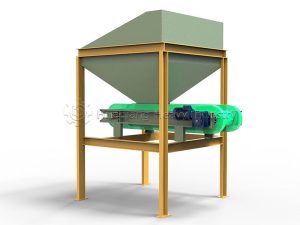
Precision in dosing starts with the equipment. Top-of-the-line lines use computer-controlled weighing systems with load cells accurate to 0.1 kg, ensuring the precise dosing of each nutrient (urea for nitrogen, diammonium phosphate for phosphate, and potassium chloride for potash). A small mistake—say, adding 2% too much potassium—can render a 15-10-20 mix ineffective for tomatoes, which require balanced nutrition. Even worse, uneven mixing (common in inexpensive blenders) can lead to segregation: the lighter urea granules float to the top, while the lower part, heavy with its high potassium content, becomes heavier. This spells disaster for farmland, as some plants absorb too much nitrogen, while others take up too much potassium.

Modular design is another secret weapon. Farmers’ needs change—one season they might want a 20-5-10 ratio for leafy greens, the next a 10-15-20 ratio for root crops. Modular production lines allow you to add hoppers to add new nutrients (such as sulfur or magnesium) or upgrade to a faster mixer without rebuilding the entire system. One factory in Henan replaced its old mixer with a larger modular model in 2024, doubling its production capacity while reducing downtime to less than a week.

Where are these lines thriving? Regions with diverse agricultural production. Coastal Zhejiang, where crops ranging from rice to strawberries are grown, requires rapid recipe adjustments—a need met by bulk mix lines. Similarly, in the mountainous regions of Sichuan, where microclimates require customized mixes, modular lines can adapt more quickly than rigid NPK lines, capturing a niche market. The bulk blending line proves that in fertilizer production, precision and flexibility are not mutually exclusive, but complementary. By defining the ratio within ±1% and enhancing adaptability, you can turn the unique needs of each crop into a competitive advantage.

The Secret to Longevity: Is Maintenance More Important Than Repair?

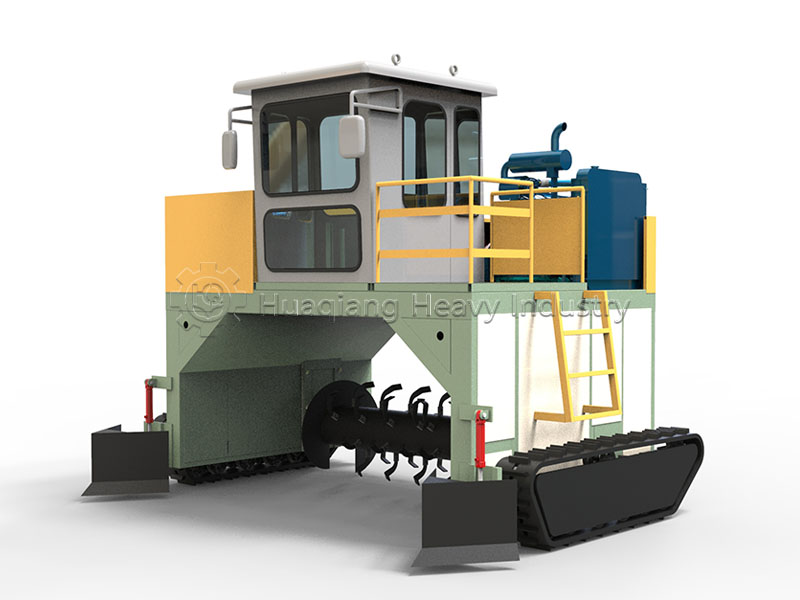
In an organic fertilizer production line, the trough turner is a vital compost fertilizer machine, working like a tireless steel dancer to aerate and mix raw materials. As a core fertilizer production machine, its consistent operation is paramount. However, even the sturdiest fertilizer machine cannot withstand the erosion of time without proper care. Proactive maintenance is the key to preventing unexpected downtime and ensuring efficient composting cycles. By implementing a regular schedule for inspection, lubrication, and part replacement, you can significantly reduce wear and tear.

Master these essential maintenance tips to extend your equipment’s operational lifespan by over 30% and protect your investment!

Daily Checks: Prevention Is Better Than Cure

Spend 10 minutes each morning on a “full physical exam”:

  • Use a flashlight to check for “uninvited guests” (pebbles, hard lumps) on tracks
  • Listen for abnormal “groans” from travel motors
  • Gently shake turner teeth to check for “loose teeth”
  • Observe whether hydraulic oil has “adequate qi” (proper oil level)

Pro Tip: Create checklists with marker stickers to ensure no item is missed.

The Art of Lubrication: Equipment’s “Elixir of Life”

Lubrication is like the equipment’s circulatory system:

  • Travel mechanism:“Blood transfusion” (greasing) for bearings and gears monthly
  • Hydraulic system:“Blood replacement” (oil change) every 1000-1500 hours
  • Drive chains:Weekly “throat moisturizing” (chain oil spraying)

Remember: Different parts need different “blood types”, just like AB blood can’t be given to type O patients.

The Way of Cleaning: Details Determine Lifespan

After each operation, give your equipment a “hot bath”:

  • Use pressure washers to remove “stubborn stains” from turner teeth
  • Scrub track grooves with wire brushes to remove “years of buildup”
  • Blow clean control cabinet “breathing channels” with compressed air

Special note: Hydraulic cylinder rods are like “the equipment’s face” – must be kept smooth and scratch-free.

Quarterly Tune-up: Comprehensive Checkup

Have professional technicians perform deep maintenance quarterly:

  • Check track straightness with dial indicators (adjust if error exceeds 2mm)
  • Use ultrasonic flaw detectors to inspect key welds for “internal injuries”
  • “Facial treatment” for rusty areas (derusting and anti-rust painting)

The secret of how the large wheel compost turner turns compost!

 In modern organic fertilizer production, the wheel compost turner stands as a pivotal organic fertilizer production machine, driving astonishing efficiency in transforming organic waste into valuable resources. This core organic fertilizer manufacturing machine accelerates composting through precise aeration and mixing, establishing the foundation for high-quality fertilizer. The process doesn’t end here: after composting, the resulting material often requires shaping into uniform granules. Here, the connection to the fertilizer compaction machine becomes clear. While the wheel turner creates the base organic matter, the compaction machine (or granulator) densifies it into stable, easy-to-handle granules. Thus, the wheel compost turner and the fertilizer granules compaction machine are integral, sequential components in a seamless organic fertilizer manufacturing line, perfectly embodying the circular economy model of “turning waste into treasure.”

The operation of this exceptional fertilizer machine begins with the raw material pretreatment stage. Livestock and poultry manure first undergoes solid-liquid separation to remove excess moisture, reducing water content to below 70%; straw is crushed to 10-20 cm lengths; industrial waste requires removal of impurities such as metals and plastics.

The pretreated materials are stacked into large windrows, with a 3-5 meter passage between windrows allowing this large fertilizer production machine to operate efficiently. The real magic begins here—the high-speed rotating wheel drives turning teeth to toss materials upward from the bottom.

Throughout the fermentation cycle, this highly efficient compost fertilizer machine demonstrates its true value. The entire fermentation cycle lasts 20-30 days, with a single unit processing 500-1000 tons of material daily, effectively eliminating pathogens and promoting humus formation.

When the material temperature drops to near ambient temperature, color turns dark brown, texture becomes loose, with no noticeable odor but a light earthy aroma, it indicates complete compost maturity. The mature material can be transported to subsequent processing areas, ultimately becoming high-quality organic fertilizer products.

A complete analysis of the application fields of cage crusher

Due to their unique pulverizing mechanism and outstanding performance, cage crushers play an indispensable role in numerous industries and have a wide range of applications.

In the building materials industry, brick and tile factories often use cage grinders to process soft and brittle materials such as shale, industrial slag, and dry clay. After these materials are crushed by cage grinders, a high proportion of fine powder particles is produced, which is crucial for brick forming.

The chemical industry is also an important application for cage crushers. They can grind medium-hard chemical raw materials such as ammonium chloride and ammonium sulfate, ensuring that these raw materials can fully participate in subsequent chemical reactions, thereby improving the production efficiency and quality of chemical products.

In compound fertilizer production, cage crushers are also indispensable for the pulverization of fertilizer raw materials such as urea. This pulverization of raw materials like urea facilitates the even release of nutrients in the fertilizer, enhancing its effectiveness.

In addition, in the production of organic fertilizers, cage crushers can crush organic waste such as sheep manure and straw, so that these wastes can better participate in the fermentation process and be converted into high-quality organic fertilizers, providing a green and environmentally friendly source of fertilizers for agricultural production, helping to improve soil and the healthy growth of crops.

Unlocking the flat die granulator: Principle revealed

When a flat die granulator is in operation, material first enters the feed inlet and is evenly conveyed to the pulverizing unit, where it is fully pulverized to meet subsequent processing requirements. The pulverized material is then transported by a screw conveyor to the pressing area. In the pressing area, the pressing rollers work closely with the flat die, forcing the material through the die holes under strong pressure, initially forming pellets. Next, the pellets are cut into the desired length by a cutter and leave the pressing area. The hot pellets then enter the cooling unit, where they are rapidly cooled by air or water, stabilizing their shape and properties. Finally, the cooled pellets are screened and packaged before being released to the market as finished products.

The flat die granulator’s pressing rollers feature wide grooves, ensuring pressure resistance and wear resistance. The larger rollers can withstand greater pressure, while the wider grooves effectively prevent material accumulation and ensure smooth material flow into the pressing area. The evenly distributed design of multiple pressing rollers ensures smoother operation while increasing the pressing area, significantly improving production efficiency. Taking biomass pellet production as an example, this design can increase yields by 30%-50%, effectively reducing production costs.

The flat die granulator achieves efficient material forming through its ingenious structural design and scientific workflow. Currently, this principle is widely used in feed, biomass energy, fertilizer, and other fields. With continued technological advancement, it is expected to play a significant role in even more areas in the future, bringing greater convenience and benefits to industrial production and resource utilization.

Composting Revolution: The Unsung Hero of Organic Fertilizer

The “Magic Hand” in Fermentation Tanks: How Trough Turners Revolutionize Organic Fertilizer

Behind the scenes of any efficient organic fertilizer production line, an unassuming yet vital machine works tirelessly—the trough turner. This seemingly simple equipment is actually a master of “fermentation art”, using precisely designed turning teeth on its mechanical arm to conduct a continuous symphony of materials in the fermentation tank. It is the cornerstone of successful bio organic fertilizer production, meticulously aerating the organic waste to maintain ideal temperature and oxygen levels for microbial activity. While a separate npk fertilizer production line relies on chemical granulation, this machine drives the natural decomposition process, transforming raw manure and plant residues into stable, nutrient-rich humus. Its rhythmic turning action ensures uniform fermentation, making it an indispensable component that bridges the gap between raw organic waste and a market-ready soil amendment.

Nature’s Fermentation Accelerator

The traditional composting process that takes months of natural fermentation is compressed to just weeks with the help of trough turners. The secret lies in its ability to precisely control every critical factor of fermentation: the reciprocating turning teeth lift materials high, ensuring every particle gets adequate aeration; meanwhile, it adjusts temperature and humidity like a meticulous gardener, creating the ideal environment for microbial activity.

Consider this: manual turning can only handle limited material per day, while a medium-sized trough turner can process 50 cubic meters per hour—that’s not just an incremental improvement!

Guardian of Large-Scale Production

In modern organic fertilizer production, trough turners solve two critical challenges: fermentation uniformity and environmental control. Their trough design ensures all materials receive equal treatment, eliminating “cold spots” common in traditional composting; the enclosed operation effectively contains odors and potential pollution, enabling truly clean organic fertilizer production.

A Smarter Future

New-generation trough turners are becoming increasingly intelligent. Sensor networks monitor fermentation progress in real-time, automatically adjusting turning frequency; IoT technology allows remote monitoring of the entire process; advanced models can even optimize turning patterns based on material conditions. These innovations are transforming organic fertilizer production from an “empirical craft” into a “precision science”.

From family farms to large-scale organic fertilizer plants, trough turners are changing organic waste processing worldwide. They not only improve efficiency but also make the dream of sustainable organic agriculture more attainable.

Trough Turner: The Mechanical Symphony of Composting

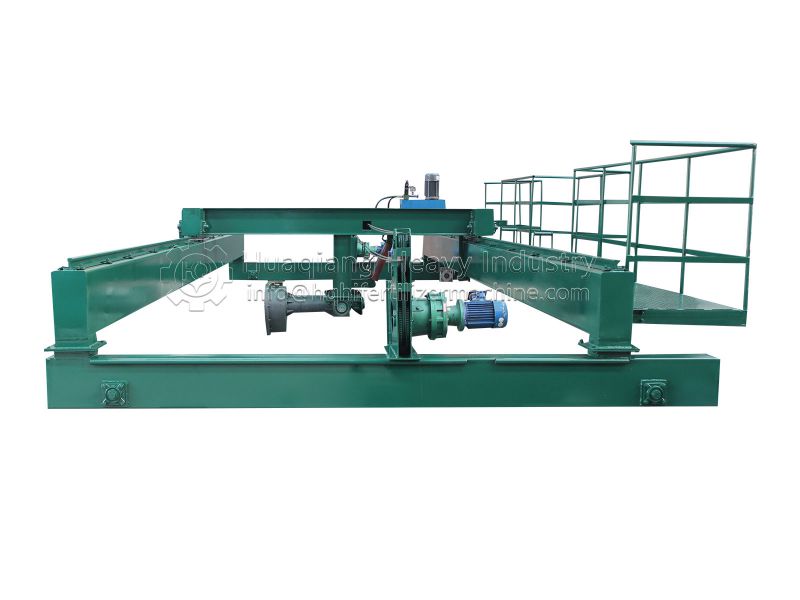
In the symphony of organic fertilizer production, the trough composter operates as the lead fertilizer machine, conducting a precise transformation of raw waste into nutrient-rich humus. This essential fertilizer production machine functions like a well-trained orchestra, where each component—from the rotating augers that mix and aerate, to the controlled aeration system that manages temperature and microbial activity—plays an indispensable role. It systematically turns and moves the organic material along the trough, ensuring consistent oxygen levels and accelerating decomposition. This harmonious process efficiently transforms agricultural waste, manure, and plant residues into a stable, fertile soil amendment, making it a cornerstone of any modern organic fertilizer production machine line.

Steel Backbone: The Frame

Like a concert hall’s steel structure, the turner’s frame is welded from high-strength steel, silently bearing tons of material weight while providing a stable platform for other components.

Mobile Legs: Travel Mechanism

The motor, reducer, and wheels work in concert to make this “iron giant” gracefully “walk” on rails at 0.5-3 m/min, adjusting its pace according to composting needs.

Core Weapon: Turning Mechanism

Hydraulic-powered arms with spiral alloy steel teeth work like a chef’s skilled hands, thoroughly aerating materials. These specially designed teeth penetrate deep into the pile for optimal oxygen exchange.

Power Heart: Hydraulic System

The hydraulic pumps and cylinders deliver smooth, powerful movements, allowing surgical precision in turning depth control—like a doctor performing delicate operations.

Smart Brain: Control System

Sensors and control panels monitor temperature and humidity in real-time. Operators simply push buttons to command this complex machine, achieving intelligent fermentation management.

Composting Quartet: From Waste to Black Gold

Material Prep: The Beauty Salon

Like prepping ingredients, organic materials are crushed and screened to remove impurities, then adjusted to the golden ratio—C/N 25-30:1 and 50-60% moisture content.

Fermentation Bed: Loading

Prepared materials are evenly spread in 0.8-1.5m layers within the trough—like making a comfortable bed for microbes to begin their decomposition feast.

Thermal Symphony: Turning

When temperatures reach 60-70°C, the turner performs—arms dive into materials, aerating and mixing like a conductor guiding microbial decomposition symphonies.

Maturity Test: Completion

When materials cool to ambient temperature, turn dark brown with an earthy fragrance, the microbial transformation concludes—waste has become premium organic fertilizer.

Advantages and applications of the flat die granulator

The flat die granulator offers significant advantages, with the larger pressure wheel being a key feature. This larger pressure wheel also increases the bearing’s ability to withstand pressure, making the equipment more stable and reliable, and reducing failures caused by pressure. Furthermore, the larger pressure wheel prevents heat generated by extrusion friction from being transmitted to the bearing chamber, ensuring the bearing operates at a low temperature and preventing lubricant leakage, thus extending bearing life. Furthermore, the larger pressure wheel can be repaired two to three times, reducing maintenance costs and increasing project profitability, offering significant advantages over similar equipment.

The flat die granulator is suitable for a wide range of materials. In agriculture, crop straw, such as corn stalks, wheat straw, and rice husks, can be processed into biomass pellet fuel or organic fertilizer. In the domestic sector, some household waste, after sorting and processing, can also be used for pelletizing, achieving resource recycling. In industry, the flat die granulator can easily handle materials such as biofertilizer, coal, carbon black, kaolin, and stone powder, demonstrating its strong material adaptability.

Flat die granulators also play a positive role in environmental protection. On the one hand, they can process large amounts of agricultural and forestry waste, reducing environmental pollution and enabling resource recycling. On the other hand, by converting degradable materials into biodegradable plastic pellets, they provide a new approach to addressing white pollution, promoting the development of environmentally friendly materials and facilitating the achievement of sustainable development goals.

Large wheel compost turner: Ushering in a new era in organic waste treatment

With growing environmental awareness, organic waste treatment has become a focus of attention in agriculture, environmental protection, and other fields. As a highly efficient organic waste treatment device, the large wheel compost turner provides powerful support for addressing the organic waste challenge. It not only effectively processes large amounts of organic waste but also transforms it into valuable resources, such as high-quality organic fertilizer, achieving resource recycling.

The large wheel compost turner’s disc consists of multiple rotating discs or paddles, with removable blades or toothed plates on the edges to break up the material. It can easily handle clumping livestock manure, straw, and other materials.

The discs are typically arranged horizontally and rotated by hydraulic or mechanical drive. The machine’s travel system allows it to follow tracks within the compost tank (or windrow) or to propel itself along tires, thus covering the entire compost pile.

During operation, the wheel rotates, the blades cut into the material, and the bottom layer of material is thrown into the air, completing the cutting and lifting action. During the spreading process, the material is fully exposed to the air, and the new and old materials are mixed, achieving both dispersion and mixing. As the equipment moves, the compost is continuously turned, forming a new loose pile, completing the displacement and advancement, and this turning process is repeated over and over again.

The large wheel compost turner, with its unique operating principle, rational structural design, and outstanding practical application results, plays an important role in the field of organic waste treatment.

Practical Strategies for Improving the Efficiency of Disc Granulators in Organic Fertilizer Production Lines

In organic fertilizer production lines, the efficiency of disc granulators directly impacts overall production capacity and finished product quality. To maximize equipment performance, systematic optimization is necessary, encompassing multiple aspects, including material compatibility, parameter control, and standardized operation. Specifically, these four key areas can be addressed.

First, effective material pretreatment is fundamental. Organic fertilizer raw materials, such as livestock and poultry manure and straw, often exhibit uneven moisture content and coarse particle size. Dehydration through extrusion or atomization is essential to precisely control the material moisture content to 35%-45%. This avoids low moisture content, which can lead to difficult pellet formation and high reject rates, or high moisture content, which can cause pellet sticking. Furthermore, a hammer mill combined with a vibrating screen can be used to refine the material to a particle size of 80-120 mesh, removing impurities and coarse particles, reducing granulation resistance, and clearing obstacles for subsequent processes.

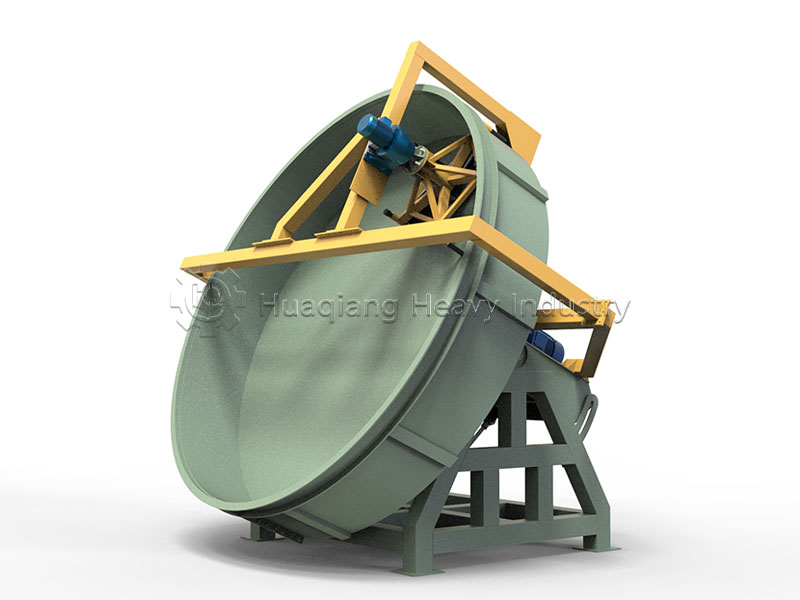
Second, scientifically adjusting equipment parameters is crucial. The disc inclination angle and speed should be adjusted flexibly based on the material characteristics. Typically, the inclination angle is set at 18°-22°, and the speed is controlled between 15-25 rpm. For highly viscous materials, the inclination angle can be increased and the speed increased to reduce wall sticking. For dry materials, the inclination angle and speed should be reduced to ensure adequate rolling and forming of the pellets. Furthermore, installing an atomizing spray system allows moisture to be evenly applied to the material surface, preventing overwetting and improving pellet uniformity and forming speed.

Furthermore, standardized operational management is essential. Operators must strictly adhere to the procedures of pre-startup inspection, monitoring during operation, and post-shutdown cleaning. Before starting the machine, check bearing lubrication and disc levelness. During startup, control the material feed rate to avoid overloading and resulting in particle size fluctuations. If problems such as overfine particles or wall sticking are detected, fine-tune parameters promptly to minimize downtime and ensure continuous and stable operation.

Finally, regular maintenance can extend the life of the equipment and maintain high efficiency. Clean the discs of residual material and inspect the liner for wear daily. Tighten the liner screws and adjust the drive belt tension weekly. Replace the bearing lubricant and test the motor performance monthly. Promptly replacing worn parts prevents minor faults from becoming major problems, ensuring the disc granulator is always in optimal working condition and helping improve the quality and efficiency of your organic fertilizer production line.