From powder to granules: The core strength of organic fertilizer disc granulators

On the organic fertilizer production line, disc granulation transforms fermented and pulverized organic raw materials into uniform, plump granules, achieving a leap in product value.

This granulation method of disc granulation offers significant advantages. It boasts a high granulation rate, producing granules with regular shape and moderate strength, making them less prone to breakage and facilitating the slow release of nutrients in the soil. More importantly, the process typically eliminates the need for high-temperature heating, maximizing the preservation of active and beneficial components in the organic matter.

Of course, the organic fertilizer disc granulator does not operate in isolation. It is a core component of the entire organic fertilizer production equipment system. Its front end requires an efficient crushing and precise mixing system to provide qualified raw materials for granulation; its back end connects to drying, cooling, screening, and automatic packaging equipment, forming a continuous and automated production line.
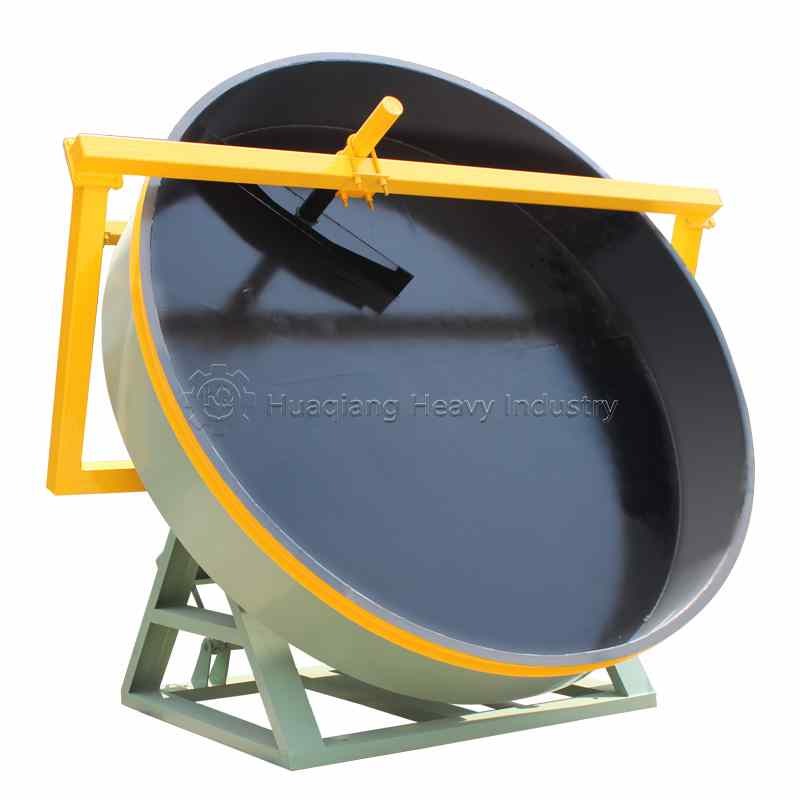
The development of modern organic fertilizer production equipment is moving towards intelligence and green technology. A central control system allows for precise monitoring and adjustment of the entire process, including key parameters of disc granulation, ensuring stable product quality while significantly improving energy efficiency.

From agricultural waste to high-value commercial organic fertilizer, disc granulators and their supporting equipment play a crucial role. They not only complete the physical transformation but also promote the recycling of nutrients, providing a solid equipment foundation for the development of sustainable agriculture.
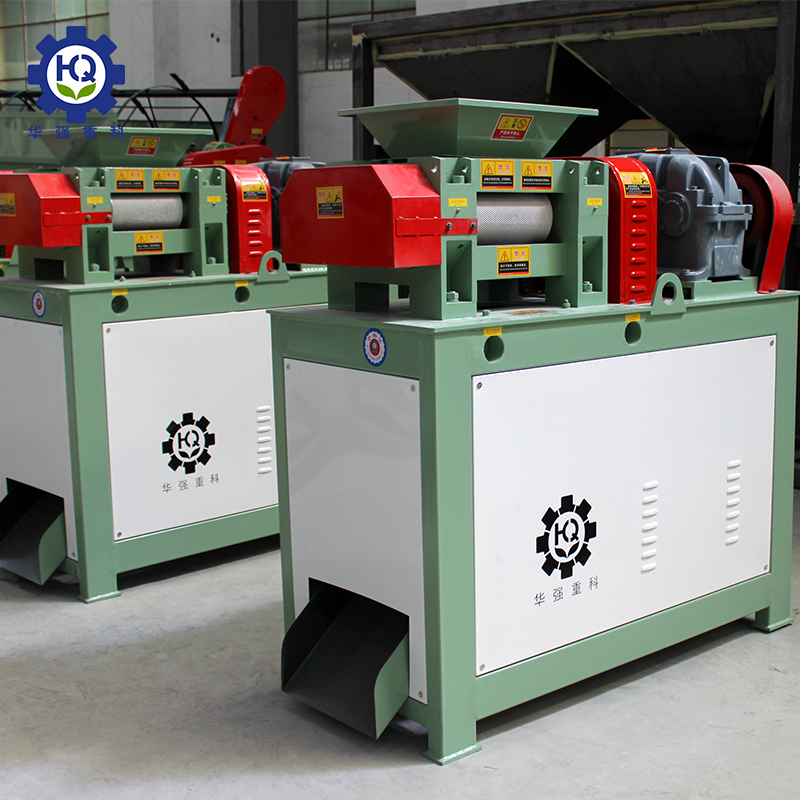
Double roller press granulators enhance the adaptability of organic fertilizer production lines

In the trend of upgrading organic fertilizer production lines towards “high efficiency, flexibility, and ecology,” double roller press granulators, with their unique physical shaping logic, have become a “core node” in the production line, adaptable to diverse raw materials.

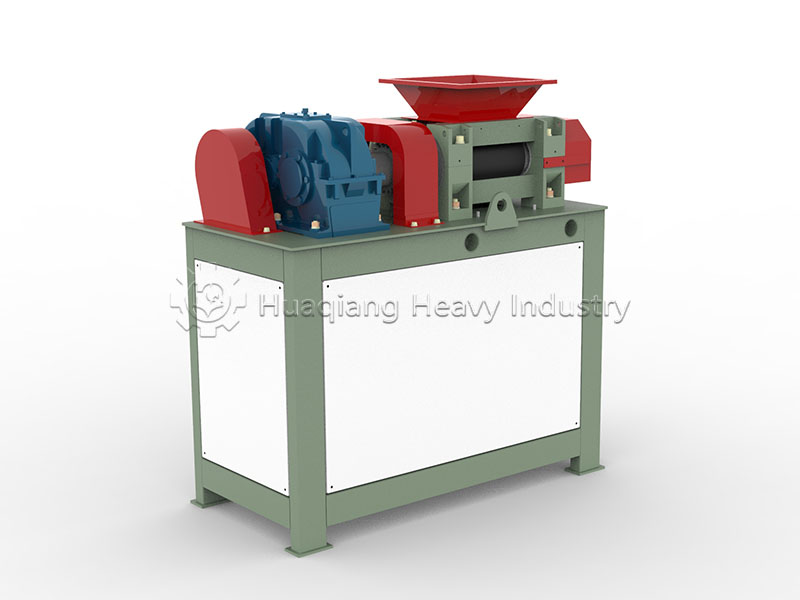
The core of an organic fertilizer production line is the transformation of organic waste into standardized fertilizer, and the granulation process is crucial in determining the fertilizer’s form and usability. Double roller press granulators precisely address this need, using only the high pressure generated by two relatively rotating rollers to extrude loose organic powder into granules. This dry material forming process is perfectly suited for organic raw materials such as straw and livestock manure, which have low moisture content and insufficient viscosity after fermentation.

In the entire organic fertilizer production line, the double roller press granulator plays a “flexible connecting” role. It can handle organic substrates of different textures after previous crushing. Whether it’s fermented straw with high coarse fiber content or fine livestock manure powder, it can achieve efficient granulation through pressure shaping. Meanwhile, its simple structure allows for easy integration with subsequent stages of the production line, such as screening, cooling, and packaging, without the need for complex process adjustments, significantly shortening the production cycle.

The double roller press granulator gives organic fertilizer production lines a greater ecological advantage: the absence of chemical additives ensures the purity of the organic fertilizer, dry material forming reduces energy consumption and pollution, and the formed granules have moderate hardness, facilitating storage and transportation while allowing for the slow release of nutrients after application. This dual advantage of “adaptability + ecological benefits” allows organic fertilizer production lines to better handle diverse organic waste.

Large wheel compost turning machines empower efficient operation of organic fertilizer production equipment

In the ecological chain of organic fertilizer production equipment, large wheel compost turning machines, with their core advantages of “wide coverage and deep turning,” have become the “efficiency leader” in the fermentation process.

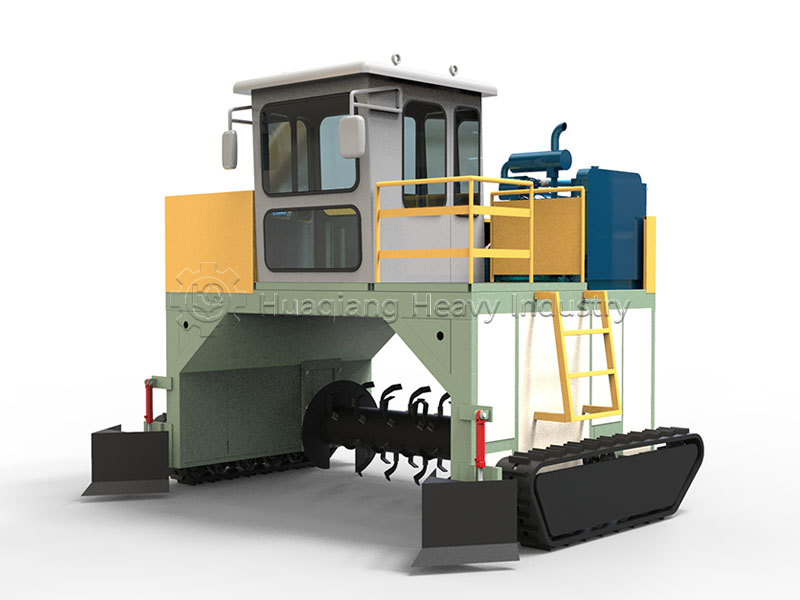
The design of large wheel compost turning machines is tailored to the needs of large-scale production. Its core large disc is equipped with multiple sets of high-strength turning teeth. During operation, the disc rotates at a uniform speed, penetrating deep into the thick pile of organic materials, turning and breaking up mixed raw materials such as straw and livestock manure from the bottom up. This turning method not only covers a wide area, processing large areas of the pile at once, but also allows the material to fully contact with air, providing sufficient oxygen for microbial composting and reducing the odor and harmful substances produced by anaerobic fermentation at the source.

As a crucial link in organic fertilizer production equipment, it precisely controls the quality of composting. Organic material composting requires a stable high-temperature environment. Through regular turning, the large wheel compost turning machine can dissipate excess heat from the center of the pile and allow material from low-temperature areas to enter high-temperature areas, ensuring consistent composting progress throughout the entire pile.

In the entire organic fertilizer production process, the large wheel compost turning machine plays a crucial role: it receives the results of the previous raw material mixing process and efficiently decomposes the material to produce a loose, nutrient-uniform substrate, reducing obstacles for subsequent crushing and granulation processes.

From the harmless treatment of organic waste to the large-scale production of high-quality organic fertilizer, the large wheel compost turning machine makes the operation of organic fertilizer production equipment more efficient and stable.

The journey from organic waste to high-efficiency fertilizer

The bio-organic fertilizer production line utilizes organic waste such as livestock and poultry manure, straw, and mushroom residue as raw materials. Through microbial fermentation technology, it recycles resources and produces fertilizer rich in active bacteria and organic matter. Bio-organic fertilizer production lines serve as a vital link between the livestock and poultry industry, the agricultural industry, and the environmental protection industry.

Raw material pretreatment is a fundamental step. It requires crushing and screening the organic waste to remove impurities and ensure a uniform particle size (approximately 80 mesh). Auxiliary materials are then added to adjust the carbon-nitrogen ratio (25-30:1) and humidity (55%-65%) to create a suitable environment for microbial growth. This phase then enters the inoculation and fermentation stage, where specialized microbial agents are added to the mixture. A compost turning machine regularly turns the compost to provide oxygen, maintaining a temperature of 55-65°C. Composting continues for 20-30 days, effectively killing pathogens and insect eggs and breaking down large organic molecules.

The fermented material undergoes post-processing to optimize quality. First, it undergoes low-temperature drying to reduce moisture to below 12% to prevent mold and mildew during storage. It then undergoes crushing, screening, and grading, with unqualified particles returned to the pre-processing stage for recycling. Finally, functional microbial agents can be optionally added to the mix to enhance the bioactivity of the fertilizer, depending on crop needs. The resulting pellets are uniform and rich in humic acid, amino acids, and a variety of beneficial bacteria, providing nutrients for crops while also improving the soil microbial ecosystem.

Windrow compost turning machine: Efficient equipment for converting livestock manure into organic fertilizer

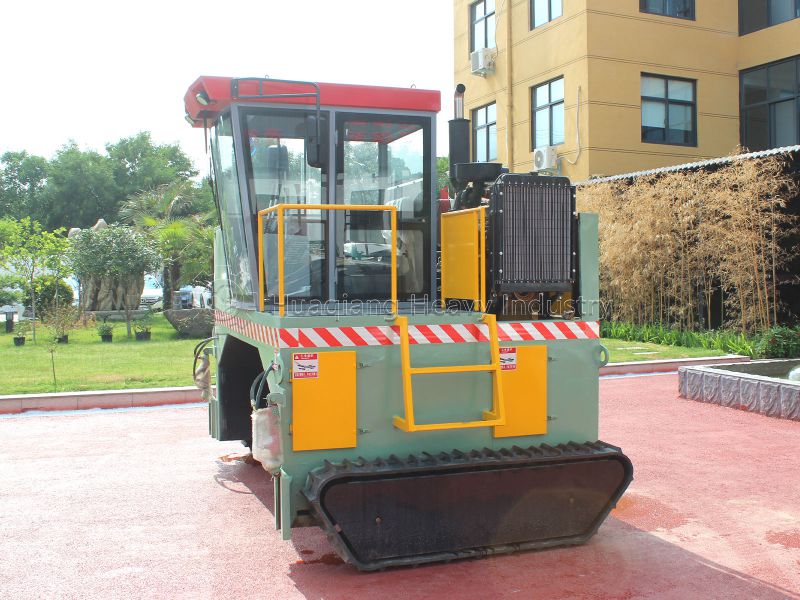
In the resource utilization of livestock and poultry waste, windrow compost turning machines, with their flexible and efficient operation, have become a core piece of equipment for converting livestock manure into organic fertilizer. Through mechanized turning and plowing, they accelerate manure composting and fermentation, transforming livestock pollutants into high-quality organic fertilizer, addressing environmental challenges while also promoting resource recycling.

The core advantage of windrow compost turning machines lies in their adaptability. Their crawler-type design allows for free movement in muddy composting areas. The large ground contact area and low pressure prevent them from sinking into the manure pile, making them suitable for various sizes of fermentation workshops or open-air sites. Equipped with a hydraulically driven turning gear shaft, the equipment can reach a turning depth of 0.8-1.5 meters, thoroughly mixing the bottom layer of manure with the surface material, breaking up compacted materials and ensuring uniform fermentation.

In the livestock manure processing process, windrow compost turners play a key role in promoting fermentation. First, livestock manure is mixed with supplementary materials such as straw and sawdust in appropriate proportions, adjusting the carbon-nitrogen ratio to 25-30:1 and the humidity to 55%-65% to create optimal conditions for microbial fermentation.

Subsequently, a compost turning machine regularly turns the pile, introducing sufficient oxygen to support aerobic microbial activity and rapidly dissipating the heat generated by fermentation, keeping the pile temperature between 55-65°C. This temperature range effectively kills pathogens, insect eggs, and weed seeds in the manure, preparing the compost for subsequent operation in the fertilizer granulator.

This equipment boasts high efficiency and a high degree of automation. By setting the turning frequency and path, continuous operation is achieved, reducing labor input.

Small pellets, big impact: The evolution of organic fertilizer through granulation

In organic fertilizer production, granulation is more than just a cosmetic enhancement. Its primary purpose lies in practicality. Powdered organic fertilizers have a low density and are bulky, taking up a lot of space during storage and transportation. They are also prone to generating dust, leading to nutrient loss and environmental pollution. Granulation compacts the material, significantly reducing its volume, making long-distance transportation and economical storage possible.

More importantly, granulation profoundly impacts the ease and efficiency of fertilization. Uniform granules facilitate mechanized spreading, adapting to the operational needs of modern large-scale farms. Furthermore, their compact structure regulates the release rate of nutrients into the soil, preventing rapid decomposition and providing a more stable and long-lasting nutritional supply for crops.

So, how are various agricultural and forestry wastes transformed into uniform granules? Currently, mainstream granulation processes, such as disc granulators and double roller press granulators, each have their own advantages.

The advancement of granulation technology, from dusty powder fertilizer to uniform, uniform granules, is a significant step toward the modernization and standardization of traditional organic fertilizers. It has transformed organic fertilizer from a traditional “homegrown” method into a standardized commodity that can be integrated into modern agricultural production systems. These tiny granules embody the industry’s unwavering pursuit of efficiency, environmental protection, and practicality.

Rotary drum granulator: The core “Shaping” equipment in fertilizer production

In fertilizer processing, the rotary drum granulator is a key piece of equipment for converting powder into granules. Its stable performance makes it a common choice for most fertilizer production scenarios.

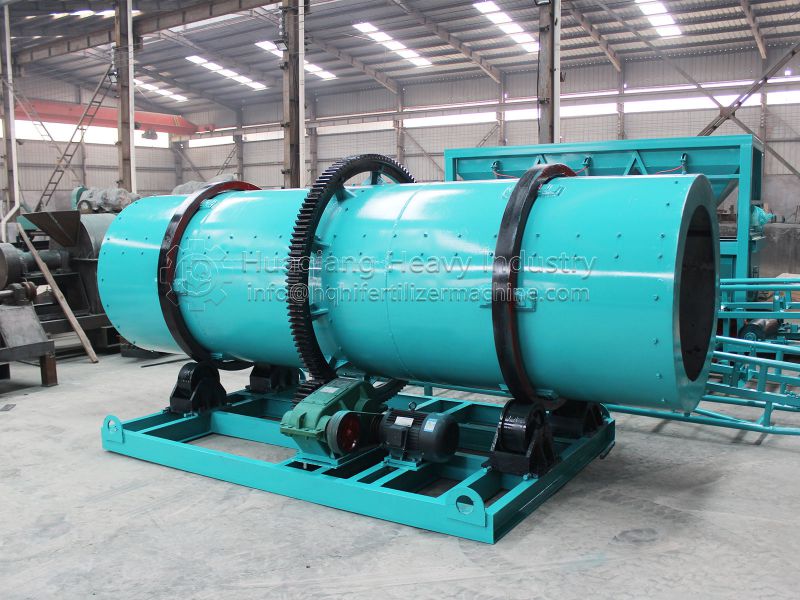
Structurally, the core of a rotary drum granulator consists of an inclined drum, a drive system, a spray device, and a heating and insulation layer. The drum’s tilt angle can be adjusted based on the characteristics of the raw material, typically controlled at 3°-5°. This ensures adequate tumbling of the raw material while preventing the granules from clumping due to prolonged dwell time. The drive system drives the drum at a constant speed of 10-20 rpm via gears or belts, ensuring a stable and controllable granulation process.

During operation, mixed fertilizer raw materials enter the drum through the feed inlet. As the drum rotates, the raw materials continuously tumble and collide within the drum. Simultaneously, a spray device applies an appropriate amount of binder to the raw materials, gradually agglomerating them into small granules. The heating and insulation layer maintains the temperature inside the drum within an optimal range, helping the granules quickly solidify and form. Finally, the formed fertilizer granules are discharged from the discharge port and enter the subsequent screening and cooling stages.

This rotary drum granulator’s advantage lies in its wide adaptability. Whether it’s nitrogen-phosphorus-potassium compound fertilizer, organic fertilizer, or biological fertilizer, efficient granulation can be achieved by adjusting parameters. The highly uniform granulation and moderate granule strength facilitate subsequent storage and transportation, providing equipment support for the large-scale advancement of fertilizer production.

How does a disc granulator create round, uniform fertilizer granules?

The roundness and uniformity of fertilizer granules directly impact the ease of application (spreading uniformity) and product competitiveness. Disc granulators, with their unique “rolling forming” principle, are key equipment for producing high-quality granules. The key lies in precisely controlling parameters to achieve the ideal shaping process within the disc.

Disc granulators do not rely on extrusion to form granules, but instead continuously roll the raw materials within a rotating disc. Initially small granules continuously absorb surrounding powder, gradually growing larger like a “snowball.” During this process, the granules rub against each other, naturally forming a rounded appearance. These granules are particularly suitable for products with high requirements for granule shape, such as organic fertilizers and biological fertilizers.

Pellet quality is determined by several parameters. The first is the disc’s inclination angle. A small angle prolongs the material’s residence time within the disc, resulting in larger particles. A large angle causes the particles to overflow quickly, resulting in smaller particles. The second is the disc’s rotational speed. Low speeds are suitable for low-viscosity raw materials, preventing powder splashing; high speeds are suitable for sticky raw materials like organic fertilizer, enhancing the rolling adsorption effect. The third is the feed rate. Maintaining a uniform feed rate prevents excessive feed from causing particle accumulation and deformation, while insufficient feed leads to uneven particle size.

Furthermore, for fertilizers such as biofertilizers that require the preservation of bacterial inoculants, disc granulators eliminate the need for high-temperature extrusion. The forming process temperature is kept below 40°C, ensuring the survival of the inoculant. The resulting rounded particles are easy to package and transport, ensuring both functionality and commercial appeal.

Common troubleshooting and solutions for double screws compost turning machines

Double screws compost turning machines operate frequently in organic fertilizer fermentation workshops. Improper operation or untimely maintenance can easily lead to problems such as uneven turning, insufficient power, and equipment jamming, impacting fermentation progress.

1. Dead corners remain after turning, and some areas remain uncomposted

The main cause is excessive clearance between the spiral blades and the sidewalls of the fermentation tank (over 10 cm), or the double screws compost turning machine is moving too fast, preventing material from being turned over the edges. To address this, adjust the position of the spiral blades to reduce the clearance to within 5 cm. Also, reduce the double screws compost turning machine’s speed to ensure that every area is thoroughly turned.

2. Motor overload and tripping, insufficient power

This is often caused by excessive moisture content (over 70%) in the raw materials, resulting in increased friction on the spiral blades due to high viscosity, or by large impurities in the raw materials that may be blocking the blades. To address this, adjust the moisture content of the raw materials to 60%-65% before clearing impurities from the fermentation tank. If the compost tank is frequently overloaded, check the tightness of the motor belt and tighten or replace it.

3. Rapid wear of spiral blades, reducing turning capacity

This is primarily due to the presence of hard impurities (such as sand and gravel) in the raw materials, or the blade material not being suitable for wear resistance. To address this, install a screen to filter out hard particles before the raw materials arrive. Regularly inspect the blades for wear. If the blade thickness has decreased by 1/3 or cracks appear, replace them promptly.

Drum fertilizer dryer: The logic of “Efficient Dehydration” for high-moisture fertilizers

In fertilizer production, high-moisture raw materials (such as fermented organic fertilizers and wet materials after compound fertilizer granulation) are prone to caking and mold if not dried promptly, affecting product quality and storage life. Drum fertilizer dryers, with their “continuous drying + uniform heating” characteristics, have become a core dehydration equipment in the fertilizer industry. Their operating principle is precisely adapted to the characteristics of fertilizer raw materials.

The core structure of a drum fertilizer dryer is an inclined rotating drum equipped with a heating system and a discharge device. During operation, high-moisture fertilizer (30%-50% moisture content) enters the drum through the high-end feed port. The motor drives the drum to slowly rotate, continuously turning the material and moving it forward. Simultaneously, the high-temperature hot air generated by the heating system fully contacts the material, rapidly removing moisture from the material through a dual heat transfer process of “convection and conduction.”

To prevent fertilizer clumping, a lifting plate is often installed inside the drum. This plate continuously lifts and drops the material, increasing the heating surface and ensuring uniform drying of each portion. The drum’s tilt angle is adjustable to control the material’s residence time within the drum, thereby precisely controlling the moisture content after drying. The entire process is continuous and stable, suitable for the mass production needs of organic fertilizer production lines. The dried material is loose and free of lumps, eliminating the need for secondary crushing.