Cow dung, seemingly livestock waste, is actually a high-quality raw material for making organic fertilizer. Rich in organic matter, nitrogen, phosphorus, potassium, and other nutrients, it can become “soft gold” for improving soil and promoting crop growth after scientific processing. This solves the problem of manure pollution and achieves resource utilization. Organic fertilizer production is key to this transformation and is suitable for farmers, livestock breeders, and small-scale planting bases.
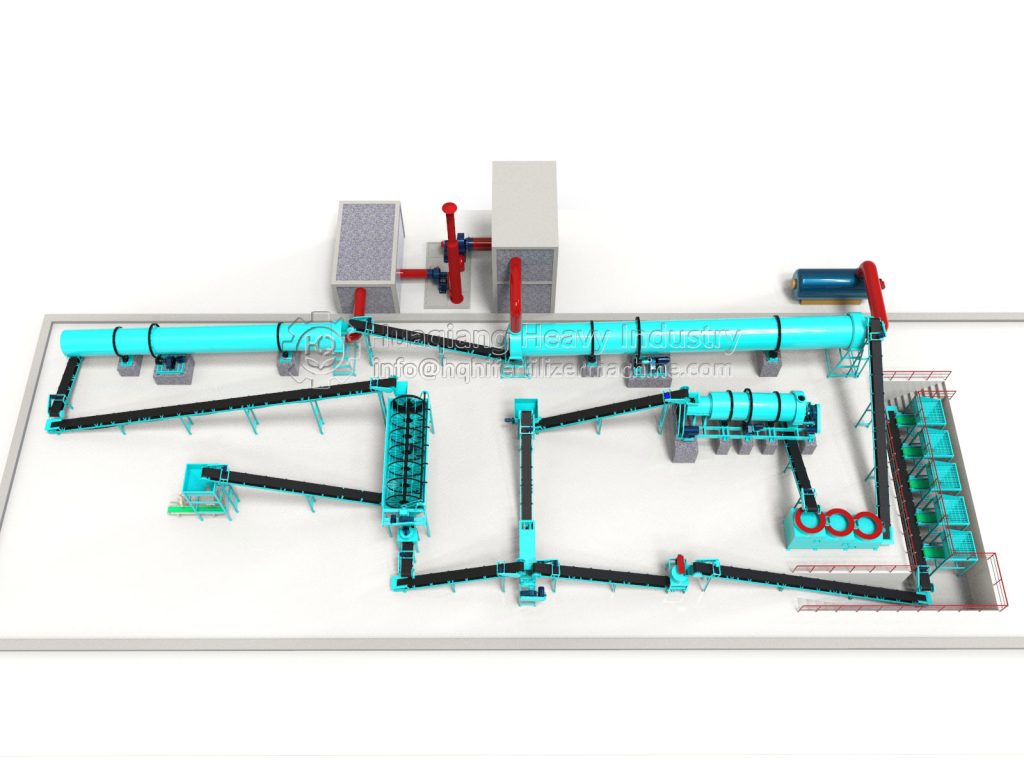
The first step in making cow dung organic fertilizer is raw material collection and pretreatment. Fresh cow dung needs to be collected, removing stones, weeds, plastic, and other impurities to avoid affecting fermentation. Fresh cow dung has a high moisture content and needs to be spread out and dried for 1-2 days until the moisture content is controlled at around 60%. The criteria for judging this is that when you squeeze the material, water droplets should form between your fingers but not drip; when released, it should clump together without crumbling. At the same time, you can break up any clumps of cow dung to increase aeration and lay the foundation for subsequent fermentation.
The second step is the raw material ratio, which is crucial for successful fermentation. Cow manure alone ferments slowly and has an unbalanced nutrient content. It needs to be mixed with carbon-rich materials such as straw and sawdust, in a 3:1 ratio, adjusting the carbon-to-nitrogen ratio to 25-35. This accelerates microbial reproduction and increases the nutrient content of the organic fertilizer. To shorten the fermentation cycle, a special fermentation agent can be added to activate thermophilic bacteria, increasing fermentation efficiency by over 30%.
The third step is composting fermentation, the core maturation stage in organic fertilizer production process, where temperature and oxygen control are crucial. The prepared materials are piled into long, 1.5-2 meter high mounds. In the early stages of fermentation, microorganisms decompose organic matter, releasing heat, and the mound temperature gradually rises to 60-70℃. This temperature effectively kills pathogens and weed seeds. During fermentation, a compost turner is needed to turn the mound every 5-7 days to replenish oxygen, regulate temperature, and ensure even fermentation throughout the mound. The entire process lasts 15-20 days, while traditional natural fermentation takes 1-3 months.
Finally, there’s the process of composting and post-processing. If the goal is to produce commercial organic fertilizer that’s easy to store, transport, and apply, granulation, drying, cooling, and packaging steps can be added. When the pile temperature drops to around 40℃, the color turns dark brown, and it emits a fresh earthy aroma, fermentation is complete. First, the composted material is crushed and sieved to remove incompletely decomposed impurities. Then, it’s fed into a granulator to produce granules with a diameter of 2-4 mm. Next, the granules are sent to a dryer, where the temperature is controlled at 80-100℃, and dried until the moisture content is below 15% to prevent mold growth during storage. The dried granules are then cooled to room temperature in a cooler to prevent excessive heat from affecting subsequent packaging and storage. Finally, they are quantitatively packaged using a packaging machine, labeled, and ready for storage or market use. If commercialization is not required, it can be applied directly or simply sealed for storage.
Making organic fertilizer from cow dung is low-cost and simple to operate. It not only turns waste into treasure and reduces pollution but also improves soil compaction and enhances crop quality. This ecological cycle model not only aligns with the concept of green agricultural development but also reduces fertilizer costs for growers, truly achieving “multiple benefits in one fell swoop”.