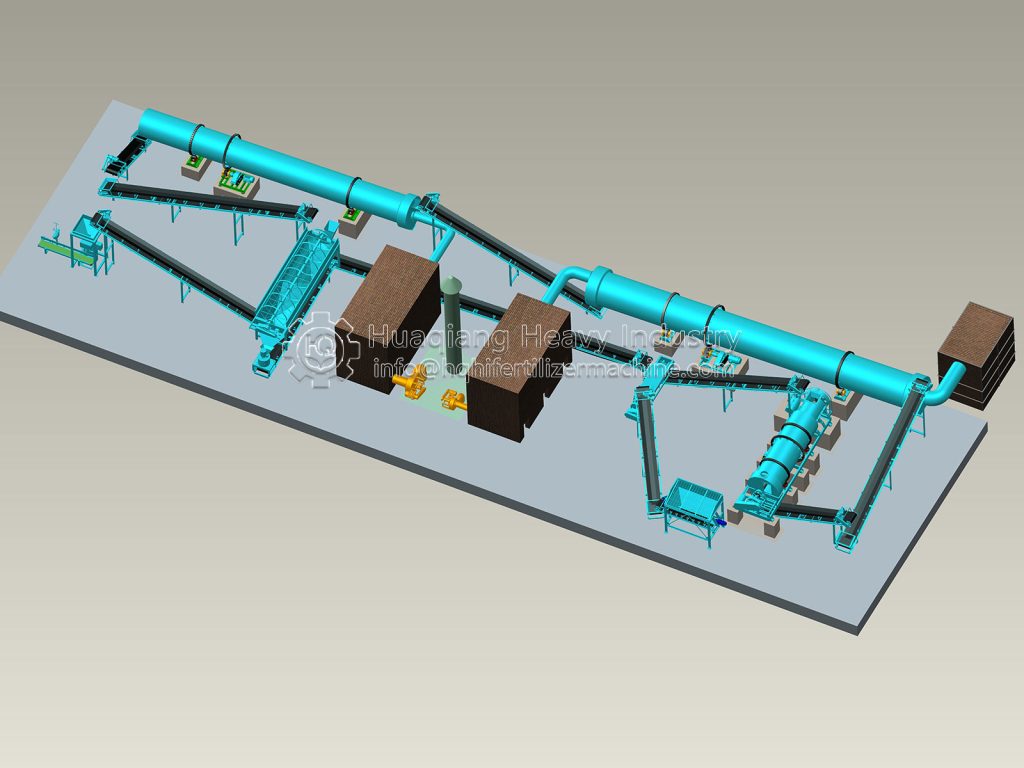
Detailed process flow of roller press granulator production line

Roller press granulator production lines, with their advantages of cold pressing, energy efficiency, and wide compatibility with raw materials, are widely used in the processing of compound fertilizers and organic fertilizers. They eliminate the need for high-temperature drying, maximizing the retention of raw material activity and nutrients.

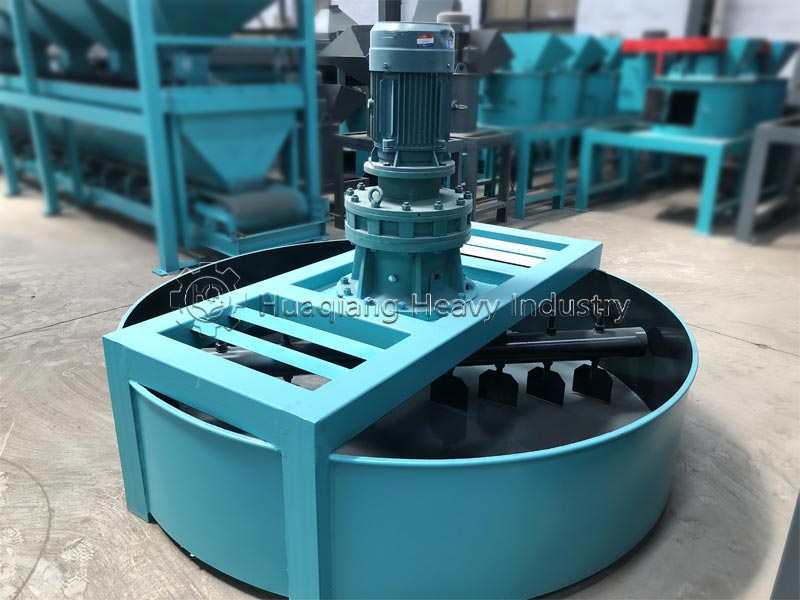
Raw Material Pretreatment: First, the raw materials are precisely proportioned according to a preset ratio. Inorganic raw materials such as urea and monoammonium phosphate, or well-rotted organic materials, are mixed with auxiliary materials and fed into a fertilizer mixer for homogenization, ensuring uniform nutrient distribution. Then, the material is processed by crushing and screening equipment to achieve a particle size of 80 mesh or higher, while simultaneously adjusting the moisture content to 8%-12% to avoid clumping or poor forming.
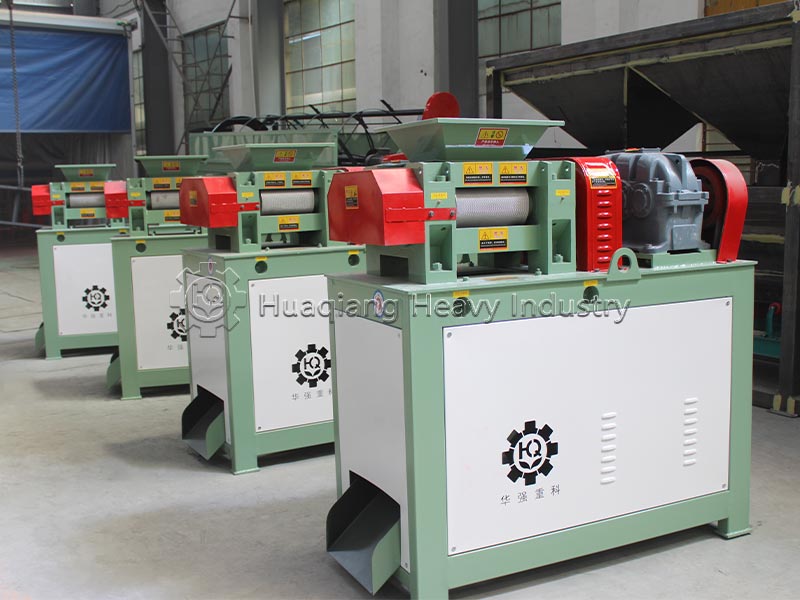
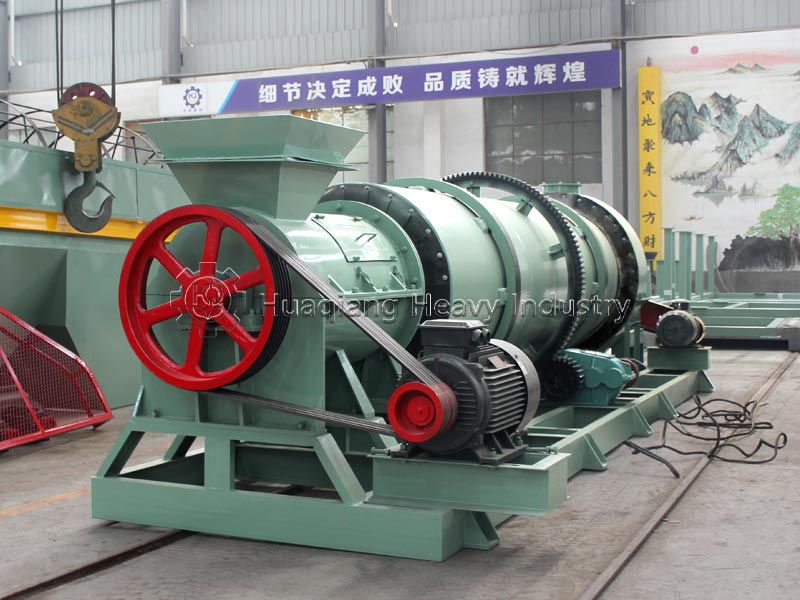
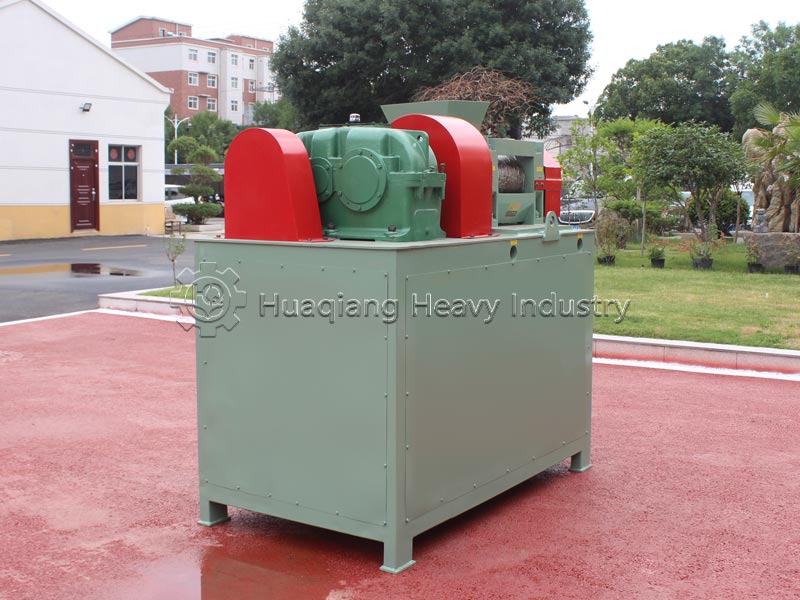
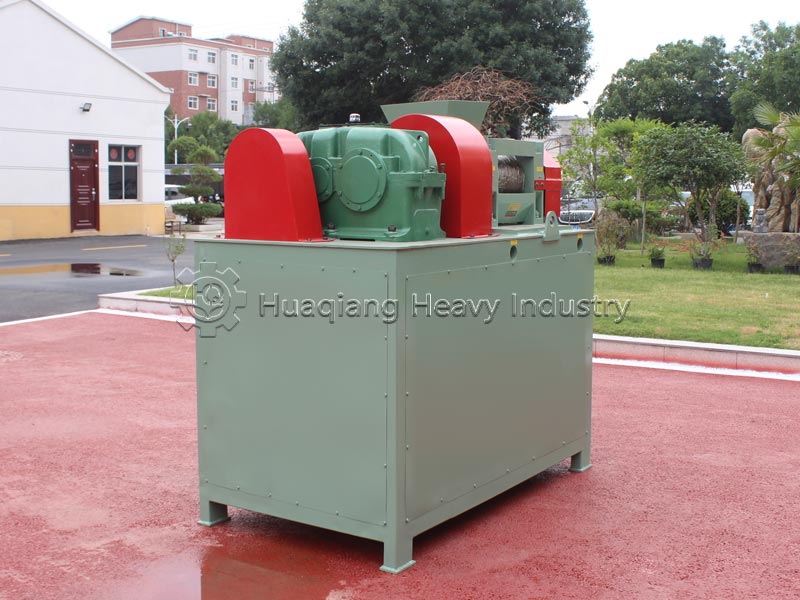
Roller Pressing: The pretreated material is fed into a double roller press granulator. High pressure is applied by a pair of counter-rotating rollers, pressing the loose material into dense flakes or blocks. The roller pressure needs to be finely adjusted according to the material characteristics. Insufficient pressure will result in brittle particles, while excessive pressure may damage the equipment and affect solubility; precise control is essential.

Post-Processing Screening: The raw material is crushed into irregular particles by a crusher, then classified by a fertilizer screener machine. Qualified particles enter subsequent stages, while unqualified coarse particles and fine powder are returned to the pretreatment stage for reprocessing, forming a closed-loop production process and improving raw material utilization. Finally, qualified particles are quantitatively packaged and sealed for storage.

This process is simple and compact, with low energy consumption and strong environmental friendliness. It is suitable for processing various material combinations and is an ideal choice for small- to medium-capacity fertilizer production lines.
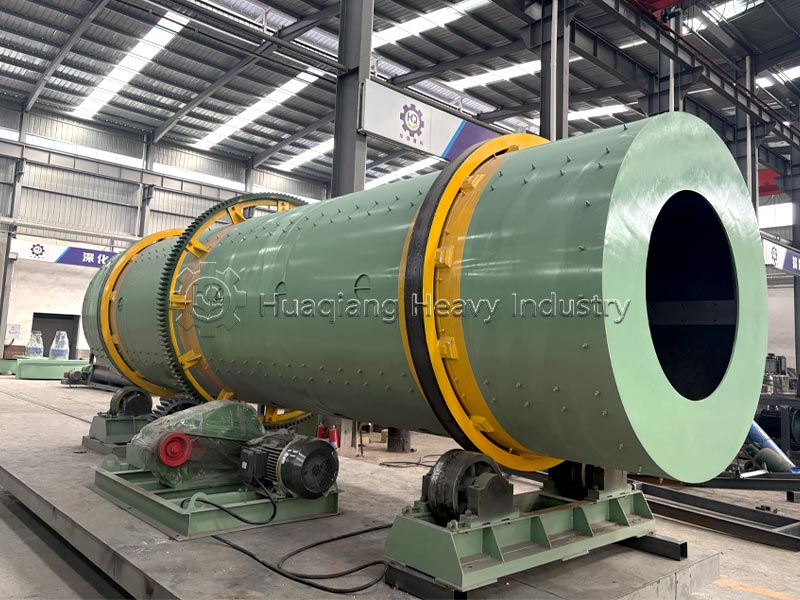
Why is urea considered the “King of Fertilizers”?

Among numerous types of fertilizers, urea is hailed as the “king of fertilizers” due to its comprehensive advantages. Supported by mature fertilizer production lines and specialized urea processing equipment, urea achieves large-scale, standardized production, making it an indispensable core fertilizer in modern agriculture.

Its high nutrient concentration and purity are its core competitive advantages. Urea contains up to 46% nitrogen, the highest nitrogen content among solid nitrogen fertilizers. Its nutrient supply capacity per unit weight far surpasses traditional nitrogen fertilizers such as ammonium bicarbonate. Its nutrients are pure, releasing only nitrogen and carbon dioxide after application, with no harmful residues. This precisely meets the nitrogen needs of crops, promoting photosynthesis and nutrient accumulation.

It boasts extremely wide applicability and strong compatibility. Urea is suitable for various crops, including field crops, fruits and vegetables, and flowers, as well as different soil environments. It can be used as a base fertilizer, top dressing, or diluted for foliar application, compatible with various methods such as broadcasting, furrow application, and drip irrigation, meeting the needs of crops at different growth stages. Its versatility far surpasses specialized fertilizers.

Its fertilizer effect is mild and long-lasting, and its application is safe. Urea needs to be converted into ammonium nitrogen by soil microorganisms before it can be absorbed by crops. This conversion process is gradual, avoiding problems such as seedling burn and excessive growth.  The long-lasting effect provides a stable supply of nitrogen, reducing the frequency of fertilization and labor costs.

Its excellent industrial attributes and outstanding cost-effectiveness are inseparable from the support of fertilizer production equipment. Urea production technology is mature, and raw materials are readily available. Combined with specialized urea processing equipment and standardized fertilizer production lines, it can achieve efficient, large-scale production, significantly reducing costs. After processing with professional equipment, urea is more stable, easier to store and transport, and less prone to caking.

Practical strategies for improving fertilizer production efficiency with fertilizer granulators

Fertilizer granulators are core equipment in fertilizer production lines, and their operating efficiency directly determines overall production capacity. Improving efficiency is not simply about increasing speed; it requires a multi-dimensional approach involving raw material adaptation, parameter optimization, and maintenance support. The goal is to maximize production capacity while ensuring granule quality.

Raw material pretreatment: The moisture content of raw materials should be strictly controlled at 8%-12%. Excessive moisture can lead to sticking and clumping, increasing equipment load, while insufficient moisture makes molding difficult. Simultaneously, the materials should be crushed and screened to a particle size of ≤2mm and thoroughly mixed in a fertilizer mixer to prevent uneven composition, which can cause jamming or poor molding, thus clearing obstacles for efficient granulation.

Precise parameter matching: Based on the characteristics of the raw materials (hardness, specific gravity) and the target granule requirements, adjust the rotation speed, pressure, or inclination angle accordingly: lighter materials can have their speed increased to enhance propulsion, while high-hardness materials require increased pressure and reduced speed to ensure dense granules. Appropriate parameters can stabilize the granulation rate at over 90%, reducing rework losses and directly increasing production capacity per unit of time.

Daily maintenance: Regularly clean residual materials inside the machine, polish worn parts (such as roller surfaces and the inner wall of the disc), and check the transmission and lubrication systems to avoid sudden breakdowns and downtime. Also, match the granulator’s capacity with the preceding and subsequent processes to prevent material accumulation or insufficient supply, thus avoiding efficiency waste.

In summary, improving efficiency requires a comprehensive approach considering raw materials, parameters, and maintenance, forming a closed loop. This allows the equipment to perform at its best while ensuring stable granule quality.

Granular or powdered fertilizer? Choosing the right option for your needs

There is no absolute superiority between granular and powdered fertilizers; the best choice depends on the planting scenario, crop requirements, and fertilization method. The two forms differ in nutrient release rate, ease of application, and storage stability. Identifying the most suitable scenario is key to maximizing fertilizer efficiency and avoiding resource waste.

Granular fertilizers are processed on a fertilizer production line, shaped using core fertilizer production equipment such as fertilizer granulators. Their core advantages are “long-lasting, convenient, and stable.” The granular structure slows down nutrient release, providing a slow and steady supply of nutrients, which suits the needs of field crops (wheat, corn) throughout their entire growth cycle, reducing the need for frequent topdressing. They are less prone to dusting during application, making them suitable for mechanized sowing and fertilization, offering high efficiency and easy dosage control. They are also less likely to clump during storage and transportation, resulting in greater stability. However, a disadvantage is the slower initial nutrient release, making them unsuitable for the seedling stage when crops urgently need nutrients. Crushing the granules before use will destroy the slow-release structure.

Powdered fertilizers have a relatively simpler production process, requiring no granulation machine and can be produced using basic fertilizer production equipment. Their core advantages are “fast-acting, uniform, and flexible.” The fine particle size allows for a large contact area with the soil, enabling rapid dissolution and absorption of nutrients by the crops, making them suitable for the seedling and growth stages when crops urgently need nutrients. They can be evenly broadcast or dissolved in water for application, especially suitable for the precise cultivation of greenhouse fruits and vegetables. However, the disadvantages include easy dusting, difficulty in storage (prone to clumping during long-term storage), and difficulty in mechanized application. The rapid nutrient release also requires careful dosage control to avoid root burn and nutrient loss.

Selection and application of bucket elevators in different scenarios

In industries such as fertilizer production, grain processing, and mining, vertical material handling is an indispensable part of the production process. Bucket elevators, with their efficiency and convenience, have become the preferred equipment for many companies.

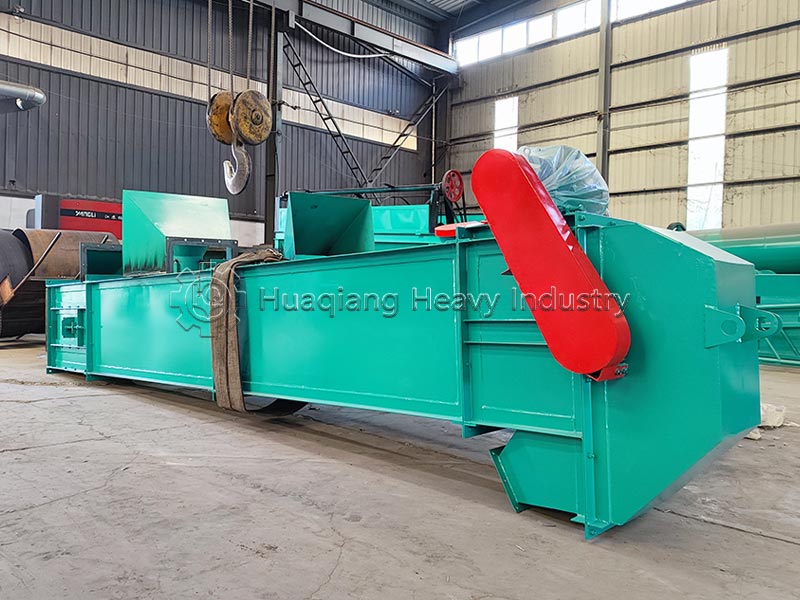
For the fertilizer production industry, bucket elevators are one of the core pieces of equipment in the fertilizer production line. The granular or powdered fertilizers involved in fertilizer production require high demands on the sealing of the equipment. These bucket elevators usually adopt a closed design, which effectively reduces the loss of fertilizer and dust dispersion during transportation, ensuring a clean production environment and reducing raw material waste. At the same time, the hopper design is adjusted according to the different particle sizes of the fertilizer to ensure smooth material handling and prevent blockages.

Similarly, vertical bucket elevators for granular materials perform excellently when handling different materials such as grains and ores. Taking the grain industry as an example, grain particles are full and fragile. The hoppers of these elevators use softer materials, and the operating speed is precisely controlled to prevent grain breakage during lifting. In the mining industry, when dealing with harder ores, the traction components and hoppers of the elevator are made of high-strength materials to ensure the durability and stability of the equipment.

High-capacity bucket elevators play a crucial role in large-scale production scenarios. Large-scale fertilizer plants and grain storage facilities, for example, require extremely high material handling volumes. These elevators optimize parameters such as hopper volume and lifting speed to transport more materials per unit time, significantly improving production efficiency and helping enterprises achieve large-scale production.

When purchasing, companies need to consider their production scale, material characteristics, and other factors, and comprehensively compare various parameters to select the equipment that best suits their needs, so that the bucket elevator can better serve their production.

How compost turning machines improve the production efficiency of powdered fertilizers?

In the production of powdered fertilizers, the efficiency of the fermentation process and the quality of raw material decomposition directly determine the pace of subsequent processing. As a core production auxiliary equipment, compost turning machines improve overall production efficiency from multiple key points by optimizing the fermentation process, improving raw material characteristics, and connecting production processes.

Accelerating raw material decomposition. Powdered fertilizer raw materials are mostly organic materials such as livestock and poultry manure and crop straw. Natural fermentation cycles are long and prone to uneven decomposition. Compost turners, through deep turning and mixing, can quickly break up material clumps, allowing the material to fully contact the air, increasing microbial activity, and promoting the rapid decomposition of organic matter.

Optimizing raw material characteristics. During the turning process, the compost turning machine can simultaneously mix and crush the materials, reducing clumping and resulting in more uniform particle size of the decomposed raw materials, eliminating the need for additional crushing and screening processes. This pre-treatment optimization makes the raw materials more suitable for subsequent grinding and fertilizer mixing equipment for powdered fertilizers, preventing equipment blockage or processing difficulties, improving the processing efficiency of subsequent processes, and reducing energy consumption and material loss.

Ensuring continuous production. Compost turners can achieve continuous and large-scale operation without frequent shutdowns for adjustments, stably supplying qualified raw materials to subsequent processes and avoiding production interruptions due to raw material shortages. At the same time, its flexible operating mode can adapt to different scales of production needs, ensuring smooth production flow whether in small and medium-sized decentralized production or large-scale fertilizer production lines.

How to better utilize double roller press granulators in fertilizer granulation?

Double roller press granulators, with their advantages of dry granulation, no drying required, and low energy consumption, are commonly used equipment in fertilizer production lines. Achieving a high molding rate and stable particle strength is crucial, and this depends on controlling raw material suitability, parameter adjustment, and standardized operation.

Raw material pretreatment is fundamental. The moisture content of the raw materials should be controlled between 8% and 12%; too high a moisture content can lead to roller sticking and clumping, while too low a moisture content makes molding difficult. After crushing and screening, ensure the particle size is ≤2mm, and thoroughly mix the materials using a fertilizer mixer machine to avoid uneven composition. Coarse fiber and high-hardness raw materials need to be softened in advance to reduce the extrusion load.

Precise parameter adjustment is key. Adjust the roller gap (0.5-2mm) according to the target particle size; a gap that is too large results in loose particles, while a gap that is too small leads to high energy consumption and easy wear of the roller surface. Match the appropriate roller pressure and rotation speed according to the characteristics of the raw materials—increase the roller pressure and decrease the rotation speed for high-hardness materials, and vice versa for lightweight materials, ensuring a molding rate of ≥90%.

Standardized operation and maintenance are essential. Before starting, check the flatness of the roller surface and the lubrication of the transmission system to avoid idling wear; during operation, observe the particle morphology in real time and fine-tune the parameters; after shutdown, clean the residue on the roller surface, regularly polish the roller surface and tighten the connecting parts, and strictly prevent metal impurities from scratching the roller surface.

By mastering these techniques, you can fully utilize the advantages of the double roller press granulator, produce high-quality and stable fertilizer granules, extend equipment life, and adapt to various granulation needs such as NPK compound fertilizers, contributing to improved quality and efficiency in fertilizer production.

The Importance of Choosing the Right Fertilizer Machinery Manufacturer

In today’s era of accelerating agricultural modernization, the performance of fertilizer machinery directly impacts fertilization efficiency and crop yield.  Choosing a high-quality manufacturer is a crucial prerequisite for ensuring stable production and improving overall efficiency. A high-quality fertilizer machinery manufacturer is not only a supplier of equipment but also a long-term partner in agricultural production, and its importance is reflected in every link of the entire production chain.

A good manufacturer can guarantee equipment compatibility and production stability. Fertilizer production involves diverse raw materials and varying capacity requirements. A high-quality manufacturer can provide customized fertilizer production line solutions based on the user’s raw material characteristics (such as livestock manure and crop straw) and production scale, avoiding production disruptions caused by mismatched equipment and needs. Data shows that the project delivery success rate of full-process equipment providers is 40% higher than that of single-equipment suppliers, and manufacturers with a high rate of self-manufactured key components have lower equipment failure rates. Conversely, small manufacturers’ assembled equipment often suffers from problems such as drum deformation and inflated capacity claims, seriously affecting production progress.

The technical and service capabilities of a high-quality manufacturer can significantly reduce long-term costs. They have years of experience in the industry and possess accumulated expertise in process optimization and energy-saving technologies, which can reduce overall equipment energy consumption by more than 30%, saving hundreds of thousands of yuan in electricity costs annually. At the same time, comprehensive integrated services can shorten the trial production period, and a 24-hour technical support and spare parts supply system can prevent long-term downtime losses due to equipment failures. Small manufacturers with inadequate after-sales service often leave users in a predicament of “being able to afford the equipment but not being able to use it.”

Choosing a reliable manufacturer is also a guarantee of compliance and market competitiveness. With increasingly stringent environmental regulations, high-quality manufacturers’ equipment can meet exhaust gas and waste residue emission standards, helping users avoid compliance risks. Their mature technology can also improve fertilizer quality, helping products meet industry standards and enhance market recognition.

In summary, choosing a good fertilizer machinery manufacturer is essentially choosing stable production guarantees and long-term development momentum. In the wave of green transformation in agriculture, only by relying on the technology and services of high-quality manufacturers can we achieve cost reduction and efficiency improvement, and build a solid foundation for modern agricultural production.

Double roller press granulator and roller press granulation production line: The synergy of core equipment and system

In the field of particle preparation, the double roller press granulator and the roller press granulation production line form a core combination. The former is the key granulation equipment, while the latter provides the system support for efficient mass production. Their synergistic operation ensures stable particle quality and improves production efficiency, making them a core configuration in the granulation process for industries such as fertilizers and chemicals.

The double roller press granulator is the “heart” of the roller press granulation production line, with its core function being high-pressure extrusion and molding of raw materials. Its advantages lie in high granulation strength and wide adaptability to raw materials; it can handle both organic fertilizer fermentation materials and chemical dry powder raw materials without the need for excessive binders, ensuring the purity of the finished product.

The roller press granulation production line is a complete system built around the double roller press granulator, encompassing the entire process from raw material pretreatment, core granulation, post-treatment, and intelligent control. Pretreatment ensures that the raw materials meet the required particle size and moisture content; post-treatment (crushing, screening, and drying) optimizes particle quality. Compared to a single piece of equipment, the fertilizer production line significantly reduces manual intervention, improves mass production capacity, and its fully enclosed design controls dust pollution, meeting environmental protection requirements.

The two complement each other: the performance of the double roller press granulator determines the baseline of particle quality, while the configuration of the roller press granulation production line determines the upper limit of production efficiency. In practical applications, it is necessary to match the appropriate equipment and production line based on raw material characteristics and production capacity requirements to achieve both quality and efficiency improvements.

Solving the challenge of high-fiber cattle manure treatment: An efficient resource utilization solution

Cattle manure, due to its high fiber content, loose texture, and long decomposition cycle, is prone to resource waste and environmental pollution if treated directly. Compared to other livestock and poultry manure, the core of treating high-fiber cattle manure lies in “fiber breakdown first, followed by composting, and then granulation.”

First, pre-treatment and fiber breakdown to reduce subsequent difficulties. Coarse fiber is the core obstacle to treatment. The cattle manure must first be crushed using a high-power fertilizer crusher to reduce the fiber particle size to 3-5 centimeters, while simultaneously screening out stones, weeds, and other impurities. If the moisture content of the cattle manure is too high (exceeding 65%), dry materials such as straw and sawdust can be mixed in to adjust the moisture content to 55%-60%. This balances the carbon-nitrogen ratio (optimizing it to 25:1-30:1) and improves material aeration, paving the way for subsequent fermentation.

Second, enhanced fermentation and composting to degrade coarse fibers. A trough-type compost turner is used for deep turning and mixing. The powerful mixing force of the equipment ensures sufficient ventilation and oxygen supply to the compost pile, maintaining a high temperature of 55-65°C for 25-30 days. The high-temperature environment accelerates microbial activity, efficiently degrading coarse fibers and simultaneously killing pathogens and insect eggs. Specialized composting agents can be added during fermentation to further shorten the composting cycle and improve the degree of decomposition.

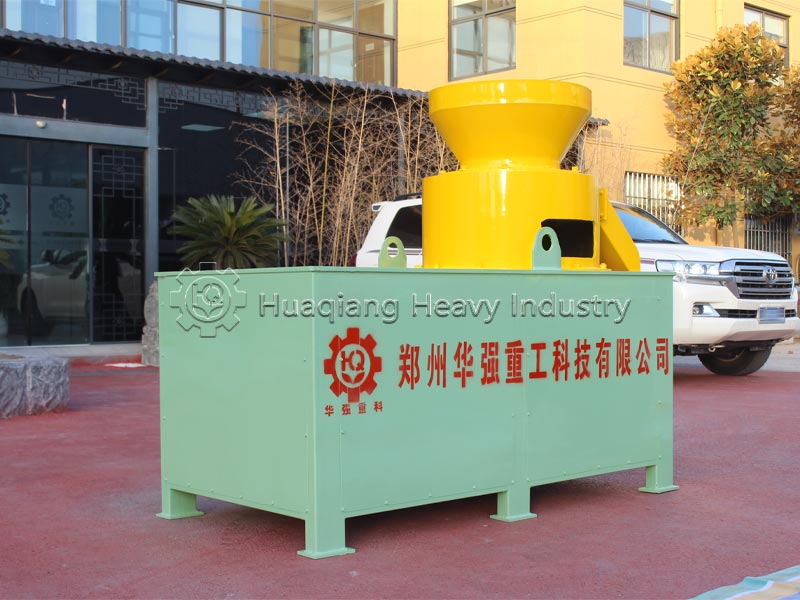
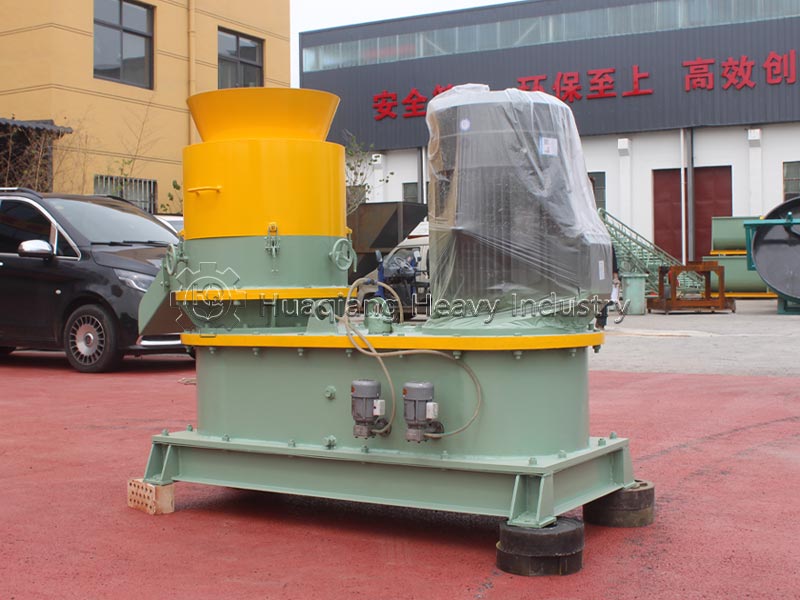
Third, shaping and processing to enhance utilization value. The composted cattle manure, with its coarse fibers largely degraded, can be fed into an organic fertilizer granulator(ring die or flat die pelleting machines are preferred, suitable for shaping loose materials) to form high-strength, uniformly sized granular organic fertilizer through extrusion or rolling.

This treatment plan can be implemented by assembling a fertilizer production line with equipment of corresponding specifications based on production capacity requirements. This not only completely solves the problem of treating high-fiber cattle manure but also transforms waste into organic fertilizer rich in organic matter.