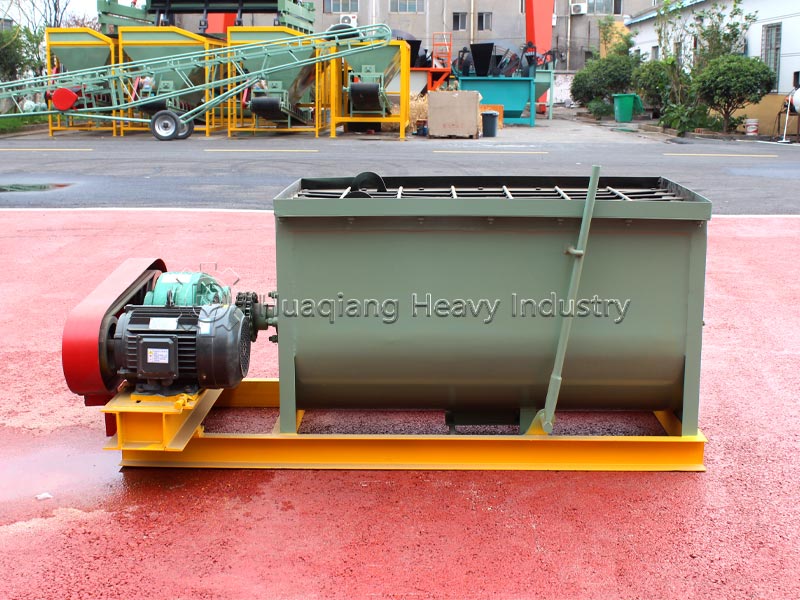
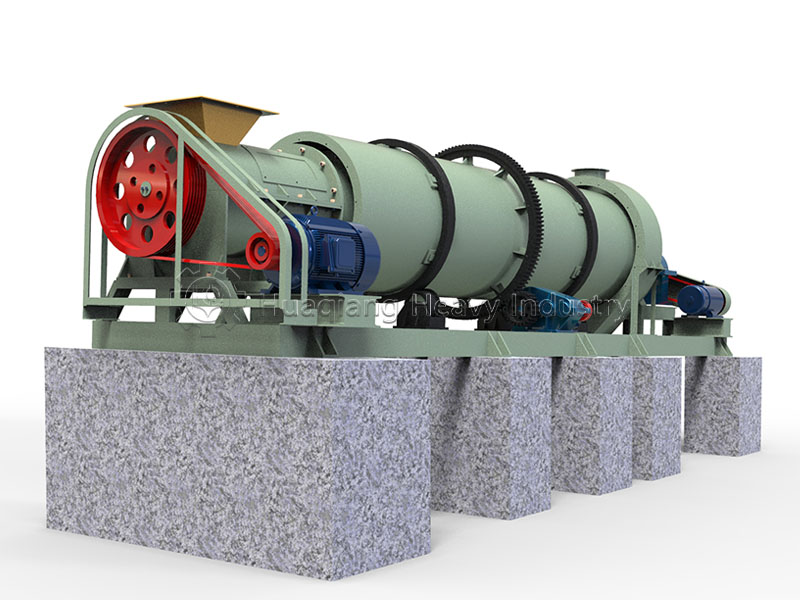
Double axis paddle mixers: A powerful mixing tool for efficient production across multiple industries

In production processes across industries such as chemicals, pharmaceuticals, food, and building materials, the uniformity and efficiency of material mixing directly impact the quality of the final product. Double axis paddle mixers, with their superior performance, have become the preferred equipment for many companies.

As a high-efficiency mixing device, it uses two independent, counter-rotating mixing shafts as its core. Through paddle-type or other types of mixing blades, it shears, crushes, and diffuses materials, easily achieving deep mixing. It is particularly suitable for scenarios requiring the mixing of high-viscosity materials and solid particles, solving the problems of uneven mixing and low efficiency associated with traditional mixing equipment.

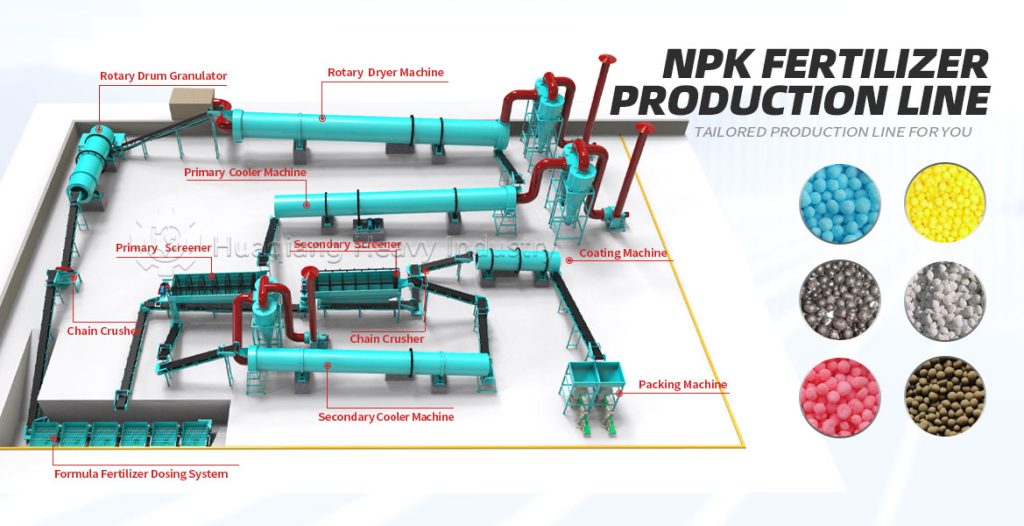
In the fertilizer production field, NPK fertilizer production lines have extremely high requirements for material mixing precision. NPK blending machine needs to uniformly mix raw materials such as nitrogen, phosphorus, and potassium. Double axis paddle mixers, with their stable mixing effect, ensure uniform distribution of raw materials, laying a good foundation for subsequent granulation, drying, and other processes, significantly improving the quality of fertilizer products. Furthermore, it is not only an important component of fertilizer mixer equipment but can also work in conjunction with fertilizer mixer machines and other equipment, adapting to the needs of different production lines such as organic fertilizers and bio-organic fertilizers.

Beyond industrial applications, double axis paddle mixers also play a crucial role in food additive mixing and pharmaceutical raw material pretreatment. For companies pursuing high-efficiency, high-quality production, selecting suitable high-efficiency mixing equipment is undoubtedly a key step in improving production efficiency and reducing costs, injecting strong momentum into the sustainable development of the industry.

High-efficiency material mixing solutions for multiple industries

In the production processes of chemical, pharmaceutical, food, and building materials industries, the uniformity and efficiency of material mixing directly affect product quality. Horizontal ribbon mixers, with their unique advantages, have become the preferred equipment for many companies.

As a professional material mixing equipment, the core highlight of the horizontal ribbon mixer lies in its horizontally arranged mixing drum design. This structure not only accommodates large volumes of materials, meeting the needs of large-scale production, but also adapts to the mixing of high-viscosity materials or materials containing solid particles, solving the problem of insufficient uniformity in traditional mixing equipment when handling special materials.

From an application perspective, the horizontal ribbon mixer is extremely versatile. In the chemical industry, it can precisely mix various chemical raw materials, ensuring reaction stability; in the pharmaceutical field, the strict sealing device prevents material leakage and contamination, meeting industry hygiene standards.

Notably, horizontal ribbon mixers are also often used in conjunction with NPK fertilizer production lines and NPK blending machines, undertaking critical material pretreatment work in the fertilizer production process. By uniformly mixing nitrogen, phosphorus, and potassium components, it improves fertilizer quality. Whether for single-material mixing or production line integration, the horizontal ribbon mixer, with its efficient and stable performance, has become an important piece of equipment driving quality improvement and efficiency enhancement across multiple industries.

A path to quality improvement and efficiency for small and medium-sized fertilizer enterprises

For small and medium-sized fertilizer enterprises, the performance of NPK fertilizer production lines directly determines their market competitiveness. Choosing the right compound fertilizer production equipment and optimizing production processes are crucial for reducing costs and increasing efficiency. Many companies have achieved a transformation from “extensive production” to “precise and efficient production” by upgrading their production lines.

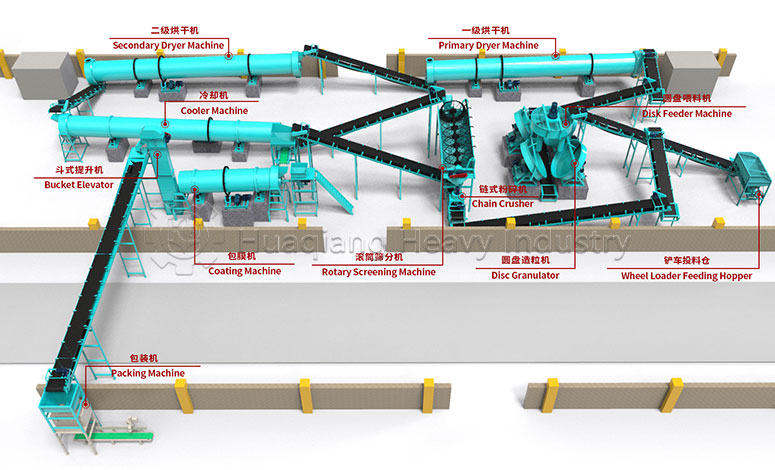
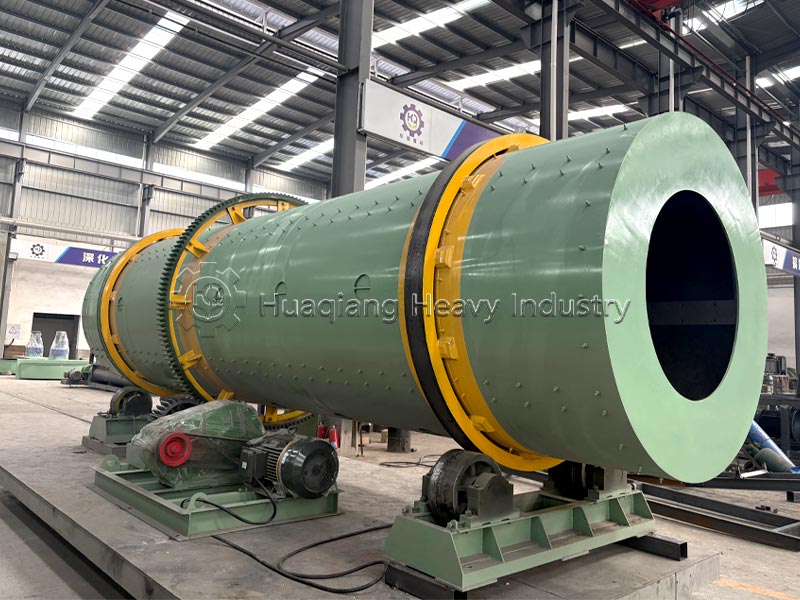
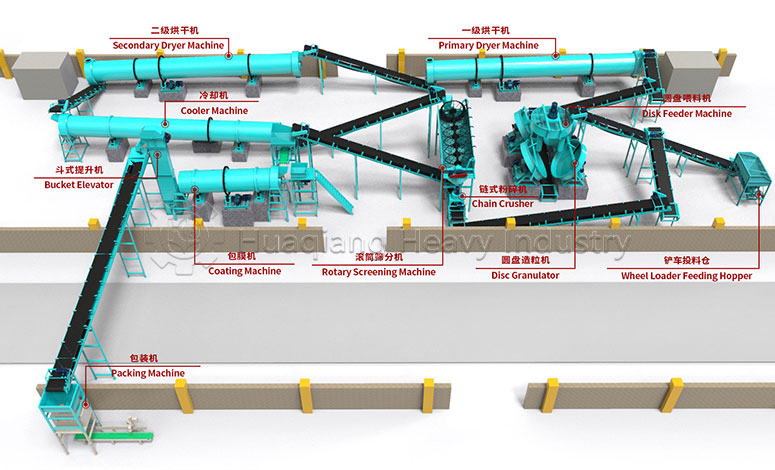
The core of upgrading production lines for small and medium-sized fertilizer enterprises is to balance practicality and cost-effectiveness. A basic NPK fertilizer production line requires essential equipment: in the raw material processing stage, a fertilizer crusher can crush large pieces of phosphate rock, potash fertilizer, and other raw materials to a suitable particle size, and a precise batching system can prevent deviations in nutrient ratios; a fertilizer mixer machine is used in the mixing stage to ensure uniform mixing of nitrogen, phosphorus, potassium, and auxiliary materials, laying the foundation for subsequent granulation. A fertilizer granulator can be selected based on production capacity. Subsequent drying, cooling, and coating machines, and fertilizer screener machines can screen out qualified granules, and then an automatic packaging machine completes the packaging process, significantly reducing labor costs.

Process optimization is equally indispensable. A high-quality NPK fertilizer granulation process can improve the finished product qualification rate. Automated compound fertilizer production is now mainstream; a simple PLC control system can monitor parameters such as drying temperature and granulation speed in real time, reducing human error.

Small and medium-sized fertilizer enterprises do not need to blindly pursue high-end equipment; they should choose a suitable solution based on their production capacity and product positioning. Prioritize manufacturers with comprehensive after-sales service to ensure that equipment problems can be resolved promptly.

From equipment to process, how to choose the right NPK fertilizer production line?

In the process of agricultural modernization, the demand for high-quality compound fertilizers has surged, making NPK fertilizer production lines core equipment for fertilizer companies expanding production. However, faced with a variety of equipment and processes, choosing a production line that suits their specific needs is a challenge for many industry professionals.

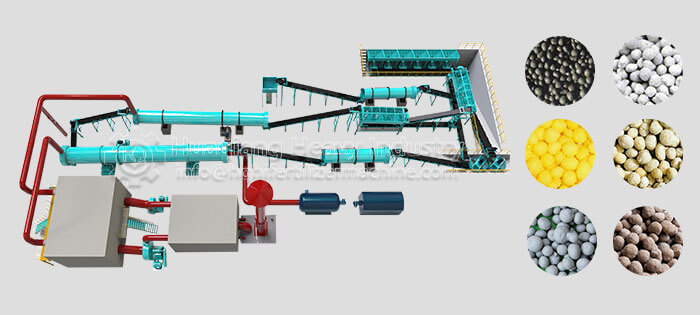
First, let’s look at the core equipment configuration. A complete NPK fertilizer production line needs to cover key stages such as raw material processing, mixing, granulation, drying, and cooling. In the raw material processing stage, a fertilizer crusher can crush large raw materials to a suitable particle size, and with a precise batching system, the proportion of nitrogen, phosphorus, and potassium components can be strictly controlled; for the mixing stage, a fertilizer mixer machine is recommended, and a double shaft paddle mixer can achieve a raw material mixing uniformity of over 95%; granulation is the core process, with disc granulators suitable for small and medium-sized capacities, while double roller press granulators are suitable for high-hardness granule requirements, and companies can choose according to their needs. Subsequent drying, cooling, and coating machines, along with fertilizer screener machines, ensure that the finished granules are uniform and have a qualified moisture content, and finally, automatic packaging is achieved through packaging machines, improving production efficiency.

At the process level, automation is key. A high-quality NPK fertilizer granulation process requires a PLC control system for full monitoring, precisely adjusting parameters from raw material proportioning to drying temperature, ensuring stable nutrient content in the finished product and reducing energy consumption. Choosing the right NPK fertilizer production line is not just about purchasing a set of equipment, but also laying the foundation for the long-term development of the enterprise. Combining capacity, finished product requirements, and manufacturer services will allow the production line to truly become a profit engine.

Vibration screener machine: The core equipment for efficient screening in fertilizer production

In the fertilizer production process, material screening is a critical link that determines product quality. Vibration screener machines, with their high efficiency and precision, have become the equipment of choice for many manufacturers. As a core material screening device, it is not only suitable for the entire fertilizer production process but can also be widely used in mining, building materials, chemical industry, and other fields, providing solutions for material classification in multiple industries.

The core advantages of the vibration screener machine lie in its “efficiency” and “precision.” Its vibrating motor generates high-frequency vibrations, allowing materials to quickly complete projectile motion on the screen surface. Materials smaller than the screen mesh are precisely separated, achieving both classification and impurity removal, significantly improving production efficiency. Considering the specific requirements of fertilizer production, the equipment can be adjusted by changing the screen mesh size and vibration parameters to adapt to different materials, such as granular materials produced by fertilizer granulators and mixed materials after mixing in fertilizer mixers. The screening accuracy far exceeds that of traditional equipment.

At the same time, the sealed design of the equipment is also a significant advantage, effectively reducing dust leakage during fertilizer production, meeting environmental protection requirements and protecting the workshop environment. Its compact structure requires a small footprint and can be flexibly integrated with different production lines, such as NPK fertilizer production lines and organic fertilizer production lines, reducing the difficulty of workshop layout.

For fertilizer companies, choosing a high-quality vibration screener machine can not only improve product qualification rates but also reduce material waste, contributing to efficient production. Whether processing coarse materials after being processed by a fertilizer crusher or conveying qualified finished products to a packaging machine, the vibration screener machine, with its stable performance, is an indispensable key equipment in the fertilizer production chain.

NPK fertilizer production line: Scientific ratios help boost vegetable yield and quality

NPK fertilizer is a scientifically blended combination of the three core nutrients – Nitrogen (N), Phosphorus (P), and Potassium (K) – designed specifically to meet vegetable growth needs. Modern NPK fertilizer production lines use precise blending processes to create high-efficiency compound fertilizers. These fertilizers can significantly improve vegetable yield, quality, and disease resistance.

1.Promotes Rapid Vegetable Growth

Nitrogen is key for leaf and stem growth in vegetables. Adequate nitrogen fertilizer speeds up leaf development in leafy greens like spinach and lettuce, helping plants thrive with vibrant green color.

2.Boosts Root Development, Flowering, and Fruiting

Phosphorus encourages root growth. It’s especially vital for fruiting vegetables like tomatoes and cucumbers, improving fruit setting rates and shortening the ripening cycle.

3.Enhances Stress Tolerance and Quality

Potassium fertilizer strengthens a vegetable’s resistance to drought and disease. It also improves the sweetness and taste of fruits. Crops like peppers and eggplants develop brighter colors and better storage and transport tolerance after application.

The Technical Edge of NPK Fertilizer Production Lines

Modern NPK fertilizer production lines use computer-controlled dosing systems. This ensures precise ratios of nitrogen, phosphorus, and potassium (like 16-16-16 or 20-10-10) and allows for adding trace elements (such as calcium and magnesium). This meets the specific nutritional needs of different vegetable varieties. The granulation process creates slow-release fertilizer pellets, reducing nutrient loss.

Scientifically blended NPK fertilizer is key to high vegetable yields and quality. Modern production line technology further improves fertilizer efficiency, helping growers achieve both economic and ecological benefits.

NPK fertilizer mixing technology: From homogeneous slurry to precision blending

In modern NPK fertilizer production, the mixing process is not merely simple stirring, but a core technology permeating the entire production process. It directly determines the uniformity of nutrient distribution, affecting the stability and fertilizer efficacy of the final product. From liquid to solid, from chemical to physical, the mixing process, in its diverse forms, supports the production quality of compound fertilizers.

In the initial stages of production, the chemical reaction itself is accompanied by deep mixing of raw materials. When the basic nitrogen, phosphorus, and potassium raw materials undergo chemical reactions under specific conditions, continuous mechanical stirring ensures sufficient contact between the reactants. The homogeneous slurry formed in this process lays the necessary physical foundation for subsequent granulation.

After chemical mixing, the materials enter the refined physical mixing stage. When the slurry or powder needs to be combined with other auxiliary materials, specialized fertilizer mixer machines, through scientifically designed motion trajectories, can achieve a highly uniform distribution of each component in a short time.

In another important branch of NPK fertilizer production—the production of physically blended fertilizers (BB fertilizers)—NPK fertilizer production technology exhibits different technical requirements. Faced with basic fertilizer granules of varying densities and sizes, the mixing process must achieve both uniform nutrient distribution and minimize granule breakage and separation. This targeted mixing technology enables the perfect coexistence of various granule types.

From mechanical stirring in the chemical reactor to the uniform distribution of the finished granules, the mixing process remains a crucial node in the NPK fertilizer production line. Its technological advancements not only improve the intrinsic quality of fertilizer products but also provide a reliable material foundation for the development of precision agriculture.

BB fertilizer mixer: Flexible productivity in the precision agriculture era

In modern fertilizer production, the BB fertilizer mixer is the core engine of the NPK blending fertilizer production line, characterized by physical blending, translating the concept of precise formulation into a uniform and high-quality finished product.

While there are many types of general-purpose fertilizer mixers, the BB fertilizer mixer is a specialized piece of equipment designed specifically for granular blending. Its unique structure allows for the uniform mixing of nitrogen, phosphorus, and potassium base fertilizers of different particle sizes and densities in a very short time, while minimizing particle breakage.

Compared to the chemical reaction route of traditional NPK fertilizer production lines, the NPK blending fertilizer production line centered on the BB fertilizer mixer exhibits unique advantages. It can quickly adjust the formula based on soil testing data, enabling flexible production of small batches and multiple varieties. This flexibility allows fertilizer processing plants to respond promptly to the personalized needs of different regions and crops, truly achieving precision fertilization.

In a complete NPK blending fertilizer production line, the BB fertilizer mixer works precisely in conjunction with the automatic batching system and conveying equipment. After precise metering, raw materials enter the mixing chamber, where they are efficiently mixed within a set time before being directly packaged or shipped in bulk. This compact design significantly shortens the conversion time from formulation to product.

With the increasing demands for precision fertilization in modern agriculture, the BB fertilizer mixer is playing an increasingly crucial role in NPK blending fertilizer production lines.

Precisely formulated NPK blending fertilizer production line

In modern agricultural production, bulk blended fertilizers, which flexibly meet customized needs, are playing an increasingly important role. The core of this efficient operation is a well-designed NPK blending fertilizer production line, which achieves the efficient conversion from multiple single-element fertilizers to a uniformly blended finished product through the coordinated operation of specialized equipment.

The value of the entire NPK blending fertilizer production line is primarily reflected in its “precision.” The production line can accurately measure the proportions of nitrogen, phosphorus, potassium, and micronutrients based on specific soil testing results and crop nutrient requirements. This precise formulation capability is the foundation for producing truly personalized bulk blended fertilizers.

In the core mixing stage of the production line, the performance of the BB fertilizer mixer is crucial. This equipment does not simply tumble; instead, through a scientifically designed mixing method, it ensures that granular raw materials of different sizes and specific gravities achieve a highly uniform physical mixture in a short time.

From a macroscopic process perspective, a complete NPK blending fertilizer production line integrates multiple modules such as automatic batching, efficient mixing, and finished product conveying. As the heart of the production line, the bulk blending fertilizer machine’s efficiency and mixing quality directly determine the quality of the final product. This systematic production method greatly improves production flexibility and efficiency, making small-batch, multi-formulation customized production possible.

Collaboration and innovation: A symphony of equipment in modern bio-organic fertilizer production

In the field of modern bio-organic fertilizer production, the coordinated operation of various specialized equipment is driving continuous innovation in production processes. From raw material processing to finished product output, different functional pieces of equipment perform their respective roles, jointly composing a harmonious symphony of efficient production.

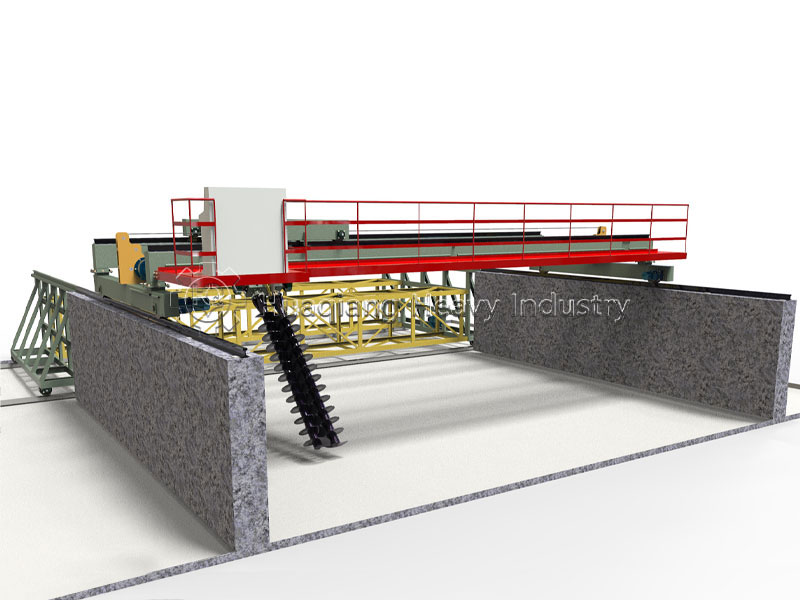
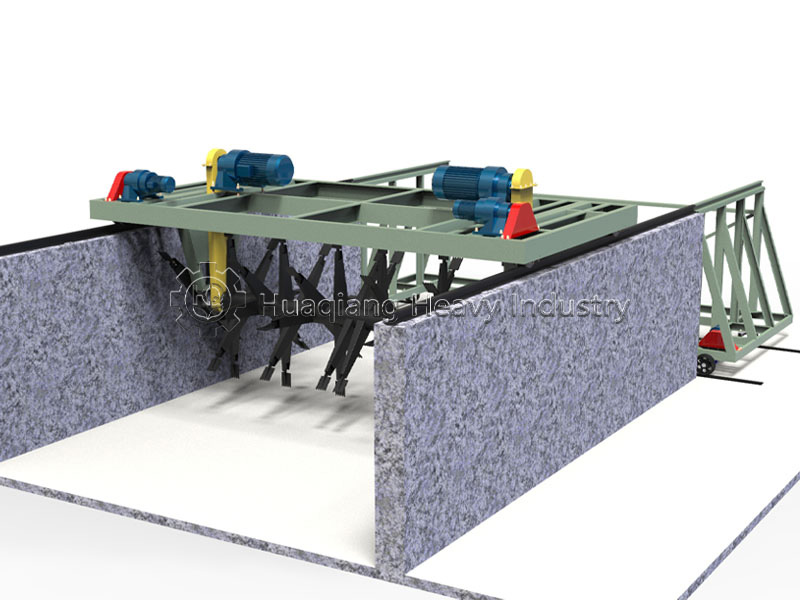
The double screws compost turning machine demonstrates unique advantages in the fermentation stage. Its double screws structure can penetrate deep into the material, achieving a more thorough turning effect. This design not only improves fermentation efficiency but also ensures uniform oxygenation of the material, laying a solid foundation for subsequent processing.

The bio-organic fertilizer equipment system, with its specialized configuration, provides an ideal environment for functional microorganisms. From temperature control to ventilation regulation, from humidity management to inoculant addition, this system ensures that every step of biotransformation takes place under optimal conditions, effectively guaranteeing the quantity and vitality of active bacteria in the final product.

In the material mixing stage, the fertilizer mixer machine plays a crucial role. Through a scientifically designed mixing method, it thoroughly and evenly mixes different raw materials. This uniform mixing not only ensures a balanced distribution of nutrients but also creates favorable conditions for the subsequent granulation process.

When the materials enter the forming stage, the new type organic fertilizer granulator demonstrates its superior processing capabilities. It can produce granules with uniform specifications and moderate hardness, tailored to the characteristics of different raw materials. This innovative granulation technology not only enhances the product’s commercial value but also significantly improves its application performance.

The perfect coordination of these devices creates a highly efficient and stable bio-organic fertilizer production line. From the raw material processing by the double screws compost turner to the uniform mixing by the fertilizer mixer machine, and finally to the finished product forming by the new type organic fertilizer granulator, each step is closely integrated to ensure the high quality and consistency of the final product.