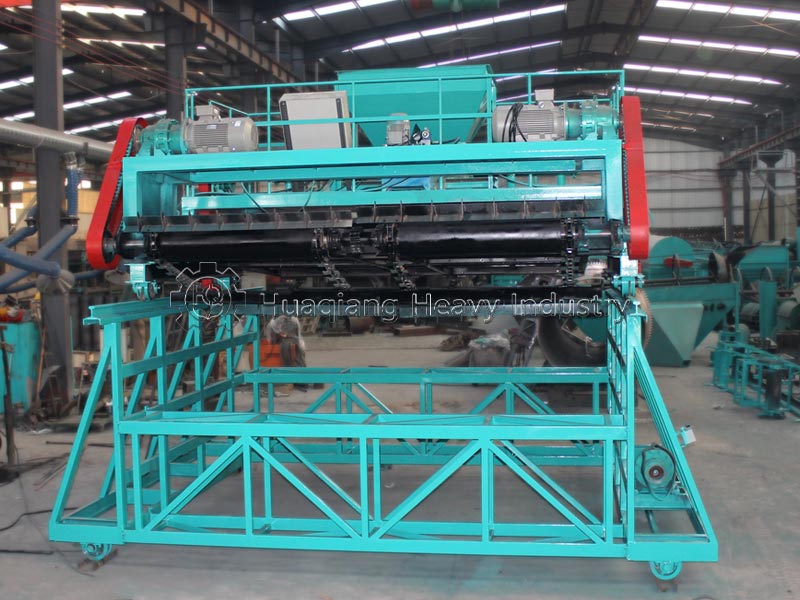
Pig manure composting technology: More efficient waste-to-treasure transformation

Pig manure is rich in nitrogen, phosphorus, potassium, and organic matter, making it a high-quality raw material for organic fertilizer. However, direct application without treatment can easily burn roots, breed pests and diseases, and pollute the environment. Utilizing organic fertilizer production lines and compost turners, and employing scientific composting technology, harmless and resource-efficient utilization can be achieved, producing high-quality organic fertilizer efficiently.

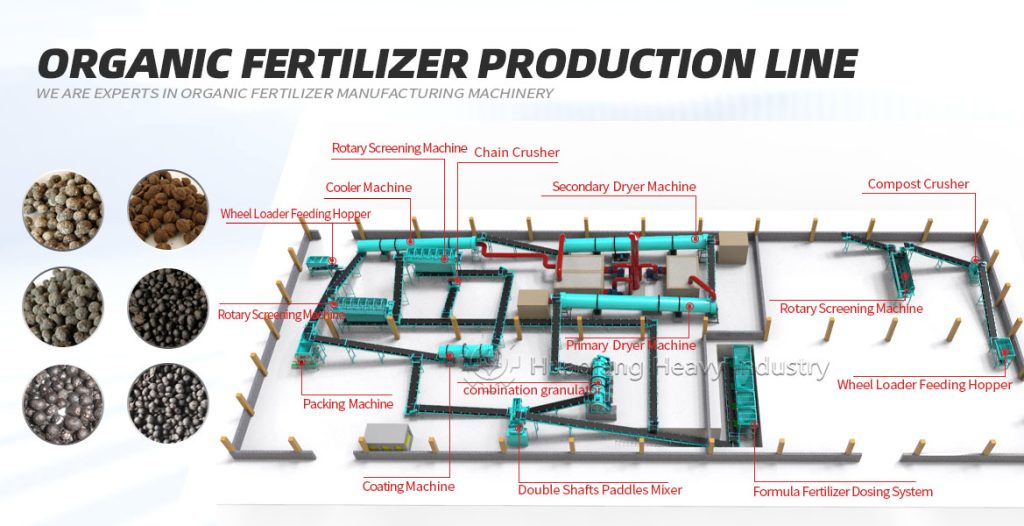
Raw Material Preparation. Fresh pig manure has a high moisture content and is very sticky. Straw, sawdust, and other auxiliary materials need to be added to adjust the carbon-to-nitrogen ratio, controlling the moisture content to 55%~65%. Large-scale composting can be achieved through raw material crushing and proportioning on the organic fertilizer production line, ensuring uniform mixing and laying the foundation for fermentation.

Composting and Fermentation. The prepared raw materials are piled into long strips. Professional temperature control equipment assists in heating, initially raising the temperature to 55~65℃, which kills pathogens, insect eggs, and weed seeds, achieving harmless standards. No sealing is required; natural ventilation is ensured.

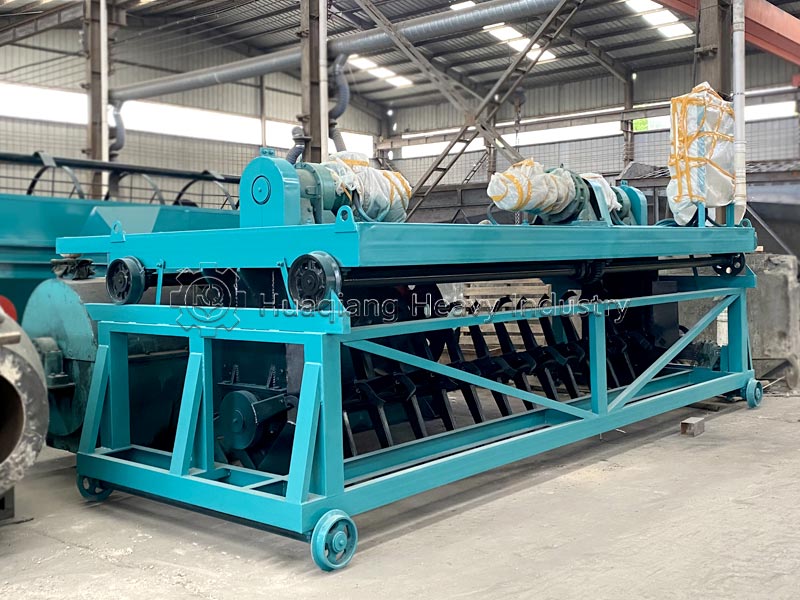
Turning and managing the compost pile is crucial. Organic fertilizer compost turning machines can replace manual turning, ensuring sufficient oxygen in the pile, preventing anaerobic fermentation and unpleasant odors, promoting even fermentation, accelerating the process, reducing labor costs, and improving efficiency.

Finally, the degree of decomposition is assessed. Fully decomposed pig manure compost is dark brown, loose in texture, and odorless, and can be further processed into finished products through an organic fertilizer production line. This technology addresses livestock pollution, provides high-quality fertilizer, and is a practical solution for integrated crop and livestock farming.
Why is composting so popular? A comprehensive guide to its core benefits

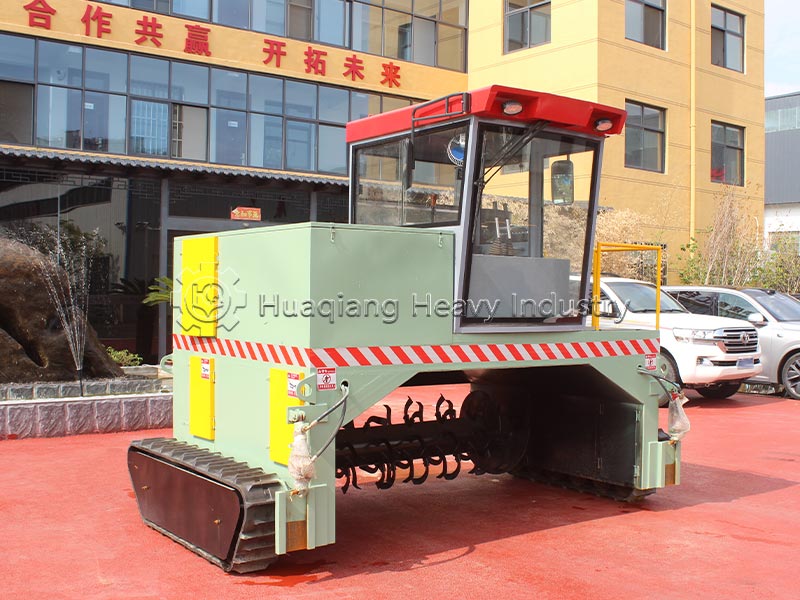
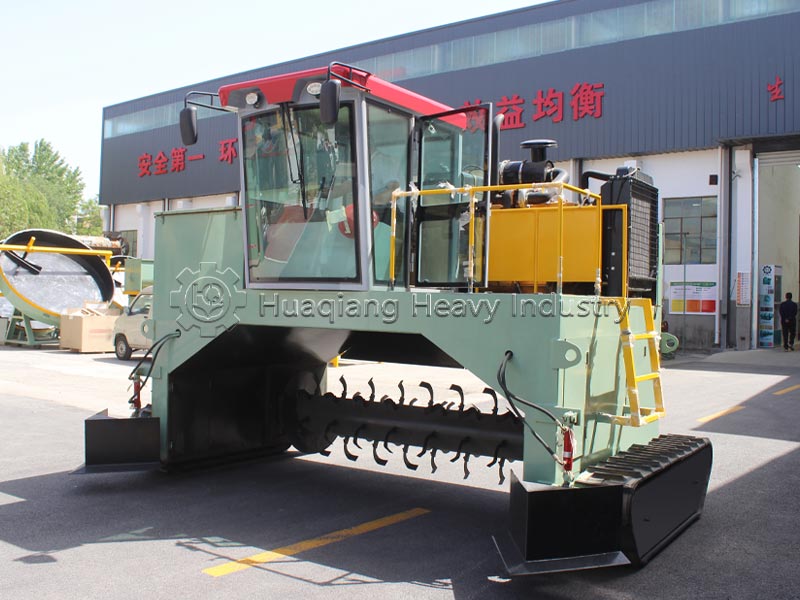
Composting is now popular worldwide, thanks to its multiple practical values and the support of organic fertilizer production lines and equipment. Among these, the organic fertilizer compost turning machine is the core equipment for large-scale composting, driving the transition from traditional manual methods to standardized production.

The most fundamental value of composting is the resource utilization of waste. Straw, kitchen waste, and livestock manure, after pretreatment by fertilizer production equipment, are accelerated through fermentation by the organic fertilizer compost turning machine, transforming into high-quality organic fertilizer. This turns waste into treasure, reducing pollution at the source and aligning with the concept of ecological recycling.

Compost plays an irreplaceable role in soil improvement. Compost processed according to standardized organic fertilizer production lines is rich in organic matter, improving soil compaction, enhancing aeration, water retention, and fertilizer retention capacity, activating soil nutrients, revitalizing barren soil, and adapting to various planting scenarios.

It is also a key support for green planting. Well-rotted compost is mild and non-irritating. After precise processing by fertilizer production equipment, its nutrients are more balanced, providing nourishment to crops while inhibiting harmful pathogens, reducing the use of pesticides and fertilizers, and contributing to the production of green agricultural products.

Economically, composting is inexpensive. Combined with organic fertilizer compost turning machines for large-scale production, fertilizer costs can be significantly reduced, while increasing the yield and quality of agricultural products. With its advantages of environmental protection, soil improvement, quality enhancement, and cost reduction, coupled with the support of professional equipment, composting has become a globally recognized ecological solution.

Windrow composting: A versatile organic fertilizer fermentation solution

Windrow composting is a classic method for organic fertilizer fermentation. Its simplicity, efficiency, and adaptability make it widely applicable in organic waste treatment and organic fertilizer production. Balancing practicality and economy, it is the preferred choice for small- and medium-sized production and individual farmer composting. Its advantages and applications are worth understanding.

Its core advantages are:

1.Low cost: No complex sealed facilities are required, and equipment investment is minimal, requiring only simple tools or an organic fertilizer compost turning machine.

2.Easy operation: The process is simple and requires no professional personnel; farmers and small- and medium-sized producers can quickly master it.

3.High adaptability: It can process various organic materials, has flexible site requirements, and allows for flexible adjustment of stack dimensions.

4.Controllable composting: Regular turning (which can be combined with a windrow compost turning machine) regulates temperature and humidity, ensuring thorough composting and improving the quality of the organic fertilizer.

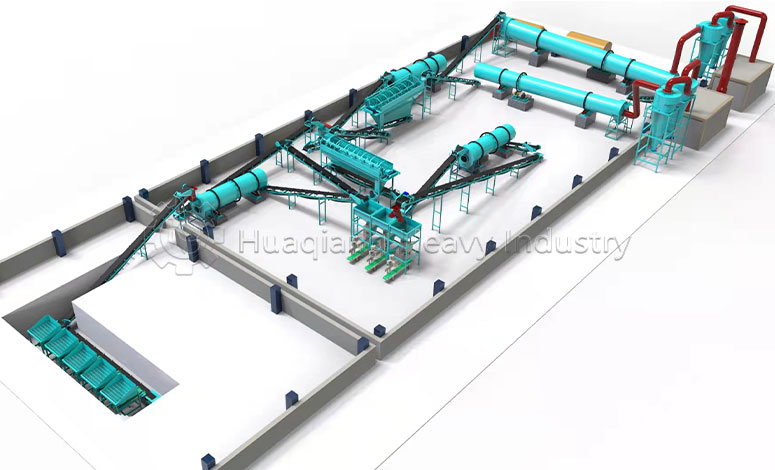
With wide-ranging applications, windrow composting technology can process straw and livestock manure in farmers’ planting, producing organic fertilizer to improve soil. In small to medium-sized organic fertilizer production, it can serve as a core fermentation process, connecting to the early composting stage of organic fertilizer production lines. In organic waste treatment, it can efficiently process solid organic waste, turning waste into treasure and meeting environmental protection requirements.

In summary, windrow composting technology, with its advantages of low cost, ease of operation, and high adaptability, has become the mainstream technology for organic fertilizer fermentation. It can meet the needs of different scales of production, promote the resource utilization of organic waste, and possess both practical and environmental value.

Composting too slow? Add these 4 types for fast and effortless decomposition

Slow composting not only delays the use of organic fertilizer but also easily breeds pathogens, a problem faced by both farmers’ self-composting and the early fermentation stages of organic fertilizer production lines. Adding readily available materials appropriately, along with the assistance of an organic fertilizer compost turning machine, can accelerate decomposition and improve quality.

First Type: Carbon-to-Nitrogen Ratio Adjuster: A balanced carbon-to-nitrogen ratio is crucial for composting. Adding dry straw, sawdust, or other carbon sources, or urea, chicken manure, or other nitrogen sources, balances nutrients, provides energy for microorganisms, and prevents composting stagnation.

Second Type: Microbial Agents: Adding specialized composting agents can quickly replenish beneficial microorganisms, breaking the slow process of natural fermentation, accelerating material decomposition, reducing odors, and shortening the decomposition cycle by more than 30%.

Third Type: Loose and Aerated Materials: Lack of oxygen leads to slow decomposition and foul odors. Adding chopped branches, perlite, etc., can increase aeration. In large-scale organic fertilizer production lines, using a windrow compost turning machine ensures even distribution of aerated materials, improving efficiency.

The fourth type of moisture regulator: Both excessively dry and excessively wet compost will slow down the process. For dry compost, add clean water and composting liquid; for excessively wet compost, add dry soil and sawdust, maintaining a moisture content of 50%-60%.

Note: Additives must be added in appropriate amounts to avoid nutrient imbalance. Turning the compost will enhance the effect; an organic fertilizer compost turning machine can be used, suitable for the large-scale needs of organic fertilizer production lines. In summary, by appropriately adding these four types of materials and using turning as an aid, high-quality organic fertilizer can be quickly produced.

Windrow composting: A high-efficiency and simple method for organic fertilizer fermentation

Windrow composting is a widely used, simple, and efficient method for organic fertilizer fermentation. Its core involves piling organic materials into windrows according to specifications, allowing them to decompose through natural ventilation or manual turning. Suitable for small to medium-scale production, it requires no complex equipment and is easy to operate with low costs.

Its core characteristics are “windrow-shaped piles + natural decomposition,” distinguishing it from closed composting. The piles are mostly trapezoidal or triangular, 1-2 meters high and 3-5 meters wide, with the length adjusted as needed. Ventilation space is reserved between the piles to ensure aerobic respiration of microorganisms and promote material decomposition.

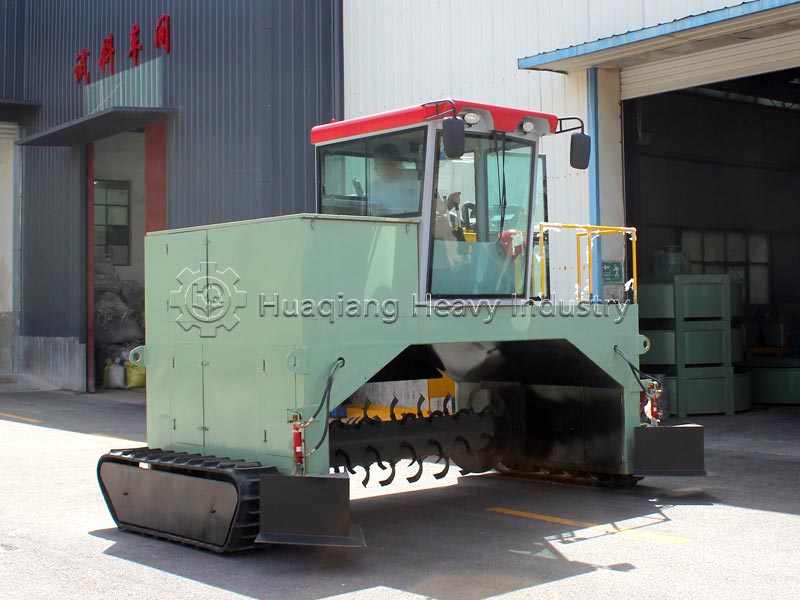
The operation process is simple: Mix livestock manure, straw, and other raw materials in a specific ratio, adjust the moisture content and carbon-nitrogen ratio, and pile them into standardized windrows. Regular turning with an organic fertilizer compost turning machine (such as a windrow compost turning machine) replenishes oxygen, regulates temperature and humidity, and accelerates decomposition. No closed system is required throughout the process.

It is adaptable to a wide range of scenarios, suitable for farmers and small- to medium-sized organic fertilizer production, and can be flexibly integrated into the early-stage composting stage of organic fertilizer production lines. It can process various types of organic waste and produce high-quality organic fertilizer, turning waste into treasure.

Its advantages are significant: low equipment investment, simple operation, flexible site requirements, and controllable composting cycle; the composted organic fertilizer can improve soil and enhance fertility, meeting the needs of green planting and is one of the mainstream modes of organic fertilizer fermentation.

Self-propelled compost turning machine operation requirements: Safe, Efficient, and Problem-free

As a core organic fertilizer compost turning machine, the self-propelled compost turning machine is widely used in organic fertilizer fermentation scenarios due to its flexibility, convenience, and uniform turning capabilities. Proper operation not only improves efficiency and extends equipment lifespan but also prevents safety accidents, ensuring the smooth operation of the organic fertilizer production line.

Before operation, conduct a comprehensive inspection and preparation: Check tire pressure, track tension, and the turning rollers and transmission components to ensure there are no loose or jammed parts; clear debris from the work area, demarcate the work zone, and prohibit unauthorized personnel from entering to ensure the safe operation of the organic fertilizer compost turning machine.

During operation, strictly follow the specifications: After starting, conduct a no-load test run to confirm normal operation before commencing work; maintain a constant speed, adjusting the turning depth according to the material thickness to avoid overloading; keep the compost turn in a straight line, slow down when turning, and avoid sudden turns and stops to prevent equipment damage or disruption to the production line schedule.

After operation, perform thorough cleaning and maintenance: turn off the power, clean the material adhering to the cutter rollers and machine body; check for wear on parts, tighten as needed, and replenish lubricating oil; park the organic fertilizer compost turning machine in a dry, well-ventilated area, protecting it from rain and dust to prevent rust.

Furthermore, operators must wear protective equipment, and operating the machine under the influence of alcohol or while fatigued is strictly prohibited. Do not touch moving parts. In summary, following these requirements ensures safety and maximizes equipment efficiency, supporting the efficient operation of the organic fertilizer production line.

Will organic fertilizer burn plants? Avoid it if you know the methods

Many farmers wonder when applying organic fertilizer: Organic fertilizer is mild and environmentally friendly, will it burn plants? The answer is: Organic fertilizer processed using proper organic fertilizer production equipment will not burn seedlings when applied correctly. Seedling burn is mostly due to improper application, not the organic fertilizer itself. Mastering the key points can prevent this.

There are three main causes of organic fertilizer burning. First, using uncomposted organic fertilizer. This type of organic fertilizer has often not undergone standardized processing on an organic fertilizer production line and has not been fully composted using a compost turning machine. It continues to ferment in the soil, generating heat, burning the roots and consuming oxygen, leading to root rot. Second, excessive application. High concentrations of organic matter in the soil create high osmotic pressure, causing the roots to lose water and burn the seedlings. Third, improper application. Directly scattering the fertilizer around the roots without mixing it evenly with the soil can lead to excessively high local concentrations that damage the roots.

Avoiding seedling burn only requires three things. First, ensure full composting. Use an organic fertilizer compost turning machine to complete the composting process through a complete organic fertilizer production line. Only use the fertilizer when it is odorless, loose, and fine. Secondly, control the dosage, applying an appropriate amount based on soil fertility and crop needs. Finally, apply scientifically, mixing the organic fertilizer thoroughly with the soil, or applying it in furrows or holes away from the root system.

In summary, organic fertilizer itself does not burn seedlings; the key is scientific application. By utilizing standardized organic fertilizer production equipment for proper decomposition, and combining it with reasonable dosage and methods, we can not only leverage its advantages in improving soil quality and increasing yield, but also completely avoid burning seedlings, thus promoting healthy crop growth.

Synergistic effect of microbial fermentation agents and organic fertilizer compost turning machines

Organic fertilizer composting is a crucial step in bio-fertilizer production. Relying solely on microbial fermentation agents or organic fertilizer compost turning machines makes it difficult to balance efficiency and quality. The scientific combination of the two can solve pain points such as slow composting, nutrient loss, and uneven fermentation, making it a core solution for high-quality organic fertilizer preparation.

The core of this combination is “reagent empowerment + equipment assistance,” exhibiting strong complementarity. Microbial fermentation agents can quickly activate beneficial bacteria in organic materials, accelerating the decomposition of raw materials such as straw and livestock manure, reducing odors, and retaining nutrients. Organic fertilizer compost turning machines optimize the fermentation environment, achieving uniform material mixing through regular turning, supplementing oxygen, and regulating temperature and humidity, ensuring optimal microbial activity.

Synergistic application accelerates both speed and quality: Without a compost turning machine, fermentation agents tend to accumulate locally, leading to uneven composting; without fermentation agents, turning only achieves physical mixing, significantly prolonging the composting cycle. With the combination of the two, the composting cycle can be shortened by more than 30%, resulting in fermented organic fertilizer with uniform nutrients and high beneficial bacteria activity, better suited to soil improvement and crop needs. Two points should be noted when applying this method: First, the dosage of microbial fermentation agent should be rationally proportioned according to the type of organic material; second, the turning frequency of the compost turner should be adjusted according to the fermentation progress to avoid excessive turning that depletes nutrients or insufficient turning that affects fermentation.

In summary, the combination of these two methods breaks through the limitations of single-operation methods, achieving the goal of “efficient, uniform, and high-quality” organic fertilizer composting. It is suitable for the fermentation of various organic materials, providing a simple and feasible solution for high-quality organic fertilizer production lines.

The fastest way to increase soil nitrogen content: Read and apply directly

Nitrogen is a core nutrient for plant growth; nitrogen deficiency in the soil leads to stunted growth and yellowing leaves. Compound fertilizers produced by NPK fertilizer production lines and high-nitrogen organic fertilizers produced by organic fertilizer production lines can both supplement nitrogen. For rapid nitrogen supplementation, prioritize fast-acting methods, considering both absorption efficiency and soil suitability.

The fastest way to supplement nitrogen is to apply fast-acting chemical nitrogen fertilizers. These fertilizers can be mass-produced through NPK fertilizer production lines and absorbed by crops within 1-7 days. Commonly used fertilizers include urea and ammonium bicarbonate. Urea has a high nitrogen content and wide applicability; it can be applied in furrows, holes, or through irrigation. Dosage control is necessary to prevent root burn.

For a balance of rapid effect and soil improvement, consider combining fast-acting fertilizers with organic fertilizers. High-nitrogen organic fertilizers (such as composted chicken manure) efficiently processed by organic fertilizer compost turning machines, combined with amino acid water-soluble fertilizers, can quickly supplement nitrogen and improve soil. This is suitable for crops and soils that are sensitive to excessive chemical fertilizer application. Water-soluble fertilizers can be applied through spraying or drip irrigation for faster absorption.

When supplementing nitrogen, note the following: First, avoid single-nutrient supplementation; consider using NPK compound fertilizers combined with phosphorus and potassium fertilizers. Second, match the fertilizer to the soil; for acidic soils, add a small amount of lime to reduce nutrient loss. Shallow tillage and covering the soil can reduce nitrogen fertilizer volatilization, and organic fertilizers fully composted by composting machines can further reduce nutrient loss.

In summary, for purely fast-acting nitrogen supplementation, choose fast-acting chemical nitrogen fertilizers from NPK fertilizer production lines. For a balance of rapid effect and soil improvement, choose a combination of “fast-acting chemical fertilizer + organic fertilizer produced by organic fertilizer production lines.” Scientific application can quickly increase nitrogen levels and ensure crop and soil health.

Can pesticides decompose in compost? Here are a few points to consider

Composting is an important way to utilize organic waste resources and a core part of organic fertilizer production lines. However, if raw materials carry pesticide residues, whether they can decompose in compost depends on factors such as the type of pesticide, the composting environment, and equipment control.

The composting environment is crucial for decomposition, and organic fertilizer compost turning machines can precisely control this environment. Microbial communities are active in compost. Turning machines maintain an aerobic environment and ensure a high temperature of 55-65℃ for several weeks through regular turning, aiding microbial metabolism and decomposition of some pesticides. Simultaneously, the turning machine can adjust the uniformity of the material, optimizing organic matter and pH conditions in conjunction with the production line’s process parameters, thus improving decomposition efficiency. In the absence of oxygen, not only is decomposition inhibited, but toxic intermediate products may also be produced.

The type of pesticide determines the ease of decomposition. Organophosphates and pyrethroids, which are easily degradable, can be broken down into harmless substances by microorganisms under the suitable environment controlled by a compost turner, posing a low risk of residue. Organochlorines and other persistent pesticides, however, are structurally stable, heat-resistant, and resistant to degradation, making them difficult to completely decompose and prone to long-term residue.

Furthermore, high concentrations of residue can inhibit microbial activity and reduce the decomposition rate. Pesticides with prolonged residue time form stable bound states, making them even more difficult to degrade. This also places demands on the raw material testing process in organic fertilizer production lines.

It is recommended that organic fertilizer production lines prioritize the use of residue-free raw materials. If there are concerns about the raw materials, extending the high-temperature turning time and enhancing the aerobic environment through a compost turning machine can improve the degradation effect. Raw materials containing persistent pesticide residues must be strictly prohibited from being fed into the system to prevent the spread of contamination.