The cost of establishing a urea manufacturing plant in 2026 exhibits significant variability, primarily shaped by three core factors: the adopted technology (conventional versus green), production capacity, and the level of automation. From large-scale industrial facilities catering to global agricultural demand to small-scale regional operations, the investment range spans from millions of dollars to as low as ten thousand dollars. Additionally, external factors such as feedstock prices, green technology premiums, and geopolitical influences further impact the overall cost landscape. A clear understanding of these cost components is essential for investors and industry players planning urea production projects.
Industrial-scale urea plants, designed for large-volume commercial production and international supply, require substantial capital investment. Among these, green urea plants, which adopt environmentally friendly technologies like electrolysis and renewable energy, represent a higher-cost option. A modern green urea plant with an annual capacity of approximately 220,000 tons is estimated to demand a total capital investment of around $510.79 million. For existing industrial facilities seeking expansion, the cost is relatively lower but still considerable. Expanding the daily capacity of an existing production line by 6–8% typically ranges between $80 million and $90 million. In terms of operational costs, the marginal production cost of urea post-construction is projected to be about $325 per ton, though this figure can surge to $400–$500 per ton depending on fluctuations in natural gas prices.
Small to medium-scale urea manufacturing plants, which focus on regional blending and granulation operations rather than full synthesis, feature significantly lower costs centered on equipment lines. Large-scale NPK/urea granulation lines with a production capacity of 18–25 tons per hour, capable of producing high-quality pellets, cost between $400,000 and $550,000. For new manufacturers with limited budgets, small to medium lines with a capacity of 1–6 tons per hour are more feasible, with setup costs ranging from $100,000 to $200,000. At the lowest end of the spectrum, basic mini turnkey urea or fertilizer blending units are available for $10,000 to $48,000, suitable for small-scale local agricultural needs.
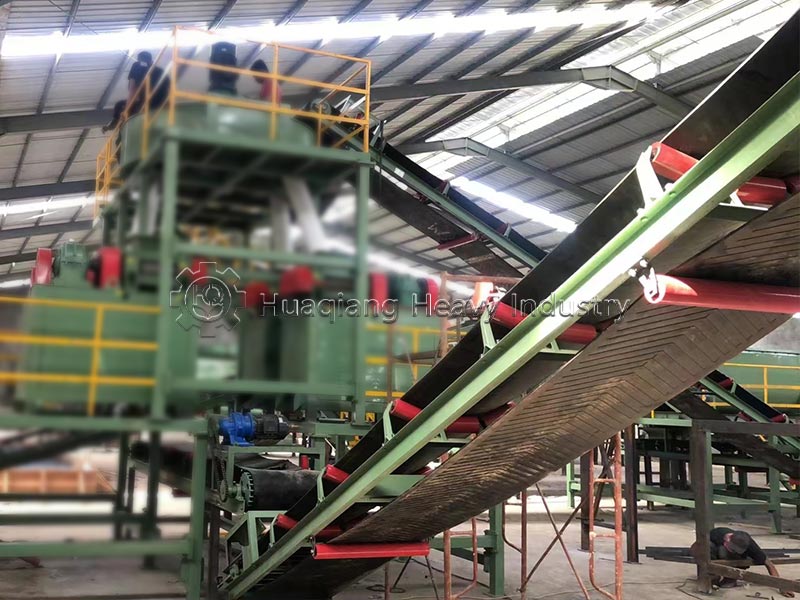
Several key factors will drive urea plant costs in 2026. Feedstock, particularly natural gas, is the dominant cost component, accounting for 70% of total urea production costs. Despite some projections of a potential downward trend in global LNG prices due to increased supply, the original industry outlook anticipates rising natural gas prices in 2026 amid growing global LNG demand, which will push up baseline production costs. Green technology also carries a significant premium, with the levelized cost of green urea processes approximately 62% higher than conventional methods, mainly due to the high electricity demands of electrolysis and renewable energy systems. Geopolitical factors and import tariffs further exacerbate costs; certain chemicals and parts required for plant construction are expected to face 12–18% import tariffs in 2026, potentially increasing both construction and future repair expenses.
In summary, the cost of establishing a urea manufacturing plant in 2026 is highly context-dependent. Industrial-scale facilities, especially green ones, demand massive capital investment, while small to medium-scale operations offer more budget-friendly options. Meanwhile, natural gas prices, green technology premiums, and geopolitical tariffs will continue to be critical cost drivers. By carefully evaluating production scale, technology choices, and external cost factors, stakeholders can make more informed decisions to optimize investment returns and adapt to the evolving market environment.
Equipment Selection for Integrated Fertilizer Production
For investors considering a diversified fertilizer operation beyond urea, the selection of appropriate professional fertilizer manufacturing equipment is paramount. A comprehensive npk fertilizer production line often begins with a precise npk blending machine or npk bulk blending machine to create the base powder formulation. The subsequent granulation stage offers multiple technology paths. A traditional and versatile choice is the disc granulator, often deployed within a complete disc granulation production line where the disc granulator for shaping forms spherical granules through a tumbling action. For producing harder, more dense granules via compaction, a double roller press granulator or a complete roller press granulator production line is the optimal solution. The specific npk fertilizer production process dictates whether a fertilizer granulator based on agitation or extrusion is selected.
This equipment ecosystem extends into organic and bio-fertilizer manufacturing. A stand-alone organic fertilizer production line typically requires a windrow composting machine (or windrow machine) for efficient aerobic fermentation prior to granulation. To incorporate beneficial microbes, this evolves into a bio organic fertilizer production line. Here, the final granulation step might utilize a specialized npk fertilizer granulator machine equipment adapted for organic materials or, alternatively, an disc granulator machine known for its gentle shaping action that preserves microbial viability.
Ultimately, the capital and operational costs for these lines vary significantly based on capacity and technology sophistication. Integrating these granulation systems allows a single facility to produce a range of nitrogen-based, NPK compound, and organic fertilizers, providing strategic flexibility to adapt to regional market demands and raw material availability.