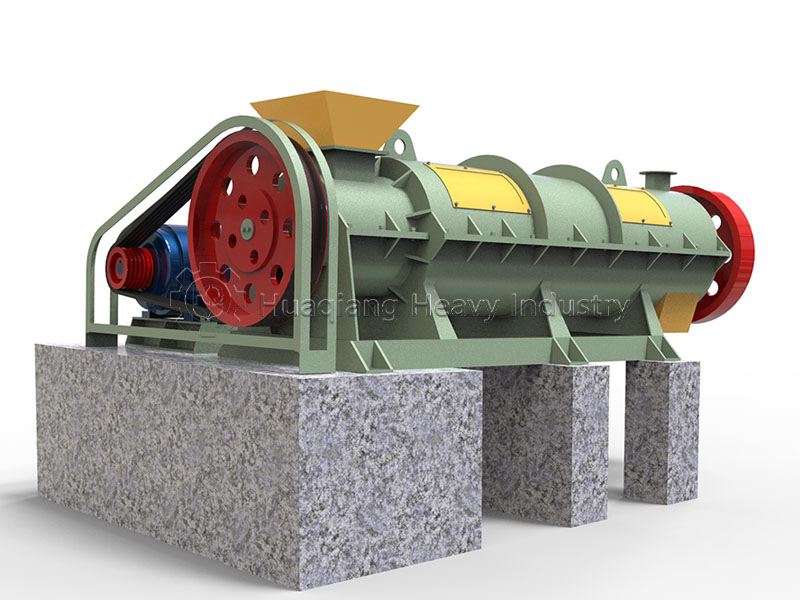
How to choose the right organic fertilizer fermentation equipment?

The market prospect of organic fertilizer is broad, and more and more medium and large farms choose to process livestock manure into organic fertilizer for sale. The most important step in the production of organic fertilizer is the fermentation of organic raw materials. During the fermentation process, the raw materials need to be turned over so that the middle materials can be fully exposed to the air for fermentation and decomposition and water removal. Due to large-scale production, the processing capacity of organic raw materials is very large, and it is unrealistic to carry out manual flipping, which requires the use of flipping equipment. There are many types of flipping equipment on the market, and it is difficult to choose a suitable flipping equipment. This article simply describes the common tossing equipment and use scenarios on the market.
 

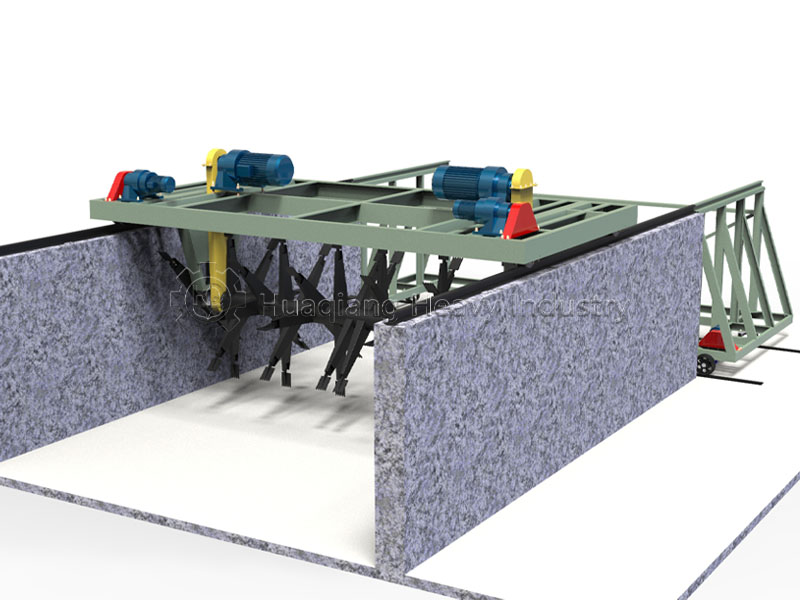
1.Simple Compost Turning Machine


Fermentation tanks need to be built, and with the help of mobile cars, it is possible to rotate between multiple fermentation tanks and reduce investment.
Tossing depth 0.8-1.8 meters, width 3-6 meters.
Can advance 1-2 meters per minute, the walking speed depends on the density of the material, the density is large, the walking speed is slow.
Application scenario: Daily organic raw material processing capacity of more than 20 tons, annual output of 6,000 tons of organic fertilizer. There is no need for manpower when the tilting machine is working.
 

2.Wheel Type Windrow Compost Turning Machine

 
The requirements for the workshop are higher, the wall must be strong, and the indoor operation.
Flipping span up to 33 meters wide, depth up to 1.5-3 meters, suitable for deep flipping operations.
Application scenario: Daily organic raw material processing capacity of more than 30 tons, annual output of 10,000 to 20,000 tons of organic fertilizer. The tilting machine works automatically without manpower.
 

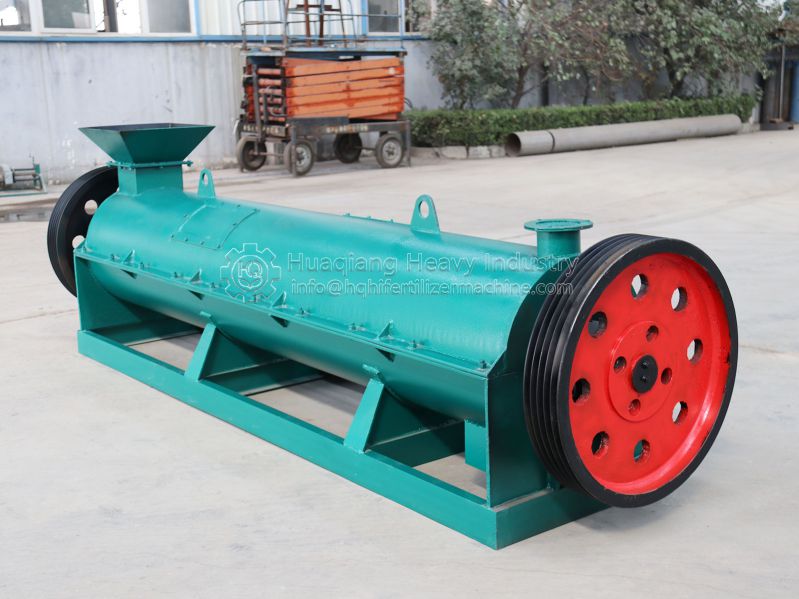
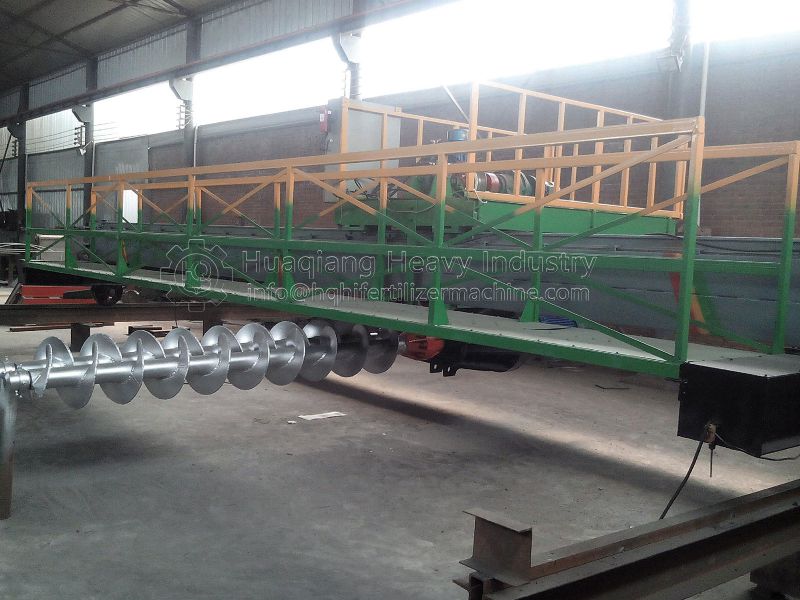
3.Double Screws Compost Turning Machine
螺旋翻抛机_1
Compared with the wheel type throwing machine, the double wheel disk as the name suggests is 2 roulette one operation, the efficiency is very high.
The requirements for the workshop are higher, the wall must be strong, and the indoor operation.
Flipping span up to 33 meters wide, depth up to 1.5-3 meters, suitable for deep flipping operations.
Application scenario: Daily organic raw material processing capacity of more than 30 tons, annual output of 10,000 to 20,000 tons of organic fertilizer. The tilting machine works automatically without manpower.

4. Chain Compost Turning Machine


Fermentation tanks need to be built, and with the help of the mobile car, it is possible to rotate between multiple fermentation tanks.
The walking speed is fast, the flipping depth can reach 2 meters, suitable for deep slot operation.
Equipped with a shifting machine to change the slot can realize the multi-slot operation of a flipping machine, saving investment.
Since the tilting plate is inclined, after each tilting, the material as a whole will move forward. The next time you stack the material, put it directly at the back of the field.
Application scenario: Small fermentation site, deep fermentation tank, daily organic raw material processing capacity of more than 30 tons, annual output of 10,000 to 20,000 tons of organic fertilizer. The tilting machine works automatically without manpower.
 

5.Crawler-type Turning Machine

 
No need to build a trough, just pile the fertilizer into strips. The stacking spacing is 0.8-1 meters, and the stacking height is 0.6-1.8 meters, which saves investment cost and is convenient for expansion.
The dump plane has a cockpit, and workers can isolate some of the odor when operating the machine.
Application scenario: Daily organic raw material processing capacity of more than 5 tons, annual output of 3,000 tons of organic fertilizer. When the tilting machine is working, a worker is required to operate the machine.
How can organic fertilizer production lines adapt to the needs of ecological agriculture?

Ecological agriculture’s requirements for “no chemical additives” and “full-cycle composting” of fertilizers are driving targeted adjustments to organic fertilizer production lines.

In ecological farming, the use of chemical regulators is prohibited. Organic fertilizer production lines must optimize the microbial community structure to achieve natural composting of raw materials. For example, complex microbial agents can be used instead of traditional chemical ripening agents to ensure that no exogenous pollutants are introduced during the fermentation process.

At the same time, ecological agriculture emphasizes the “cultivation-livestock cycle.” Organic fertilizer production lines must adapt to a variety of ecological raw materials, such as rice husks and mushroom residues, using precise pulverization and mixing processes to ensure balanced nutrient release.

Furthermore, to meet the demand for “light and simplified fertilization” in ecological farming, end-of-line production lines must enhance granulation and slow-release technologies to adapt fertilizers to various ecological farming scenarios, such as drip irrigation and broadcasting, thus achieving a closed loop of “fertilization-growth-soil maintenance.”

At present, the application rate of products of this type of organic fertilizer production line adapted to ecological agriculture in ecological fruit and vegetable planting has increased by 35% compared with ordinary production lines. After some ecological tea gardens adopted this type of fertilizer, the tea polyphenol content in tea increased by an average of 8%, and the pass rate of pesticide residue detection remained at 100%, further verifying the adaptability of the production line to ecological planting.

How Fertilizer Plants Slash Costs & Boost Efficiency: A Practical Guide for Production Lines

In an era of volatile raw material prices and intensifying market competition, “cost reduction and efficiency improvement” has become a survival imperative for fertilizer manufacturers. Whether operating an organic fertilizer production line, optimizing an npk fertilizer production line, or expanding into bio organic fertilizer production, the key lies in smart upgrades, rational layout, and resource recycling—strategies that turn operational pain points into profit drivers.

First, streamline production lines to cut waste and boost output. For organic fertilizer line operators, raw material pretreatment is a common bottleneck: traditional processes often lead to 12-15% material waste due to incomplete decomposition. By integrating intelligent temperature-control systems and automated crushing equipment, plants can reduce waste to below 7% and shorten fermentation cycles by 25%, directly lowering unit production costs. For NPK fertilizer production line managers, precision is critical: replacing manual batching with computer-controlled systems narrows nutrient deviation to ±0.8% and cuts labor costs by 30%, while upgrading granulation machines increases hourly output by 15-20%. Even bulk blending fertilizer line—which requires frequent formula switches—benefits from modular design: quick-change components reduce downtime between batches by 40%, maximizing equipment utilization.

Second, diversify product lines to balance market risks and increase revenue. A single organic fertilizer production line may struggle with seasonal demand fluctuations, but pairing it with bio organic fertilizer production opens doors to high-value markets like organic farming and greenhouse cultivation. Similarly, combining npk fertilizer production line with bulk blending fertilizer line allows plants to offer “base NPK + custom-blended fertilizer” packages for cash crops (e.g., fruits, vegetables). Data shows plants with 3+ complementary lines have 50% stronger risk resistance than single-line operations, with average profit margins rising by 8-12%. This synergy also reduces raw material costs: bulk purchases for both NPK and blending lines unlock supplier discounts, while by-products from organic fertilizer line (e.g., fermented residues) can be repurposed as additives in bio organic fertilizer production, eliminating waste disposal fees.

Finally, adopt energy-saving and recycling measures to capture hidden savings. In NPK fertilizer production line drying processes, waste heat recovery systems can reuse 60% of exhaust heat, cutting fuel consumption by 18%. For organic fertilizer production line, biogas generated from fermentation can power 30% of plant electricity needs, slashing utility bills. Real-time energy monitoring—tracking water, electricity, and gas use across all lines—also helps identify “leaks”: one mid-sized plant found a faulty pump in its bulk blending fertilizer line was wasting 12% of its monthly electricity, fixing it saved $15,000 annually.

Cost reduction and efficiency improvement for fertilizer plants is not about cutting corners—it’s about strategic investments in lines like organic fertilizer production line and npk fertilizer production line, leveraging synergy, and turning waste into value. By focusing on these areas, plants can not only weather market volatility but also build sustainable competitiveness in the long run.

Trough Compost Turning Machine: The Ultimate Organic Waste Alchemist

In the world of circular agriculture, trough composting turners perform as remarkable “waste transformers,” serving as the essential compost fertilizer machine that converts diverse organic materials into fertile black gold.

This seemingly simple fertilizer production machine represents one of the most crucial equipments required for biofertilizer production. As the workhorse of bio organic fertilizer production, it holds genuine alchemical power—consistently turning waste into wealth through natural decomposition processes.

But what exactly can this industrial alchemist “digest”? From agricultural residues to food waste, this versatile machine processes a wide spectrum of organic materials, transforming them into valuable nutrients for sustainable farming. The trough composter’s unique design ensures optimal aeration and mixing, accelerating the natural decomposition process that forms the foundation of effective bio organic fertilizer production, closing the loop in modern agricultural systems.

Livestock Manure: From Nuisance to Nutrient Powerhouse

Chicken, pig, and cattle manure—once unpleasant waste—get reborn under the turner’s blades. Like a meticulous chef, the machine “cooks” the manure through constant turning, eliminating odors while neutralizing pathogens, ultimately producing safe, effective organic fertilizer.

Crop Straw: Field Waste’s Remarkable Comeback

Corn stalks and wheat straw, those stubborn field residues rich in cellulose, meet their match. The turner acts as a patient deconstruction master, creating ideal conditions for microbes to break down tough fibers, transforming them into humus-rich black gold.

Mushroom Residue: Growing Medium’s Second Act

Spent mushroom substrate appears spent but holds secrets. Its abundant mycelium serves as nature’s fermentation starter. With the turner’s help, these “retired” growing media enjoy a second life as soil-enhancing fertilizer.

Industrial Byproducts: Green Magic for Waste

Distillers’ grains, sugar residue—these industrial leftovers often cause headaches. But under the turner’s spell, they become prized organic resources. The machine carefully manages fermentation, converting “industrial scraps” into crops’ “nutrient feast.”

Municipal Sludge: Urban Metabolism Reborn

Sewage sludge has long posed disposal challenges. After rigorous testing, the turner meticulously conditions sludge—reducing moisture while stabilizing properties—giving these urban metabolic byproducts an ecological purpose, completing their journey from pollutant to fertilizer.

The trough composter stands as a silent guardian of ecology, quietly weaving organic waste back into nature’s cycle. From farms to factories, fields to cities, it continues writing green legends of waste transformation.

Key points for retrofitting organic fertilizer production lines under environmental compliance requirements

With increasingly stringent environmental protection policies, environmental retrofitting of organic fertilizer production lines has become an industry imperative, focusing on the treatment of “three wastes” and compliance upgrades.

For waste gas treatment, organic fertilizer production lines must be equipped with sealed fermentation chambers and ammonia collection systems. Biofilter technology is used to control ammonia concentrations generated during the fermentation process to within standards. Some areas also require VOC monitoring equipment to ensure real-time upload of emission data.

For wastewater treatment, production lines must establish a recycling system to sediment and filter wash water and condensate before reusing them for raw material moisture conditioning, achieving zero wastewater discharge.

For solid waste treatment, optimized screening processes are employed to re-crush fermentation residues before mixing them back into fermentation, achieving full solid waste utilization.

Furthermore, the environmental impact assessment process imposes stricter requirements on production line site selection and capacity planning, such as requiring them to be at least 500 meters away from residential areas and designing production capacity to match the regional environmental carrying capacity. Although these transformations increase initial investment (usually the transformation cost of a single production line accounts for about 15%-20% of the total investment), the energy consumption of the organic fertilizer production line can be reduced by 12%-18% after the transformation.

How to prevent blockages in new type organic fertilizer granulators?

Many people occasionally encounter blockages when using new type organic fertilizer granulators (raw material gets stuck in the granulation chamber, preventing pellets from coming out). However, if you take three steps in advance, this problem is virtually eliminated.

First, avoid any hard lumps in the raw material. Whether it’s manure or straw, lumps may form after fermentation. Before feeding, be sure to use a crusher to break up any lumps. Keep lumps no larger than 1 cm, otherwise they will get stuck in the die holes of the new organic fertilizer granulator. Accumulating these lumps will cause a blockage.

Second, control the moisture content of the raw material. Although new type organic fertilizer granulators are moisture-resistant, raw material that is too moist (over 65%) will stick to the granulation chamber, while too dry (less than 45%) will produce fine powder and clog the screen. Before each feeding, grab a handful of raw material and form a ball that breaks apart easily. This will ensure the raw material flows smoothly through the granulation chamber without blockage.

Third, perform a component inspection every day before starting the machine. Check the pressure roller of the new type organic fertilizer granulator to see if it’s stuck and the scraper at the discharge port to see if it’s blunt. If the roller can’t turn or the scraper is blunt, the pellets won’t come out and the machine will jam. Simply turn the roller manually and check the scraper to see if it’s sharp. If there’s any problem, adjust it immediately to avoid jams.

How do new type organic fertilizer granulators reduce dust and noise?

Organic fertilizer plants now have to meet environmental standards, and dust and noise are prone to complaints. New type organic fertilizer granulators offer more comprehensive dust and noise reduction measures than traditional models, eliminating the need for extensive additional environmental protection equipment.
Let’s first discuss dust reduction. Both the feed and discharge ports feature dust-proof designs. The feed port features a soft dust cover that fits over the conveyor belt outlet, preventing dust from escaping as the material falls. The discharge port incorporates a “deflector + atomizing nozzle” system. As the granules emerge, the deflector guides them in a direction, while the atomizing nozzle sprays a small amount of water (just enough to wet the dust without affecting the particles) to suppress any raised fines. This reduces dust concentration in the workshop by over 60%, eliminating the need for separate, large-scale dust removal equipment.

Next, consider noise reduction. The new type organic fertilizer granulator features a soundproofing pad between the motor and the granulation chamber, resulting in a 10-15 decibel reduction in operating noise compared to traditional machines. For example, while traditional machines typically make a tractor-like sound, the new type organic fertilizer granulator’s operation resembles a washing machine spinning, allowing for normal conversation in the workshop without earplugs. Furthermore, its rollers and ring die work together more smoothly, eliminating the sharp noises caused by friction and preventing disturbance to nearby residents.

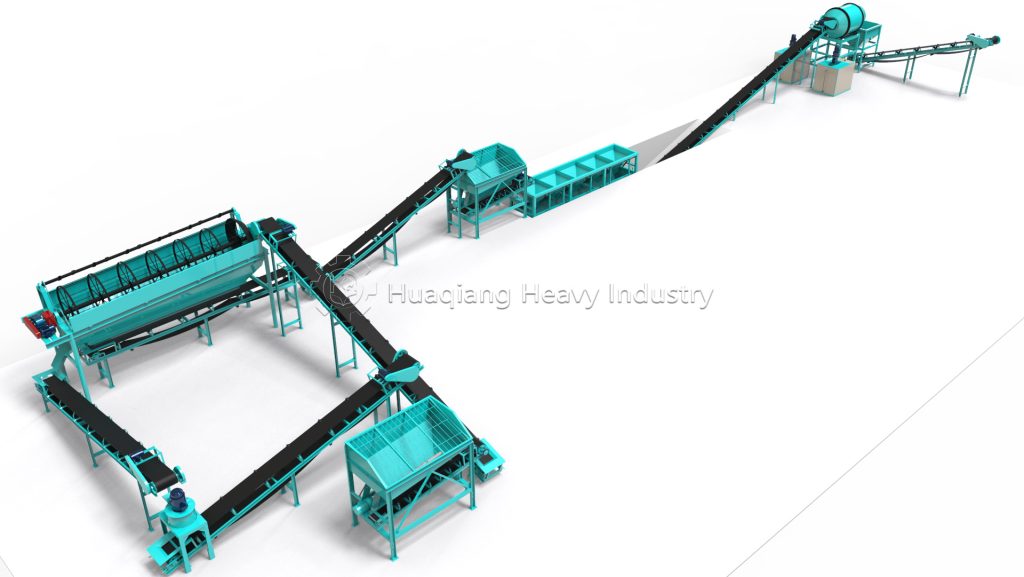
Organic fertilizer production line was used to process chicken manure

Organic fertilizer is favored by agricultural production because of its ability to improve soil structure, increase organic matter content and enhance soil fertility. Among them, chicken manure as a high-quality organic fertilizer raw material, its processing has attracted much attention. This article will explore how to efficiently process organic manure from chicken manure through organic fertilizer production lines and ensure its quality and safety.
 

1. Raw material preparation and pretreatment

 
Chicken manure requires strict pretreatment before processing to eliminate pathogens and weed seeds in it. This usually involves composting treatment, which breaks down organic matter through the action of microorganisms while releasing heat to achieve bactericidal and deodorizing effects. The pre-treated chicken manure can enter the organic fertilizer production line for further processing.
 

2. Drying and sterilization of chicken manure

 
One of the key steps in an organic fertilizer production line is drying. By using professional drying equipment, such as Rotary Dryer Machine, the moisture content of chicken manure can be effectively reduced, its stability can be increased, and the subsequent granulation process can be facilitated. In addition, the high temperature during the drying process can further sterilize, ensuring the safe use of organic fertilizers.

3. Ingredient mix and nutrition balance

 
In the organic fertilizer production line, chicken manure is usually mixed with other auxiliary materials such as straw, shells, etc., to adjust the carbon nitrogen ratio and ensure the nutrient balance of organic fertilizer. This step is done through the Bulk Blending Fertilizer Production Line, ensuring that the final product can meet the needs of the different crops.

4. Granulation molding

 
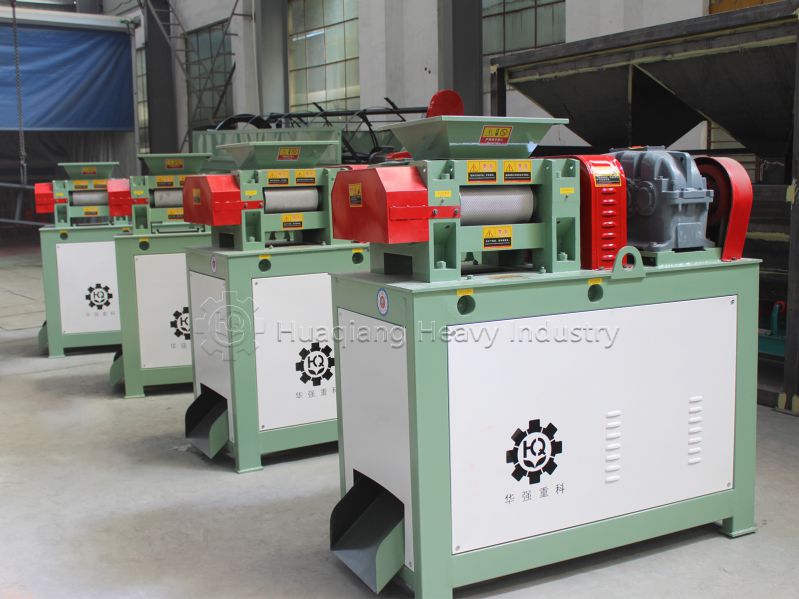
The mixed raw materials will enter the granulator, such as the Fertilizer Granules Compaction Machine, for molding processing. This step forms the raw material into a uniform granular form that is easy to apply and store. Granulation can not only improve the appearance of organic fertilizer, but also improve its dispersion and absorption rate in the soil.
7_1

5. Screening and packaging

 
The organic fertilizer after granulation needs to be screened by Rotary Screening Machine to ensure uniform particle size and meet product quality standards. The qualified product is then packaged to become the final chicken manure organic fertilizer product.

6. Quality control

 
In the whole process of organic fertilizer production line, quality control is an indispensable link. By regularly testing the number and activity of microorganisms in organic fertilizers, the effectiveness and safety of the product can be assessed. For example, the application of bio-organic fertilizer can increase the capacity of soil microorganisms to utilize carbon sources, improve microbial nutrient conditions, maintain high microbial activity, and increase soil microbial diversity.
 
Through the above steps, the organic fertilizer production line can efficiently convert chicken manure into high-quality organic fertilizer products. This processing method not only improves the efficiency of resource utilization, but also helps to improve the quality and safety of agricultural products, and also contributes to the sustainable development of agriculture. With the advancement of technology and the growth of market demand, organic fertilizer production lines will continue to play an important role in modern agricultural production.

How do new type organic fertilizer granulators adapt to different organic fertilizer raw materials?

New type organic fertilizer granulators are more flexible than traditional models. Whether it’s straw, manure, mushroom residue, or distiller’s grains, they can be adapted with minimal adjustments without having to replace equipment.

If using fermented straw for granulation, this raw material is fibrous and somewhat loose, making it difficult to produce compact pellets. Add 5%-8% bentonite (a common binder) to the raw material, mix it thoroughly before feeding it into the new type organic fertilizer granulator, and increase the roller pressure. This will ensure compact pellets without breaking them up and damaging the organic matter in the straw.

For wet, sticky raw materials like chicken manure and pig manure, the biggest concern is clogging the granulator. Instead of adding too much binder, add about 10% dry mushroom residue to reduce moisture. Also, slow the new type organic fertilizer granulator’s feed rate to allow the raw material to fully form in the granulation chamber. The resulting pellets are smooth and less likely to stick to the machine.
When it comes to fine raw materials such as mushroom residue and wine lees, they have moderate viscosity and do not require additional adhesives, which saves materials and time.

How can you use new type organic fertilizer granulators more efficiently and save energy and materials?

Many organic fertilizer plants are concerned about costs. However, when using new type organic fertilizer granulators, paying attention to two small details can significantly save energy and materials.

To save energy, most new type organic fertilizer granulators are equipped with variable-frequency motors. Avoid running them at maximum speed all the time. For example, when initially feeding, use a low speed of 15 rpm. Once the raw materials have stabilized in the granulation chamber, gradually increase the speed to 20-25 rpm. This prevents the motor from exerting sudden force, saving 10%-15% of energy per hour. Additionally, avoid idling the machine. Do not start the machine until the raw materials are ready. The energy wasted in idling for one hour is enough to generate granules for 20 minutes.

To save materials, the key is to reduce waste. New type organic fertilizer granulators have a return device. Instead of discarding the crushed granules, they are directly returned to the granulation chamber through the return port, where they are mixed with new raw materials and granulated again. This can reduce the waste rate from 10% to less than 3%. Also, do not mix impurities such as stones and iron wire into the raw materials. Impurities will wear out machine parts and crush good particles. Use a sieve before feeding each time to avoid a lot of material waste.