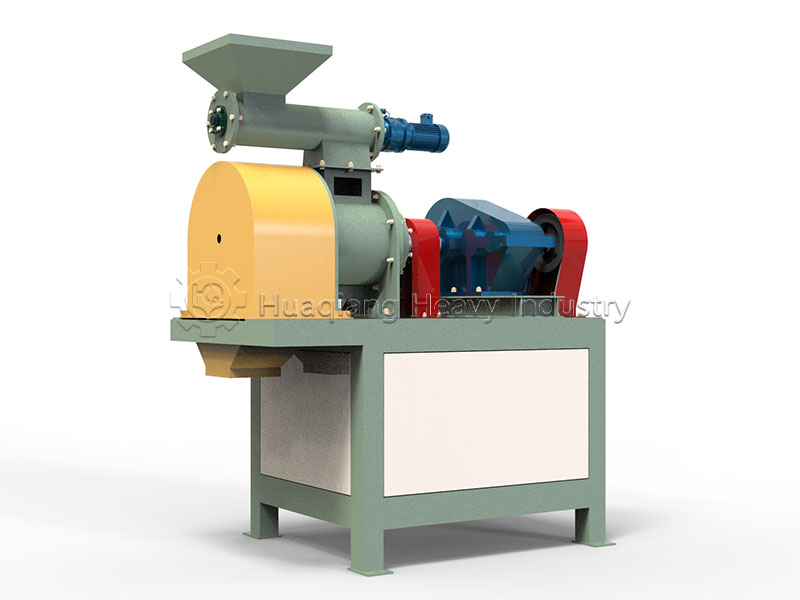
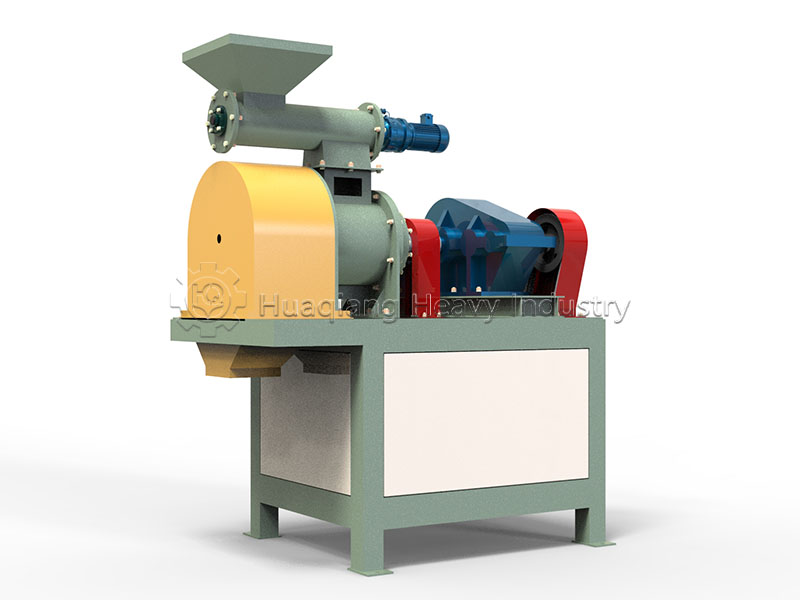
In BB fertilizer (blended fertilizer) production, the BB fertilizer mixer is a key piece of equipment that determines product quality. Its core function is to evenly blend multiple raw materials of varying density and particle size into a nutrient-consistent fertilizer, directly impacting subsequent fertilization effectiveness.
In terms of equipment structure, mainstream BB fertilizer mixers mostly adopt a closed-cylinder design with an internal mixing assembly. The cylinder is typically positioned horizontally, with the mixing assembly driven by a motor. Some BB fertilizer mixers also feature forward and reverse rotation to reduce residual material in the cylinder. The feed inlet is typically located at the top of the cylinder, and the discharge outlet at the bottom. Some models feature an observation window for easily monitoring the mixing status.
During operation, raw materials such as urea, monoammonium phosphate, and potassium chloride are introduced into the mixing cylinder according to the formulated ratio. The rotating mixing assembly propels the raw materials: the screw conveys the raw materials from both ends toward the center, the paddles shear and stir the raw materials, and the guide plates facilitate convection, ensuring full contact between raw materials with density differences of 30%-50%. The entire process does not require the addition of adhesives, and mechanical force is used to achieve “small particles filling gaps and large particles colliding with each other”, ultimately achieving a uniform mixing effect.
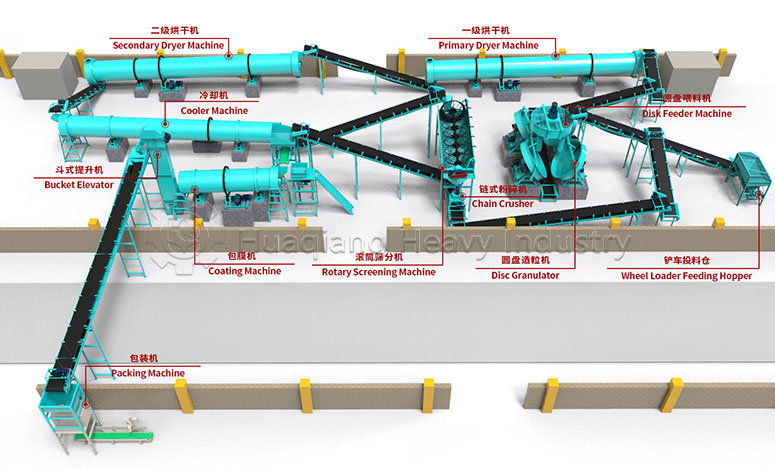
Chain crushers are not limited to organic fertilizer production; they also play a vital role in a variety of industries, including chemicals, building materials, and mining. They are truly versatile tools for material crushing in various industries, their flexible adaptability enabling them to deliver outstanding performance in diverse production scenarios.
In the chemical industry, they can pre-process and crush various medium-hardness industrial raw materials (such as sulfur lumps and soda ash agglomerates), providing uniformly sized materials for subsequent chemical reactions or processing steps. This prevents incomplete reactions caused by uneven raw material size and improves the quality and stability of chemical products.
In the building materials sector, chain crushers offer efficient crushing of materials such as limestone and shale. They can adjust the output particle size to meet the diverse particle size requirements of building materials production, such as cement and bricks.
In the mining industry, their high adaptability is particularly evident when dealing with ores of varying hardness, allowing crushing parameters to be adjusted based on the ore’s characteristics to ensure optimal crushing results.
In addition, this chain crusher can also be used in scenarios such as agricultural fertilizer crushing. With its wide applicability, it has become an important equipment in the material crushing process of various industries.
Many fertilizer companies switch product categories based on market demand. However, if the compatibility of the fertilizer granulator machine with the fertilizer type is neglected, problems such as reduced granule quality and frequent equipment failures can occur.
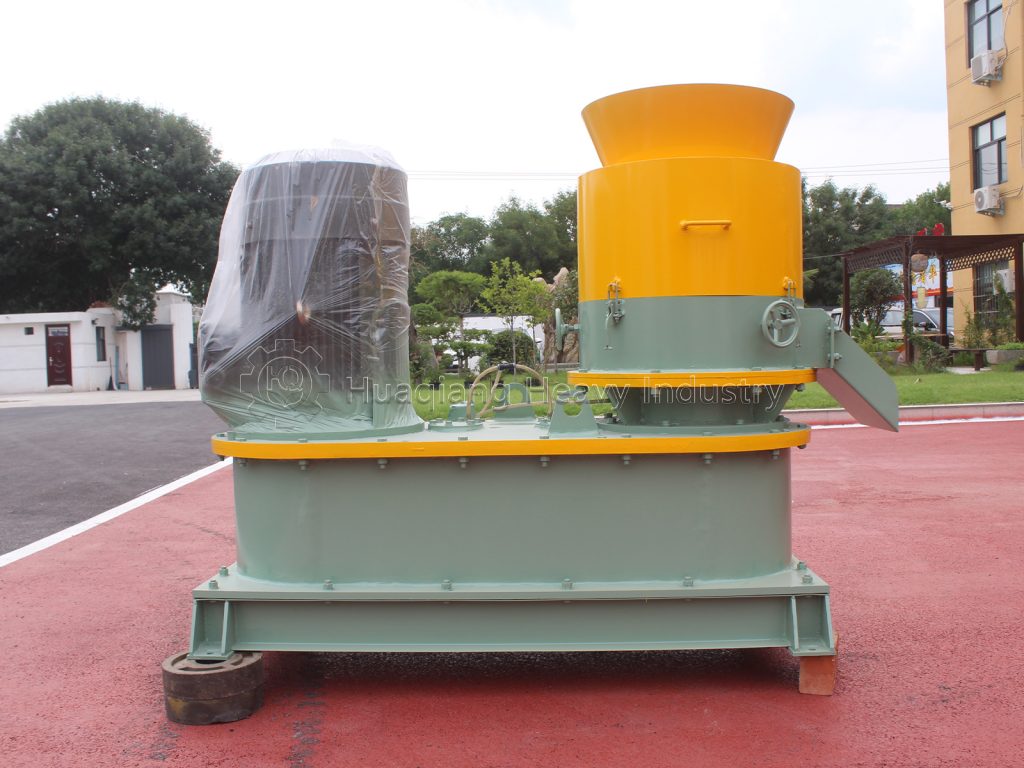
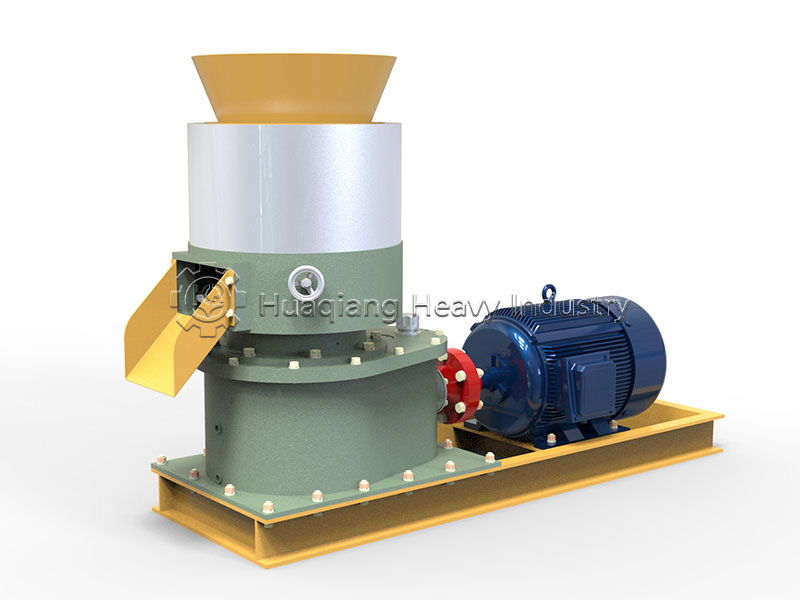
For organic fertilizers (including straw and fermented manure), the key requirement is “adaptability to the fiber raw material and avoid entanglement and machine blockage.” Flat die granulators or rotary drum granulators are preferred. The vertical extrusion design of the flat die cuts long fibers, and the trapezoidal, non-slip rollers reduce fiber entanglement. Rotary drum granulators use rolling to form the granules, and the lifting plate evenly lifts the fiber material to avoid localized accumulation.
For compound fertilizers (containing phosphate rock and potassium chloride), the key requirements are “high granule hardness and transport resistance.” The high compression ratio of the ring die granulator allows hard mineral raw materials to be extruded with a compressive strength of over 15N, meeting the requirements of long-distance transportation.
For biofertilizers (containing functional microbial agents), the key principle is “low-temperature granulation to protect the activity of the agents.” A flat die granulator (chamber temperature ≤ 40°C) or a disc granulator (rolling, no high-temperature extrusion) can prevent inactivation of microbial agents.
For slow-release fertilizers (including coating materials), “smooth granules suitable for subsequent coating” are required. The rolling forming method of a rotary drum granulator produces smooth, uniformly sized granules, which prevent the coating from detaching during coating.
How to Achieve Efficient Granulation Through Hydraulic Technology? Explore the Unique Advantages of High-Pressure Granulation
Technological Breakthrough in High-Pressure Granulation
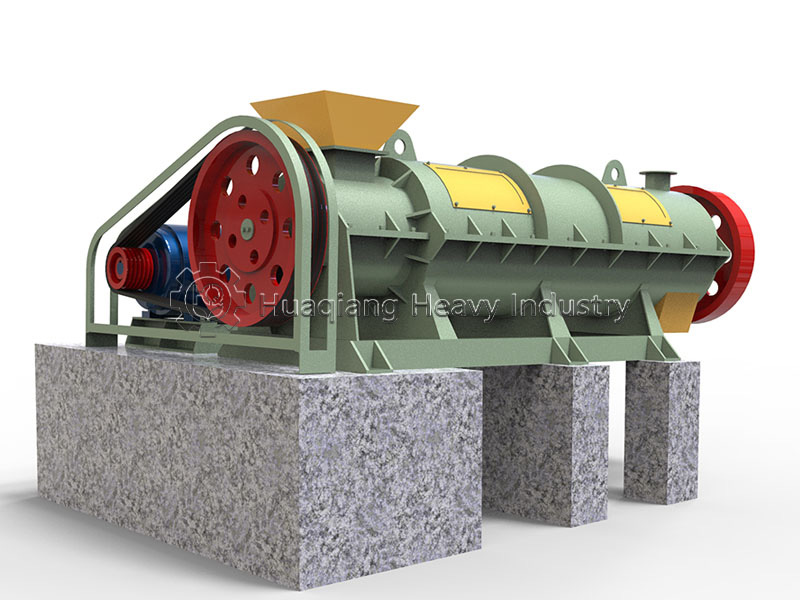
In today’s granulation technology field, the hydraulic double roller granulator has become essential equipment across numerous industries due to its unique working principle and exceptional performance. This innovative fertilizer roller press machine utilizes hydraulic systems to drive counter-rotating pressure rollers, applying extreme pressure to materials, causing plastic deformation and bonding to achieve highly efficient compaction granulation.
The double roller press granulator serves as a versatile NPK fertilizer granulator for chemical production and equally functions as an effective organic fertilizer granulator for biological materials. Unlike the tumbling action of a rotary drum granulator that forms spheres through agitation, this press technology creates granules through direct compression. Within a complete NPK production line, the roller press system provides distinct advantages for specific material formulations, offering an alternative granulation method that complements other equipment for comprehensive production flexibility.
Wide Range of Applications
The exceptional adaptability of hydraulic roller granulators enables them to process various dry powders, slightly wet powders, and partially viscous materials, playing important roles in multiple industrial fields.
Fertilizer Industry
Granulation processing of fertilizers including compound fertilizers, phosphate fertilizers, and potassium fertilizers to enhance fertilizer quality and effectiveness
Chemical Industry
Precision granulation of chemical products such as catalysts, dyes, and additives to optimize product performance
Metallurgical Industry
Granulation processing of metallurgical raw materials including iron powder and mineral powder to improve raw material utilization
Food Industry
Granulation processing of food ingredients including seasonings and additives to ensure product safety and hygiene
Precision Structure: Six Core Systems
The outstanding performance of hydraulic roller granulators stems from their six meticulously designed core systems, each precisely calculated and optimally configured.
Roller Assembly
Consists of two sets of counter-rotating pressure rollers that control particle size and density through precise adjustment of roller spacing and pressure, ensuring stable product quality
Hydraulic System
Provides stable high-pressure power for the pressure rollers, ensuring continuity and stability of the granulation process for efficient production
Feeding System
Enables uniform and continuous feeding of materials between rollers, providing stable raw material supply for the granulation process
Control System
Monitors and adjusts parameters such as pressure, speed, and temperature in real-time to ensure precise control of the granulation process
Frame and Support
Provides stable structural support to ensure smooth and safe equipment operation
Crushing and Screening System
Optional configuration for processing non-conforming particles generated during granulation to ensure product consistency
Technological Innovation and Process Advantages
The core technical advantage of hydraulic roller granulators lies in their unique hydraulic drive system and precision control technology. Compared with traditional granulation equipment, hydraulic systems can provide more stable and precise pressure control, ensuring each particle has consistent density and strength. This high-pressure granulation method requires no binder additives, relying entirely on the material’s own plastic deformation to achieve particle formation, ensuring product purity while reducing production costs.
More importantly, while improving production efficiency, hydraulic roller granulators also feature excellent energy utilization efficiency. Their modular design makes equipment maintenance more convenient, while the intelligent control system significantly reduces operational difficulty. From fertilizers to chemical products, from metallurgical raw materials to food additives, this innovative granulation equipment is providing more efficient and reliable granulation solutions for various industries.
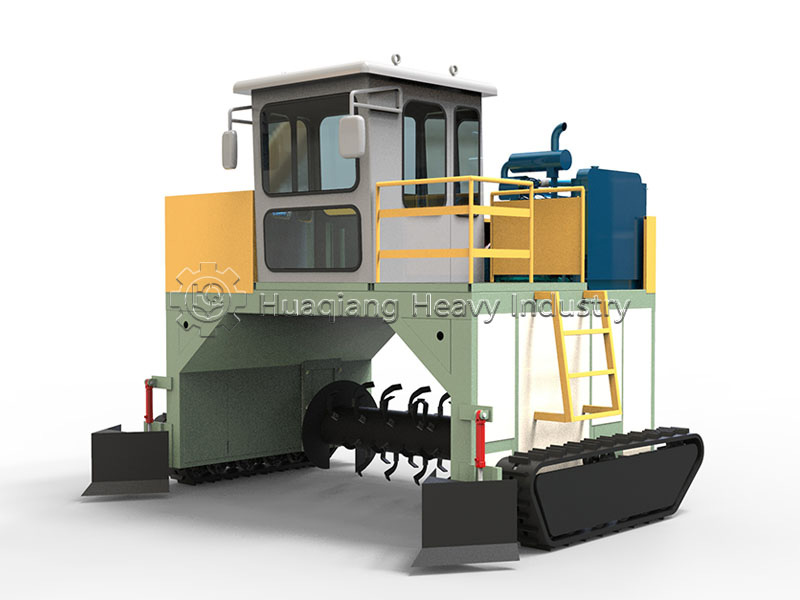
The core of aerobic fermentation of organic fertilizers lies in uniform oxygen supply and temperature-controlled composting. The site adaptability of compost turning equipment directly determines fermentation efficiency and production flexibility. Windrow compost turning machines, with their trackless mobility and all-terrain adaptability, are a perfect fit for the diverse fermentation scenarios in the fertilizer industry.
From a structural perspective, the core advantage of windrow compost turning machines lies in the synergy between their crawler chassis and flexible turning mechanism. Their wide rubber tracks provide a large contact area and low ground pressure, preventing the vehicle from getting stuck even in muddy composting areas or gravel surfaces after rain, eliminating the need for pre-leveling. The chassis’ steering system supports 360° steering, making it easy to navigate obstacles such as raw material piles and equipment around the fermentation area.
In terms of the turning mechanism, most windrow compost turning machines are equipped with double-auger or blade-type turning components, capable of turning compost up to 1.2-2 meters deep and covering compost piles up to 3-5 meters wide. During operation, the equipment slowly moves along the fermentation pile. The turning components throw the bottom material upward and disperse it to the sides, creating a “rolling up and down, mixing side to side” effect. This not only provides sufficient oxygen for aerobic bacteria but also quickly dissipates the heat generated by fermentation.
For fertilizer companies, the value of a windrow compost turning machine lies not only in its flexibility but also in its ability to accommodate multiple fermentation batches. For example, the same site can simultaneously process both a “fresh feed pile” and a “mature compost pile,” allowing the equipment to flexibly switch between different piles, resulting in fermentation efficiency improvements of over 30% compared to track-type compost turners.
As the fertilizer industry upgrades toward “precision and functionalization,” demand for functional fertilizers such as slow-release fertilizers, biofertilizers, and trace element compound fertilizers has surged. The production of these fertilizers places special demands on granulators, balancing functional retention and granule formation.
For slow-release fertilizer production, fertilizer granulators must meet the dual requirements of “granule formation” and subsequent coating. For example, when producing sulfur-coated slow-release fertilizers, the granulation process requires producing base granules with a smooth surface and uniform hardness. The “rolling forming” feature of a rotary drum granulator is perfectly suited for this purpose. By controlling the drum speed (8-12 rpm) and the amount of binder used, the granules are naturally rounded and smooth. Some granulators also feature a “pre-cooling section” at the discharge port to reduce the granule temperature to below 30°C, paving the way for subsequent coating and preventing the coating material from melting and becoming ineffective due to high temperatures.
For compound fertilizers containing trace elements, fertilizer granulators must address the issue of uneven trace element distribution. These fertilizers contain low concentrations of trace elements such as zinc, boron, and iron. Inhomogeneous mixing can lead to nutrient deficiencies in some granules. In this case, the low-speed extrusion design of a flat die granulator is optimal. After thoroughly mixing the trace elements with the base raw materials in a twin-shaft premixer, the low-speed rollers slowly extrude the granules into shape, minimizing material separation and ensuring a trace element content variation of ≤0.1% per granule, thus preventing functional deficiencies.
For biofertilizers, the granulator’s low-temperature performance is crucial. Flat die and disc granulators utilize a low-friction, no-high-temperature extrusion design to maintain a temperature within the granulation chamber below 40°C, ensuring the survival rate of the microbial inoculant.
For manufacturing companies, equipment performance and cost control are crucial. Disc granulators excel in both areas, making them a powerful tool for enhancing competitiveness.
First, they offer exceptional energy efficiency. Compared to traditional granulation equipment, they consume less energy. Long-term use can save companies significant energy costs and effectively reduce production and operating costs. Second, disc granulators offer high production efficiency and enable continuous production. Depending on production needs, hourly output can range from several tons to tens of tons, meeting the production needs of companies of all sizes and helping them quickly complete production tasks.
Disc granulators offer even greater advantages in granulation quality. They produce highly uniform, strong, and resistant granules, ensuring high product quality for fertilizers, mineral powders, and chemical raw materials. Furthermore, they are easy to operate, requiring minimal training for operators to master their operation. This reduces production risks associated with complex operations. Maintenance is also relatively simple, further reducing management costs.
Standing at the crossroads of fertilizer production, many agricultural entrepreneurs face this critical decision: Should they invest in an organic fertilizer production line or choose an NPK compound fertilizer production line? This choice not only affects the initial investment but also shapes the company’s future market positioning and development direction.
Understanding the Fundamental Differences
Organic fertilizer production lines focus on transforming biomass materials into nutrient-rich fertilizers through natural processes including fermentation, crushing, and granulation. In contrast, NPK fertilizer production lines represent precision engineering at its finest, dedicated to manufacturing compound fertilizers with exact nutritional specifications through sophisticated NPK fertilizer manufacturing process technology.
The heart of NPK manufacturing begins with precise formulation using advanced fertilizer mixer machine and NPK blending machine equipment. These systems ensure homogeneous distribution of nutrients before the material enters the granulation phase. The core NPK production process employs specialized granulation technology, where the NPK fertilizer granulator machine – whether disc granulator, ring die granulator, or other NPK granulation machine variants – transforms powdered blends into uniform granules through advanced fertilizer granulation principles.
For specific applications, NPK bulk blending machine systems provide flexible formulation capabilities, while the disc granulator machine utilizes centrifugal force to create spherical granules ideal for precise application. The complete NPK fertilizer production lineintegrates multiple NPK fertilizer machine units, each optimized for specific stages of the manufacturing of NPK fertilizer. Modern bulk blending fertilizer machine technology ensures consistent quality throughout the entire NPK production process, delivering fertilizers that meet exact crop nutritional requirements with remarkable precision.
Core Organic Equipment:
· Compost Turner
· Organic Fertilizer Granulator
· Fermentation Equipment
· Crusher
Core NPK Equipment:
· Disc Granulator
· NPK Blending Machine
· Batching System
· Drying and Cooling Machine
In-Depth Production Line Comparison
Comparison Dimension
Organic Fertilizer Line
NPK Fertilizer Line
Raw Material Source
Agricultural waste, livestock manure, etc.
Chemical raw materials, mineral fertilizers
Production Process
Fermentation, decomposition, granulation
Batching, mixing, granulation, drying
Product Value
Improves soil structure, enhances soil fertility
Precise nutrition, fast results
Investment Scale
Medium, focuses on fermentation space
Higher, requires precision equipment
Market Trend
Green agriculture, sustainable development
Precision agriculture, efficient production
Key Insight: The choice isn’t necessarily either/or! Many successful companies operate both production lines, meeting traditional agricultural needs while capturing opportunities in organic agriculture. Equipment like disc granulators can even be shared between both lines, maximizing investment returns.
Five Key Factors for Making an Informed Choice
1. Target Market Positioning: If you’re targeting the premium organic agricultural products market, the organic fertilizer line is the ideal choice; if serving traditional agriculture focused on high yields, the NPK line is more suitable.
2. Raw Material Availability: Assess the raw material advantages in your region—is it a concentrated livestock farming area or close to chemical raw material suppliers?
3. Investment Budget Considerations: NPK lines typically require higher initial investment, but organic fertilizer lines may have special requirements for facility construction.
4. Technical Expertise: Organic fertilizer production emphasizes biological fermentation technology, while NPK production requires precise chemical formulation and process control.
5. Long-term Development Planning: Consider agricultural development trends over the next five to ten years, choosing a production model that can continuously create value.
Professional Advice: Consider starting with a disc granulation production line—this equipment has wide adaptability, capable of processing both organic materials and NPK formulations, leaving ample room for future business expansion.
In the process of agricultural modernization, NPK compound fertilizer, containing the three core nutrients of nitrogen, phosphorus, and potassium, has become a crucial factor in increasing crop yields. As the core equipment for converting NPK raw materials into practical fertilizers, NPK fertilizer granulator machines are profoundly impacting the fertilizer industry’s production efficiency and product quality.
The core value of NPK fertilizer granulator machines lies in resolving raw material form issues. Through the granulator’s physical processing, powdered raw materials are extruded and shaped into uniform granules. This not only improves fertilizer stability, facilitating long-distance transportation and long-term storage, but also ensures a slow release of nutrients during application, improving crop absorption.
Furthermore, NPK fertilizer granulator machines offer significant advantages: high efficiency and adaptability. Modern granulation equipment can adjust parameters based on different raw material ratios to meet the production needs of various NPK compound fertilizers, including those high in nitrogen, phosphorus, and potassium. Furthermore, the equipment’s energy consumption is continuously optimized, increasing production speed while reducing operating costs.
For the fertilizer industry, NPK fertilizer granulator machines are not only a production tool but also a key to enhancing product competitiveness. With the growing demand for high-efficiency fertilizers in agriculture, NPK fertilizer granulator machines will undoubtedly continue to play a vital role in driving the fertilizer industry towards greater efficiency and higher quality.
In the precise world of modern fertilizer production, the NPK fertilizer granulator acts as a sophisticated sculptor, transforming loose powdered raw materials into uniform, dense pellets through advanced engineering. This seemingly simple equipment embodies remarkable technical wisdom, employing either the rotary drum granulator or disc granulator technology to achieve optimal fertilizer granules compaction.
The heart of the NPK manufacturing process lies in this precise granulation stage, where specialized fertilizer compaction machine equipment ensures consistent particle size and structural integrity. Within the comprehensive NPK production line, the drum granulator utilizes centrifugal force and liquid binders to create spherical granules, while alternative systems employ pressure-based compaction methods. Each fertilizer production machine is calibrated to maintain the precise NPK ratio throughout the NPK fertilizer manufacturing process, ensuring optimal nutrient delivery and minimal dust formation.
The Art and Science of Granulation
The NPK fertilizer granulator is specialized equipment for processing powdered raw materials into granules, particularly suitable for organic-inorganic compound fertilizers and high nitrogen content products. It’s not just a machine, but a magician of fertilizer transformation, achieving the magnificent metamorphosis from powder to pellets through precise mechanical design.
Imagine that various nutrients are gradually condensed into uniform particles through the ingenious operation of the granulator. This process not only improves the physical properties of the fertilizer, but also significantly increases the utilization rate of the fertilizer, laying a solid foundation for precise fertilization in modern agriculture.
Perfect Harmony of Precision Construction
Sturdy Frame
Constructed with thickened channel steel welding, like the steel skeleton of a building, providing stable support foundation for the entire equipment, ensuring long-term operational stability and reliability.
Drum Design
Drum-type structure welded with thickened steel plates, like a precise rotating stage, providing ideal granulation environment for materials, ensuring uniform pellet formation.
Agitating Teeth Granulation
Innovative agitating teeth granulation mechanism, like dexterous fingers, skillfully kneads powdered materials into ideal pellet forms during rotation.
Internal Drive
Coupling soft connection design, like flexible joints, effectively cushions impact forces, ensures smooth transmission, and extends equipment service life.
External Drive
Cast steel gear mesh transmission system, like precise clockwork mechanism, ensures accurate and efficient power transmission, achieving stable and reliable operation.
Outstanding Technical Advantages
· High Efficiency Granulation – Rapidly converts powder into uniform pellets
· Wide Adaptability – Suitable for various high-nitrogen fertilizer formulations
· Stable Operation – Robust structure ensures long-term stable production
· Energy Saving Design – Optimized transmission system reduces energy consumption
Agitating Teeth Technology | Dual Drive System | Reinforced Structure | Intelligent Control | Eco-friendly Design
From the sturdy frame to the precise transmission system, from innovative granulation mechanisms to intelligent control technology, the NPK fertilizer granulator has become an indispensable key equipment in modern fertilizer production with its excellent engineering design and reliable production performance. It not only changes the physical form of fertilizers but also enhances their practical value, contributing significant technical power to global agricultural production.