Organic fertilizer granulator: A key device for transforming powdered raw materials into valuable granules

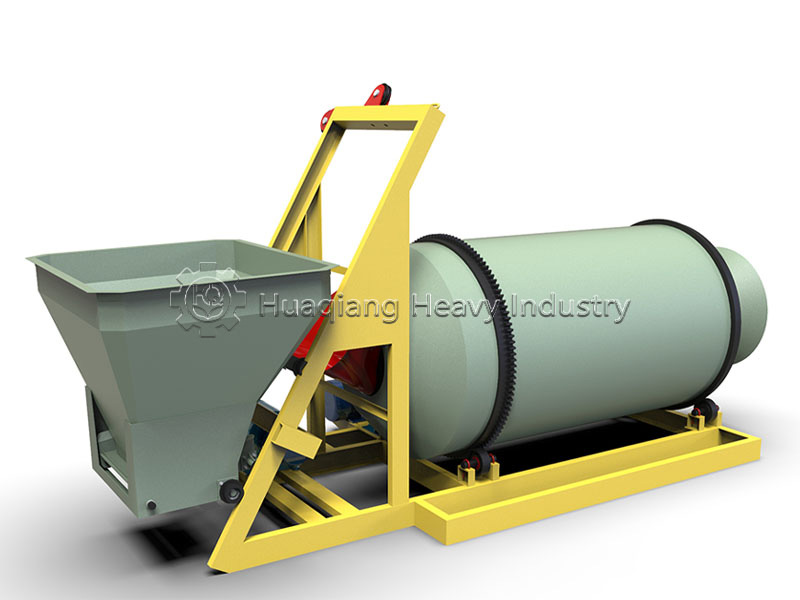
In modern fertilizer production systems, granulators play a crucial role. As a core component of bio-organic fertilizer equipment, they transform fermented and pulverized powdered organic raw materials into uniformly sized granular products.

The granulation process exhibits different technical characteristics in organic fertilizer and NPK fertilizer production lines. For organic fertilizer production, granulators need to process raw materials with high fiber content, using unique molding processes to create granules that retain organic activity while being easy to use. In NPK fertilizer production lines, granulators require precise control of the chemical raw material ratios and molding quality.
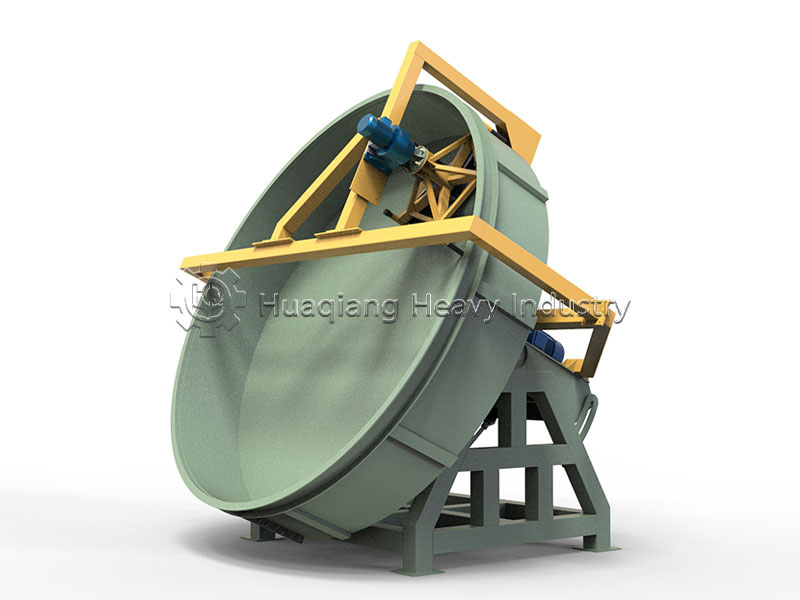
Different types of granulation equipment perform their respective functions in fertilizer production. In the raw material pretreatment stage, fertilizer mixer machines ensure thorough mixing of various components, providing uniform raw materials for subsequent granulation. For compound fertilizer production requiring precise proportions, NPK blending machines achieve the scientific formulation of multiple nutrients. These pretreatment processes directly affect the final granulation quality and efficiency.

With the upgrading of the fertilizer industry, granulation technology is also constantly innovating. Whether processing organic raw materials or chemical fertilizers, modern granulation equipment is developing towards intelligence and efficiency. In the entire fertilizer production line, the organic fertilizer granulator is like the “final stroke” of the system, transforming carefully formulated raw materials into a commodity form that is easy to store, transport, and use, achieving a perfect transformation from raw materials to finished products.
How windrow compost turning machines improve the efficiency of bio-organic fertilizer production lines?

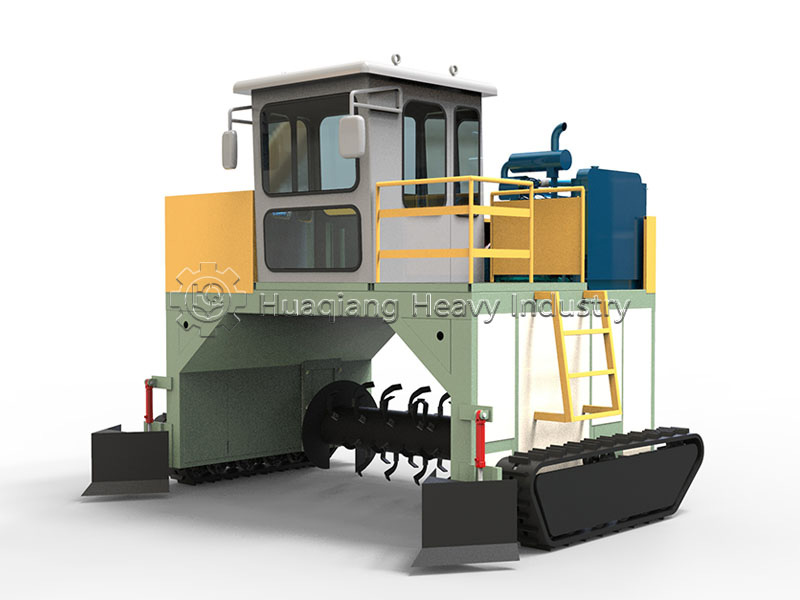
In modern composting plants, windrow compost turning machines are quietly changing the traditional model of organic waste treatment. They are no longer simply turning tools, but a crucial link connecting waste with resource utilization.

Unlike wheeled equipment, their unique tracked chassis offers significant advantages. On soft, uneven materials, the wide tracks effectively distribute pressure, preventing slippage. Whether in muddy conditions after rain or on loose piles, they can move stably, achieving continuous and efficient turning operations.

Through a powerful rotor system, the equipment evenly disperses and tosses the material, creating an ideal lifeline for aerobic microorganisms. This precise turning operation directly determines the quality of the raw materials for subsequent fertilizer granules compaction. When the finely fermented raw materials enter the new type organic fertilizer granulator, high-quality pretreatment ensures the final granule formation rate and quality.

In a complete bio-organic fertilizer production line, the windrow compost turning machine plays an indispensable pretreatment role. Working in conjunction with subsequent bio-organic fertilizer equipment, it forms a bridge between waste and high-value-added products.

This windrow compost turning machine symbolizes an upgrade in modern organic waste treatment methods, becoming a crucial link in the bio-organic fertilizer production line, bridging the gap between upstream and downstream processes, on the path to promoting sustainable agricultural development.

Modular design: A new approach to NPK fertilizer production

Traditional NPK fertilizer production lines typically have a fixed layout, while modular design is becoming a new trend. This design divides the entire NPK fertilizer production line into independent functional units, improving the flexibility of equipment configuration and production management.

The raw material processing module is responsible for receiving and initial crushing. Raw materials of different forms are fed into a temporary storage bin via lifting equipment, providing suitable materials for the subsequent NPK blending machine. This design also reserves interfaces for the introduction of bio-organic fertilizer equipment, enhancing the diversity of formulations.

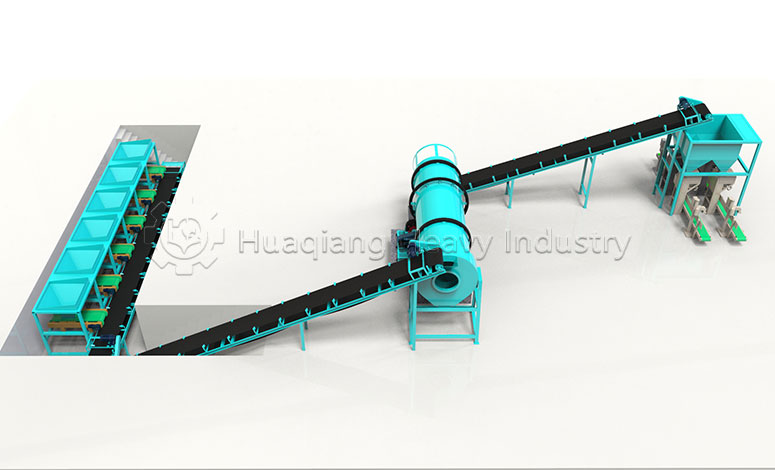
The core batching system uses a multi-bin combination with weighing units. Raw materials are conveyed to the central mixing zone according to preset proportions, where they are mixed by a high-efficiency NPK blending machine (also known as a fertilizer mixer machine). The entire process is automatically completed by the control system, ensuring the accuracy of the proportions.

The mixing and packaging modules are tightly integrated. Modern fertilizer mixer machines achieve uniform mixing of materials in a short time, and the finished product is directly transported to the packaging scale through a closed pipeline. This layout effectively prevents material segregation and is particularly suitable for handling NPK formulations with large differences in specific gravity.

The modular design enables the NPK fertilizer production line to be quickly adjusted according to market demand. While mainly producing NPK compound fertilizer, it also creates conditions for the introduction of bio-organic fertilizer equipment, enhancing the adaptability of the production line.

Investing in bio-organic fertilizer production lines: Enhancing agricultural efficiency and environmental value

In a corner far from the city’s hustle and bustle, a silent revolution is underway. A complete bio-organic fertilizer production line, with its systematic industrial power, is transforming agricultural waste and livestock manure—resources once considered burdensome—into “black gold” that nourishes the land.

This system is like a meticulously designed mobile factory. From initial crushing and screening to uniform mixing and adjusting the carbon-nitrogen ratio, and then to the core aerobic fermentation stage, it achieves assembly-line operation. Among these processes, a windrow compost turning machine replaces heavy manual labor, moving steadily across the spacious fermentation area, penetrating deep into the material to bring in oxygen, and precisely controlling the fermentation process with its powerful mobility.

Fermentation is not the end. At the end of the modern bio-organic fertilizer production line lies the crucial shaping stage. A new type organic fertilizer granulator, through precise technology, molds loose, well-rotted material into regular, compact granules.

This is not merely an upgrade of equipment, but a reconstruction of thinking. It marks the transition of organic fertilizer production from an experience-based workshop model to an era of standardization and large-scale production.

The invisible art of formulation: A modern NPK blending fertilizer production line

A modern NPK blending fertilizer production line is more like a precision “proportioning factory.” Its core task is not complex chemical reactions, but precise and efficient physical mixing and shaping.

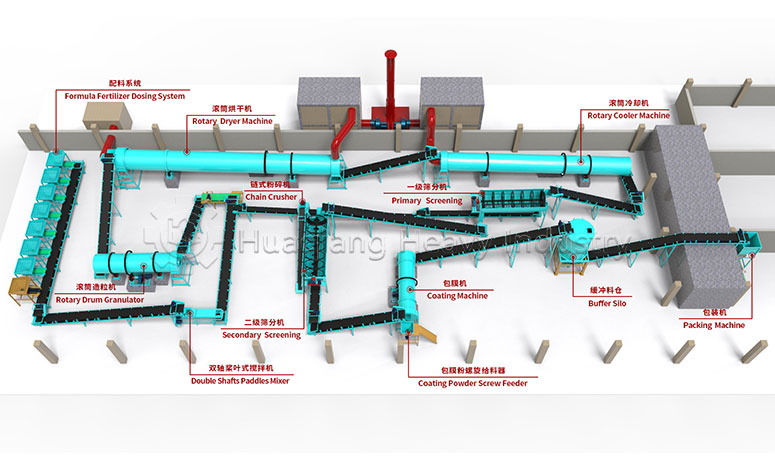
The production line begins with raw materials in various forms. Solid urea, ammonium phosphate, and potassium salts are fed to a massive crusher and uniformly pulverized. These powders are then fed into the core equipment—the NPK blending machine. Here, this crucial fertilizer mixer machines (such as a BB fertilizer mixer) begins operation. The computer control system precisely measures and mixes various basic raw materials and trace elements according to a preset “NPK formula,” ensuring that the nutrient ratio in each batch is exactly correct.

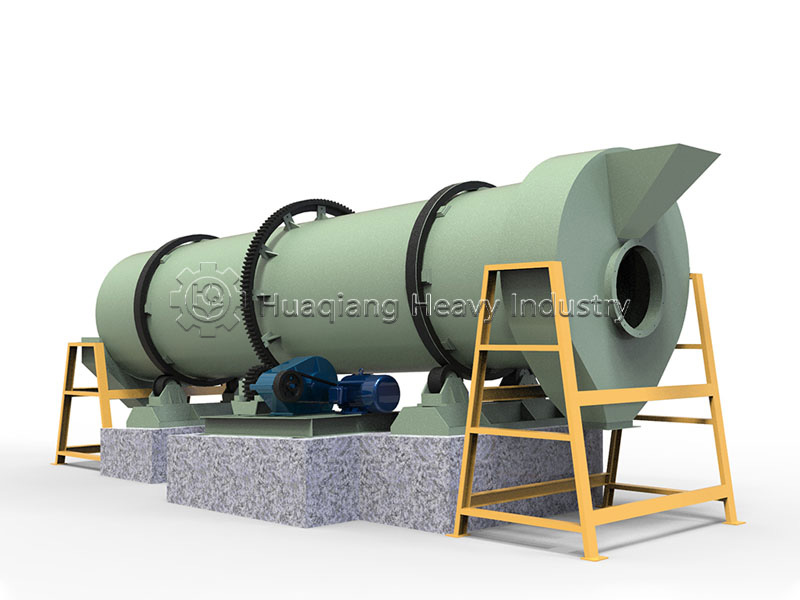
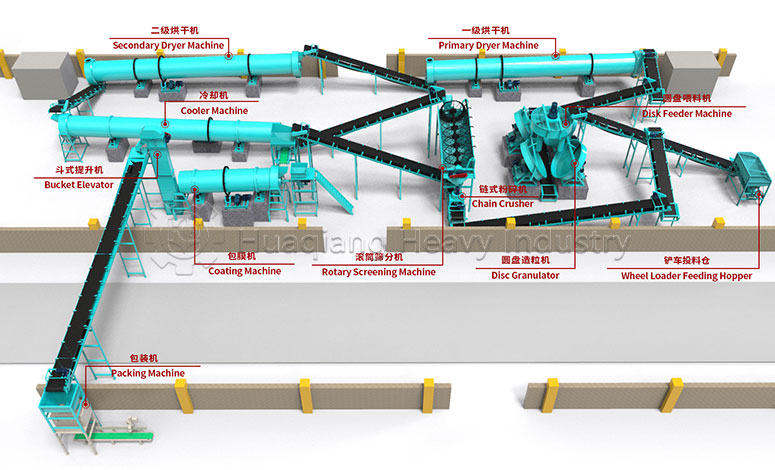
The uniformly mixed materials are about to undergo a transformation. In a rotary drum granulator, the powdery mixture rolls and binds under the influence of moisture and rotation, forming tiny granules. Next, a high-temperature drying process locks in the granules’ shape and strength, while subsequent cooling makes them firm and stable.

At the end of the production line is a process of “uniformity” screening. The fertilizer screener machine separates out particles that don’t meet size requirements, returning them to the previous process. The qualified particles then enter the final stage, where they are wrapped in a thin protective film to prevent clumping. Finally, these uniform particles are automatically weighed, bagged, and stacked, awaiting delivery to the fields.

This invisible production line, with its final product—those uniform particles—is the cornerstone of modern agriculture’s scientific fertilization and ensuring a balanced diet for crops.

The key role and quality improvement of coating machines in bio-organic fertilizer production lines

In modern bio-organic fertilizer production lines, if fermentation, crushing, and mixing are the core processes, then the coating machine plays the role of the final “stylist.” Standing quietly at the end of the production line, it coats the fertilizer granules with the final crucial layer of material.

The coating process is a vital link in the bio-organic fertilizer equipment system. After pre-treatment, the fertilizer granules are evenly coated with a thin film material. This process, seemingly simple, is actually crucial. This coating effectively reduces clumping of fertilizer granules during storage and transportation, maintaining their loose physical state.

For bio-organic fertilizer, coating has an even more special significance. Appropriate coating can, to some extent, regulate the nutrient release rate and protect the activity of beneficial microorganisms in the product. This is consistent with the overall design philosophy of bio-organic fertilizer equipment.

In the entire bio-organic fertilizer production line, the configuration of the coating machine reflects the final quality control of the finished product. It does not change the fertilizer’s internal composition, but significantly improves the product’s appearance quality and practical performance. A stable coating machine can ensure that every fertilizer pellet leaving the factory has a uniform coating effect.

Optimizing fertilizer production efficiency and quality: The key role of BB fertilizer mixers

In all stages of fertilizer production, mixing is a crucial step in ensuring product uniformity and effectiveness. BB fertilizer mixers are the unsung heroes behind this process.

They lack complex design principles; their value lies in their simple yet efficient mixing capabilities. Whether it’s granular base fertilizers or powdered fine additives, they can achieve uniform mixing in a short time. This uniformity directly determines the quality of the final product.

On modern fertilizer production lines, BB fertilizer mixers often work in conjunction with bio-organic fertilizer equipment. The former is responsible for physical uniform mixing, while the latter is involved in the fermentation and transformation of materials; together, they form a complete production chain. The value of an excellent fertilizer mixer machine lies not only in its own capabilities but also in its seamless integration with upstream and downstream equipment.

For companies producing products with various formulations, the flexibility of this equipment is particularly important. When it’s necessary to adjust the proportions of elements such as nitrogen, phosphorus, and potassium, the NPK blending machine plays a central role. It can precisely and quickly blend different formulas, ensuring that each batch of product meets the preset nutritional standards.

In actual production, these seemingly ordinary fertilizer mixer machines are the cornerstone of ensuring stable fertilizer quality and uniform nutrient distribution. Their efficient operation signifies the efficiency and reliability of the production line.

Fertilizer granules compaction technology: Reshaping the form and efficacy of organic fertilizer

In agricultural production, the form of fertilizer often affects its effectiveness. Now, through advanced extrusion technology, fertilizer can be “reshaped” into uniform granules, a transformation that is quietly improving the efficiency and convenience of fertilization.

The core of extrusion technology lies in forcing pre-treated organic raw materials through a specific mold using mechanical force to form granules of uniform size and stable density. This process, seemingly simple, actually relies on the coordinated operation of the entire bio-organic fertilizer production line.

Before extrusion, the raw materials need to undergo sufficient fermentation and conditioning. Here, a windrow compost turning machine plays a crucial role. Its efficient turning method replaces traditional, heavy manual operations and is an important link in achieving large-scale pre-treatment.

When the fully fermented raw materials enter the subsequent stages, they reach the critical stage of extrusion molding. Modern bio-organic fertilizer equipment integrates multiple functions such as conveying, mixing, conditioning, and extrusion. By precisely controlling moisture and pressure, these devices can continuously produce granular products with moderate hardness and a smooth surface.

Finally, after drying and sieving, these granules are endowed with a longer shelf life, better slow-release properties, and a precise application experience. They are less prone to clumping, easier to spread mechanically, and allow nutrients to be released more stably into the soil.

From bulk materials to granules, fertilizer granules compaction technology represents more than just a change in form; it’s an upgrade to the organic fertilizer application experience.

Bio-organic fertilizer pretreatment process: A solid first step to efficient production

The production of bio-organic fertilizer begins with the pretreatment stage. This stage directly affects the effectiveness of subsequent fermentation and granulation, and is fundamental to ensuring fertilizer quality.

Upon arrival, raw materials are first sorted. Various types of livestock and poultry manure, straw, and other raw materials undergo preliminary screening to remove impurities such as stones and plastics. This step relies on specialized bio-organic fertilizer equipment to provide clean raw materials for subsequent processing.

Next comes crushing and mixing. Crushing equipment is used to process large pieces of raw material into uniform fragments. This not only optimizes the physical properties of the material but also facilitates the uniform action of subsequent microorganisms. Subsequently, different raw materials are added to a fertilizer mixer machine according to the formula for mixing. If producing a product with both organic and inorganic nutrients, nutrients provided by the NPK fertilizer production line are precisely added at this stage to achieve a scientific ratio and uniform distribution of nutrients.

A crucial step is the adjustment of moisture and carbon-nitrogen ratio. By adding auxiliary materials or water, the mixture is adjusted to a suitable humidity range for fermentation, while simultaneously balancing the carbon-nitrogen ratio to create an ideal environment for microbial activity. The processed material is then transported to the fermentation zone, completing the pretreatment process.

The entire pretreatment process, through the coordinated operation of a series of bio-organic fertilizer equipment, transforms raw waste into standardized material suitable for fermentation. The meticulous operation of this stage not only lays the foundation for efficient fermentation but also directly affects the pelleting rate and quality of the subsequent organic fertilizer granulator.

When organic waste meets modern bio-organic fertilizer production line

A large amount of organic waste is generated daily in our cities and villages. This waste can be transformed into “black gold” to nourish the land through a sophisticated bio-organic fertilizer production line.

The starting point of this production line is the pretreatment of raw materials. Various types of livestock and poultry manure, straw, and kitchen waste are collected and first transported to the crushing and mixing stage via conveyor equipment.

Next comes the core fermentation stage. The processed materials are sent to a specialized fermentation workshop. Here, modern bio-organic fertilizer production technology replaces traditional composting methods. Using bio-organic fertilizer equipment such as trough-type compost turners or windrow compost turning machines, the materials are regularly turned, ventilated, and temperature-controlled.

The matured materials then enter the deep processing stage. Further crushing is required to ensure the fertilizer’s fineness. Subsequently, in the granulation section, a specialized granulator compresses the powdered material into granules, which facilitates transportation and application and reduces dust. Then, further processing is carried out.

Looking at the entire production line, we can see that the core of modern bio-organic fertilizer production technology lies in industrializing and standardizing the natural decomposition process through a series of efficient and controllable bio-organic fertilizer equipment.