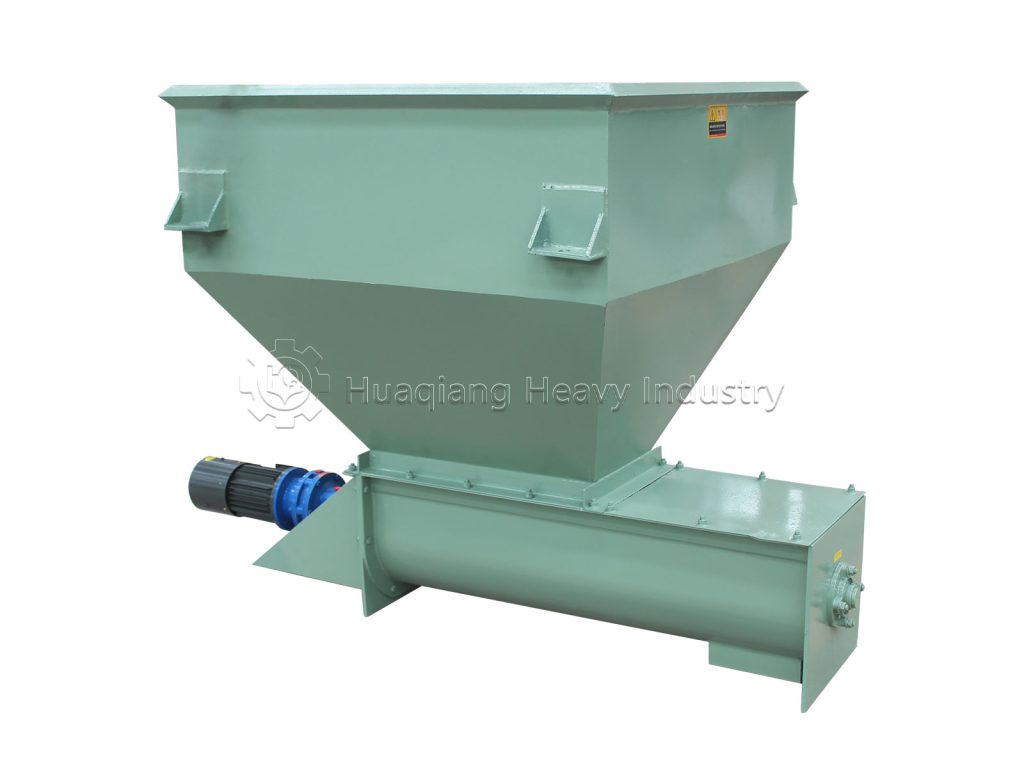
The role of uniform feeder in fertilizer production line

In the continuous process of fertilizer production, the uniform feeder is the “nerve center” to ensure the coordinated operation of all links. Whether in compound fertilizer production line or organic fertilizer production line, it can improve the stability of raw material supply by more than 50%, and reduce product quality fluctuations from the source.

The uniform feeder adopts a design combining spiral conveying and frequency conversion speed regulation. The conveying screw is made of wear-resistant alloy material, which can adapt to raw materials with different physical properties such as urea granules, phosphate rock powder, fermented organic fertilizer, etc. The feeding amount can be set with an accuracy of ±2%. It can automatically adjust the conveying speed according to the needs of subsequent crushing, mixing, granulation and other processes to avoid raw material accumulation or feed interruption.

In the compound fertilizer production line, it can accurately convey basic raw materials such as nitrogen, phosphorus, and potassium according to the ratio, so that the nutrient deviation in the mixing link is controlled within 2%, which is much better than 8% of manual feeding. When handling wet organic fertilizer raw materials, its anti-blocking spiral structure combined with the vibration device can effectively avoid material adhesion and blockage, ensuring that the feeding amount per minute is stable at more than 98% of the preset value.

Compared with traditional feeding equipment, the uniform feeder does not require frequent manual adjustment, can reduce 80% of operational intervention, and reduce energy consumption by 30%. The material level sensor equipped with the equipment can monitor the inventory of the silo in real time, automatically start and stop the feeding, and realize unmanned continuous operation.

Whether it is connected to the crushing equipment or the mixer, the uniform feeder can lay a good foundation for the subsequent processes through the stable supply of raw materials. Choosing an appropriate uniform feeder can make the fertilizer production process smoother, the product quality more stable, and demonstrate the core value in large-scale production.

Application of Disc Granulators in NPK Fertilizer Production Lines

In the NPK fertilizer production line, disc granulators are a widely used and highly favored granulation equipment.

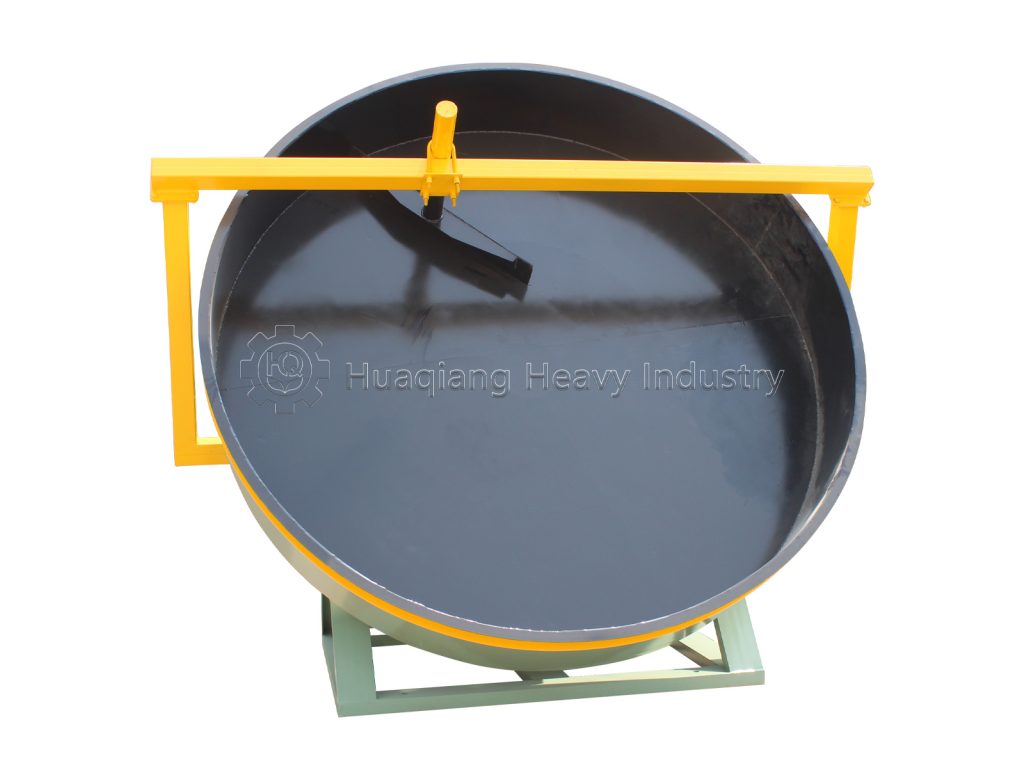
The disc granulator‘s structure is relatively simple yet unique. It primarily consists of an inclined disc, a drive mechanism, and a spray system. The disc, the core of the granulation process, is typically constructed of high-strength steel to ensure it can withstand the various forces involved in the granulation process. The drive mechanism provides stable rotational power to the disc, ensuring it rotates at an appropriate speed.

The disc’s operating principle is based on the movement and interaction of the materials within the rotating disc. When the mixed NPK fertilizer raw materials are fed into the rotating disc, the disc’s tilt and rotational motion cause the materials to roll upward along the disc’s inner wall due to a combination of centrifugal force, friction, and gravity. During this rolling process, a spray system applies a binder to the material. The binder acts like “glue,” gradually binding the loose raw material particles together and causing them to aggregate and grow. Over time, these agglomerated particles continuously roll and collide within the disc, further compacting and shaping them, ultimately forming relatively uniformly sized round granules that roll off the disc’s edge, completing the granulation process.

Disc granulators offer numerous advantages. First, they produce fertilizer granules with high roundness, excellent appearance, and strong market competitiveness. Second, they are relatively simple to operate and easy to master, requiring minimal operator skill. Furthermore, disc granulators are highly adaptable and can produce fertilizer granules of varying sizes to meet diverse market demands by adjusting parameters such as disc speed, tilt angle, and binder spraying rate to meet specific production needs.

However, disc granulators also have limitations. For example, compared to some large-scale granulation equipment, their production efficiency may be relatively low, making them less suitable for large-scale industrial production. Furthermore, when processing high-viscosity raw materials, material may stick to the disc, affecting granulation efficiency and equipment operation. Nevertheless, due to their unique advantages, disc granulators still play an important role in the production of NPK compound fertilizers by small and medium-sized enterprises, as well as in production scenarios where the appearance of fertilizer granules is a high priority.

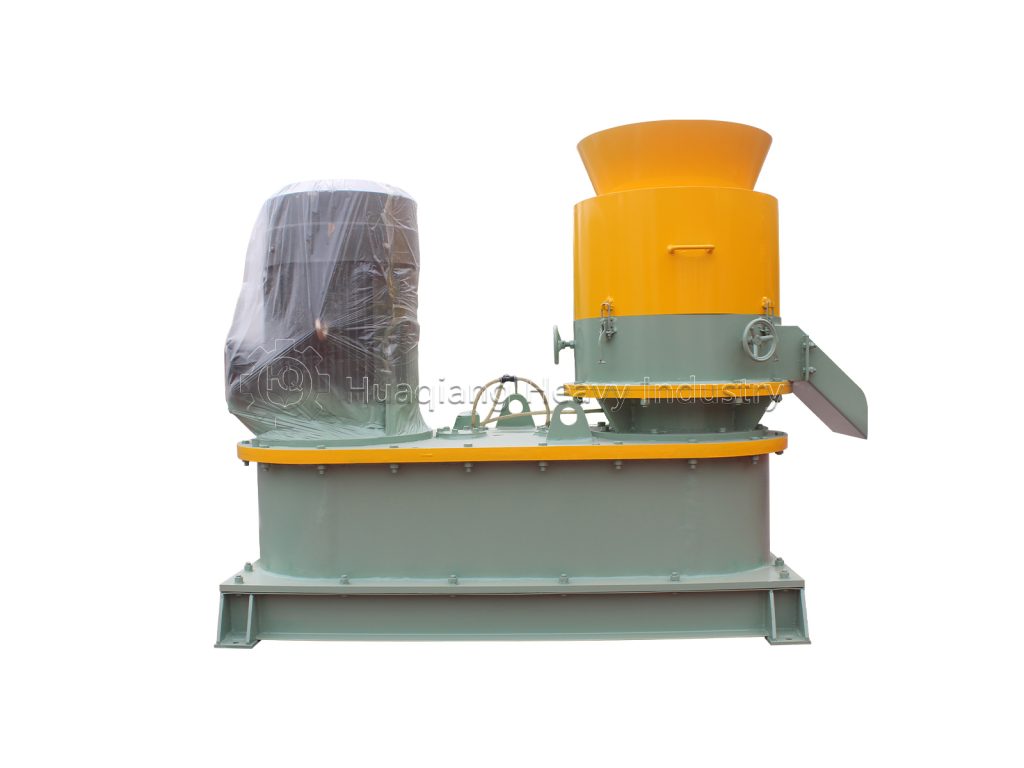
Where are flat die granulators used?

With its unique extrusion molding principle, flat die granulators have demonstrated strong application potential in a variety of fields, making them an ideal choice for small- and medium-scale production. Their core structure consists of a flat die and a pressure wheel. The rotation of the pressure wheel squeezes the material through the die holes, forming cylindrical pellets. This simple and direct operation gives them wide applicability.

Flat die granulators perform exceptionally well in fertilizer production lines. When processing bio-organic fertilizers, they can directly pelletize wet fermented materials without the need for additional drying pretreatment, preserving the activity of beneficial bacteria while streamlining the production process. For nitrogen, phosphorus, and potassium compound fertilizers, their powerful extrusion capabilities can compress mixed powders into high-strength pellets, effectively eliminating the clumping problem associated with traditional pelleting. They are particularly suitable for producing high-concentration specialty fertilizers.

Flat die granulators are also essential for the feed processing industry. For poultry and livestock feed, they can compress raw materials such as straw powder and soybean meal into pellets, reducing feed losses during transportation. High-temperature extrusion kills parasite eggs in the raw materials, enhancing feed safety. In aquatic feed production, pellet density can be controlled by adjusting die hole size to meet the feeding needs of fish in different water layers.

In the environmental protection field, flat die granulators are a valuable aid in solid waste treatment. They can compress municipal sludge, agricultural and forestry waste, and other materials into fuel pellets, realizing waste resource utilization. These pellets have high combustion efficiency and low pollutant emissions, providing new ideas for the development of new energy sources.

The flat die granulator‘s advantages also lie in its flexible operation. By simply replacing dies with different apertures, a wide range of pellet specifications can be produced to meet the needs of diverse industries. The equipment also occupies a small footprint and is easy to install and maintain, making it suitable for small and medium-sized enterprises. As the concept of green production becomes increasingly popular, the flat die pelletizer, with its high efficiency, energy conservation, and versatility, continues to provide a reliable solution for material forming in various fields.

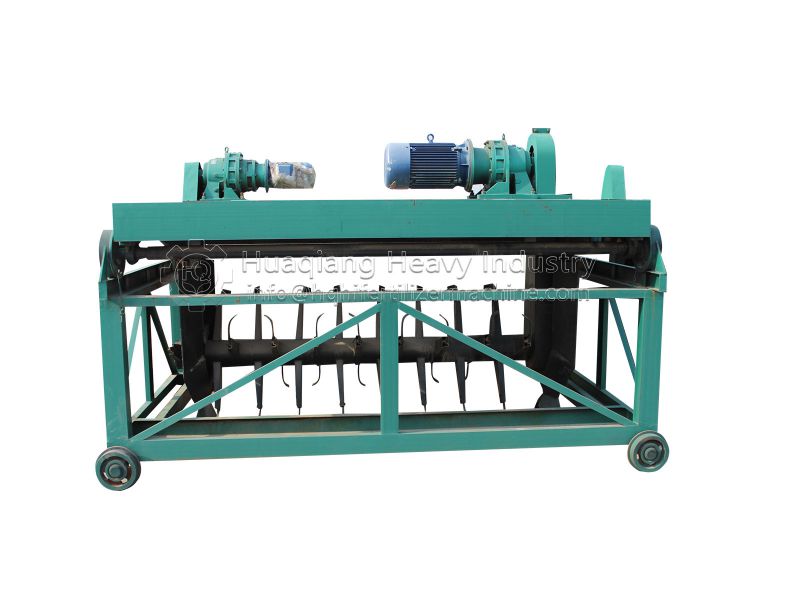
Precautions for Using a Compost Turning Machine

As a core piece of equipment for material fermentation in an organic fertilizer production line, the proper use of a compost turning machine directly impacts production safety and fermentation efficiency. During daily operation, equipment inspection and parameter adjustment must be thoroughly monitored to ensure maximum performance.

A thorough pre-startup inspection is the first line of defense for safe operation. Check the tracks or running wheels for deviation and bolt connections for looseness. In particular, check for breakage or excessive wear on the turning blade assembly to prevent blades from falling off and causing damage to the equipment during operation. Also, clear the fermentation tank of hard objects such as rocks and metal to prevent them from becoming entangled in the turning mechanism and causing it to jam. Electrical system inspection is essential. Ensure cables are intact and grounding is reliable. Install a waterproof cover during rainy weather to prevent electrical leakage.

Parameter adjustment during operation is crucial for ensuring fermentation quality. Dynamically adjust the turning depth and frequency based on the material’s characteristics: High-protein materials like fresh livestock and poultry manure require more frequent turning to ensure ventilation and oxygen supply to prevent anaerobic decay. Crude fiber materials like straw can be turned more deeply to promote even mixing. The turning speed should be matched to the material’s moisture content. If the moisture content is too high, slow the turning speed to reduce clumping. Dry materials can be turned faster to improve efficiency.

Post-downtime maintenance determines the lifespan of the equipment.After each run, clean the blades and trough to prevent caking and compaction, which increases the load at the next start-up. Regularly lubricate bearings, chains, and other transmission components, and promptly replace severely worn parts. When the equipment is idle for extended periods, it should be stored in a dry location, the blades should be coated with anti-rust oil, and the electrical system should be disconnected from the power supply and dust-proofed.

Proper operation of a compost turning machine is not only essential for ensuring production safety, but also a scientific approach to improving fermentation efficiency and reducing operational costs, laying a solid foundation for the resource utilization of organic waste.

How to choose cow dung organic fertilizer machine manufacturers?

The cow manure organic fertilizer production line can effectively reduce the eutrophication of surface water bodies caused by pollution, solve the environmental pollution caused by breeding industries such as cattle farms and other organic wastes, and lay a foundation for human consumption of green food and organic food. A good foundation is conducive to improving the safety and quality of agricultural products, and the ecological and environmental benefits are extremely significant.

organic fertilizer production machines

The cow manure organic fertilizer manufacturing process is using organic waste such as livestock manure to produce bio-organic fertilizer, pure organic fertilizer and organic inorganic fertilizer. The cow manure organic fertilizer equipment is characterized by fresh cow dung as raw material, after a series of processing and advanced technology, producing complete sets of production equipment of natural organic cow manure fertilizer.

The equipment is easy to operate, low in energy consumption and high in output. It adopts a new generation of high-efficiency granulation process, scientific and reasonable process, compact layout, and effectively solves the key technical problems, such as the organic raw materials are difficult to granulate of traditional granulation process, the addition amount is low, and the raw materials need to be dried and smashed treatment. The cow manure organic fertilizer equipment has stable operation, energy saving and no consumption, no three discharges, convenient maintenance, reliable operation and wide adaptability of raw materials. It can produce spherical pure organic fertilizer, organic inorganic fertilizer and biological organic fertilizer; the particles are round and uniform, smooth, good fluidity and high strength.

How to choose cow dung organic fertilizer production line equipment manufacturers? First, let us know what equipment is composed of cow dung organic fertilizer equipment?

Cow manure organic fertilizer equipment is divided into three configurations: low, medium and high:

Low configuration: semi-wet material pulverizer, horizontal mixer, fertilizer granulator machine, drum sieving machine, packaging equipment.

Medium configuration: semi-wet material pulverizer, horizontal mixer, fertilizer granulator machine, dryer, cooler, drum sieving machine, packaging equipment, belt conveyor, etc.

High configuration: chicken manure dehydrator, fermentation compost turner machine, semi-wet material crusher, horizontal mixer, fertilizer granulator machine, dryer, cooler, drum sieving machine, coating machine, packaging equipment, belt conveyor, etc.

The quality of organic fertilizer equipment directly affects the level of efficiency. Therefore, when we choose the cow manure organic fertilizer machine manufacturers, we must not blindly choose, we must choose strong and responsible manufacturers. It is not easy for customers to earn every penny. It is also necessary to carefully select the equipment that is more suitable for them and find a manufacturer of organic fertilizer production lines with excellent technology and good after-sales service.

Other article for your reference:Pig manure organic fertilizer production equipment

How to choose fertilizer manufacturing process plant

Fertilizer promotes the development of ecological agriculture, and the demand is huge. Investment in building fertilizer plants has become a popular project. Some investors want to build small-scale fertilizer manufacturing process to save costs, while some investors in fertilizer plants are going to build large-scale fertilizer plants to save unit production costs.

So what should we pay attention to when purchasing fertilizer manufacturing process plant? Here are some notes.


  1. Determine the type of fertilizer and producton site. Determining whether to produce organic fertilizer or compound fertilizer affects the choice of site. If organic fertilizer is produced, it should not be too far from the farm where raw materials are provided. The type of fertilizer determines whether compound fertilizer equipment or organic fertilizer equipment is needed. Different types of fertilizer equipment also have differences.


  1. Determine the fertilizer granulator machine. Granulation is the key link in fertilizer production and plays an important role in the quality of manufactured fertilizer. Fertilizer granules are cylindrical, spherical and flat spherical in shape. The granules produced by granulators of different shapes are different. The choice of granulator is related to the scale of fertilizer plant construction and local market. Fertilizer factories have different investment scales, different production processes, and different supporting equipment.

If a small fertilizer plant is to be built, it is suggested to configure simple machinery and equipment to reduce investment in equipment. The small fertilizer production line is composed of crusher, mixer, granulator, drum screener and automatic packing machine. If organic fertilizer fermentation is needed, it can be carried out with batten fermentation and windrow turning machine. The advantages are that they are more in line with the principle of aerobic fermentation. It is not easy to form anaerobic fermentation. The fermentation is full and complete, and the fermentation speed is fast. Forklift trucks can also be used instead of turner (the effect is not as good as turner), which can be adopted in terms of saving investment. According to the local environmental protection requirements, choose dust removal settings, where environmental protection requirements are high, choose heavy dust settings to meet the local emission quality standards.

Investment in large and medium-sized fertilizer plants, fertilizer production equipment can choose turning machine, automatic batching system, loader feeding hopper, crusher, mixer, granulator, dryer, hot stove, cooler, feeder, screener, cyclone dust collector, packing machine, etc. Increase mechanical automation, save manpower and cost. Organic fertilizer tank fermentation, can choose simple compost turning machine, double screws compost turning machine (suitable for large yield).


  1. Determine the manufacturer of fertilizer manufacturing process plant. Several fertilizer machine manufacturers were inspected, and the strength, scale and reputation of the manufacturer of fertilizer equipment were fully understood. It is better to inspect the production workshop, finishing workshop and assembly workshop of the enterprise, to know the product quality, processing equipment, production process of the enterprise, and whether the fertilizer equipment produced by the manufacturer is professional. Referring to the customer cases that the manufacturer has completed, on-site test machine, the production site can best show the real operation of the equipment. Looking for fertilizer equipment suppliers with perfect after-sales service, suppliers provide professional technicians to guide customers to install and debug equipment, so that the equipment can operate normally, and provide corresponding training services.


  1. Determine the safety performance of fertilizer manufacturing process plant. Safety is the first, before purchasing, we need to consider whether the production line has safety devices, whether the machine design is reasonable, whether safety factors are taken into account, whether the parts are not welded properly, whether the bolts are tightened, whether there is pollution, and so on. In addition, whether the overall operation of the equipment is smooth and whether the design of the production line is reasonable are also matters needing attention, because it relates to the efficiency and quality of the operation of the equipment. With the permission of the manufacturer, the operator can try to operate it in practice and feel its state conveniently.

fertilizer manufacturing process


Powerful organic fertilizer production equipment enterprises can customize their own equipment configurations for different customers according to their needs, and users can choose their own equipment according to their own needs. Zhengzhou Tianci Heavy Industry Machinery Co., Ltd. We provide customers with process design, equipment manufacturing, installation and commissioning, with full one-stop services. We are a leading agricultural fertilizer machine manufacturer in China, has strong technical strength in fertilizer machines. We have exported to many countries, India, Korea, Vietnam, Pakistan, Malaysia, Kenya, Sudan, Egypt, Algeria, Russia, Ukraine, Turkey, Spain, etc. Any question, welcome to contact us.

Fermentation Mode of Chicken Manure Organic Fertilizer Manufacturing Process

Organic fertilizer, commonly known as farm manure, consists of various animal, plant residues or metabolites, such as human and animal manure, straw, animal residues, slaughterhouse waste, etc. Carbon-containing materials, mainly from plants and animals, are applied to the soil to provide plant nutrition as its main function. It not only provides comprehensive nutrition for crops, but also has long fertilizer efficiency. It can increase and renew soil organic matter, promote microbial reproduction, improve soil physical and chemical properties and biological activity. It is the main nutrient in green food production.

The production of organic fertilizer must go through composting fermentation process. Composting is a process in which organic matter is continuously degraded and stabilized by microorganisms under certain conditions, and a product suitable for land use is produced.

Site selection

The site should be flat, near the water source and sunny from the leeward. It does not pollute the environment and is easy to provide water. 

Chicken Manure Organic Fertilizer Fermentation Mode

1. Store the materials and add the bacteria proportionally. Water content should be controlled at 60%-70%. Fermentation of less water is slow and aeration of more water is poor. Oxygen deficiency will corrupt and produce odor.

2. The start-up temperature is better than 15℃ (can be operated in four seasons, not affected by season, fermentation in indoor or greenhouse in winter as far as possible), and the fermentation temperature should be controlled between 60 ~65℃.

3. Fermentation of organic fertilizer needs oxygen consumption fermentation. In the process of operation, oxygen supply measures should be increased so as to mix well, turn over frequently and ventilate properly. The windrow turner can work accurately to meet the requirements, it’s an important equipment of fertilizer fermention. Windrow compost turning machine has the advantage of high efficiency, smooth operation, strong and durable, even turning throw.

4. Fermentation

Warming-up stage: generally only one day is needed from room temperature to 50℃.

High temperature stage: generally only 2 days from 50-70℃.

Cooling stage: from high temperature to below 50℃, generally about two weeks. The temperature began to drop to normal temperature, indicating that the fermentation was completed.

FAQ of Organic Fertilizer Fermentation:

1. Slow warming: no or slow warming of the reactor

Material is too wet, too dry, there is not enough nitrogen source, and the pH is too low.

2. Heap temperature is too high: during fermentation, the heap temperature is more than 65℃.

Poor permeability.

3. Odor: The odor of rotten eggs or rotten eggs is emitted from the stack.

Ammonia content is too high, material stacking is too dense.

After being processed by the chicken manure organic fertilizer production equipment, these organic fertilizers can be sold. Huaqiang fertilizer machine manufacturer supply professional organic fertilizer production line, and a series comprehensive service.


How to Operate Cow Manure Organic Fertilizer Production Equipment

How to deal with cow dung in cattle farm? In the process of cattle breeding, if the cow dung is not handled in time, it will cause air pollution, breed a large number of mosquitoes and flies, pollute the surrounding environment of the farm and cause cattle diseases. Treating cow dung to turn waste into treasure can also bring huge benefits.

Making cow dung into organic manure is one of the main methods to treat cow dung. Dry cow dung contains 10%-20% crude protein, 1%-3% crude fat, 20%-30% nitrogen-free extract and 15%-30% crude fiber, so it has high nutrients. An organic fertilizer production line can efficiently convert cow dung into organic fertilizer.

Organic Fertilizer Production Equipment

Cow Dung Organic Fertilizer Production Equipment and Process Step

1.Fermentation is the first important step

The cow dung produced by a cow in one year requires 4 to 6 cubic meters of space. According to the scale of farming, reasonable construction of cattle dung accumulation fermentation site. Adding 10%-15% straw, rice bran and other supplementary materials to cow dung, and adding appropriate water, the water content of cow dung can be controlled at about 60%, inoculated with starter, and the fermentation time is 15-40 days (depending on the season).

In organic fertilizer fermentation, turning is an important phase. Its purpose is to enable the materials mixed. By the thrown over, it course of the materials make the most contact with the air and get the best fermentation.

Fermentation compost turning machine (Strong maneuverability of mechanical dump operation)

Trough Compost Turning Machine, Double Screws Compost Turning Machine (Suitable for large field flip), Windrow Turner (Suitable for strip stacking).


2.Crushing raw material

The fermented materials and other additives are crushed, proportioned and mixed through material grinder and mixer in a certain proportion. The function of this system is to crush, mix and mix compost materials, inorganic fertilizers of nitrogen, phosphorus, potassium and other additives in a certain proportion. Based on years of experience, the following equipment is recommended:

Half-wet Material Crusher

The machine is mainly used to crush materials of biological fermentation organic fertilizer with moisture of 25%~50%. Have good effect on grinding the glass brick, ceramics and broken stone such kinds of hard matter from the city life garbage organic fertilizer.

Horizontal Mixer

Horizontal mixer stir material in batches, material can be mixed completely. High mixing rate, less residual suitable for feed, concentrated feed, premix additives mixing.


3.Pelletizing

New Type Organic Fertilizer Granulator is used to granulate the material. The organic fertilizer granulator is the newest technology products by our years of research experience. It process fertilizer powder into granules, it also can be achieved the better effect of grain making to acid and municipal sludge. We also supply disc fertilizer granulator and flat die pelleting machine for organic fertilizer production.


4.Drying, cooling and screening

After granulating, the fertilizer moisture is a little high. Use organic fertilizer Rotary Dryer, further remove water, to achieve the standard requirements of organic fertilizer moisture content.

Cooling the particulate matter with a Rotary Cooler helps to store the heat particulate matter from the top of the dryer to the counter-flow cooler. Under the action of the cooling fan, the dry air enters from the lower part of the cooler and exchanges sufficiently with the wet and hot particles from the upper tribe and the lower tribe.

There are some differences in particle sizes of the particles exported from the pelletizing and forming system, which requires sieving and grading. Drum Screener Machine has the advantages of low vibration, low noise and convenient screen change. The organic fertilizer manufacturing process is equipped with automatic feed-back system, which screens the unqualified large and small particulate materials, conveys them through belt hoist, re-crushes them and sends them to the granulator to continue granulating, which is helpful to improve the continuous operation ability of the production line.


5.Packing

Packing Machine weighs and packs the particulate matter quantitatively. Automatic quantitative packaging of powder and granules, suitable for flour, starch, feed, food, chemical industry, light industry, building materials industries.


Using cow dung as raw material to produce organic fertilizer has the advantages of low cost, stable quality, fluffy soil, improved land consolidation, improved soil fertility, and great marketing space. As a leading fertilizer equipment manufacturer in China, we have a professional organic fertilizer manufacturing process, which can make cow manure into organic fertilizer with high efficiency and benefit.
Pig manure organic fertilizer production equipment

The pig manure organic fertilizer production needs equipment such as fermentation turner, organic fertilizer pulverizer, drum sieving machine, horizontal mixer, fertilizer granulator machine, rotary dryer, packaging machine, conveyor and the like.
1. Compost turning machine, or trough type turning machine: the ground turning machine does not need to build a trough, and directly puts the materials into a pile, and uses a wheel type turning machine to ride the straddle to carry out the pile fermentation.
2. Organic fertilizer pulverizer: The large pieces of impurities and stones in the organic fertilizer that are screened out are separated and pulverized, so that the beauty can ensure the quality of the product.
3. Drum screening machine: The fermented organic fertilizer is sieved, and the large pieces and debris inside are sorted out to facilitate the next crushing and packaging.
4. Horizontal mixer: pre-mixing the sieved and pulverized organic fertilizer can ensure the stability of the product quality, and at the same time play a role in mixing the production of special fertilizers and various compound fertilizers when adding fertilizers and trace elements.
5. Fertilizer granulator: granulate the material.
6. Rotary dryer: Dry and cool the pellets.

organic fertilizer production machine

Process introduction of pig manure organic fertilizer production line:
1. Raw material ingredients: Chicken manure, pig manure, cow dung, biogas slag and other animal manure can be fermented or have fertilizer efficiency after treatment.
2. Stirring of raw materials: Stir the prepared raw materials evenly to increase the uniform fertilizer content of the whole fertilizer granules.
3. Raw material granulation: The uniformly stirred raw materials are sent to a granulator for granulation (a drum granulator can also be used, and a disc granulator can also be used).
4. Drying of granules: The granules produced by the granulator are sent to the dryer to dry the moisture contained in the granules, increasing the strength of the granules and facilitating storage.
5. Particle cooling: After drying, the temperature of the fertilizer particles is too high, easy to agglomerate, after cooling, easy to bag storage, and transportation.
6. Granulation classification: The cooled particles are classified, and the unqualified particles are pulverized and regranulated, and the qualified products are sieved out.
7. Finished packaging: Store the granules in a ventilated place.

How much is a set of pig manure organic fertilizer production equipment?
The pig manure organic fertilizer production equipment can be divided into large, medium and small, and a simple set of small pig manure organic fertilizer production equipment can be completed by hundreds of thousands of yuan. Zhengzhou Tianci Heavy Industry can be tailored according to your needs, combined with your actual situation to analyze the budget, you can call us or visit the factory directly to negotiate, and we will give you the most affordable price.

The difference between organic fertilizer and chemical fertilizer

Difference between organic fertilizer and chemical fertilizer

Chemical fertilizer, manufactured by chemical or physical methods, containing one or more nutrient elements for crop growth. Also known as inorganic fertilizers, including nitrogen, phosphate, potash, micronutrients, compound fertilizers, etc. It has strong pertinence and quick effect. There are many kinds of chemical fertilizers, the most common ones are urea.

Organic fertilizer is formed by a variety of animal, plant residues or metabolites after a certain processing technology. Mainly including agricultural wastes, livestock manure, industrial wastes, municipal Sludge,etc. Organic fertilizer is rich in nutrients and can improve soil.

Main chemical fertilizer granulator machine:
Double Roller Granulator
Double Roller Granulator has compact structure, good stability, good sealing, low noise, easy operation and maintenance, etc. The new machine has won the users praise after coming into the market. Wide adaptability for raw materials, such as fertilizer, feed, chemical industry and especially good adaptability for rare earth, metallurgy, coal, biologics environmental protection. On the other hand, it is also the promotion of environment projects.

Disc Fertilizer Granulator (Pan Granulator)
Disc granulator is used to make powder into ball shape, widely applied in organic fertilizer plant, fertilizer plant and mines, chemical industry, food and other industries. The machine for processing of granulation, granule product with beautiful appearance, particle diameter selection of large scale.

Rotary Drum Granulator

rotary drum granulator
Drum granulator is a kind of fertilizer granulator machine can make the material into a specific shape. It is suitable for large-scale production of cold &hot fertilizer granulation line and high and low concentration compound fertilizer line.

Main organic fertilizer granulator machine:
New Type Organic Fertilizer Granulator
This organic fertilizer granulator used for granulation all kinds of organic matter after fermentation, crushing through the conventional organic prilling before granulation. The organic content can be high to 100%, make pure organic granulate, granule is round ball.

Ring Die Granulator
The granulator is used for granulation to all kinds of organic matter after fermentation, break through the conventional organic prlling before granulation. no need to dry and crush the raw materials before granulation. It can direct burdening to work out cylindrical grain, and save a lot of energy.

Two In One Organic Fertilizer Granulator
The machine can not only granulate a variety of organic matter, especially for the coarse fiber materials which are difficult to be granulated by conventional equipment, such as crop straw, wine residue, mushroom residue, drug residue, animal dung and so on. And it could granulate compound fertilizer. Organic fertilizer and compound fertilizer can be mixed and granulated.

Why is organic fertilizer so popular
Organic fertilizer can improve the damage, because the organic elements contained in it will restore soil vitality. Excessive use of chemical fertilizer damage the structure of the soil, and cause great harm to the soil.

Organic fertilizer improves plant’s resistance to disease and insect pests, while chemical fertilizer is a single microorganism population, which is prone to plant diseases and insect pests.


Organic fertilizer production equipment main includes: Compost turner machine, Crusher machine, Screen Machine, Mixing machine, Fertilizer granulator, Dryer machine, Cooler machine, Screener machine, Packaging machine.