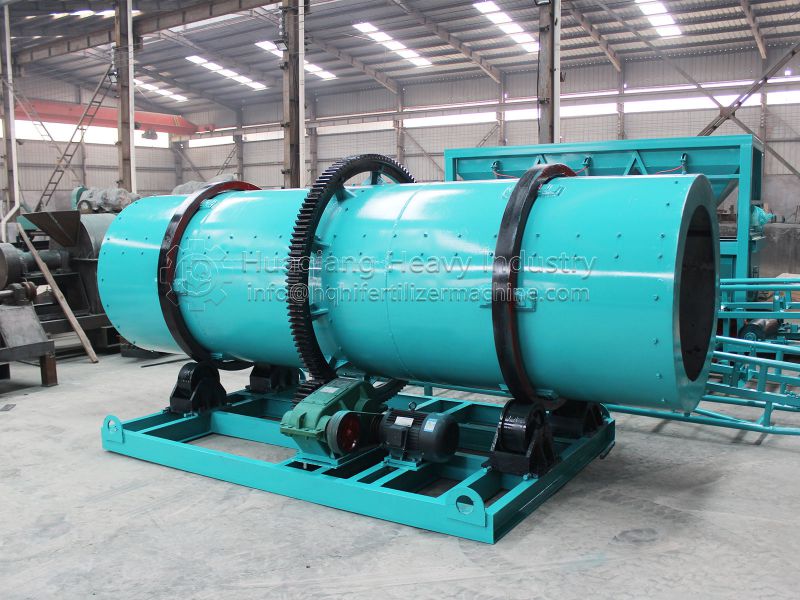
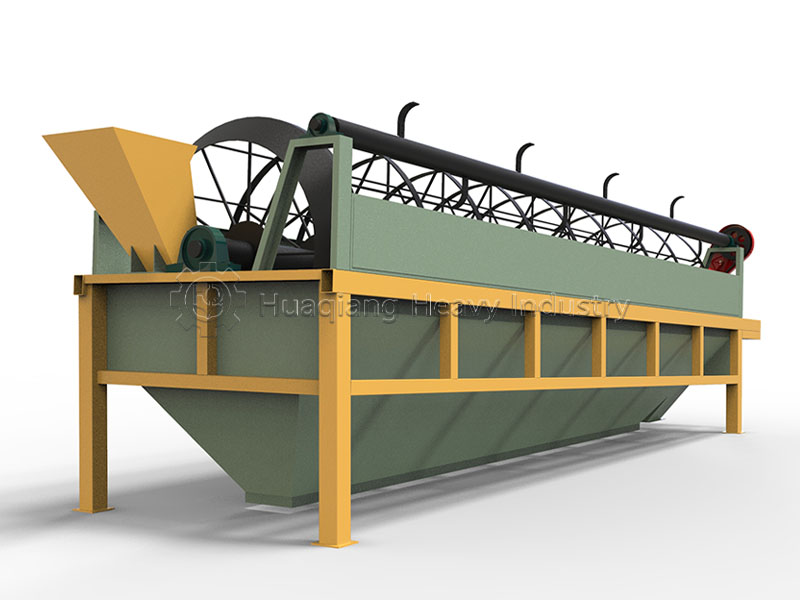
Daily maintenance of drum fertilizer coolers: Key points to extend equipment life

Drum fertilizer coolers are continuously operating industrial equipment. Inadequate routine maintenance can easily lead to frequent failures, impacting production schedules and shortening equipment lifespan.

First, regularly inspect the transmission system. The bearings and gears in the transmission are highly consumable and should be inspected weekly. Observe the bearings for unusual noises or heat buildup. Excessive temperatures may indicate insufficient lubrication or bearing wear, requiring timely lubrication or bearing replacement.

Second, ensure the cooling system is clean. Prolonged cleaning of the cooling jacket can lead to accumulation of scale and impurities, impairing heat transfer and reducing cooling effectiveness. It is recommended to clean the jacket every three months. If using cold water cooling, circulate a citric acid solution to remove scale. If using cold air cooling, clean the air inlet filter monthly to prevent dust from clogging the filter and reducing air flow.
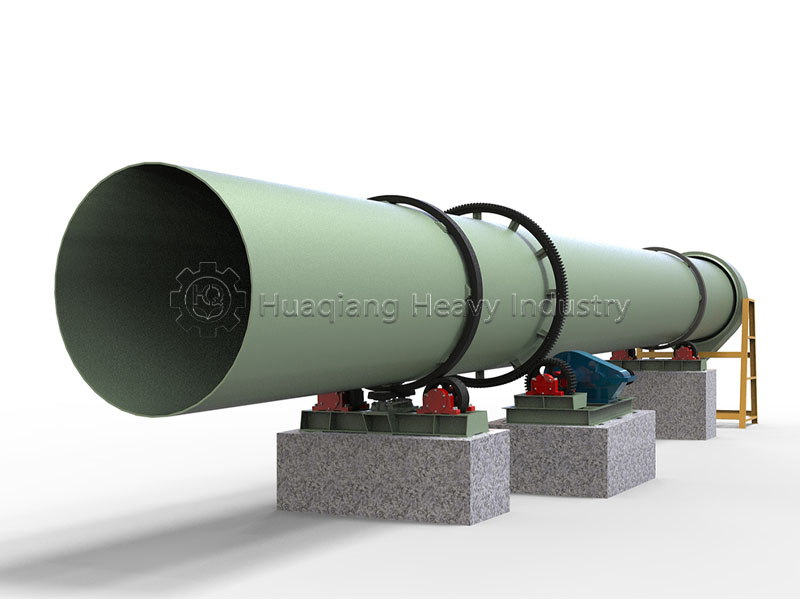
Third, inspect the sealing components for leaks. Seals at the feed, discharge, and exhaust ports (such as rubber rings and asbestos gaskets) are prone to leakage due to wear and aging. They should be inspected monthly. If dust or cooling medium leakage is detected, the seals should be replaced promptly.

Fourth, regularly clean the drum fertilizer cooler interior. Even with suitable materials, a small amount of material may remain on the drum interior after long-term operation. If not cleaned, this material will gradually accumulate and affect the uniformity of material turnover. It is recommended to use a special scraper to clean any remaining material from the drum fertilizer cooler interior after weekly shutdown.
The journey from organic waste to high-efficiency fertilizer

The bio-organic fertilizer production line utilizes organic waste such as livestock and poultry manure, straw, and mushroom residue as raw materials. Through microbial fermentation technology, it recycles resources and produces fertilizer rich in active bacteria and organic matter. Bio-organic fertilizer production lines serve as a vital link between the livestock and poultry industry, the agricultural industry, and the environmental protection industry.

Raw material pretreatment is a fundamental step. It requires crushing and screening the organic waste to remove impurities and ensure a uniform particle size (approximately 80 mesh). Auxiliary materials are then added to adjust the carbon-nitrogen ratio (25-30:1) and humidity (55%-65%) to create a suitable environment for microbial growth. This phase then enters the inoculation and fermentation stage, where specialized microbial agents are added to the mixture. A compost turning machine regularly turns the compost to provide oxygen, maintaining a temperature of 55-65°C. Composting continues for 20-30 days, effectively killing pathogens and insect eggs and breaking down large organic molecules.

The fermented material undergoes post-processing to optimize quality. First, it undergoes low-temperature drying to reduce moisture to below 12% to prevent mold and mildew during storage. It then undergoes crushing, screening, and grading, with unqualified particles returned to the pre-processing stage for recycling. Finally, functional microbial agents can be optionally added to the mix to enhance the bioactivity of the fertilizer, depending on crop needs. The resulting pellets are uniform and rich in humic acid, amino acids, and a variety of beneficial bacteria, providing nutrients for crops while also improving the soil microbial ecosystem.

A brief overview of the performance advantages of cage crushers in production

In the field of material pulverization, cage crushers, with their unique performance advantages, have become an ideal choice for many manufacturers and occupy a key position among various types of pulverizers.

In terms of compatibility, cage crushers are excellent for processing low- to medium-hardness materials, particularly those with a Mohs hardness of 1.0-2.0. Materials with a hardness exceeding 3 are less suitable due to excessive wear on the cage.

In terms of pulverization performance, cage crushers offer excellent fineness control. By precisely controlling the screen aperture, fineness can be adjusted from 0.2 to 5.0 mm. The high precision of the screen aperture guarantees a 90% particle size deviation of ≤0.2 mm.

In terms of uniformity, the unique synergistic effect of impact and grinding produces a narrow particle size distribution. For example, when crushing corn, 80% of the particles are concentrated between 0.8 and 1.2 mm, resulting in minimal over-fine grinding. Material loss is low, sealing performance is excellent, and the dust rate is only 3% to 5%.

Energy consumption and maintenance are also important indicators of crusher performance. The specific energy consumption of a cage crusher is moderate. For example, when crushing corn, the energy consumption ranges from 8.5 to 15.6 kW h/t, but energy consumption increases with finer grain size. The lifespan of its wearing parts is relatively long.

Regarding maintenance, while regular cleaning of the screen and cage residue is required, and cage replacement requires complete machine disassembly, overall, the maintenance effort and cost are relatively moderate.

With its comprehensive advantages in material compatibility, crushing efficiency, energy consumption, and maintenance, cage crushers demonstrate strong competitiveness in applications requiring medium-to-fine crushing of low- to medium-hardness materials, with high requirements for crushing accuracy and particle shape.

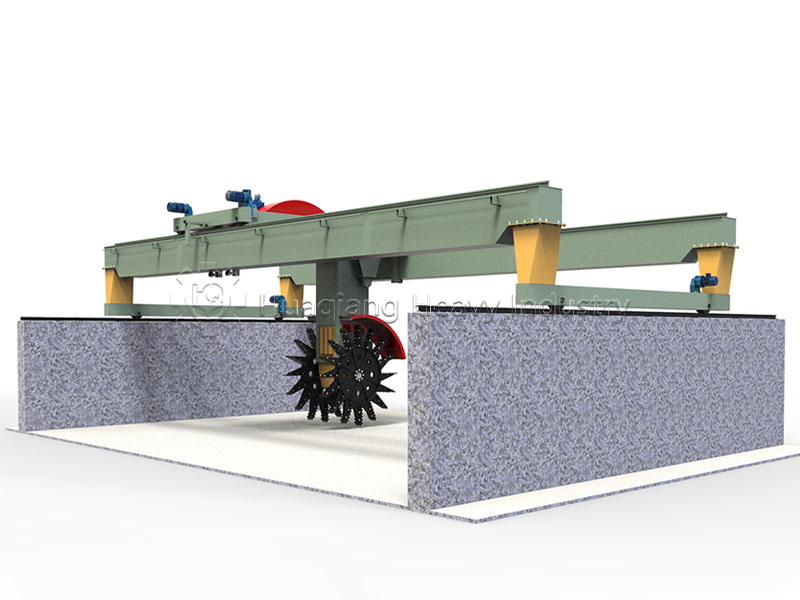
Windrow compost turning machine: Efficient equipment for converting livestock manure into organic fertilizer

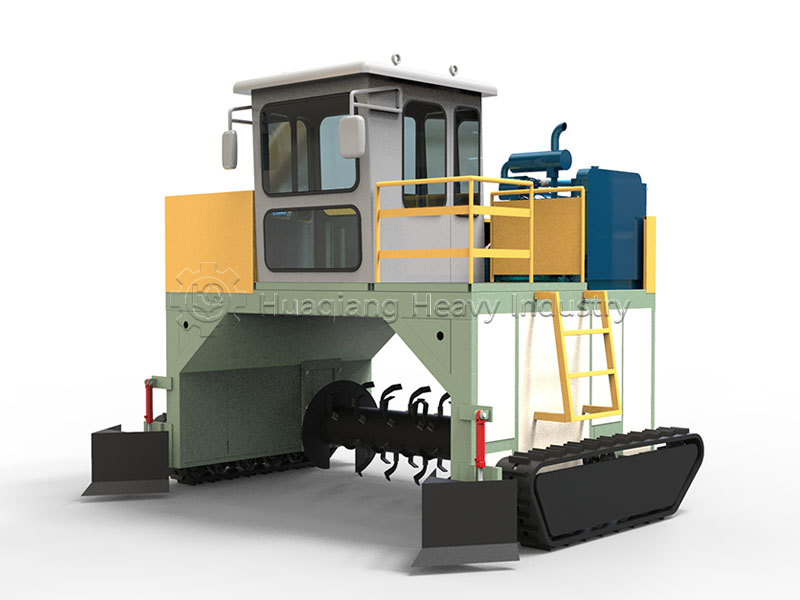
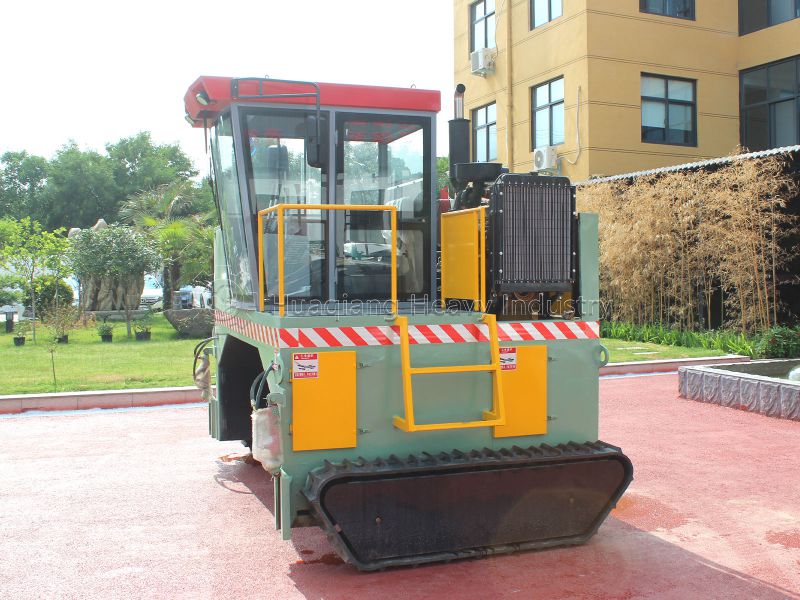
In the resource utilization of livestock and poultry waste, windrow compost turning machines, with their flexible and efficient operation, have become a core piece of equipment for converting livestock manure into organic fertilizer. Through mechanized turning and plowing, they accelerate manure composting and fermentation, transforming livestock pollutants into high-quality organic fertilizer, addressing environmental challenges while also promoting resource recycling.

The core advantage of windrow compost turning machines lies in their adaptability. Their crawler-type design allows for free movement in muddy composting areas. The large ground contact area and low pressure prevent them from sinking into the manure pile, making them suitable for various sizes of fermentation workshops or open-air sites. Equipped with a hydraulically driven turning gear shaft, the equipment can reach a turning depth of 0.8-1.5 meters, thoroughly mixing the bottom layer of manure with the surface material, breaking up compacted materials and ensuring uniform fermentation.

In the livestock manure processing process, windrow compost turners play a key role in promoting fermentation. First, livestock manure is mixed with supplementary materials such as straw and sawdust in appropriate proportions, adjusting the carbon-nitrogen ratio to 25-30:1 and the humidity to 55%-65% to create optimal conditions for microbial fermentation.

Subsequently, a compost turning machine regularly turns the pile, introducing sufficient oxygen to support aerobic microbial activity and rapidly dissipating the heat generated by fermentation, keeping the pile temperature between 55-65°C. This temperature range effectively kills pathogens, insect eggs, and weed seeds in the manure, preparing the compost for subsequent operation in the fertilizer granulator.

This equipment boasts high efficiency and a high degree of automation. By setting the turning frequency and path, continuous operation is achieved, reducing labor input.

Flat die granulators: Common failures and solutions

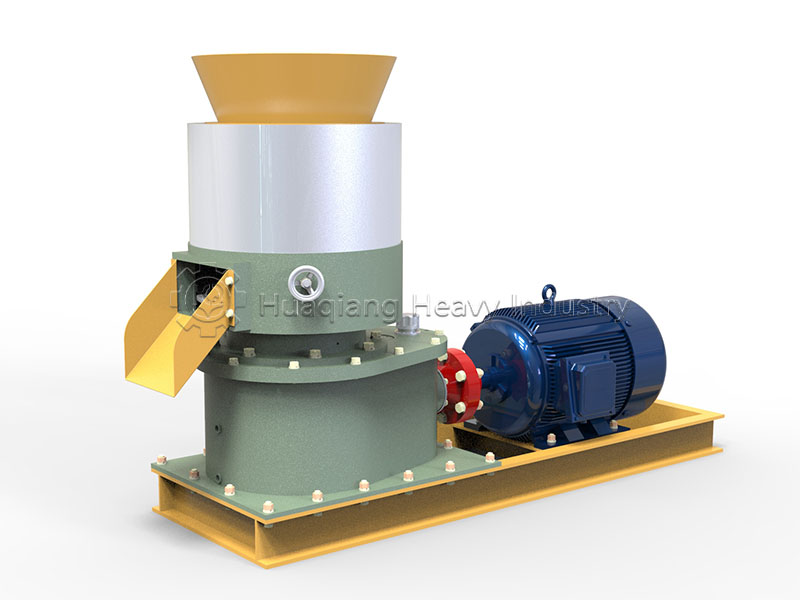
Poor pellet formation is a common problem with flat die granulators. Improper material moisture is the primary cause. Excessively high moisture content can cause the material to stick together, making it difficult to form; while excessively low moisture content can lead to a lack of cohesiveness and loose pellets. Die wear can also cause forming problems, resulting in irregular die holes and poor pellet quality. Insufficient roller pressure can also prevent the material from being fully extruded. Solutions include strictly controlling material moisture content to maintain it within the appropriate range; regularly inspecting and replacing severely worn dies; and adjusting roller pressure to ensure uniform and adequate pressure.

Abnormal equipment noise is often caused by multiple factors. Bearing damage is a common cause, producing abnormal noise during operation. Loose components, such as loose screws and connectors, are also important, as they can generate vibration and noise during operation. Gear wear can also increase noise, as worn gears mesh poorly. If these problems occur, promptly inspect the bearings, tighten loose components, and replace damaged gears as necessary to reduce noise and ensure proper operation.

Routine maintenance is crucial to minimizing flat die granulator failures. Regularly check the wear of equipment components, such as rollers, dies, and bearings, and replace wearing parts promptly. Keep the flat die granulator clean to prevent residual material from corroding the equipment. Lubricate the equipment regularly to reduce friction between components. These routine maintenance measures can effectively reduce the incidence of equipment failures, extend equipment life, and improve production efficiency.

Small pellets, big impact: The evolution of organic fertilizer through granulation

In organic fertilizer production, granulation is more than just a cosmetic enhancement. Its primary purpose lies in practicality. Powdered organic fertilizers have a low density and are bulky, taking up a lot of space during storage and transportation. They are also prone to generating dust, leading to nutrient loss and environmental pollution. Granulation compacts the material, significantly reducing its volume, making long-distance transportation and economical storage possible.

More importantly, granulation profoundly impacts the ease and efficiency of fertilization. Uniform granules facilitate mechanized spreading, adapting to the operational needs of modern large-scale farms. Furthermore, their compact structure regulates the release rate of nutrients into the soil, preventing rapid decomposition and providing a more stable and long-lasting nutritional supply for crops.

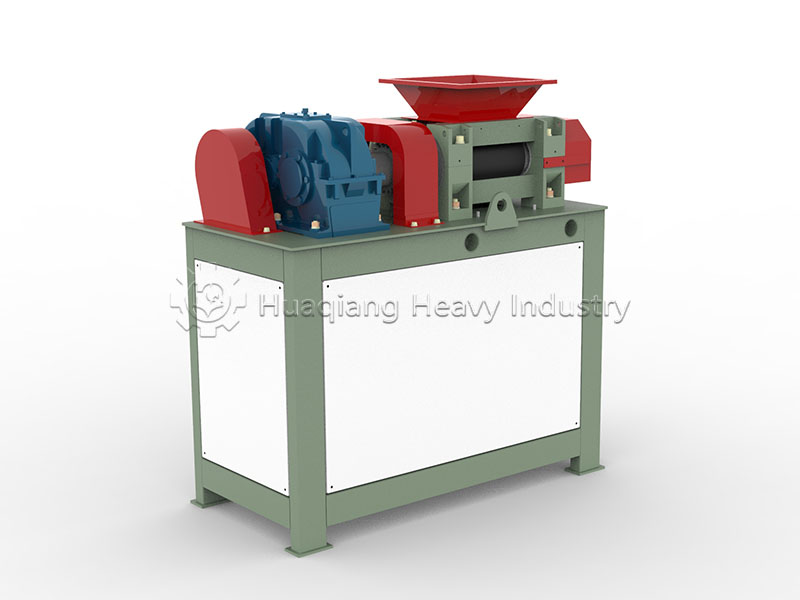
So, how are various agricultural and forestry wastes transformed into uniform granules? Currently, mainstream granulation processes, such as disc granulators and double roller press granulators, each have their own advantages.

The advancement of granulation technology, from dusty powder fertilizer to uniform, uniform granules, is a significant step toward the modernization and standardization of traditional organic fertilizers. It has transformed organic fertilizer from a traditional “homegrown” method into a standardized commodity that can be integrated into modern agricultural production systems. These tiny granules embody the industry’s unwavering pursuit of efficiency, environmental protection, and practicality.

The “Competition” between large wheel compost turners and traditional compost turning equipment

In the field of organic waste treatment, compost turning equipment is a critical tool. The emergence of large wheel compost turning machines has disrupted the traditional compost turning system, creating a fierce competition with it.

Traditional trough compost turning machines typically require the construction of fixed fermentation tanks, which not only limits the equipment’s flexibility but also takes up a significant amount of site space. For example, a small organic waste treatment project with a daily processing capacity of 10 tons would require the construction of at least two fermentation tanks, each 10 meters long and 3 meters wide. Including the spacing between the tanks and the operating space, the total area required is approximately 100 square meters.

Large wheel compost turning machines, on the other hand, have relatively low site requirements. Without the need for fixed fermentation tanks, they can operate in more open areas. To process the same 10 tons of organic waste, a large wheel compost turning machine may only require approximately 60 square meters of site space, significantly saving space.

Traditional compost turning equipment has a relatively limited turning range, typically 5-10 meters wide and 1-1.5 meters deep. Large-wheel compost turning machines, on the other hand, can reach widths of up to 30 meters and depths of 1.5-3 meters, enabling them to cover a wider area and greater depths.

Conventional equipment can have blind spots, resulting in incomplete fermentation of some materials. Large wheel compost turning machines, through symmetrical turning and a speed-adjustable, shifting trolley, achieve seamless turning, ensuring more even mixing and more complete fermentation.

Rotary drum granulator: The core “Shaping” equipment in fertilizer production

In fertilizer processing, the rotary drum granulator is a key piece of equipment for converting powder into granules. Its stable performance makes it a common choice for most fertilizer production scenarios.

Structurally, the core of a rotary drum granulator consists of an inclined drum, a drive system, a spray device, and a heating and insulation layer. The drum’s tilt angle can be adjusted based on the characteristics of the raw material, typically controlled at 3°-5°. This ensures adequate tumbling of the raw material while preventing the granules from clumping due to prolonged dwell time. The drive system drives the drum at a constant speed of 10-20 rpm via gears or belts, ensuring a stable and controllable granulation process.

During operation, mixed fertilizer raw materials enter the drum through the feed inlet. As the drum rotates, the raw materials continuously tumble and collide within the drum. Simultaneously, a spray device applies an appropriate amount of binder to the raw materials, gradually agglomerating them into small granules. The heating and insulation layer maintains the temperature inside the drum within an optimal range, helping the granules quickly solidify and form. Finally, the formed fertilizer granules are discharged from the discharge port and enter the subsequent screening and cooling stages.

This rotary drum granulator’s advantage lies in its wide adaptability. Whether it’s nitrogen-phosphorus-potassium compound fertilizer, organic fertilizer, or biological fertilizer, efficient granulation can be achieved by adjusting parameters. The highly uniform granulation and moderate granule strength facilitate subsequent storage and transportation, providing equipment support for the large-scale advancement of fertilizer production.

How to choose a suitable drum screener machine for organic fertilizer production?

In the organic fertilizer production process, the quality of material screening directly affects the particle uniformity and application effectiveness of the finished fertilizer. Therefore, selecting an appropriate drum screener machine is crucial. Considering the material characteristics and process requirements of organic fertilizer production, the following key aspects should be considered when selecting a suitable drum screening machine.

First, focus on the equipment’s processing capacity and screening efficiency. Organic fertilizer production is often a continuous process, so the equipment must be able to match the overall production line capacity to avoid material accumulation due to slow screening speeds. Furthermore, screening efficiency must meet industry standards to ensure rapid separation of materials of varying particle sizes and minimize unscreened material residue. When selecting a drum screener machine, pay particular attention to its ability to screen wet and easily agglomerated materials. The equipment must be able to effectively handle these materials and avoid clogging of the screen openings.

Second, consider the equipment’s wear and corrosion resistance. Organic fertilizer materials may contain corrosive components or hard impurities. A high-quality drum screener machine should use wear-resistant and corrosion-resistant materials for its core components, especially the screen and drum lining. This reduces the need for routine maintenance, extends the equipment’s lifespan, and minimizes the risk of production interruptions.

Finally, the equipment’s adjustable flexibility and ease of operation must also be considered. Different batches of organic fertilizer may require different screening accuracies, and the equipment should be able to flexibly adjust parameters such as mesh size and vibration frequency to accommodate diverse production needs.

BB fertilizer mixers: Key equipment for ensuring uniform nutrient distribution in blended fertilizers

In BB fertilizer (blended fertilizer) production, the BB fertilizer mixer is a key piece of equipment that determines product quality. Its core function is to evenly blend multiple raw materials of varying density and particle size into a nutrient-consistent fertilizer, directly impacting subsequent fertilization effectiveness.

In terms of equipment structure, mainstream BB fertilizer mixers mostly adopt a closed-cylinder design with an internal mixing assembly. The cylinder is typically positioned horizontally, with the mixing assembly driven by a motor. Some BB fertilizer mixers also feature forward and reverse rotation to reduce residual material in the cylinder. The feed inlet is typically located at the top of the cylinder, and the discharge outlet at the bottom. Some models feature an observation window for easily monitoring the mixing status.

During operation, raw materials such as urea, monoammonium phosphate, and potassium chloride are introduced into the mixing cylinder according to the formulated ratio. The rotating mixing assembly propels the raw materials: the screw conveys the raw materials from both ends toward the center, the paddles shear and stir the raw materials, and the guide plates facilitate convection, ensuring full contact between raw materials with density differences of 30%-50%. The entire process does not require the addition of adhesives, and mechanical force is used to achieve “small particles filling gaps and large particles colliding with each other”, ultimately achieving a uniform mixing effect.