What types of phosphate fertilizers can a rotary drum granulator process?

The rotary drum granulator is key equipment in phosphate fertilizer production, suitable for the granulation process of many types. It forms powder into granules through the tumbling action of a rotating drum, offering advantages like high output, good granule formation rates, and strong adaptability.

Phosphate Fertilizers Suitable for Rotary Drum Granulator:

1.Single Superphosphate (SSP)

SSP is a water-soluble phosphate fertilizer containing 14% to 20% available P₂O₅. Because it’s quite acidic, neutralizing agents (like lime or ammonia) need adding during granulation to improve how well the material sticks together. The rotary drum produces uniform SSP granules with good strength for storage and spreading.

2.Triple Superphosphate (TSP)

TSP has much higher P₂O₅content (44% to 52%) than SSP. Granulation requires careful moisture control (usually 8% to 12%) and adding binders (like bentonite or humic acid) to boost the granules’ strength and resistance to wear.

3.Ammonium Phosphate Fertilizers (MAP/DAP)

Monoammonium Phosphate (MAP): Contains 48% to 52% P₂O₅and 10% to 12% N. Granulation needs pH adjustment to prevent the material becoming too sticky, which affects granule formation.

Diammonium Phosphate (DAP): Contains 46% to 48% P₂O₅and 16% to 18% N. The higher nitrogen content means temperature control during granulation is important to prevent nitrogen loss.

4.Organic-Inorganic Compound Phosphate Fertilizers

These are made by granulating phosphate fertilizers (like SSP) mixed with organic materials (like composted manure or humic acid). The rotary drum mixes the materials evenly, creating granules that provide balanced nutrients and improve soil quality.

In summary, the rotary drum granulator is an ideal machine for making phosphate fertilizer granules. By choosing the right process settings, it produces strong, high-quality granules that improve fertilizer effectiveness and make spreading easier.

Cost Analysis of Chicken Manure Fertilizer Processing in an Organic Fertilizer Production Line

Chicken manure is indeed a high-quality organic fertilizer raw material, rich in organic matter, nitrogen, phosphorus, potassium, various trace elements, enzymes, and microorganisms. Through standardized aerobic composting processes, it effectively degrades organic matter, kills parasite eggs and pathogens, and renders it harmless and stable. This can then be produced into commercial organic fertilizer through an organic fertilizer production line, creating economic benefits for chicken farms while fundamentally addressing environmental pollution.

However, processing chicken manure into commercial organic fertilizer does involve certain production costs, which can be primarily categorized into the following aspects. First, equipment investment is the core, one-time investment. A complete production line typically includes fermentation and compost turning equipment, a crusher, a mixer, a granulator, a dryer, a cooler, a screener, and an automatic packaging machine. The choice of granulator significantly impacts cost and product form. For example, a rotary drum granulator offers high output, a disc granulator offers a high granulation rate, and a flat die granulator is suitable for organic materials. Different granulator models have varying prices and energy consumption. Secondly, the costs of the pretreatment and fermentation processes cannot be ignored. Fresh chicken manure is sticky and moist, typically with a moisture content exceeding 70%, while the optimal fermentation moisture content needs to be adjusted to 50%-60%. Therefore, a large amount of auxiliary materials (such as straw, sawdust, and mushroom residue) are often required to adjust the moisture and carbon-nitrogen ratios. The procurement, transportation, and crushing of these auxiliary materials all incur ongoing costs.

The initial equipment investment for processing chicken manure in an organic fertilizer production line is relatively high, and ongoing operations also require ongoing investment. The cost level depends largely on the production scale, the degree of automation, the availability and price of raw materials, and the positioning of the final product. For large-scale chicken farms, although the initial investment is high, in the long run, the comprehensive benefits of addressing environmental pressures and creating economic value by turning waste into resources are significant, making the cost acceptable.

Comparing granule shapes from different fertilizer granulators: Choosing the best granulation process

In fertilizer production, the choice of granulator directly affects granule shape, strength, and performance. Different granulation techniques produce distinct granule shapes suited for specific fertilizer types and market needs.

1.Rotary Drum Granulator: Spherical granules, smooth surface

Produces typically round, smooth-surfaced granules with uniform size. This shape works well for compound fertilizers, organic fertilizers, and BB blends, offering good flowability and crush strength for mechanical application.

2.Double Roller Press Granulator: Oblate or hemispherical granules

Forms mostly flat-round or half-spherical granules, sometimes with slight burrs on edges. The dense structure resists breakage, making it suitable for high-concentration compound fertilizers or organic-inorganic blends.

3.Flat Die Granulator: Cylindrical granules, varying lengths

Creates short cylindrical pellets with consistent diameter but lengths that may vary. These high-hardness granules fit organic fertilizers, bio-organic fertilizers, and feed additives.

4.Disc Granulator: Near-spherical granules, mixed sizes

Similar to rotary drum granulation but yields less regular, near-spherical shapes with a wider particle size range. Ideal for initial processing of organic or compound fertilizers—cost-effective but less uniform.

In short, selecting the right granulator improves fertilizer quality and production efficiency.

How to choose between a rotary drum granulator and a disc granulator?

In the fertilizer, feed and other industries, disc granulators and rotary drum granulators are both common granulation equipment, playing a key role in fertilizer production lines. Understanding their differences can help companies choose the right equipment and achieve efficient production.  From the working principle, when the disc granulator tilts the disc and rotates, the material continues to roll and agglomerate under the action of gravity, centrifugal force and friction. First, small particles are formed at the bottom of the disc, and then they continue to roll, absorbing the surrounding powder and gradually become larger. After reaching a certain size, they overflow from the edge of the disc to complete the granulation. The material of the rotary drum granulator rolls continuously in the rotating drum, and through water or steam, the basic fertilizer and other materials are fully reacted chemically in a wet environment, and the particles are agglomerated into balls under the extrusion force generated by the rotation of the cylinder.

In terms of equipment structure, the disc granulator is relatively simple. The core component is the tilted granulation disc, which is driven to rotate by the drive device. There are also disc inclination adjustment mechanisms, racks, feeding pipes, liquid sprayers, hanging plates, etc. The rotary drum granulator has a complex structure. The main body is a huge rotating cylinder, which is driven by a drive device. In addition, there are feeding systems, steam or gas supply systems, discharging systems, and complex control systems and auxiliary equipment such as temperature and humidity sensors. ​

The two have different focuses in their application areas. The disc granulator has a small investment and is easy to operate. It is a powerful assistant for small production plants and is widely used in small compound fertilizer plants, feed processing plants and small biomass fuel enterprises. The rotary drum granulator is like an industrial giant with high output and is suitable for large-scale production. It performs well in large-scale compound fertilizer and feed production enterprises and industrial raw material granulation processing. ​​

Disc granulators and rotary drum granulators have their own advantages and disadvantages. Enterprises must make comprehensive considerations and careful choices based on their own production scale, material characteristics, product quality requirements and budgets to win development opportunities in the fierce market competition.

How is NPK fertilizer manufactured?

NPK fertilizer, a compound fertilizer containing the three key nutrients nitrogen (N), phosphorus (P), and potassium (K), provides comprehensive nutrients for crops. Its production requires multiple precision steps.

First, the raw material pretreatment stage begins. Nitrogen fertilizer raw materials, typically urea and ammonium chloride, need to be crushed into a fine powder of 80 mesh or larger. Phosphate fertilizers, typically monoammonium phosphate and superphosphate, need to be de-agglomerated and ground. Potassium fertilizers, primarily potassium chloride and potassium sulfate, are screened and decontaminated before being crushed. The three raw materials are blended according to crop requirements. For example, a fertilizer specifically for corn might use a 15:15:15 ratio of nitrogen, phosphorus, and potassium.

Next, the mixing and granulation stages begin. The pretreated raw materials are thoroughly agitated in a mixer, and an appropriate amount of water or a binder (such as bentonite) is added to maintain a moisture content of 20% to 30%. The granules are then granulated using wet granulation equipment. Rotary drum granulators are commonly used for this process because they are suitable for large-scale production. The material is rolled and agglomerated within the drum to form granules with a diameter of 2-4 mm. Disc granulators are suitable for small and medium-sized production capacity, and the granule size can be controlled by adjusting the inclination angle.

After granulation, the granules are dried and cooled. They first enter a rotary dryer at 60-80°C to reduce the moisture content to below 5% to prevent clumping during storage. They are then cooled to room temperature in a cooler to prevent condensation during packaging.

Finally, they are screened and packaged. The cooled granules are classified by a vibrating screen. The fine particles are returned to the granulation stage for reuse. Qualified granules enter a film coating machine, where they are sprayed with an anti-caking agent, weighed, and packaged.

The entire process of the NPK compound fertilizer production line requires strict control of the raw material ratio and particle quality to ensure that the nutrients in the finished fertilizer are uniform and the strength meets the standards to meet the nutritional needs of different crops at different growth stages.    

Rotary drum granulator production

The rotary drum granulator machine is designed for producing the organic fertilizer granulator or inorganic fertilizer granulator.How can we use the rotary drum granulator machine to finish the fertilizer production process?

Different type fertilizer granulator machine are designed for producing the organic or inorganic fertilizer granulator.Different type fertilizer granulator machine has different working principle.The rotary drum granulator machine is designed for producing the organic or inorganic fertilizer granulator.There we share the principle of the working principle with you.
The drum granulation is a method of mixing and granulating powdery basic fertilizer with drum granulator,which is widely used in the granulation of compound fertilizer.The series of rotary drum granulator machine is designed for not only used in the compound fertilizer manufacturing process,it also can be used in the organic fertilizer manufacturing process to produce the organic fertilizer granulator.

The principle of the rotary drum granulator:First of all,the basic fertilizers are screened separatedly,and the screened materials are crushed by the crusher before screening.The material under the screen is sent to the respective hopper.When the pelletilizing system is in operation,each basic fertilizer is fed into the feed hopper through the metering equipment,conveying equipment and lifting equipment according to the proprtion requirements from each hopper at the same.At the same time,the return material also enters the hopper together with the basic fertilizer through the lifting equipment.There is a certain degree of mixing between the basic fertilizer and the returned material in the process of transportation and lifting,but it is more ideal to add a mixing equipment.The mixture in the feed hopper is fed to the rotary drum granulator at a certain feeding speed.At the same time,in the fertilizer manufacturing process,saturated steam is properly introduced into the bottom of the material layer,which not only improves the temperature of the material,but also makes the material wetted,which is conducive to granulation.If necessary,sprinkle a small amount of water or fertilizer solution on the material to maintain the best liquid volume of material granulation.The material forms a rolling bed by the friction action of the rotary drum granulator.The extrusion pressure generated by the rolling makes the material with certain liquid phase agglomerate into small particles.These small particles become the core,and the surrounding powder adheres to form large particles.As the drum granulator generally inclines to the discharge end at a certain angle,the granular material slowly rolls to the discharge port along the inclined direction of the cylinder while rotating with the cylinder.Qualified particles leave the drum granulator and enter the dryer for drying,and then pass through screening,cooling,coating,packaging and storage.After crushing,the upper part of the screen and the loweer part of the screen will be sent to the hopper as the return material and the basic fertilizer will be granulated at the same time.In the granulating process,we are besides the granulating method to be used to produce the fertilizer granulator,there is also designed the flat die granulator machine and the roller press granulator machine which are suitable for using the extrusion method to produce the fertilizer granulator.

In different type fertilizer production line,it is equipped with different type organic fertilizer machine,which are suitable for producing the organic fertilizer granulator,and the inorganic fertilizer granulator,which it is equipped in the compound fertilizer production line to produce the compound fertilizer granulator.In the fertilizer manufacturing process,using different type fertilizer machines to finish the fertilizer manufacturing production process not only improve the working efficient,it also save the waste of the raw materials.


How to Preventing Caking from the NPK Fertilizer Production Process

NPK compound fertilizer is prone to cake because of its strength, moisture content, storage and so on. This article will introduce how to prevent caking from the process operation of NPK fertilizer production process.


NPK fertilizer production equipment produce products with smooth and uniform particles

Non-uniform particles, too many fine particles, non-smooth fertilizer, the compressive resistance, wear resistance is also poor, easy to be compressed and deformed in storage and transportation. The contact area between particles increase, which is easy to agglomerate. In order to produce products with uniform and smooth particle size, appropriate fertilizer granulator machine should be selected. Disc granulator and rotary drum granulator can produce moderate size particles and meet the requirements. If there is a higher requirement for the shape of the particles, it can also be combined with the ball shaping machine to polish the particles to ensure that the shape is qualified.

fertilizer granulator machine

Strengthening the control of screening machine

In order to ensure the consistency of particle size and reduce the caking of powder, it is necessary to screen particles with the rotary drum screener machine. According to the particle size of the product, different screens can be selected, and secondary screening can be selected in the process. Pay attention to the material screening in production, timely clean the screen.


Dryer reduces product water content

NPK compound fertilizer has a high water content, which will lead to salt reaction and cause hardening. The higher the water content, the easier the particles to agglomerate. Therefore, the NPK compound fertilizer production line must use a dryer to reduce the moisture content to the allowable range.

After the particle is dried by the dryer, the temperature is higher and the hygroscopicity effect will appear, so it needs to be cooled. The cooler reduces the material temperature to room temperature, and the product can be saved.


Coating treatment is used in NPK fertilizer production process

Choose the suitable material and use the fertilizer coating machine to coat the particles. At the same time, pay attention to the amount of wrapping agent added. The amount of wrapping agent added is small, the particles are not wrapped completely, the effect is poor; the amount of adding is large, the wrapping oil will infiltrate into the inside of the NPK fertilizer, and the product is easy to cake.

The principle of rotary drum granulator

Different type fertilizer granulator machine are designed for producing the organic or inorganic fertilizer granulator.Different type fertilizer granulator machine has different working principle.The rotary drum granulator machine is designed for producing the organic or inorganic fertilizer granulator.There we share the principle of the working principle with you.
The drum granulation is a method of mixing and granulating powdery basic fertilizer with drum granulator,which is widely used in the granulation of compound fertilizer.The series of rotary drum granulator machine is designed for not only used in the compound fertilizer manufacturing process,it also can be used in the organic fertilizer manufacturing process to produce the organic fertilizer granulator.

New type organic fertilizer prodiction line

The principle of the rotary drum granulator:First of all,the basic fertilizers are screened separatedly,and the screened materials are crushed by the crusher before screening.The material under the screen is sent to the respective hopper.When the pelletilizing system is in operation,each basic fertilizer is fed into the feed hopper through the metering equipment,conveying equipment and lifting equipment according to the proprtion requirements from each hopper at the same.At the same time,the return material also enters the hopper together with the basic fertilizer through the lifting equipment.There is a certain degree of mixing between the basic fertilizer and the returned material in the process of transportation and lifting,but it is more ideal to add a mixing equipment.The mixture in the feed hopper is fed to the rotary drum granulator at a certain feeding speed.At the same time,in the fertilizer manufacturing process,saturated steam is properly introduced into the bottom of the material layer,which not only improves the temperature of the material,but also makes the material wetted,which is conducive to granulation.If necessary,sprinkle a small amount of water or fertilizer solution on the material to maintain the best liquid volume of material granulation.The material forms a rolling bed by the friction action of the rotary drum granulator.The extrusion pressure generated by the rolling makes the material with certain liquid phase agglomerate into small particles.These small particles become the core,and the surrounding powder adheres to form large particles.As the drum granulator generally inclines to the discharge end at a certain angle,the granular material slowly rolls to the discharge port along the inclined direction of the cylinder while rotating with the cylinder.Qualified particles leave the drum granulator and enter the dryer for drying,and then pass through screening,cooling,coating,packaging and storage.After crushing,the upper part of the screen and the loweer part of the screen will be sent to the hopper as the return material and the basic fertilizer will be granulated at the same time.In the granulating process,we are besides the granulating method to be used to produce the fertilizer granulator,there is also designed the flat die granulator machine and the roller press granulator machine which are suitable for using the extrusion method to produce the fertilizer granulator.


In different type fertilizer production line,it is equipped with different type organic fertilizer machine,which are suitable for producing the organic fertilizer granulator,and the inorganic fertilizer granulator,which it is equipped in the compound fertilizer production line to produce the compound fertilizer granulator.In the fertilizer manufacturing process,using different type fertilizer machines to finish the fertilizer manufacturing production process not only improve the working efficient,it also save the waste of the raw materials.

How to select fertilizer granulator suitable for compound fertilizer production

Solid compound fertilizer granules are more effective than other fertilizers in use and soil, and are widely welcomed in the market. Fertilizer granulation is a basic treatment method in fertilizer production. Fertilizer granulator machine mixes different fertilizers into granules, which plays an important role in NPK fertilizer production line.

Basic fertilizers such as ammonium bicarbonate, urea, ammonium chloride, ammonium nitrate, ammonium sulfate, ordinary superphosphate, calcium magnesium phosphate, ingot phosphate, heavy superphosphate, potassium chloride, potassium sulfate, phosphate nitrate, dicalcium phosphate, potassium nitrate and so on are proportionally compounded to make the compound fertilizer we need, which is granulated by fertilizer granulator. Granulation is the granulation of fertilizer containing water. In NPK fertilizer production equipment, the commonly used fertilizer granulator machine includes double roller fertilizer granulator, rotary drum granulator and disc fertilizer granulator.

Fertilizer granulator machine granulates by agglomeration

The working principle of drum granulator and disc granulator is similar. When urea, calcium superphosphate, ammonium sulfate, ammonium phosphate, ammonium nitrate, potassium fertilizer and other fertilizers are mixed, they are aggregated into compound fertilizer granules through granulation operation. Rotary drum granulator and disc granulator are suitable for granulation of various ingredients, and the obtained granules are of good quality and high granulation rate of materials.

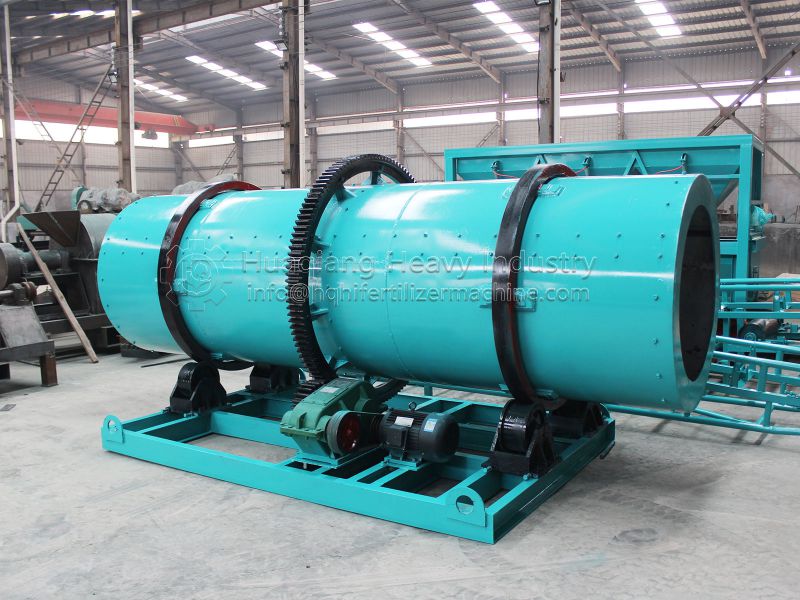
The main body of the rotary drum granulator is a horizontal drum. The drum is driven by motor, reducer and gear, which is supported by wheel and rollover. The drum granulator has strong production capacity, long material residence time and good granulation effect.

The main body of the disc granulator is a slightly inclined disc, which continuously rolls to complete granulation. In the production of disc fertilizer granulator, the production situation can be seen directly, which is convenient to observe and adjust in time, and the granulation rate of compound fertilizer is high.

Fertilizer granulator machine granulates by extrusion

The double roller fertilizer granulator makes the material into granules by extrusion method. The water content is not higher than 15%, and the materials with good fertilizer effect are mixed after mixing, and the material is strongly extruded by the roller press granulator, so that the molecular force between fertilizers acts and is extruded, and then the sheeted material is crushed into granular compound fertilizer.

The difference between organic fertilizer and chemical fertilizer

Difference between organic fertilizer and chemical fertilizer

Chemical fertilizer, manufactured by chemical or physical methods, containing one or more nutrient elements for crop growth. Also known as inorganic fertilizers, including nitrogen, phosphate, potash, micronutrients, compound fertilizers, etc. It has strong pertinence and quick effect. There are many kinds of chemical fertilizers, the most common ones are urea.

Organic fertilizer is formed by a variety of animal, plant residues or metabolites after a certain processing technology. Mainly including agricultural wastes, livestock manure, industrial wastes, municipal Sludge,etc. Organic fertilizer is rich in nutrients and can improve soil.

Main chemical fertilizer granulator machine:
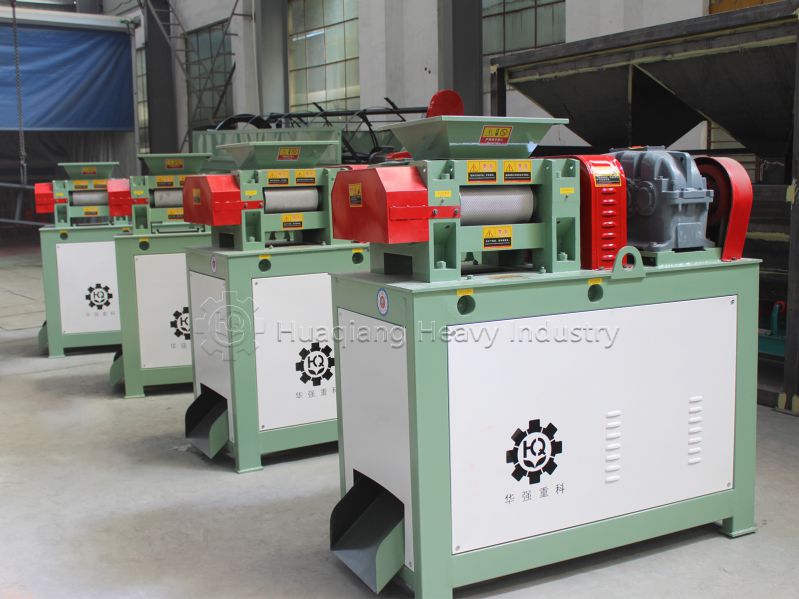
Double Roller Granulator
Double Roller Granulator has compact structure, good stability, good sealing, low noise, easy operation and maintenance, etc. The new machine has won the users praise after coming into the market. Wide adaptability for raw materials, such as fertilizer, feed, chemical industry and especially good adaptability for rare earth, metallurgy, coal, biologics environmental protection. On the other hand, it is also the promotion of environment projects.

Disc Fertilizer Granulator (Pan Granulator)
Disc granulator is used to make powder into ball shape, widely applied in organic fertilizer plant, fertilizer plant and mines, chemical industry, food and other industries. The machine for processing of granulation, granule product with beautiful appearance, particle diameter selection of large scale.

Rotary Drum Granulator

rotary drum granulator
Drum granulator is a kind of fertilizer granulator machine can make the material into a specific shape. It is suitable for large-scale production of cold &hot fertilizer granulation line and high and low concentration compound fertilizer line.

Main organic fertilizer granulator machine:
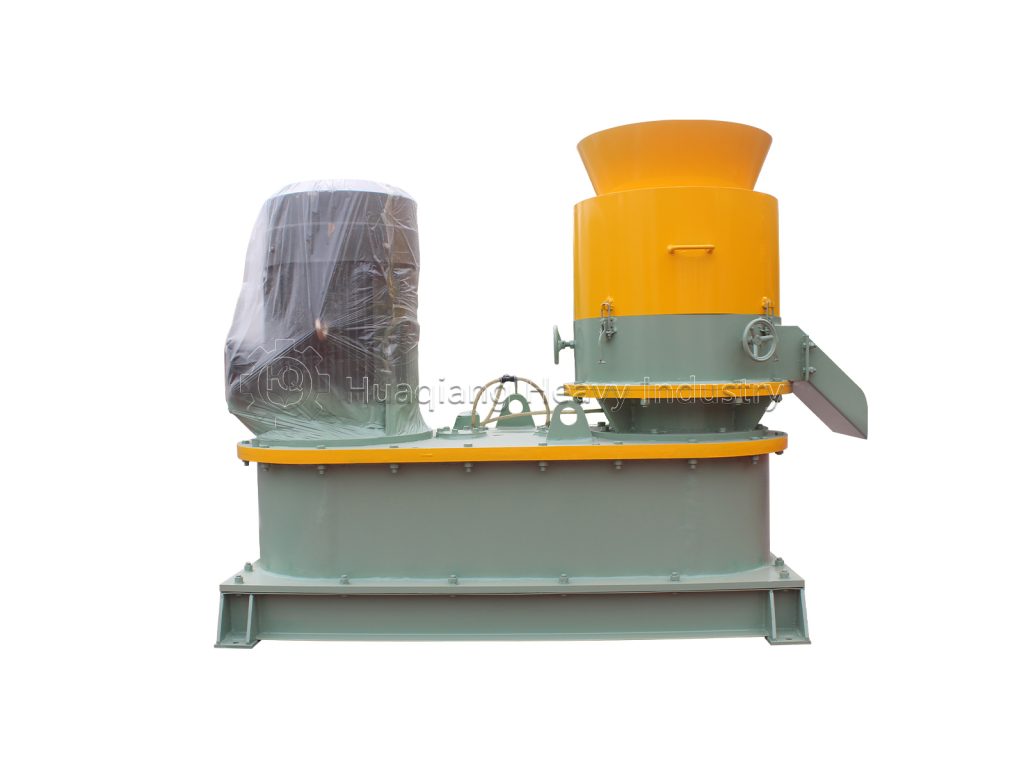
New Type Organic Fertilizer Granulator
This organic fertilizer granulator used for granulation all kinds of organic matter after fermentation, crushing through the conventional organic prilling before granulation. The organic content can be high to 100%, make pure organic granulate, granule is round ball.

Ring Die Granulator
The granulator is used for granulation to all kinds of organic matter after fermentation, break through the conventional organic prlling before granulation. no need to dry and crush the raw materials before granulation. It can direct burdening to work out cylindrical grain, and save a lot of energy.

Two In One Organic Fertilizer Granulator
The machine can not only granulate a variety of organic matter, especially for the coarse fiber materials which are difficult to be granulated by conventional equipment, such as crop straw, wine residue, mushroom residue, drug residue, animal dung and so on. And it could granulate compound fertilizer. Organic fertilizer and compound fertilizer can be mixed and granulated.

Why is organic fertilizer so popular
Organic fertilizer can improve the damage, because the organic elements contained in it will restore soil vitality. Excessive use of chemical fertilizer damage the structure of the soil, and cause great harm to the soil.

Organic fertilizer improves plant’s resistance to disease and insect pests, while chemical fertilizer is a single microorganism population, which is prone to plant diseases and insect pests.


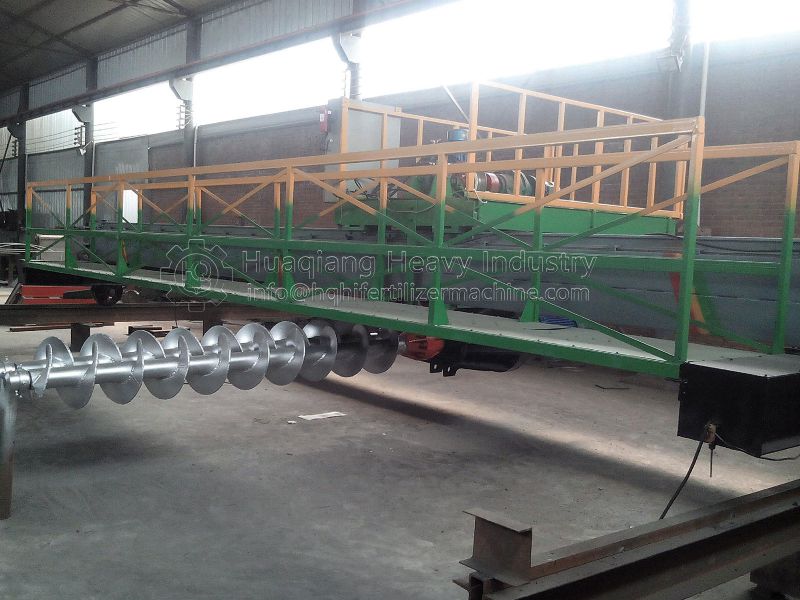
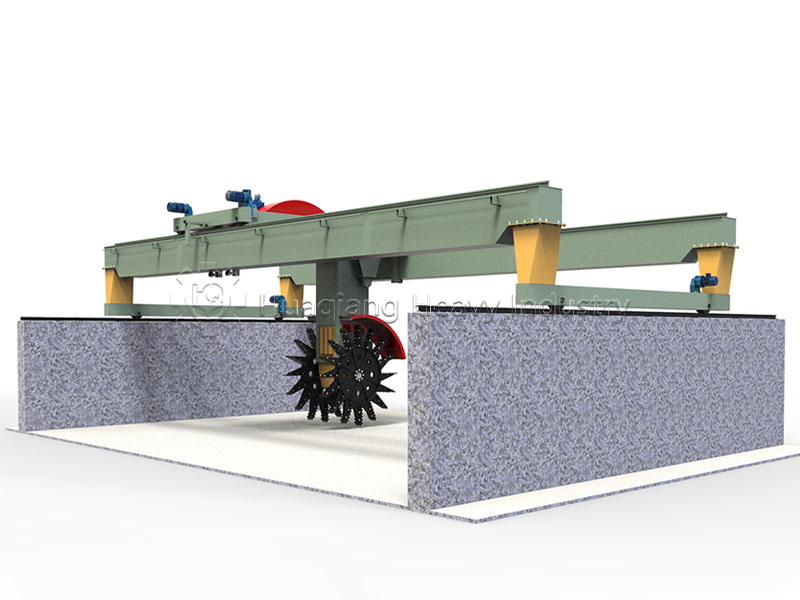
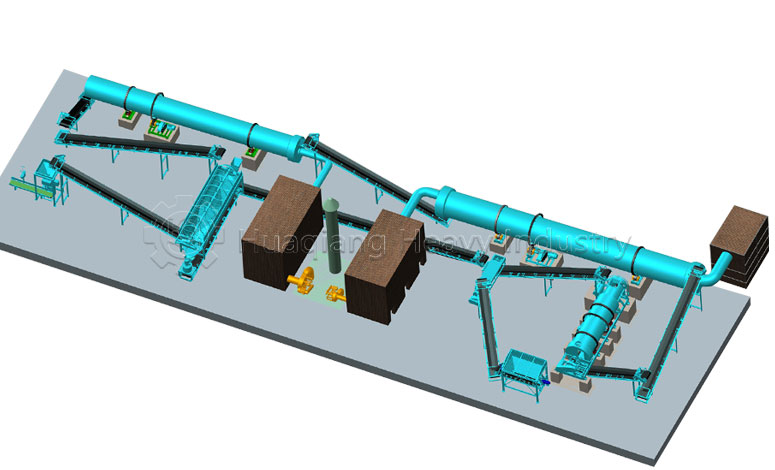
Organic fertilizer production equipment main includes: Compost turner machine, Crusher machine, Screen Machine, Mixing machine, Fertilizer granulator, Dryer machine, Cooler machine, Screener machine, Packaging machine.