Granulation is a core process in organic fertilizer production, and the organic fertilizer granulator, as a key component of organic fertilizer production equipment, has a process selection that directly impacts efficiency. Dry granulation and wet granulation are the mainstream processes, each with its own focus in terms of principles, equipment, and applicable scenarios. The choice depends on the characteristics of the raw materials and production capacity.
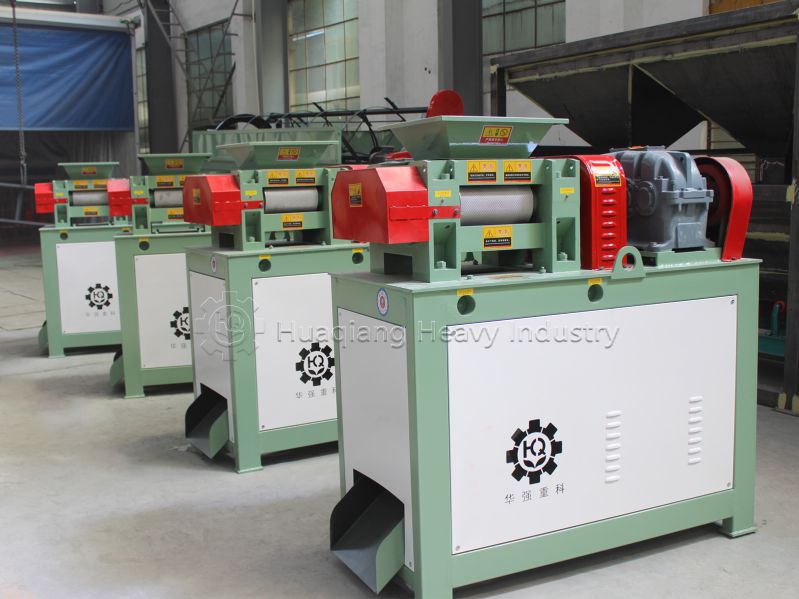
Dry granulation does not require the addition of water or binders, relying on the inherent viscosity of the raw materials or external force for shaping. The commonly used equipment is a fertilizer compaction machine. After pretreatment by the organic fertilizer production equipment, the material is extruded into thin sheets and then crushed and screened. The advantages are the elimination of the drying step, low energy consumption, and a simple process, suitable for composted raw materials with a moisture content of 10%-15%. The disadvantages are the high requirements for raw material viscosity and weaker granule strength, making it suitable for small and medium-sized production.
Wet granulation requires spraying water or binders and relies on mechanical force for granulation. Typical equipment includes organic fertilizer disc granulators and rotary drum granulators, which are key components of large-scale organic fertilizer production equipment. After the material is agglomerated into spheres through rotation, it needs to be processed through drying and cooling units of the organic fertilizer production equipment. The advantages are good granule sphericity, high strength, and strong adaptability to raw materials; the disadvantages are the need for additional drying equipment, resulting in higher energy consumption and costs.
Key selection criteria: For small and medium-scale production, with low moisture content and good viscosity of raw materials, dry granulation organic fertilizer granulators are suitable; for large-scale production, where granule quality is a priority or the raw material moisture content is high, the wet process dominated by organic fertilizer disc granulators is more advantageous. Regardless of the process, complete pretreatment and post-treatment equipment are necessary to ensure efficiency.