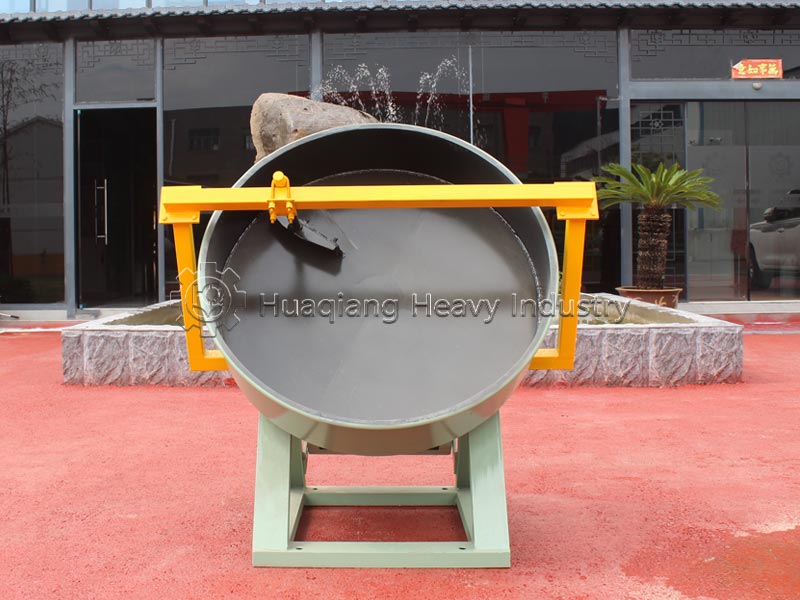
The complete process of organic fertilizer crusher processing: Efficient grinding technology

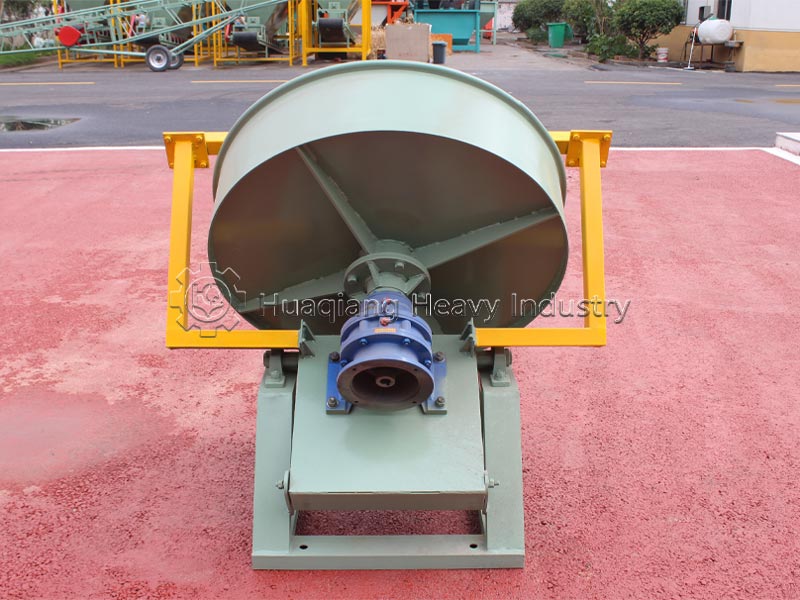
The fertilizer crusher is a core piece of equipment in an organic fertilizer production line. Its processing directly affects the quality of the final product and production efficiency.

1.Raw Material Pre-Treatment Stage

Moisture Control: Keep material moisture content between 30% and 50%. Too dry creates dust; too wet reduces crushing efficiency.

Impurity Removal: Remove hard impurities like stones or metal manually or mechanically.

Initial Crushing: Break down large chunks to reduce the crusher’s workload.

2.Core Workflow

Feeding System: A conveyor belt feeds material evenly into the crushing chamber.

High-Speed Crushing: The rotor spins at 1,500–3,000 rpm, using hammers or blades to strike materials.

Screening: Crushed material passes through a sieve (usually 3–10mm holes).

Recycling: Oversized material stays in the chamber for further grinding.

3.Key Process Control Points

Speed Adjustment: Lower speed for fibrous materials; higher speed for brittle ones.

Sieve Selection: Choose sieve hole size based on required particle size.

Temperature Monitoring: Keep bearing temperature below 75°C to avoid overheating.

Current Monitoring: Unusual motor current may indicate blockage or malfunction.

4.Finished Product Quality Standards

Uniform particle size: ≥90% passes through the target sieve. No visible unprocessed chunks. Fibrous materials ≤5mm in length. Moisture content variance within ±2%.

By properly controlling process parameters and strictly following procedures, the fertilizer crusher can maintain peak performance. This lays a solid foundation for subsequent steps like fermentation and granulation.

Cost Analysis of Chicken Manure Fertilizer Processing in an Organic Fertilizer Production Line

Chicken manure is indeed a high-quality organic fertilizer raw material, rich in organic matter, nitrogen, phosphorus, potassium, various trace elements, enzymes, and microorganisms. Through standardized aerobic composting processes, it effectively degrades organic matter, kills parasite eggs and pathogens, and renders it harmless and stable. This can then be produced into commercial organic fertilizer through an organic fertilizer production line, creating economic benefits for chicken farms while fundamentally addressing environmental pollution.

However, processing chicken manure into commercial organic fertilizer does involve certain production costs, which can be primarily categorized into the following aspects. First, equipment investment is the core, one-time investment. A complete production line typically includes fermentation and compost turning equipment, a crusher, a mixer, a granulator, a dryer, a cooler, a screener, and an automatic packaging machine. The choice of granulator significantly impacts cost and product form. For example, a rotary drum granulator offers high output, a disc granulator offers a high granulation rate, and a flat die granulator is suitable for organic materials. Different granulator models have varying prices and energy consumption. Secondly, the costs of the pretreatment and fermentation processes cannot be ignored. Fresh chicken manure is sticky and moist, typically with a moisture content exceeding 70%, while the optimal fermentation moisture content needs to be adjusted to 50%-60%. Therefore, a large amount of auxiliary materials (such as straw, sawdust, and mushroom residue) are often required to adjust the moisture and carbon-nitrogen ratios. The procurement, transportation, and crushing of these auxiliary materials all incur ongoing costs.

The initial equipment investment for processing chicken manure in an organic fertilizer production line is relatively high, and ongoing operations also require ongoing investment. The cost level depends largely on the production scale, the degree of automation, the availability and price of raw materials, and the positioning of the final product. For large-scale chicken farms, although the initial investment is high, in the long run, the comprehensive benefits of addressing environmental pressures and creating economic value by turning waste into resources are significant, making the cost acceptable.

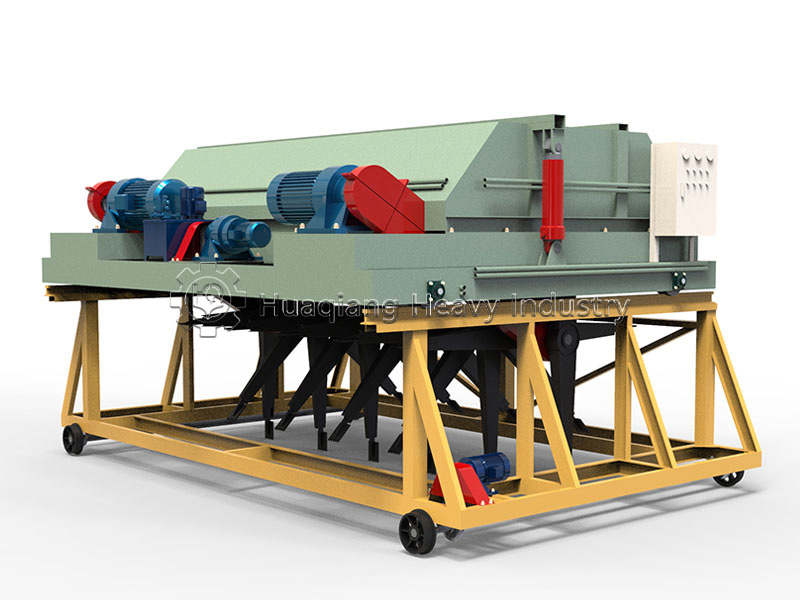
Precautions for Using a Compost Turning Machine

As a core piece of equipment for material fermentation in an organic fertilizer production line, the proper use of a compost turning machine directly impacts production safety and fermentation efficiency. During daily operation, equipment inspection and parameter adjustment must be thoroughly monitored to ensure maximum performance.

A thorough pre-startup inspection is the first line of defense for safe operation. Check the tracks or running wheels for deviation and bolt connections for looseness. In particular, check for breakage or excessive wear on the turning blade assembly to prevent blades from falling off and causing damage to the equipment during operation. Also, clear the fermentation tank of hard objects such as rocks and metal to prevent them from becoming entangled in the turning mechanism and causing it to jam. Electrical system inspection is essential. Ensure cables are intact and grounding is reliable. Install a waterproof cover during rainy weather to prevent electrical leakage.

Parameter adjustment during operation is crucial for ensuring fermentation quality. Dynamically adjust the turning depth and frequency based on the material’s characteristics: High-protein materials like fresh livestock and poultry manure require more frequent turning to ensure ventilation and oxygen supply to prevent anaerobic decay. Crude fiber materials like straw can be turned more deeply to promote even mixing. The turning speed should be matched to the material’s moisture content. If the moisture content is too high, slow the turning speed to reduce clumping. Dry materials can be turned faster to improve efficiency.

Post-downtime maintenance determines the lifespan of the equipment.After each run, clean the blades and trough to prevent caking and compaction, which increases the load at the next start-up. Regularly lubricate bearings, chains, and other transmission components, and promptly replace severely worn parts. When the equipment is idle for extended periods, it should be stored in a dry location, the blades should be coated with anti-rust oil, and the electrical system should be disconnected from the power supply and dust-proofed.

Proper operation of a compost turning machine is not only essential for ensuring production safety, but also a scientific approach to improving fermentation efficiency and reducing operational costs, laying a solid foundation for the resource utilization of organic waste.

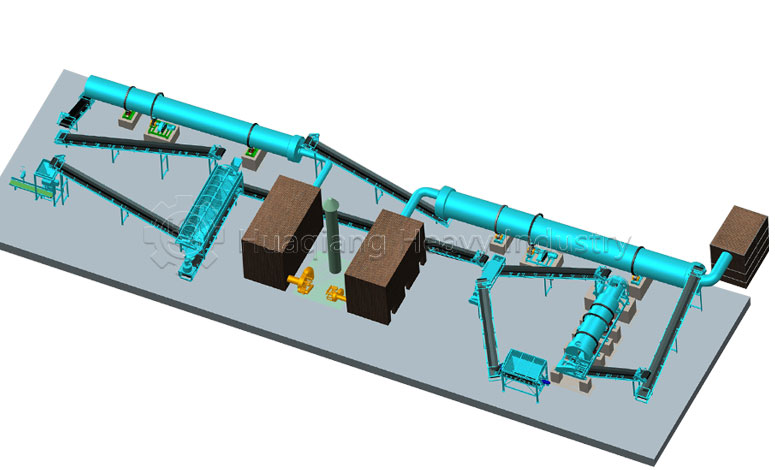
What is the production process of an organic fertilizer production line?

In terms of equipment, an organic fertilizer production line requires a fermentation compost turner, fertilizer crusher, fertilizer mixer, fertilizer granulator, fertilizer dryer, fertilizer cooler, fertilizer screening machine, fertilizer packaging machine, fertilizer conveyor, and fertilizer coating machine.

The raw materials used in organic fertilizer production vary widely, including livestock and poultry manure, municipal sewage sludge, and animal and plant residues. These raw materials are rich in organic matter, nitrogen, phosphorus, potassium, and other nutrients, providing essential nutrients for crop growth and are available at low prices.

How an organic fertilizer production line works:

Organic fertilizer processing primarily involves collecting, crushing, and mixing the raw materials. The raw materials are then mixed according to the desired formula, and the moisture content and carbon-nitrogen ratio are adjusted before the fermentation process begins.

Fermentation compost turning machines: Assist in turning the compost during the fermentation process, provide sufficient oxygen, and control the temperature to ensure uniform and thorough fermentation.

Fertilizer mixers: If the size and state of the fermented material are inconsistent, a semi-wet material grinder can be used for fine grinding.

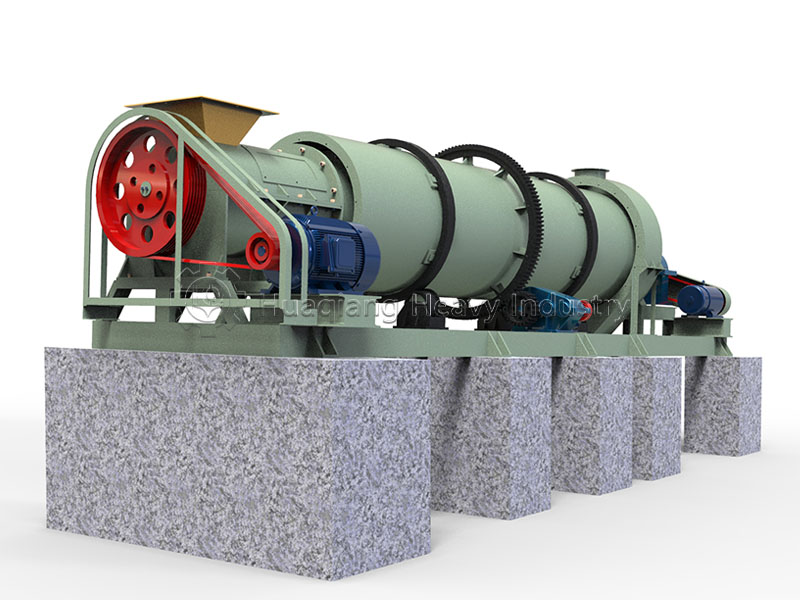
Fertilizer Granulator: The crushed material is processed into uniformly sized organic fertilizer granules by the organic fertilizer granulator.

Fertilizer Cooler: After granulation, the organic fertilizer still contains approximately 30% moisture. To increase its strength, the granules need to be cooled for later storage and transportation.

Fertilizer Screening Machine: After granulation, a small number of unqualified granules, some too large and some too small, will be produced. The fertilizer screening machine is used to separate these granules. Oversized granules are returned to the fertilizer crusher, while undersized granules are returned to the fertilizer granulator for regranulation. Qualified granules are then sent to the automatic packaging machine.

Fertilizer Packaging Machine: The finished organic fertilizer granules are packaged by the automatic packaging machine, completing the entire process.

It should be noted that the above configuration is for a typical organic fertilizer production line and may not be suitable for all situations. In actual production applications, different manufacturers may have different requirements regarding site and raw materials, and adjustments may be required based on actual needs.  

What are the main components of an organic fertilizer production line?

Those familiar with organic fertilizer production lines can generally identify their components, but for those new to the industry, this may seem a bit vague. Today, Zhengzhou Huaqiang Heavy Industry will share with you the components of an organic fertilizer production line.

The crushing section of an organic fertilizer production line. Given the diversity of user raw materials, our organic fertilizer production line equipment is designed with a crushing section. During the equipment sales process, we found that many users use relatively dry chicken manure or pig manure as raw materials, and some even mix in other raw materials to reduce organic fertilizer production costs. Raw materials with excessively large particle sizes cannot be directly granulated. Therefore, before granulation, the raw materials must be crushed to achieve the desired granulation effect before they can be fed into the organic fertilizer granulator. Of course, for users with sufficiently fine raw materials, this step can be omitted when designing organic fertilizer equipment.
The granulator section of an organic fertilizer production line is the core component of the equipment, making it an essential component. The model of granulator to be selected depends on the user’s production volume. The drying section of the organic fertilizer production line. The granulation process requires that the material humidity be kept below 25%. Therefore, raw materials with an initial humidity above 25% should first enter the drying process, and then enter the granulation process after the dried material reaches the required humidity. Of course, users with sufficient material humidity can omit this step when designing organic fertilizer equipment.
In other parts of the organic fertilizer production line, after the pelletizer completes the processing, it is conveyed by a belt conveyor to a ball shaping machine for shaping, achieving a perfectly spherical shape and forming organic fertilizer granules. For users who require it, we can design a final packaging process to directly package the final product, thus achieving perfect automation of the entire fertilizer granulation process.

The unique working principle of the double roller press granulator

The reason why the double roller press granulator can occupy an important position in the organic fertilizer granulation equipment is inseparable from its unique working principle, which also allows it to show many advantages.  Its working process is clear and straightforward. First, the pre-treated dry powder raw material is conveyed between two relatively rotating rollers. The surface of this pair of rollers is usually provided with specific lines or grooves. Under the action of strong extrusion force, the raw material is tightly squeezed to form continuous flakes. These flakes then enter the crushing device and are crushed into particles of different sizes. Next, the particles will go through the screening stage, and the fine powder or large particles that do not meet the requirements will be separated and sent back to the granulation system, while the qualified particles will become the final product.

This working principle brings significant advantages. There is no need to add a lot of water, and the subsequent drying step is omitted, which not only saves energy, but also maintains the original nutritional content of the raw materials. The whole process is coherent and efficient, from the entry of raw materials to the output of qualified particles, which can be completed in one go and quickly meet production needs. At the same time, due to the physical extrusion granulation, it has strong adaptability to raw materials, and a variety of organic raw materials can be made into granules in this way.

The double roller press granulator has become an efficient and practical granulation choice in the organic fertilizer production line due to its scientific working principle, helping producers improve efficiency and ensure quality.

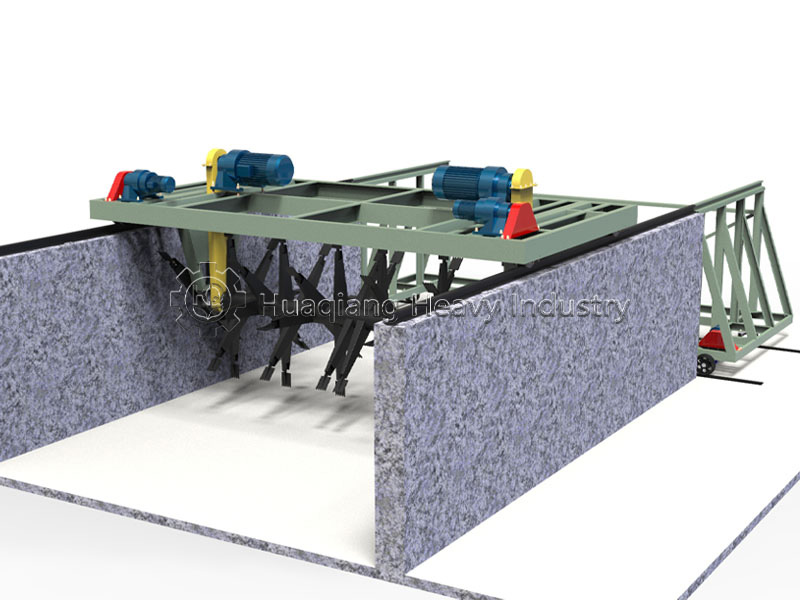
Comparison between trough compost turners and crawler compost turners

In the composting equipment of organic fertilizer production lines, compost turning machine and windrow compost turning machine have their own advantages. Choosing suitable equipment can make production efficiency more efficient.

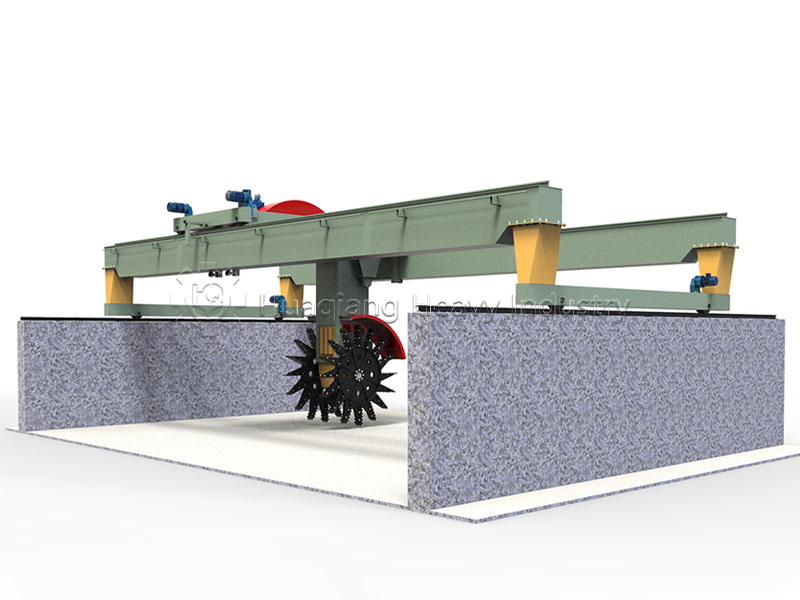
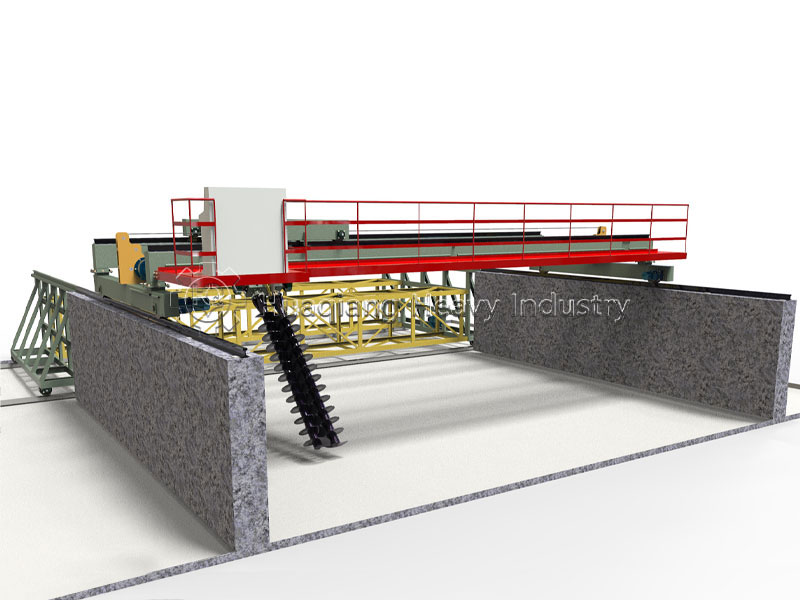
In terms of application scenarios,compost turning machines are suitable for fixed-site operations and need to be used in conjunction with fermentation tanks. The width of a single tank is usually 3-5 meters and the depth is 1-1.5 meters. They are suitable for large-scale and standardized production bases, especially in the continuous fermentation line of organic fertilizer plants. Windrow compost turning machines are experts in mobile operations. The crawler design enables them to shuttle freely in muddy sites without the need for preset fermentation tanks. The pile height can reach more than 1.5 meters.

Each has its own focus on operating efficiency. The compost turning machine relies on chain transmission to drive the turning and throwing teeth. The hourly processing capacity can reach 50-100 tons. The turning and throwing depth is uniform, the material is highly broken, and oxygen can be fully integrated. The fermentation cycle can be shortened to 7-10 days. Windrow compost turning machines rely on hydraulically driven rotating blades to process 30-80 tons per hour. Although the efficiency per hour is slightly lower, they can adapt to irregular piles and have a small turning radius. Their flexibility in operation on complex sites far exceeds that of trough compost turners.

There are obvious differences in operation and maintenance. Compost turning machines require regular adjustment of chain tension and monthly lubrication of sprocket bearings. Due to fixed operations, the replacement cycle of wear parts is relatively long. Windrow compost turning machines require weekly inspection of track tightness and grease of blade bearings every 100 hours, but their modular design makes replacement of wearing parts more convenient and less time-consuming for daily maintenance.

In terms of energy consumption and cost, compost turning machines have 15%-20% lower energy consumption per unit of processing capacity, but they need to invest in fermentation tank construction in the early stage. Windrow compost turning machines have low initial investment, and mobile operations save site renovation costs, making them suitable for small and medium-sized enterprises.

Both can meet the requirements of harmless compost treatment. The compost turning machine is suitable for large-scale and standardized production, while the windrow compost turning machine is suitable for flexible and changeable operation scenarios. Only by choosing according to your own production needs can you make compost treatment efficient and economical, and help the development of green industry.

What is an organic fertilizer production line?

An organic fertilizer production line is a systematic set of equipment that converts organic materials such as agricultural waste and livestock manure into high-quality organic fertilizer. Through a series of standardized processes, it achieves the complete transformation from waste to green fertilizer, making it a core piece of equipment for developing ecological agriculture.

Its core function is to deeply process and transform organic raw materials. The raw materials come from a wide range of sources, including pig and chicken manure from farms, straw and rice husks from farmland, as well as edible fungus residue and traditional Chinese medicine residue. These waste materials, which could otherwise cause pollution, are transformed into nutrient-rich organic fertilizer after processing through the production line, addressing environmental concerns and achieving resource recycling.

From a process perspective, an organic fertilizer production line consists of several key links. Raw materials undergo pretreatment, with crushing equipment used to break down bulky raw materials. Mixing equipment then blends the materials in appropriate proportions to ensure an optimal carbon-nitrogen ratio. The fermentation and composting phase then begins. Microorganisms use fermentation tanks or vats to complete high-temperature composting, killing pathogens and insect eggs and degrading harmful substances. The composted materials are processed into granules in a granulator, then dried and cooled to adjust the moisture content. Finally, they are screened and packaged to form the finished product.

The equipment configuration of the production line is customized based on production capacity and raw material characteristics. Small production lines can meet annual production needs of 10,000-30,000 tons and are equipped with simple crushing and turning equipment. Larger production lines integrate intelligent control systems that automatically adjust parameters such as temperature and humidity, reaching annual production capacities of over 100,000 tons and adapting to large-scale production.

In short, organic fertilizer production lines serve as a bridge connecting organic waste and green agriculture. Through scientific processes, they transform “waste” into “treasure.” The resulting organic fertilizer improves soil and enhances crop quality, making them a crucial piece of equipment for promoting sustainable agricultural development.

The efficient purification method of cyclone dust collector

In the fertilizer production line, dust pollution not only affects the workshop environment, but also reduces the utilization rate of raw materials. With its targeted design, the cyclone dust collector has become an ideal dust removal partner for the fertilizer production line, protecting the cleanliness of production from raw material crushing to finished product packaging.

It can accurately respond to the dust characteristics of different links. When the chain crusher processes raw materials such as phosphate rock powder and potassium salt, the coarse dust particles generated enter the cyclone dust collector through the tangent line, and are quickly separated under the action of centrifugal force. The purification efficiency is stable at more than 92%, avoiding dust adhesion to the inner wall of the mixing equipment and causing raw material waste.

Facing the wet dust discharged by the half-wet material crusher, the smooth inner wall design of the cyclone dust collector effectively prevents adhesion and blockage. Its conical ash hopper, combined with the timed cleaning device, can discharge wet dust in time to ensure the continuous operation of the equipment. When processing fermented organic fertilizer, it can also reduce the mixing and diffusion of ammonia and dust, improve the air quality in the workshop, and reduce the risk of respiratory diseases among workers.

Compared with traditional bag dust collectors, it is more suitable for the complex working conditions of fertilizer production lines. There is no need to frequently replace filter bags. Facing the corrosive dust commonly seen in fertilizer production, the service life of the stainless steel cylinder can reach more than 5 years, and the maintenance cost is reduced by 40%. The compact structural design can be directly connected to the discharge port of equipment such as crushers and granulators, reducing the pipeline layout and saving 30% of the workshop space.

Today, with increasingly stringent environmental protection requirements, cyclone dust collectors can not only meet the dust emission indicators of fertilizer production, but also improve the utilization rate of raw materials by recycling dust. Choosing it will allow the fertilizer production line to improve its competitiveness in cleanliness and efficiency, and achieve a dual improvement in environmental protection and benefits.

How Cyclone Dust Collectors Work Efficiently

In the fertilizer production process, from raw material crushing and mixing to granulation and drying, large amounts of dust are generated at every stage. This dust not only contains active ingredients such as nitrogen, phosphorus, and potassium, but may also carry corrosive substances. Cyclone dust collectors, with their targeted design, are an ideal choice for dust control in fertilizer plants.

The cyclone dust collector’s process is precise and efficient, tailored to the characteristics of fertilizer dust. When the dust-laden airflow from the granulator outlet enters the cyclone dust collector, the tangential airflow design creates a strong rotation within the cylinder. Centrifugal force rapidly propels larger particles (such as unformed fertilizer granules) toward the cylinder wall, where they slide down the conical bottom into the dust hopper. These recovered particles can be reused in production, minimizing raw material loss. For smaller fertilizer dust particles, the optimized airflow trajectory prevents them from escaping with the purified airflow. Even the lighter organic fertilizer dust is effectively captured within the stable centrifugal field. Purified air is discharged from the top outlet, preventing dust pollution in the workshop.

Details specifically designed for the fertilizer industry make it even more practical. Considering the potential for fertilizer dust to absorb moisture and clump, the tapered bottom features a wide angle, coupled with a timed dust discharge mechanism to prevent dust accumulation and blockage. The interior of the cylinder is coated with an anti-corrosion coating to protect against acidic and alkaline elements in the fertilizer, extending the life of the equipment. In compound fertilizer production lines, it can simultaneously process mixed dust generated by different raw materials such as urea and monoammonium phosphate, achieving a consistently high purification efficiency of over 90%. In organic fertilizer production lines, it effectively captures light dust from fermented straw and manure, preventing odor and dust contamination.

Selecting the appropriate cyclone dust collector not only creates a clean environment in fertilizer production workshops, but also recycles effective raw materials and reduces costs.