The granular quality of NPK fertilizers directly determines their fertilization effect and market acceptance. The NPK fertilizer granulator machine, as the core equipment of the production line, plays a crucial role in quality control. Among the many types of NPK fertilizer granulators, the flat die pelleting machine, with its unique advantages, has become the preferred equipment for small and medium-sized NPK fertilizer production lines.
The flat die pelleting machine is well-suited to the raw material characteristics of NPK fertilizers and meets the diverse needs of the production line. NPK fertilizer raw materials have complex compositions and varying particle sizes and viscosities. The flat die pelleting machine, through its die extrusion molding principle, can effectively adapt to different NPK raw material ratios. Whether it’s high-nitrogen, high-phosphorus, or balanced ratio raw materials, it can achieve stable granulation, producing granules with high strength and uniform nutrient distribution, preventing powdering or caking. At the same time, its simple structure and convenient adjustment allow for flexible adjustment of particle size according to production line needs, adapting to different crop fertilization scenarios.
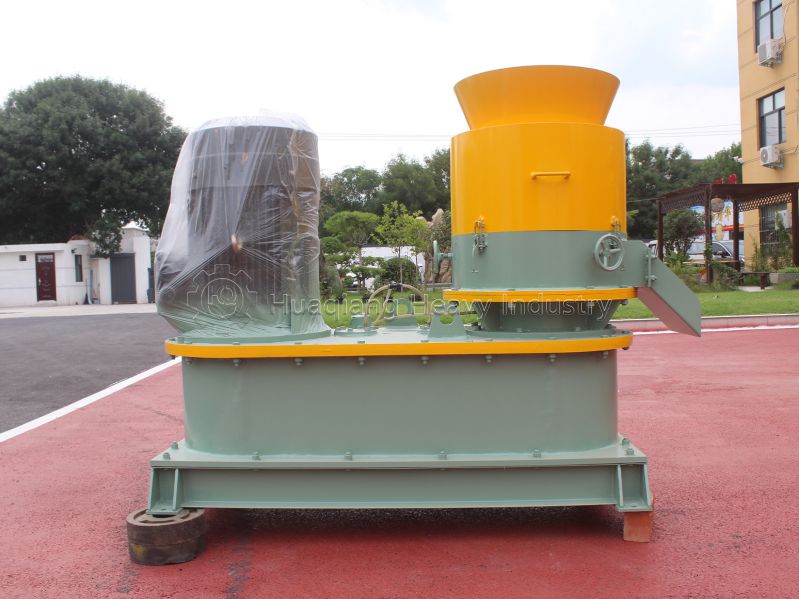
The synergistic operation of the flat die pelleting machine and the NPK fertilizer production line requires attention to core details. On the one hand, it is necessary to ensure uniform mixing of raw materials at the front end to lay the foundation for granulation; on the other hand, it is necessary to accurately adjust the pressure and speed of the granulator according to the moisture content of the raw materials to avoid particle adhesion due to excessive moisture or difficulty in molding due to insufficient moisture.
In summary, in an NPK fertilizer production line, the rational selection of a high-quality NPK fertilizer granulator like the flat die pelleting machine, and the control of the synergistic details between the equipment, raw materials, and processes, is the core path to improving product quality and enhancing the competitiveness of the production line.